Roundup
Best Coast Guard Approved Life Jackets for Kids (2026)
Five USCG-approved kids' jackets by weight, plus the fit check most families skip.
Category
Coast Guard approval, weight-range sizing, and the difference between a life jacket and a swim aid.
This is the one category on the site where getting it wrong has consequences that are not about money. A life jacket is a piece of certified safety equipment, and a great many things sold alongside them — swim vests, arm bands, puddle-jumper look-alikes without approval marks — are not life jackets at all.
There is one check that settles it. A genuine life jacket carries a printed US Coast Guard approval statement on the inside label, along with the weight range it is certified for. If that text is not there, it is a swim aid, whatever the packaging looks like, and it does not satisfy boating law.
The second thing that matters is fit, and it is checked by weight rather than age. A jacket certified for 30-50 lbs on a 25 lb child will lift over their head in the water. That is the failure mode, and it is why every guide here leads with the weight range.
Our picks
Roundups with a top pick, a cheaper pick and an upgrade.
Roundup
Five USCG-approved kids' jackets by weight, plus the fit check most families skip.
Roundup
Approved infant and toddler jackets, and the three features that matter under 30 lbs.
Roundup
Cheap approved spares versus a jacket you will actually wear — and why you want both.
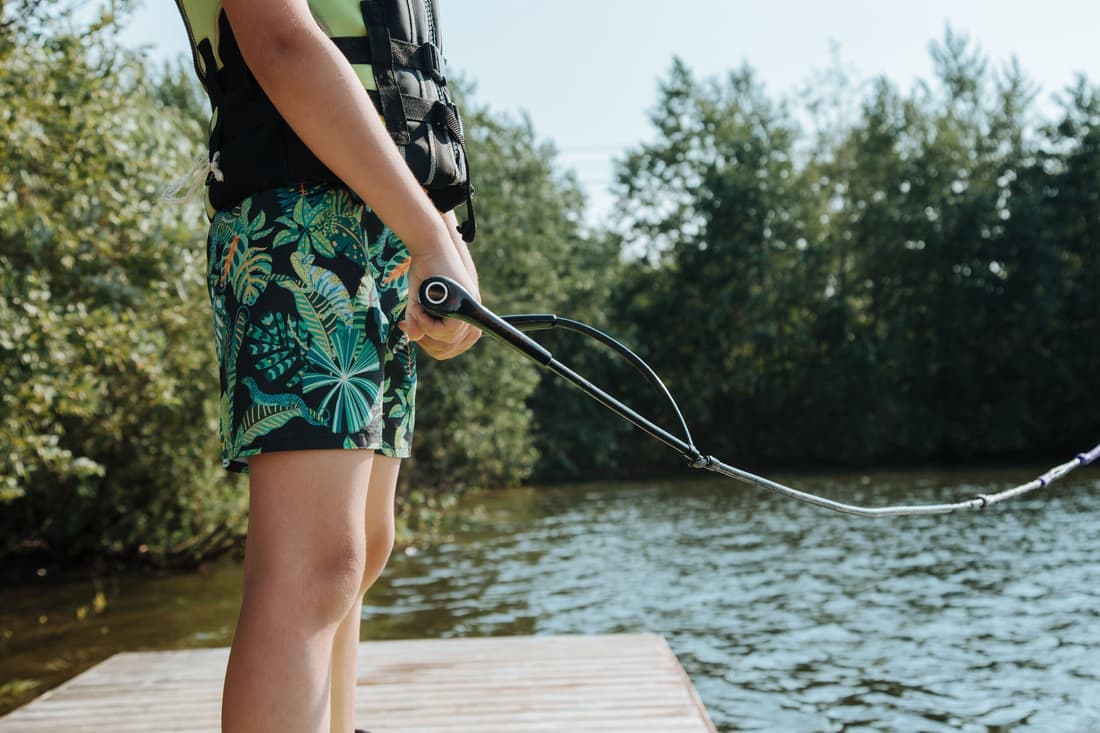
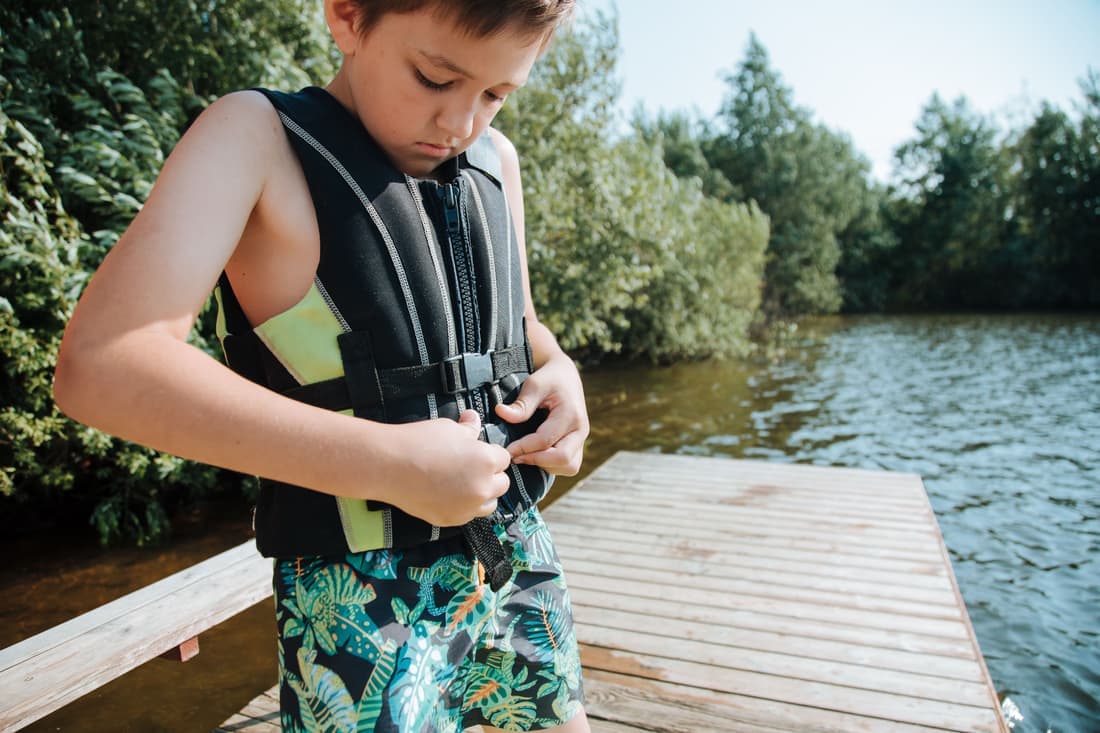
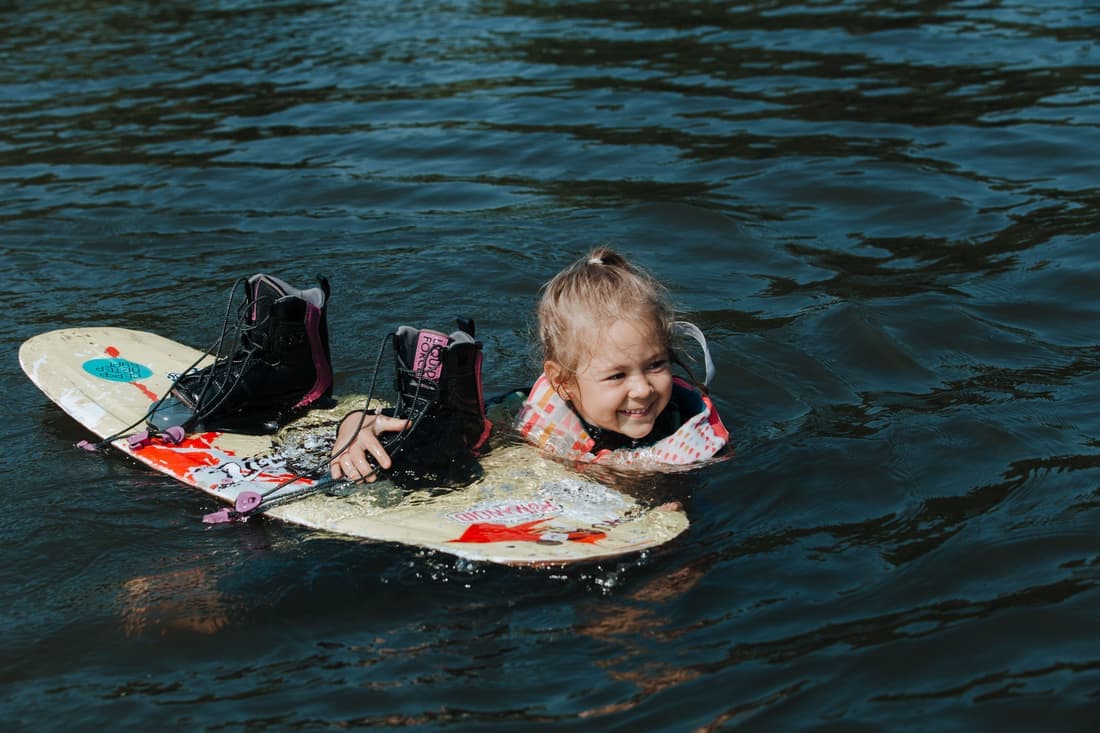
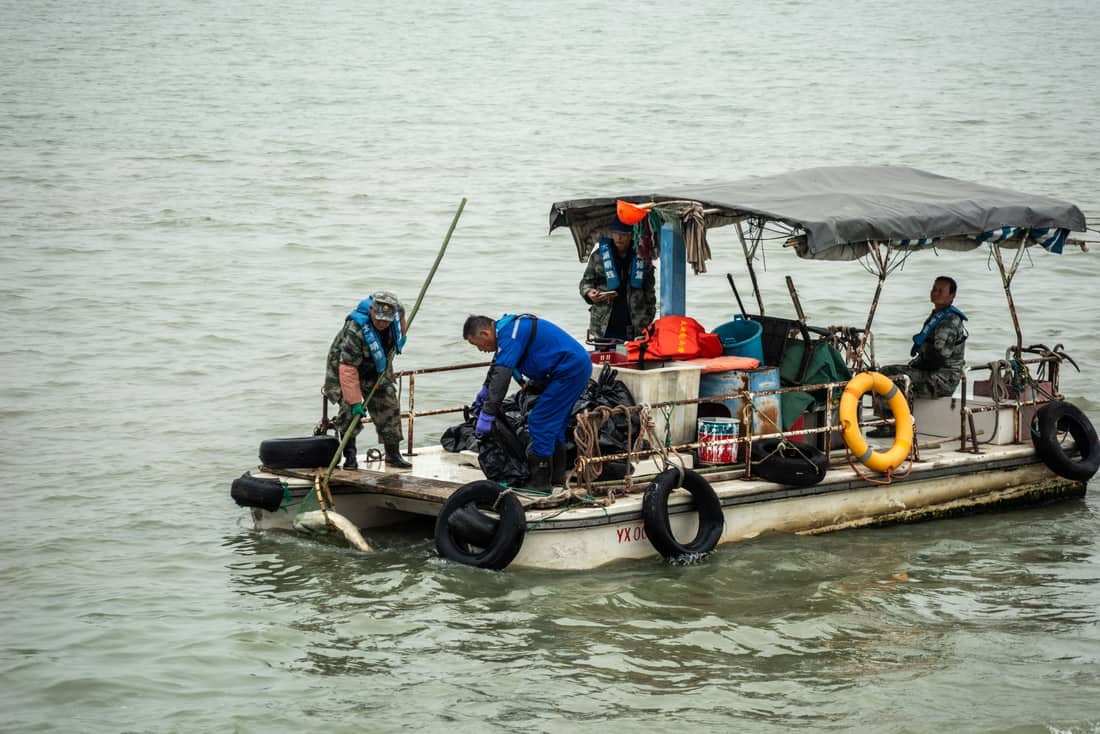
Photos on this page are licensed images that illustrate the category. They are not photographs of the specific products named, and no product image here is supplied by a manufacturer or retailer.
Straight comparisons
Decision tables for the choices people get stuck on.
Comparison
Approved arm-float jackets versus a traditional vest — what each is for, and the label check.
Comparison
Approved life jacket or unapproved swim vest — which belongs where, stated plainly.
Guides
Sizing, fit, care and the questions that come up most.
Guide
Types I-V explained, the newer icon labels, and how to read an approval label properly.
Guide
The weight-band chart, the lift test, and what to do about a child between two bands.

Guide
What changes when there is no lifeguard: supervision, cold water, drop-offs and boat traffic.
Look inside for three things. First, the USCG approval statement and approval number. Second, the weight range in pounds. Third, the intended use — the Coast Guard's older system labeled these Type I through Type V, and newer labels use icons and plain-language descriptions of the conditions the jacket is designed for. Both systems appear on shelves today, which is why the older Type language still turns up.
For families, the practical translation is this. Offshore-rated jackets (the old Type I) have the most flotation and will turn most unconscious wearers face-up; they are bulky and rarely what you want on a lake. Near-shore and flotation-aid ratings (old Types II and III) cover almost all family boating and watersports. Type V is a special-use category that is only approved while being worn as labeled. Our USCG life jacket types page breaks all of it down against the Coast Guard's own guidance.
Fit the jacket dry. Do up every buckle and the crotch or leg strap if it has one, then lift the child by the shoulders of the jacket. If the jacket rises past their ears or their chin slips out, it is too big — tighten the straps, and if it still lifts, it is the wrong size. This takes thirty seconds and it is the check most families skip.
A crotch strap is not optional for children, particularly on a towable tube. It is the thing that stops the jacket riding up over the head in a hard fall, and a towing jacket without one should not be used for towing. Infant jackets should also have a flotation collar for head support and a grab handle you can use to lift the child straight out of the water.
Swim vests and float suits are teaching aids. They hold a child horizontal to practice a stroke, and some let you remove flotation panels as the child improves — genuinely useful things a life jacket cannot do. But they are not USCG approved, they give no head support, and they do not meet the legal requirement to carry a wearable approved device per person on a boat.
The honest position is that most families with young children need both: a swim vest for supervised practice, and an approved jacket for anything involving a boat, a dock or open water. See life jacket vs swim vest and puddle jumper vs life jacket, which answers the question we get asked most.
Questions
Start here
These two guides connect every category on the site — what to buy first when you are outfitting several people, and what to put in the bag before you leave.