Life Jackets & Safety · Comparison
Inflatable vs Foam Life Jackets
One of them is approved for everybody on the boat. The other is only approved for you.
The short answer
Foam is the answer for a family. Inherently buoyant foam vests are approved at every age and weight, work the instant they get wet, and need no upkeep. Inflatables are approved only for wearers 16 and over, count only while worn, and need rearming after every firing. Buy an inflatable for yourself, never for the kids.
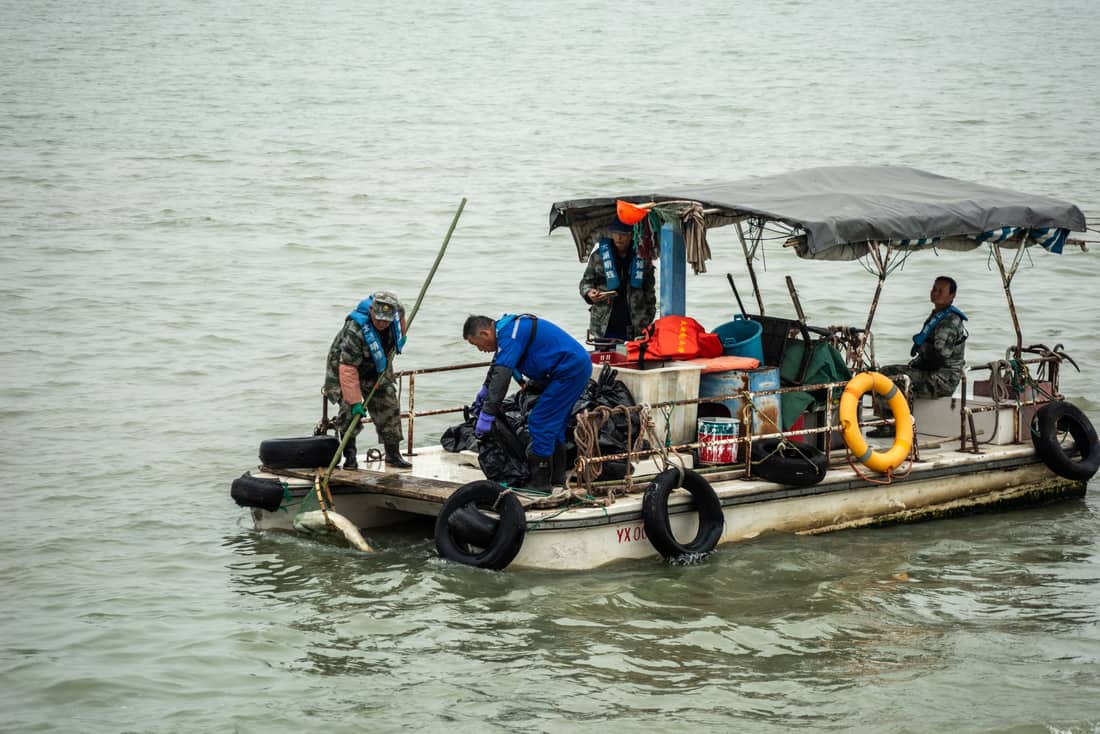
Product photos are the retailer’s own catalogue images, shown from the retailer’s servers and refreshed daily. Any other photo here is a licensed image that illustrates the category, not a photograph of the specific product named.
| # | Product | Best for | USCG class | Price |
|---|---|---|---|---|
| 1 | 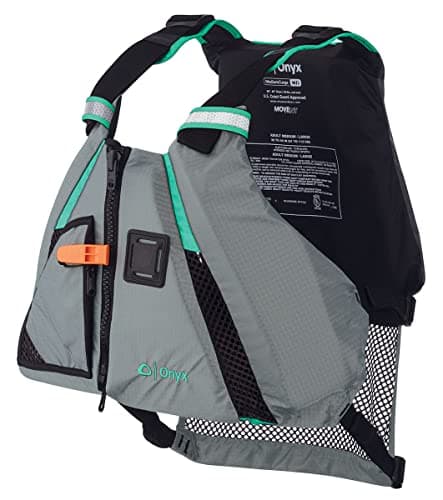 Top pick Onyx MoveVent Dynamic Paddle Vest A ventilated paddling vest with high-cut armholes, so you can actually swim, paddle and lift children in it. | Adults who are active | Type III, approved | |
| 2 | 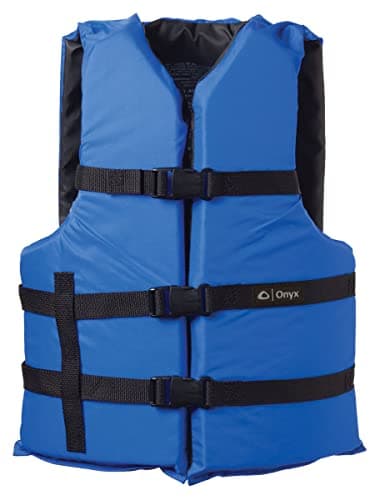 Budget pick Onyx General Purpose Vest The plain, cheap, USCG-approved adult vest you keep three of in the boat locker. | Spare jackets for guests | Type III, approved | |
| 3 | 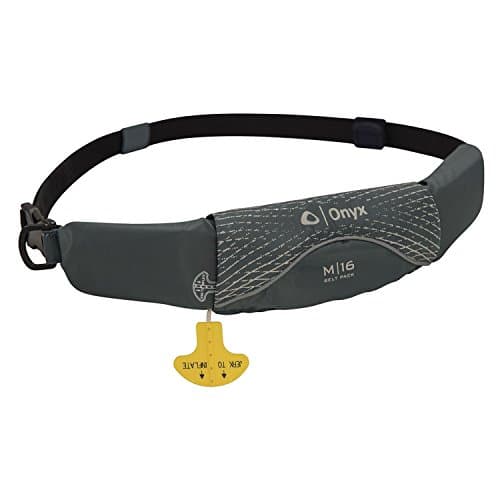 Also good Onyx M-16 Manual Inflatable Belt Pack A manual belt pack worn at the waist - the least intrusive approved device an adult can wear, and the one that asks the most of you. | Paddling in hot weather | Type V, Type III performance | |
| 4 | 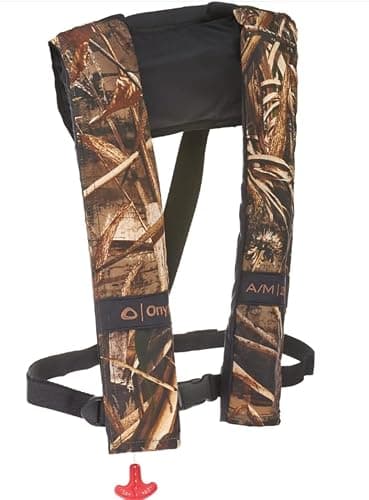 Also good Onyx A/M-24 Inflatable Life Jacket The inflatable most adults end up buying: a slim yoke that inflates on immersion, approved only for wearers 16 and over. | Adults who won't wear foam | Type V, Type III performance | |
| 5 | 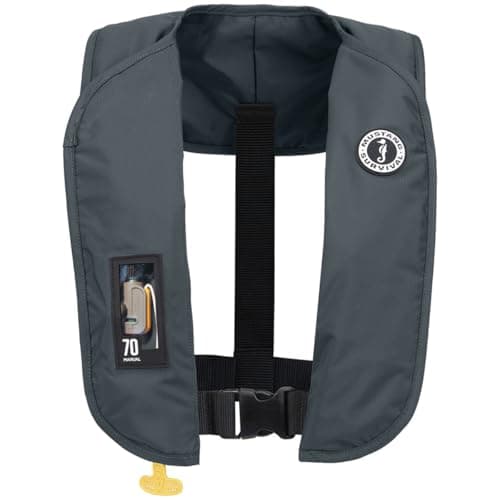 Upgrade pick Mustang Survival MIT 70 Manual Inflatable PFD The thin one: a membrane-inflatable vest that sits flatter than any other approved yoke, at a price to match. | All-day wear, slimmest fit | Harmonized Level 70 (US and Canada) | |
| 6 | Also good Stearns Youth Classic Series Vest The plain nylon boating vest: three buckles, a leg strap, and enough flotation to be the one you tow behind a boat in. | 50-90 lbs, boating | Type III, approved |
The difference is when the flotation exists
Both kinds of jacket are Coast Guard approved and both will hold you up. The difference is not how much buoyancy they have. It is when they have it.
A foam jacket is buoyant the moment it leaves the shop. The flotation is closed-cell foam sewn into panels, and it floats whether you are awake, asleep, conscious, cold, or have never read the label. Nothing has to work for it to work. The jargon for this is inherent buoyancy, and inherent is the operative word.
An inflatable jacket has no buoyancy at all until a CO2 cylinder fires and fills a bladder. An automatic model fires on immersion, usually within a couple of seconds. A manual model fires when a conscious person pulls a handle. Either way, the flotation is an event that has to happen, and like any event it can fail to.
That single structural fact produces every other difference on this page: the age restriction, the maintenance, the price, the comfort, and the reason a family buys both rather than choosing.
Onyx MoveVent Dynamic Paddle Vest
A ventilated paddling vest with high-cut armholes, so you can actually swim, paddle and lift children in it.
Specifications
- USCG class
- Type III, approved
- Size
- Adult S/M to XL/2XL
- Ventilation
- Mesh back panel
- Features
- High armholes, pockets, adjustable
What works
- High armholes and a mesh back make it wearable for hours in heat
- Multiple adjustment points get a real fit rather than a universal approximation
- Front pockets hold a phone in a dry bag and a set of keys
- Still a full Type III, so it satisfies the legal requirement
What doesn’t
- Costs several times a universal vest
- Mesh back offers no flotation behind the shoulders, so it sits lower in the water
Who it’s for
A parent who wears a PFD all day — paddling, supervising swimmers, getting in and out of a boat.
Bottom line
The adult vest people actually keep on. Modeling that in front of your children is worth more than the jacket costs.
Onyx General Purpose Vest
The plain, cheap, USCG-approved adult vest you keep three of in the boat locker.
Specifications
- USCG class
- Type III, approved
- Size
- Adult universal
- Shell
- Nylon
- Closure
- Zip plus straps
What works
- Cheapest route to meeting the legal requirement of one wearable PFD per person aboard
- Universal adult sizing covers most guests without a fitting
- Stores flat and survives a locker
- Bright colors that are actually visible in the water
What doesn’t
- Basic foam construction is hot and restrictive for a full day
- Universal sizing fits nobody especially well
Who it’s for
Boat owners who need spare approved jackets for passengers.
Bottom line
Buy these as spares, not as your own jacket. Legal compliance is the job and it does it.
Onyx M-16 Manual Inflatable Belt Pack
A manual belt pack worn at the waist - the least intrusive approved device an adult can wear, and the one that asks the most of you.
Specifications
- USCG class
- Type V, Type III performance
- Inflation
- Manual pull only
- Buoyancy
- 17 lb from the 16g cylinder
- Worn
- Belt pack at the waist
- Cover
- 200-denier nylon
What works
- Nothing crosses the shoulders, so it is the one approved device that a paddler will genuinely forget they are wearing
- Under a pound, which is why it ends up on people who would otherwise wear nothing
- Rearming is a single 16-gram cylinder, the cheapest and simplest inflator on this page to maintain
- Manual-only means it will not fire from spray, rain or a wet dog
What doesn’t
- Manual only: it does nothing at all unless a conscious person pulls the handle and then pulls the bladder over their head
- Not approved under 16, and not approved for towed sports or whitewater
- Approved only when worn as labeled, which for a belt pack means around the waist rather than slung over a shoulder
- Wrong device for anyone who might be knocked out, which on a boat is the case worth planning for
Who it’s for
A strong adult swimmer paddling or fishing in heat, who would wear nothing otherwise.
Bottom line
A real jacket for the adult who refuses one. Never the device for a weak swimmer, a child, or a tube ride.
Onyx A/M-24 Inflatable Life Jacket
The inflatable most adults end up buying: a slim yoke that inflates on immersion, approved only for wearers 16 and over.
Specifications
- USCG class
- Type V, Type III performance
- Inflation
- Automatic on immersion, or manual
- Buoyancy
- 22.5 lb minimum, inflated
- Wearer
- 16+ years, over 80 lb
- Chest
- 30-52 in
What works
- Light and open at the shoulders, which is the whole reason adults keep it on in August heat
- Inflates by itself if you go in unconscious, which no manual device and no foam vest does
- Convertible to manual-only, so you can stop it firing in spray or rain
- Oral tube as a third backup after the cylinder and the pull handle
What doesn’t
- Not approved for anyone under 16, so it is no help for the people you are supervising
- Approved only while worn - uninflated and sitting in a locker it does not count toward the one-per-person requirement
- Needs an annual inspection and a rearm kit after every firing, which is upkeep a foam vest never asks for
- Costs several times what an approved foam vest costs
Who it’s for
An adult on a boat or a dock all day who has proved they will take a foam vest off.
Bottom line
Buy it for yourself, not for the family. The comfort is real and so is the maintenance.
Mustang Survival MIT 70 Manual Inflatable PFD
The thin one: a membrane-inflatable vest that sits flatter than any other approved yoke, at a price to match.
Specifications
- Approval
- Harmonized Level 70 (US and Canada)
- Inflation
- Manual pull only
- Buoyancy
- 15.7 lb (70 N), inflated
- Weight
- About 1.1 lb
- Inspection
- Window and access flap
What works
- Membrane construction keeps it flatter and cooler than a folded-bladder yoke, which is the difference between wearing it and carrying it
- The inspection window lets you confirm the inflator is armed without unpacking the vest
- Manual pull only, so no accidental firing in rain or spray
- Harmonized Level 70 approval, so it is legal on both sides of the border
What doesn’t
- 15.7 lb of buoyancy is the lowest figure on this page - adequate, but less margin than a 22 lb inflatable or a foam vest
- Manual only, so it does nothing for an unconscious wearer
- Not approved under 16, and the Canadian listing states a minimum wearer weight near 88 lb
- The most expensive device here, and a rearm kit is an extra purchase
Who it’s for
An adult who is on the water constantly and has decided comfort is the only thing that keeps a jacket on.
Bottom line
The best-wearing inflatable here. Pay for it only if all-day comfort is genuinely the deciding factor.
Stearns Youth Classic Series Vest
The plain nylon boating vest: three buckles, a leg strap, and enough flotation to be the one you tow behind a boat in.
Specifications
- USCG class
- Type III, approved
- Weight range
- 50-90 lbs
- Shell
- Durable nylon
- Closure
- 3 buckles plus leg strap
What works
- Leg strap is what stops a vest riding up over a child's head in a hard fall — do not buy a towing vest without one
- Nylon shell survives dock boards, boat carpet and a season of sun
- Three buckles let you tighten it properly at the chest and waist separately
- Cheap enough to buy one per child rather than sharing
What doesn’t
- Bulkier and hotter than a swim-focused vest, so kids take it off between rides
- Foam panels restrict arm movement, so it is poor for actual swimming
Who it’s for
A 50-90 lb child on a boat, on a towable tube, or on a dock.
Bottom line
The right jacket for boating and towing. For swimming, a Puddle Jumper or swim vest is more wearable.
Why an inflatable is not an option for your children
This is the part most comparisons bury, and it decides the question for most families reading this.
Inflatable PFDs carry a minimum age and a minimum weight on their approval label — commonly 16 years and 80 pounds. That is not a manufacturer's suggestion or a liability hedge. It is a condition of the approval, which means an inflatable worn by a twelve-year-old is not an approved device on that child, and does not satisfy a requirement that the child wear one.
The reasoning is straightforward once you think about the failure mode. An inflatable asks something of its wearer: notice the water, pull the handle, or at minimum stay calm inside an unfamiliar bladder that has just inflated around your neck. Children panic, and a panicking child in an uninflated jacket is wearing a nylon vest with a gas cylinder in it. Foam asks nothing of anybody.
So the shopping decision for a family is not inflatable or foam. It is foam for everyone under sixteen, full stop, and then a separate decision about what the adults wear. Our kids' life jacket picks are all inherently buoyant foam for exactly this reason.
Head to head
| Inherent foam | Inflatable | |
|---|---|---|
| Flotation available | Always | After the cylinder fires |
| Approved for children | Yes, sized by weight | No - 16+ and typically 80 lb+ |
| Works if you are unconscious | Yes | Only an automatic model |
| Counts when stowed, not worn | Yes, as a carried device | No - approved only while worn |
| Maintenance | Rinse, dry, inspect the straps | Annual inspection, rearm after firing |
| Typical cost | Cheapest approved option | Several times a plain foam vest |
| Heat and bulk | Hot and bulky | Slim and cool |
| Towed sports, whitewater | Yes, if the label allows | Usually excluded by the label |
Read the last two rows together, because that is the whole trade. The inflatable wins on exactly one axis — how it feels to wear for six hours in August — and loses on every other one. Whether that single win matters depends entirely on whether you have ever taken a foam vest off because you were too hot. Plenty of adults have.
What foam actually gives you
It works without you. A foam vest on an unconscious adult still floats them. No approved device turns every wearer face-up — that is an offshore Type I jacket's job and almost nobody owns one — but a foam Type III keeps an unresponsive person at the surface, which is the thing that buys time.
It is cheap enough to buy properly. Federal rules require one approved wearable per person aboard, sized for them. At foam prices you can meet that for a boat full of guests without thinking about it. At inflatable prices you cannot, which is why most boats carry foam spares regardless of what the owner wears.
It survives being treated like gear. A foam vest lives in a damp locker, gets stood on, gets left in the sun, and still floats. The failure modes are visible: compressed and hardened foam, a torn shell, a broken buckle, or webbing you can tear by hand. Our guide to how long life jackets last covers the checks, and all of them are things you can see.
It is the only choice for towing. Most inflatable labels specifically exclude water skiing, kneeboarding, tubing and similar towed activities, along with personal watercraft. If anyone in your family rides a towable, the jacket for that is foam with a leg strap, and the inflatable stays on the dock.
What an inflatable actually gives you
A jacket that stays on. This is not a small thing, and it is not vanity. The most dangerous life jacket is the comfortable one you left in the locker, and the second most dangerous is the hot one you unbuckled an hour into the afternoon. An inflatable is light, open at the shoulders and cool, and adults who have historically worn nothing wear them.
Automatic inflation. An automatic model is the only device on this page that will float somebody who goes into the water already unconscious and was not wearing enough foam. If you fish alone, or boat alone, that is a genuine argument, and it is why the auto/manual convertible models exist.
Freedom of movement. Nothing crosses the chest or the armholes, which matters to paddlers, anglers casting all day and anyone reaching over a gunwale. A ventilated foam paddle vest closes a lot of that gap for a fraction of the cost — see paddle vest vs life jacket — but it does not close all of it.
The label condition people miss
Most inflatables are approved as Type V devices with Type III performance, and Type V has a condition attached: it is approved only while worn as the label describes. A foam Type III sitting in a locker still counts as a carried approved device. An inflatable in a locker counts as nothing.
In practice that means an inflatable cannot be your spare. It is the jacket on your body, and if you take it off, the boat is one approved device short. If you want a device that counts whether or not anyone is wearing it, that device is foam. The full breakdown of the classes is in USCG life jacket types explained.
The other label habit worth building: check that the approval is printed there at all. Look-alike inflatable vests sold as flotation aids are common online, and an unapproved device is not a life jacket however buoyant it is. How to tell if a life jacket is Coast Guard approved walks through where the label sits on each kind — on an inflatable it is inside the outer cover, near the bladder.
Maintenance is the cost that is not on the price tag
A foam vest needs a freshwater rinse, a dry in the shade and a two-minute look at the straps and seams once a season. That is the entire program.
An inflatable needs an annual inspection, a check that the cylinder is still armed and not corroded, and a rearm kit after every firing — including the firings you did not intend, because an automatic model will fire in heavy spray, in rain, or if it ends up in the bilge. The kit is specific to the model and costs real money. Budget for one every year or two and you will not be surprised.
There is a behavioral cost too, and it is the one that actually hurts. An inflatable you have not inspected is a jacket you are trusting without evidence, and the honest answer is that most recreational inflatables are not inspected on schedule. If you know you will not do it, that is useful self-knowledge and it points at foam.
So what should a family actually buy?
For nearly every family reading this on the way to a lake, the answer is: foam for everyone, and then one inflatable for the adult who has proved they take foam off.
- One foam vest per person, sized by weight, including the adults. This is the legal requirement and the baseline.
- A ventilated foam paddle vest for whichever adult is in and out of the water all day. It is the cheapest large upgrade in comfort available, and it still counts as a spare when nobody is wearing it.
- Foam with a leg strap for anyone riding a towable, because that is what the label allows and what stops a vest riding up in a hard fall.
- One inflatable, if and only if there is an adult who genuinely will not keep foam on. A manual vest or belt pack for a strong swimmer; an automatic model if they are ever on the water alone.
What we would not do is buy inflatables as the family's primary jackets. You would spend several times as much, the children still could not use them, your spares would stop counting, and you would inherit an annual maintenance task to keep the whole thing legal. The jacket you want on a lake is the one that works when nobody is paying attention — and that is foam. The adult picks are in best life jackets for adults.
Questions
Frequently asked questions
Are inflatable life jackets Coast Guard approved?
Can a child wear an inflatable life jacket?
Which is safer, inflatable or foam?
Do inflatable life jackets go off in the rain?
How often do inflatable life jackets need servicing?
Can you water ski or tube in an inflatable life jacket?
Sources
- US Coast Guard — Wearing Your Life Jacket
- US Coast Guard Boating Safety — Life Jackets
- Defender Marine - Onyx A/M-24 Automatic/Manual Inflatable PFD (specifications)
- Defender Marine - Onyx M-16 Inflatable Belt Pack PFD (specifications)
- Defender Marine - Mustang Survival MIT 70 Manual Inflatable PFD (specifications)
Read next