Lake Swimming Guides · Guide
Family Swim Gear on a Budget
Where cheap is the right answer, where it is false economy, and the order to buy in.
The short answer
Buy in this order: approved life jackets for anyone who needs one, then swimsuits and goggles, then sun cover, then footwear if the bottom is rocky, then floats. Spend properly on life jackets, closed-toe water shoes and chlorine-resistant suits for weekly swimmers; buy everything else at the bottom of the market.
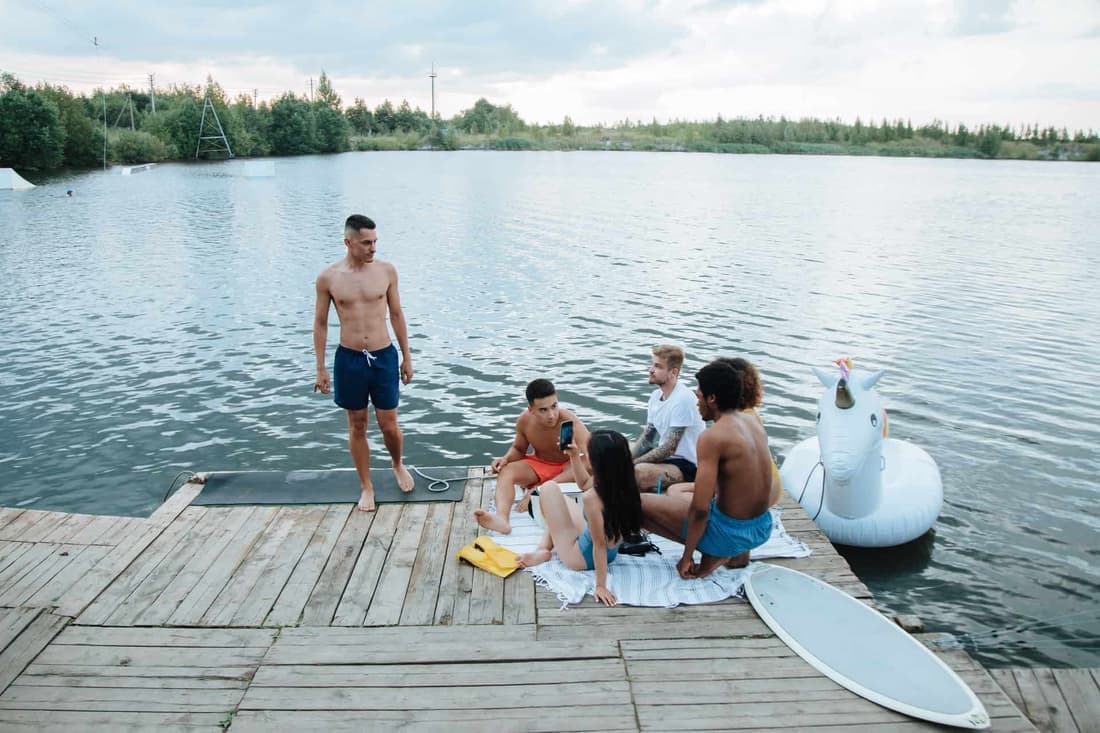
Photos on this page are licensed images that illustrate the category. They are not photographs of the specific products named, and no product image here is supplied by a manufacturer or retailer.
The buying order
If you are outfitting several people at once, the order matters more than the total. Buy in this sequence and you will never be in the position of owning floats and no life jacket.
- Approved life jackets for anyone who needs one — a weak swimmer, a child on a boat, anyone being towed. This is the only category where the wrong purchase is a safety issue.
- Swimsuits, one or two each depending on frequency.
- Goggles, because a child who cannot see does not swim. Cheap, and buy spares.
- Sun cover — a rash guard each and a hat. This is a health spend and it belongs above the fun items.
- Water shoes, but only if your lake bottom demands them. Wade it and find out first.
- Swim caps, if anyone has long hair or does weekly lessons.
- A floating cooler, which is cheap and the single most-used item on a lake day.
- Floats, one per person, at the bottom of the market.
- A towable tube, last, and borrow one before you buy.
Where cheap is exactly right
| Item | Why cheap is correct |
|---|---|
| Pool floats | They puncture regardless of price. Buy several and a patch kit |
| Kids' goggles | They get lost. Two cheap pairs beat one good pair |
| Toddler swimwear | Outgrown in months, long before fabric wears out |
| Swim caps | Cheap across the board; only volume for long hair costs more |
| Swim shoes for sand and pools | A thin rubber sole does the whole job |
| Boys' swim trunks | Destroyed by abrasion, not by chlorine |
| Occasional-use swimsuits | Chlorine is the destructive agent; lake water is gentle |
The pattern is consistent: buy cheap where the item is lost, outgrown or destroyed by the environment rather than worn out by use. Spending more on a float does not make it puncture-proof, and spending more on a toddler's swimsuit does not slow the toddler down.
Where cheap is false economy
Three categories, and only three.
1. Approved life jackets. Not because expensive ones are safer — a cheap approved vest carries exactly the same USCG rating — but because a comfortable jacket is one a child keeps on, and a jacket that comes off every twenty minutes is not protecting anybody. Buy the cheapest approved jacket if your child wears it happily; spend more if they do not. And buy one per child, because weight bands do not overlap enough to share.
2. Closed-toe water shoes, if your bottom is rocky. A cut foot ends the day and costs more than the shoes. These also reliably hand down to a sibling, so the cost per child is lower than it looks.
3. Chlorine-resistant swimsuits, for anyone in a pool weekly. PBT fabric costs roughly double and lasts three or four times longer in chlorine, which makes it cheaper per swim. For a lake-only swimmer this does not apply at all.
A worked allocation for a family of four
Two adults and two children, one of whom is in weekly lessons, swimming mostly at a lake with a rocky entry and occasionally on a friend's boat. This is the allocation we would make, in priority order:
- Two approved life jackets for the children, sized by weight. Cheap approved vests unless a child refuses to wear one.
- Two chlorine-resistant suits for the child in lessons, because that is where the fabric pays for itself.
- One cheap suit each for the other three.
- Four pairs of cheap goggles, soft-gasket for the children, plus two spares in the car.
- Four rash guards, mid-market certified UPF 50+. Not premium; not cotton t-shirts.
- Four pairs of closed-toe water shoes, because the entry is rocky. This is the biggest single line and it is justified.
- One swim cap for the child in lessons, plus one for anyone with long hair.
- One floating cooler.
- Four cheap floats and a patch kit.
- No towable. Borrow one from the boat-owning friend first.
What is deliberately absent: premium floats, a foam mat, a towable, branded fashion swimwear, and anything for the adults beyond a cheap suit and goggles. Those are the items to add in a second season once you know what actually gets used.
The second-summer question
Ask it about every purchase: will this still fit next June? For a child in a growth spurt the honest answer for most clothing is no, and that argues for cheap. For life jackets, closed-toe water shoes and foam floating mats the answer is usually yes — and there, cheap is the false economy.
One structural point worth knowing: fit is what outgrows, not fabric. A swimsuit that still has years of fabric life left becomes unusable because the torso is too short. That is why we say buy cheap for growing children rather than buy durable — durability you cannot use is money spent on nothing.
Things that cost nothing and help most
- Rinse everything in fresh water after every use. It roughly doubles the life of suits, goggles, caps and shoes.
- Never tumble dry swimwear. Heat destroys elastane faster than chlorine does.
- Own two of anything that gets wet. A dry item is worth more than a nicer item.
- Wade your swimming area before buying water shoes. You may not need any.
- Borrow before buying a towable. Some children will not go a second time.
- Keep a patch kit in the car, which saves floats that would otherwise be binned.
Where to start browsing
By category: swimsuits, swim goggles, swim caps, rash guards, water shoes, life jackets and safety, floats and towables, and baby and toddler.
And before a trip, the lake day packing list is the one to run through — most of what makes a lake day good is not something you buy.
Our picks
The three places we said cheap is false economy, plus the one place it is exactly right. An approved life jacket, a closed-toe water shoe if your bottom is rocky, a chlorine-resistant suit for anyone in a pool weekly -- and the cheapest goggles worth owning, bought two at a time.
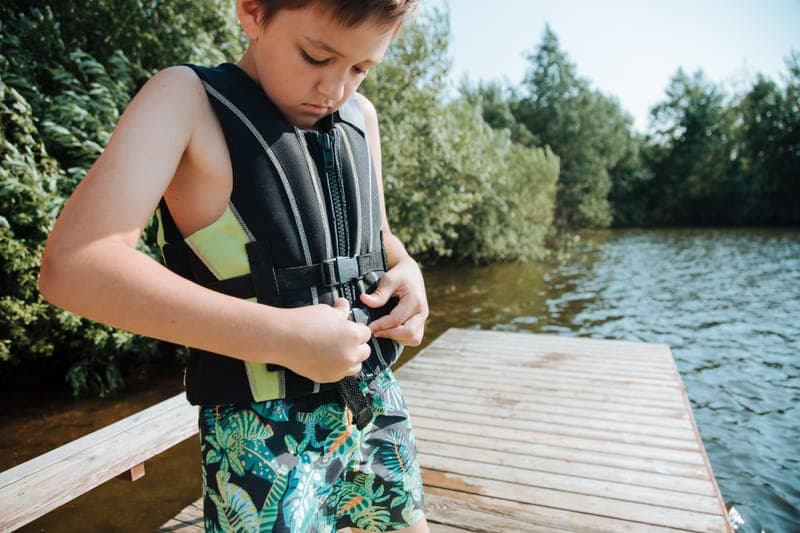
Stearns Puddle Jumper Deluxe
A USCG-approved Type III that children accept, because the arm floats leave the shoulders free.
Specifications
- USCG class
- Type III, approved
- Weight range
- 30-50 lbs
- Closure
- Single rear buckle
- Flotation
- Chest panel plus arm floats
What works
- Genuinely USCG-approved, unlike the water wings and arm bands it resembles
- The rear-only buckle is behind the child, so they cannot undo it themselves
- Children tolerate it for a whole afternoon, which is the property that actually keeps them in it
- Holds a swimmer upright and slightly forward, which suits pool and calm-lake play
What doesn’t
- Not designed to turn an unconscious wearer face-up — that is a Type I offshore jacket
- The upright-forward position teaches a vertical body posture that has to be unlearned in lessons
Who it’s for
A 30-50 lb child in a pool or on a calm lake shore, supervised at arm's length.
Bottom line
The most-worn kids' PFD in America for a reason. Check the printed USCG approval on the label, because look-alikes without it are everywhere.

KEEN Newport H2
A closed-toe water sandal with a real rubber outsole — the only style that protects toes on a rocky shoreline.
Specifications
- Toe
- Closed, rubber bumper
- Outsole
- Non-marking rubber, lugged
- Closure
- Bungee lace
- Drainage
- Open side panels
What works
- The closed toe bumper is the feature — stubbed toes on submerged rocks are the actual injury at a lake
- Lugged rubber outsole grips wet rock and algae-covered boat ramps
- Bungee lace cinches once and stays, so it does not come off in mud
- Genuinely lasts long enough to hand down to a sibling
What doesn’t
- Heaviest option here and the slowest to dry
- Most expensive kids' water shoe in the category
Who it’s for
A child at a rocky, weedy or gravelly lake, or one who walks in and out of the water all day.
Bottom line
The lake pick. If the bottom is rock or the shore is gravel, nothing else in this list is adequate.
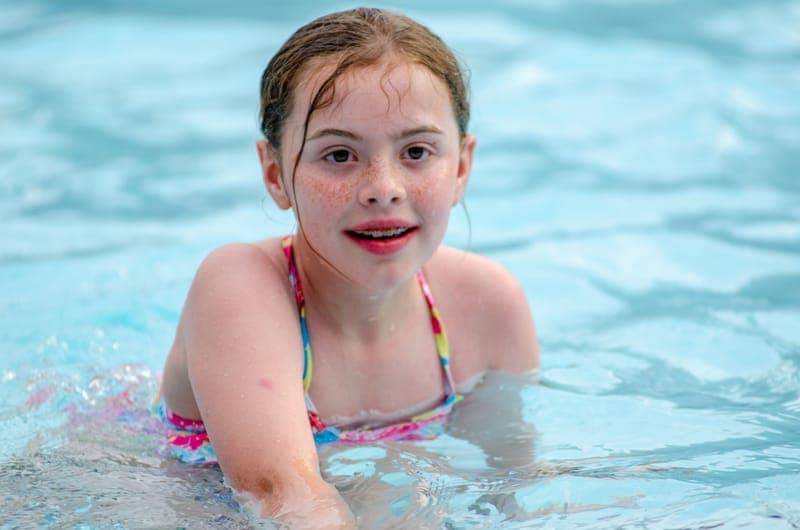
Speedo Girls' Solid Racerback
A plain chlorine-resistant racerback — the suit that survives a full season of weekly lessons.
Specifications
- Fabric
- Chlorine-resistant polyester blend
- Back
- Racerback
- Sizes
- Girls 4-16
- Lining
- Front lined
What works
- Chlorine-resistant fabric holds shape and color where a fashion suit goes see-through by August
- Racerback straps do not slide off shoulders mid-lesson, which is the real reason kids tug at suits
- Full coverage, so a child is not adjusting it every time they climb out
- Cheap enough to own two so one is always dry
What doesn’t
- Plain and unfashionable — older children may object
- Chlorine-resistant fabrics feel stiffer than fashion swim fabric
Who it’s for
A girl in weekly lessons or on a summer team, where a suit gets chlorinated repeatedly.
Bottom line
The workhorse. If your child is in a pool every week, buy this rather than a fashion suit and replace it half as often.
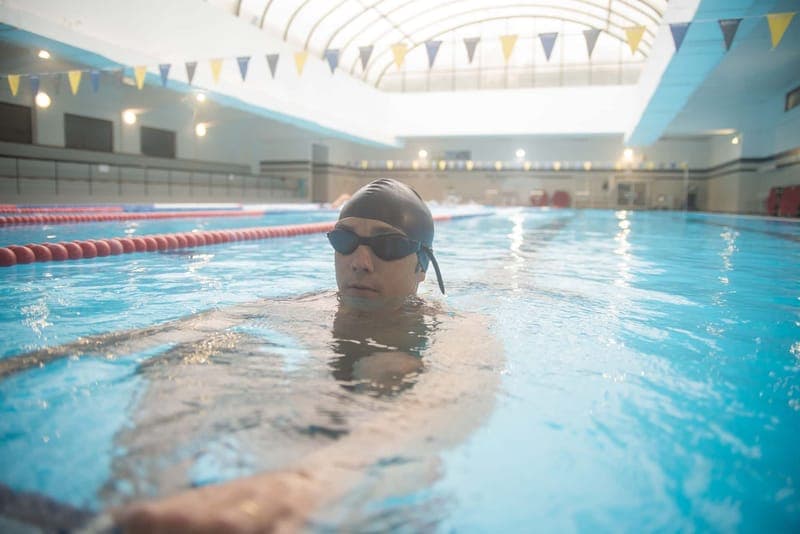
Speedo Hydrospex Classic
A soft-gasket recreational goggle at the bottom of the price range that still seals and still blocks UV.
Specifications
- Fit
- Recreational, adult and youth
- Gasket
- Soft, wide
- Lens
- Anti-fog, UV
- Strap
- Single, latex-free
What works
- Wide soft gasket is comfortable straight out of the packet with no fitting
- Genuine UV protection, which many bargain-bin goggles do not have
- Cheap enough to keep spares in the car
- Fits a wide range of faces, teens through adults
What doesn’t
- Soft gasket compresses over a season and starts to leak
- Narrow field of view and slight distortion at the lens edges
Who it’s for
Someone who swims a handful of times a summer, or a household that needs five pairs at once.
Bottom line
The honest budget pick. Do not expect two seasons, and that is fine at this price.
Questions
Frequently asked questions
What swim gear should I buy first for a family?
Where is it worth spending more on swim gear?
How do I outfit three kids for a summer cheaply?
Is expensive swim gear worth it for children?
Read next