Water Shoes · Guide
Do Kids Need Water Shoes?
On a rocky lake bottom, yes. On sand, not really. The bottom decides.
The short answer
It depends entirely on what is under the water. On a rocky, gravelly or weedy lake bottom, water shoes prevent the cuts and stubbed toes that end a swim, and there they are close to essential. On sand or a pool deck they are a convenience rather than a necessity.
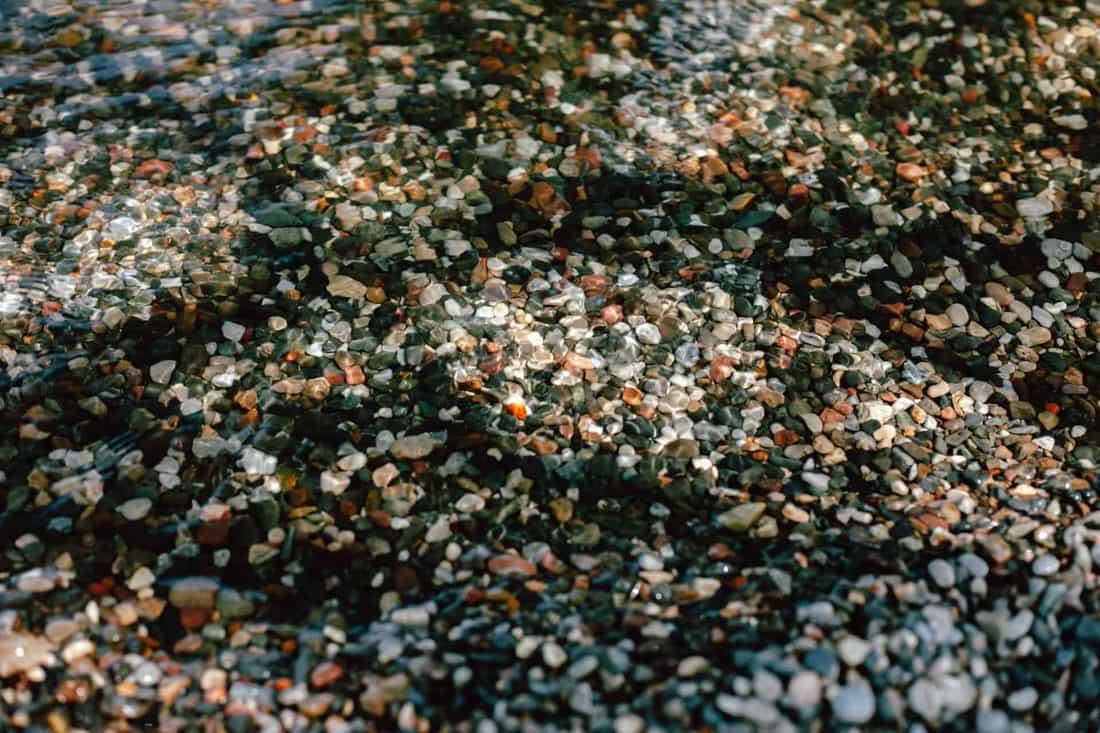
Photos on this page are licensed images that illustrate the category. They are not photographs of the specific products named, and no product image here is supplied by a manufacturer or retailer.
Where they are genuinely essential
- Rocky or gravelly lake bottoms. The commonest inland swimming surface in much of the country, and the one that causes the injuries. Submerged rocks cannot be seen and a stubbed or cut toe ends the afternoon.
- Zebra mussel water. In the Great Lakes region and many inland lakes, mussel shells encrust rocks and docks and they are genuinely sharp — this is one of the strongest cases for closed-toe shoes.
- Rivers and spillways. Current plus unpredictable bottom plus a real cost to losing a shoe.
- Boat ramps and docks. Algae-covered concrete is one of the slipperiest surfaces you will encounter, and a lugged rubber sole grips it where bare feet do not.
- Anywhere with broken glass risk. Public shorelines, sadly.
Where they are a convenience
- Sandy beaches. Hot sand on the walk in and grip on nothing in particular. Useful, not necessary.
- Splash pads. Wet concrete is slippery and hot in sun, and a thin-soled slip-on solves both cheaply.
- Pool decks. Same reasoning. Many families use them purely so children are not walking barefoot through changing rooms.
- Cruise ships and water parks. This is the context many people are searching from, and the answer is mostly hot surfaces and hygiene rather than protection.
- Great Wolf Lodge and similar indoor parks. Warm wet floors; grip and hygiene. A cheap slip-on is plenty.
Where you can skip them
A soft sandy bottom with no rock, no shells and no current, where the child is swimming rather than walking. Bare feet are fine there and arguably better — a child learns more about the bottom through their feet than through a rubber sole.
We would rather say that plainly than sell you a product you do not need. If your regular swimming spot is a sand beach, a pair of cheap flip-flops for the walk in and bare feet in the water is a complete answer.
What about babies and toddlers?
For a baby who is carried and a toddler who is in the shallows with an adult, water shoes are usually unnecessary and can be counterproductive — an unsteady toddler is steadier barefoot on a soft bottom than in a loose shoe.
The exception is the same as for everyone else: a rocky bottom, or hot sand and decking. There, a soft slip-on with a heel strap is worth having, sized snugly so it does not become a trip hazard.
What a baby genuinely needs at a lake is shade and sun cover, not footwear. See baby sun protection and the first lake day checklist.
How to decide for your own lake
- Wade the swimming area yourself before the children use it. You will know within a minute whether the bottom is soft or hostile, and you will also learn where the drop-off is.
- Check for mussels on rocks and dock legs. If they are there, buy closed-toe shoes.
- Look at how far the walk is from the car or the campsite. A long walk shifts the answer toward a sport sandal.
- Ask what your child actually does. A child who runs in and out fifty times a day needs something on their feet; one who swims for an hour and gets out does not.
What we recommend
Wade your own swimming area first, then buy to what you found. Rocky bottom: closed-toe water sandals, and they are worth real money because they also hand down. Sand and pool decks: the cheapest slip-on that fits snugly. Soft sand with no walking: nothing.
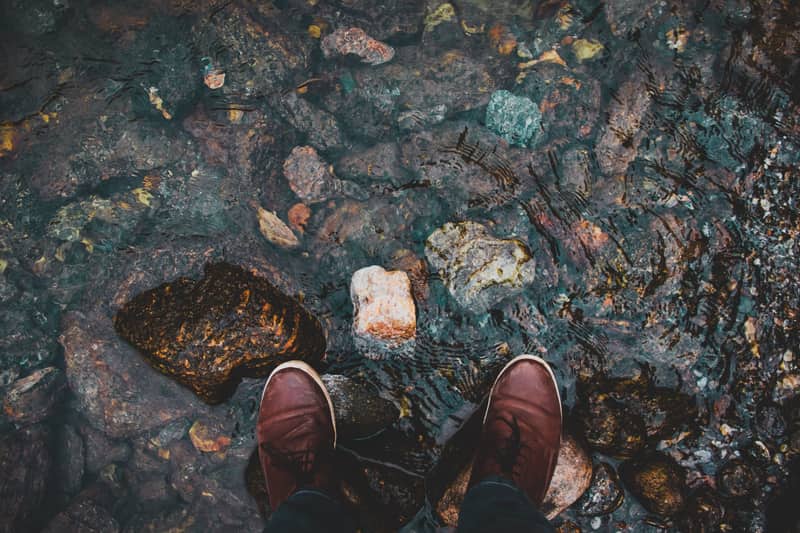
KEEN Newport H2
A closed-toe water sandal with a real rubber outsole — the only style that protects toes on a rocky shoreline.
Specifications
- Toe
- Closed, rubber bumper
- Outsole
- Non-marking rubber, lugged
- Closure
- Bungee lace
- Drainage
- Open side panels
What works
- The closed toe bumper is the feature — stubbed toes on submerged rocks are the actual injury at a lake
- Lugged rubber outsole grips wet rock and algae-covered boat ramps
- Bungee lace cinches once and stays, so it does not come off in mud
- Genuinely lasts long enough to hand down to a sibling
What doesn’t
- Heaviest option here and the slowest to dry
- Most expensive kids' water shoe in the category
Who it’s for
A child at a rocky, weedy or gravelly lake, or one who walks in and out of the water all day.
Bottom line
The lake pick. If the bottom is rock or the shore is gravel, nothing else in this list is adequate.
Speedo Kids' Surfwalker Pro
A slip-on water shoe with a thin rubber sole — everything a splash pad or pool deck needs, at a price that makes replacement painless.
Specifications
- Construction
- Stretch upper, rubber sole
- Closure
- Slip-on
- Weight
- Light
- Drainage
- Perforated sole
What works
- Cheap enough to buy a size up and a size down without thinking about it
- Thin rubber sole is grippy on wet pool decks, which is where kids actually slip
- Slip-on means a four-year-old manages it alone
- Packs flat in a swim bag
What doesn’t
- Thin sole transmits every rock; wrong for a stony lake bottom
- Stretch upper loosens over a season and starts slipping off
Who it’s for
Pools, splash pads, cruise decks and sandy beaches — anywhere the ground is flat.
Bottom line
The budget pick and genuinely adequate for smooth surfaces. Outfitting three kids? Buy these.
Merrell Hydro Moc
A one-piece molded clog with a heel strap, which is a clog that actually stays on in water.
Specifications
- Construction
- One-piece molded EVA
- Heel
- Adjustable strap
- Weight
- Very light
- Drainage
- Open ports
What works
- The heel strap is what separates this from a Croc — it does not float off a kicking foot
- One-piece EVA means nothing to delaminate and nothing to hold sand
- Rinses clean in seconds
- Light enough that children keep them on between water and shore
What doesn’t
- Soft EVA sole offers little protection against sharp rock
- Open design lets grit in, which then has to be rinsed out
Who it’s for
Children on sandy beaches, splash pads and docks who take shoes on and off twenty times a day.
Bottom line
The convenience pick, and a good one. Not the shoe for a rocky bottom.
Questions
Frequently asked questions
Do kids need water shoes at the beach?
Do kids need water shoes on a cruise or at a water park?
Do babies need water shoes?
Are water shoes worth it for one holiday?
Read next