Water Shoes · Guide
Water Shoes for Rocky Lake Bottoms
Closed toe, lugged sole, secure closure. On rock, nothing less is adequate.
The short answer
A rocky lake bottom needs a closed-toe water shoe with a rubber toe bumper, a lugged rubber outsole and a closure that holds the heel. Soft EVA clogs flex around rocks rather than shielding you from them, and neoprene socks provide essentially no puncture protection.
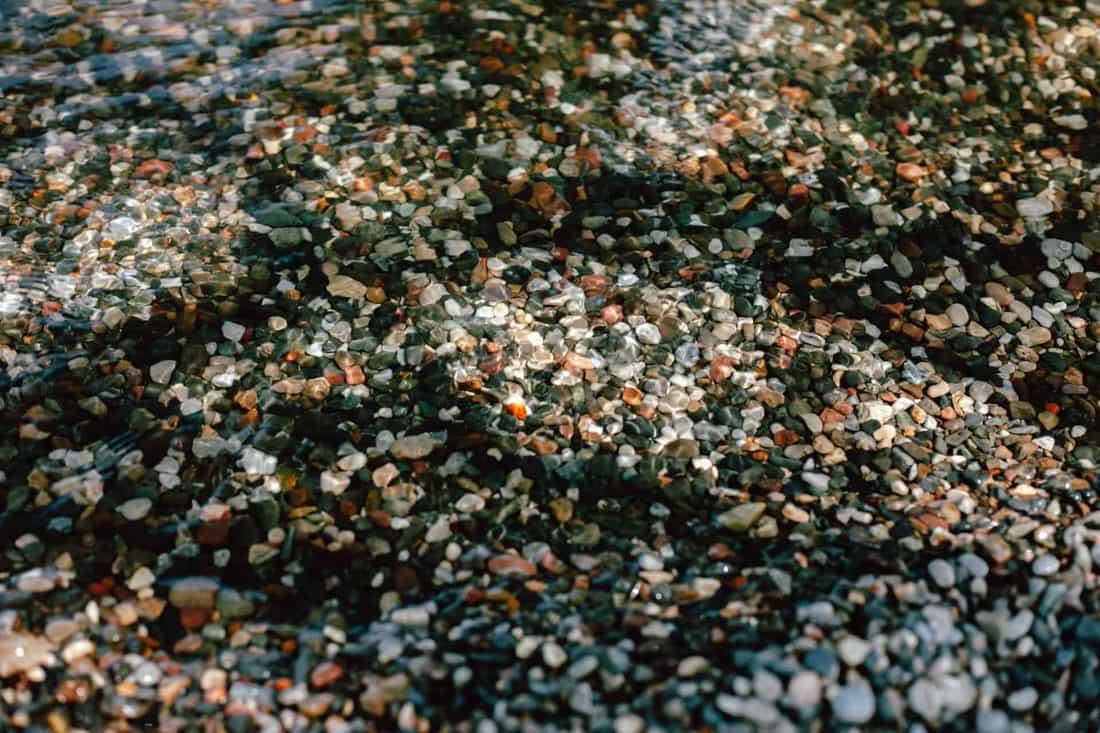
Photos on this page are licensed images that illustrate the category. They are not photographs of the specific products named, and no product image here is supplied by a manufacturer or retailer.
What makes rock different
On sand, the job of a water shoe is comfort and hygiene. On rock it is injury prevention, and the injury is specific: a stubbed or cut toe on a rock you could not see. You cannot see a lake bottom, the depth changes unpredictably, and a child walking out is placing their feet blind.
That puts hard requirements on the shoe rather than preferences. A toe bumper, because the toes take the impact. A lugged outsole, because wet rock and algae are genuinely slippery. A secure closure, because a shoe that comes off leaves one bare foot on the worst possible surface.
Cuts from lake rock are also worth taking seriously for a second reason: they happen in water that contains organisms, and an open cut in lake water can become infected. Keeping feet intact is easier than treating them.
The three requirements
- A closed toe with a rubber bumper. Not a reinforced fabric toe — actual rubber. This is the feature and the reason these shoes cost more.
- A lugged rubber outsole. Deep enough to bite into algae-covered rock. Smooth EVA is slippery on exactly the surface you need grip on.
- A closure that holds the heel. A bungee lace, hook-and-loop straps, or a heel strap. Slip-ons and open clogs come off.
A shoe that has all three will handle a rocky bottom, a river entry, a boat ramp and a shoreline walk. A shoe missing any of them will fail at one of those.
Why clogs and socks are not enough
Molded EVA clogs are the most common substitute and the most common mistake. EVA is soft — that is why it is comfortable — and a soft sole conforms around a rock rather than spanning it. You feel the rock through the shoe, and a sharp edge can still cut through. They also usually have an open toe and, without a heel strap, come off.
Neoprene socks provide warmth and chafe protection and essentially no puncture resistance. A shell or a sharp stone goes straight through thin neoprene. They are useful worn *inside* a closed-toe shoe, and they are not a substitute for one.
Sport sandals have the right sole and the wrong front. The open toe is the exposed part, and on rock that is the part that gets hit. They are the right shoe for a trail-and-wade day on a soft bottom and the wrong shoe here.
Zebra mussels change the answer
In the Great Lakes region and in a growing number of inland lakes, invasive zebra and quagga mussels encrust rocks, dock legs and boat hulls. Their shells are thin, hard and genuinely sharp, and they cut feet readily.
If your lake has them — check rocks and dock legs at the waterline, where they are visible — then closed-toe shoes stop being a recommendation and become necessary equipment, including for adults. This is the single most common cause of cut feet at affected lakes.
How to walk a rocky entry
- Shuffle rather than step. Sliding a foot forward finds an obstacle without stubbing into it.
- Walk the route yourself first, before children use it, and note where the drop-off and the worst rocks are.
- Set a fixed entry point — a gap between rocks you have checked — rather than letting everyone find their own.
- Never dive or jump into water of unknown depth. See lake swimming safety.
- Keep shoes on in the water, not just for the walk in. The exit is when people are tired and careless.
What we recommend
One closed-toe water sandal per person who is going in the water, worn on the way in and kept on. It is the most expensive footwear recommendation on this site and the one we would least want to compromise on, because the alternative is a cut foot and a shortened day.
Add neoprene socks inside them if the water is cool or anyone blisters. Full range in best water shoes, and the sizing detail — snug, and check width — is in the sizing guide.
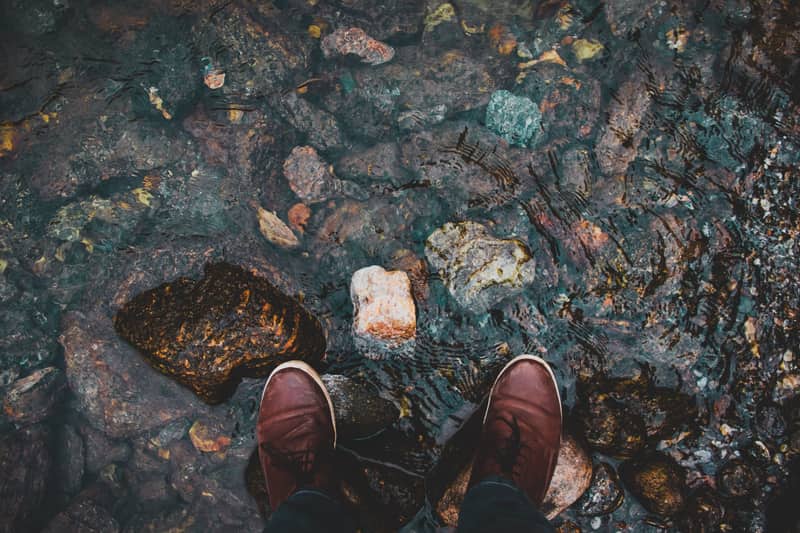
KEEN Newport H2
A closed-toe water sandal with a real rubber outsole — the only style that protects toes on a rocky shoreline.
Specifications
- Toe
- Closed, rubber bumper
- Outsole
- Non-marking rubber, lugged
- Closure
- Bungee lace
- Drainage
- Open side panels
What works
- The closed toe bumper is the feature — stubbed toes on submerged rocks are the actual injury at a lake
- Lugged rubber outsole grips wet rock and algae-covered boat ramps
- Bungee lace cinches once and stays, so it does not come off in mud
- Genuinely lasts long enough to hand down to a sibling
What doesn’t
- Heaviest option here and the slowest to dry
- Most expensive kids' water shoe in the category
Who it’s for
A child at a rocky, weedy or gravelly lake, or one who walks in and out of the water all day.
Bottom line
The lake pick. If the bottom is rock or the shore is gravel, nothing else in this list is adequate.
Teva Kids' Hurricane XLT2
An open-toe sport sandal with three adjustment points — the right choice when the day is half trail, half water.
Specifications
- Toe
- Open
- Closure
- 3-point hook-and-loop
- Outsole
- Durabrasion rubber
- Footbed
- Cushioned, quick-dry webbing
What works
- Three adjustment points get a genuinely secure fit on an awkward foot
- Cushioned footbed makes it comfortable for miles, which water shoes are not
- Quick-dry webbing does not stay soggy overnight
- Grippy enough for wet rock despite being a sandal
What doesn’t
- Open toe gives no protection against submerged rocks
- Webbing traps sand and needs rinsing to stop rubbing
Who it’s for
A child on a day that mixes walking and wading — a trail to a swimming hole, a campsite by a lake.
Bottom line
The best walk-and-wade compromise. For a rocky swimming spot, the closed-toe Newport H2 is safer.
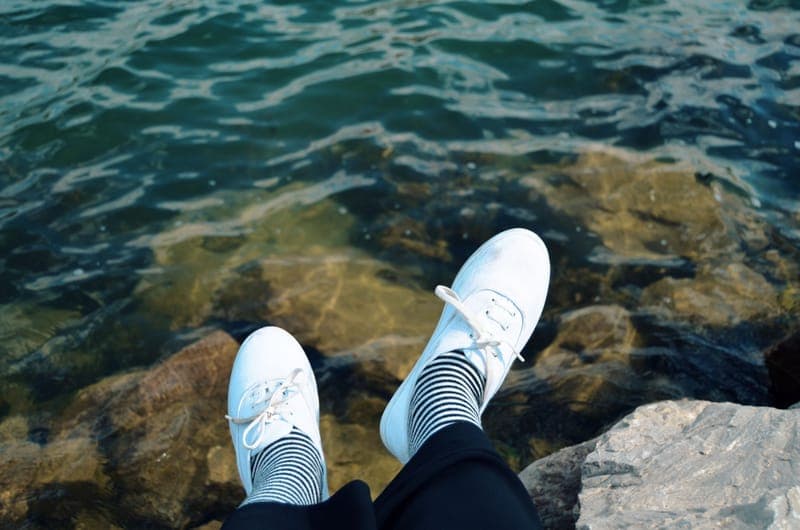
Cressi Neoprene Water Socks
Thin neoprene socks: warmth and chafe protection, essentially no sole, and not a substitute for a shoe.
Specifications
- Material
- Neoprene, thin
- Sole
- Minimal grip print
- Purpose
- Warmth, chafe protection
- Sizes
- Child and adult
What works
- Keeps feet warm in cool water, which nothing else in this category does
- Stops fin and shoe chafe, the reason most people buy them
- Packs to nothing in a swim bag
- Cheap, and a genuinely different tool from a water shoe
What doesn’t
- Almost no puncture protection — a sharp rock or a shell goes straight through
- Slippery on wet boat ramps and dock boards
Who it’s for
Cool-water swimmers, anyone wearing fins, and children who blister inside water shoes.
Bottom line
Buy socks for warmth and chafe, shoes for protection. Wearing socks inside shoes covers both.
Questions
Frequently asked questions
What kind of water shoes do you need for a rocky lake?
Are Crocs OK for a rocky lake bottom?
Do zebra mussels cut your feet?
How do you walk on a rocky lake bottom safely?
Read next