Lake Swimming Guides · Guide
Lake Day Packing List
Everything to bring, grouped by what it is for, plus the six things people always forget.
The short answer
Pack in five groups: safety (approved life jackets, a throwable, first aid), sun and shade, water and food, clothing with two towels per person, and the gear. The most-forgotten items are a second towel, a patch kit, a wet bag, more water than you think, and shade.
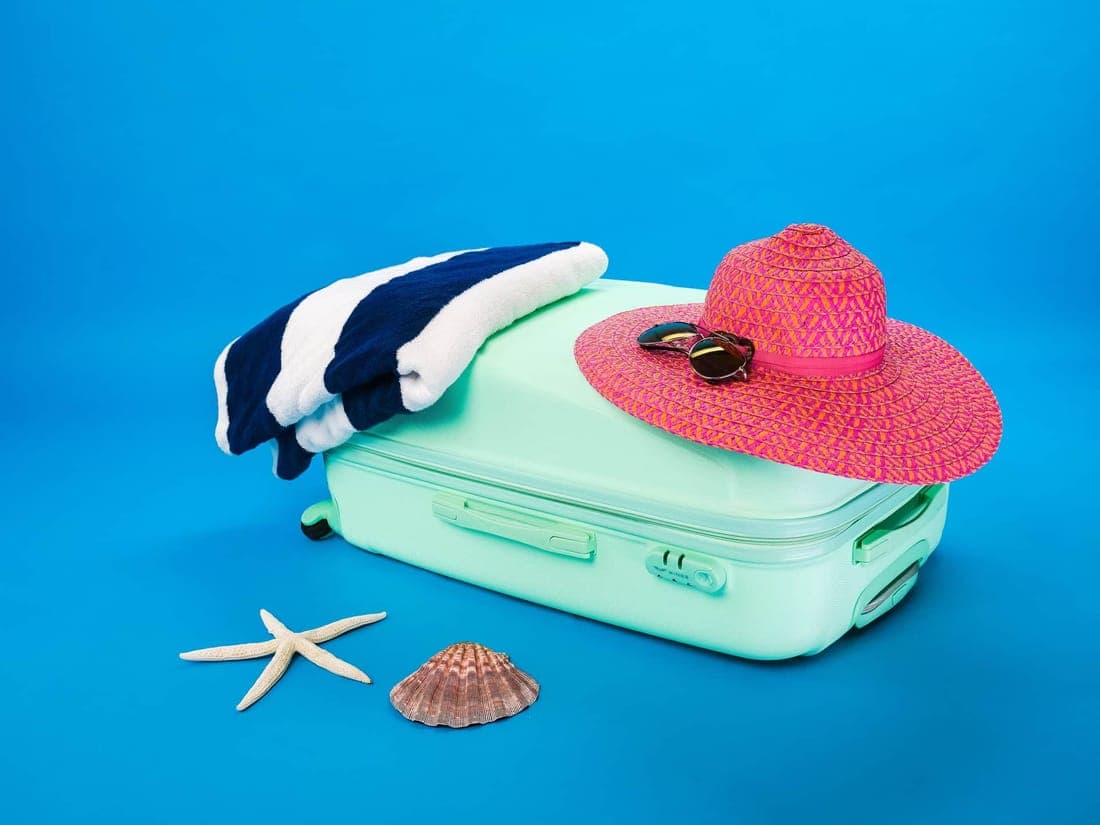
Photos on this page are licensed images that illustrate the category. They are not photographs of the specific products named, and no product image here is supplied by a manufacturer or retailer.
Safety — pack this group first
- Approved life jackets for every weak swimmer, sized by weight and fitted dry beforehand. See life jacket sizing by weight.
- A throwable flotation device — a ring buoy or a cushion — kept at the water's edge. Reaching or throwing beats swimming to someone in trouble.
- A first-aid kit, with something for cuts from rocks and shells specifically.
- A charged phone in a dry bag, and knowledge of where the nearest road access is.
- A whistle, which carries further than a shout across water.
And the thing that is not equipment: decide who is watching the water and say it out loud. See lake swimming safety.
Sun and shade
- Shade — an umbrella or a pop-up tent. Essential with a baby, valuable with anyone.
- Rash guards for the children, and for adults on a long day.
- Wide-brim hats, ideally with a neck flap.
- Sunscreen for the face, ears, neck, hands and tops of feet — the areas fabric misses.
- Sunglasses, and a spare cheap pair because one will end up in the lake.
- Lip balm with sun protection, which almost nobody packs and everybody needs.
Water and food
- More drinking water than you think. This is the single most under-packed item on any lake day.
- A floating cooler, tethered, so drinks are with you rather than on shore.
- A hard cooler with ice for anything that must stay cold — an inflatable cooler will not manage a hot afternoon.
- Food that survives heat. Anything with mayonnaise does not.
- A bin bag. Most lake shores have no bins and leaving rubbish is not an option.
- Hand sanitizer, since there is rarely a sink.
Clothing and towels
- Two swimsuits per child. A wet suit on a cold child ends the afternoon.
- Two towels per person. One gets wet, one gets lost, and the second is what makes swimmer's-itch prevention possible — see swimmer's itch.
- A warm layer each, even in summer. Wind off water is colder than it looks.
- A complete change of dry clothes, including socks.
- Water shoes, if the bottom needs them. Wade it first — see do kids need water shoes.
- A wet bag or a plastic bag for everything soggy on the drive home.
The gear
- Goggles, plus a spare pair. See best kids' swim goggles.
- Swim caps, for long hair and for visibility — a bright cap makes a swimmer far easier to spot.
- Floats, and a patch kit for them.
- A pump, if anything needs inflating. A foot pump that stays in the car boot has saved many afternoons.
- A floating mat, if you have one and a way to move it.
- A tow rope and a spotter, if a towable is coming. See towable tube safety.
With a baby or toddler
- Swim diapers — two reusables, or one disposable per swim.
- Regular diapers, twice as many as you expect. They cover before, between, after and the drive home.
- A zipped wet bag, wipes and a changing mat.
- Shade, which for a baby is the first item rather than an optional one.
- A USCG-approved infant vest if a boat or dock is involved, fitted dry at home first.
- More feeds than usual, because heat increases fluid needs.
The full version is in baby's first lake day checklist.
The six things people always forget
- A second towel per person. One is never enough, and the second is what lets you towel off briskly on leaving the water.
- Enough drinking water. Not nearly enough, every single time.
- Shade. Assumed to exist at the destination, frequently does not.
- A wet bag. Without one, everything in the car is damp.
- A patch kit. Small, cheap, saves a float mid-afternoon.
- A bin bag. There is no bin.
The short version, if you are already late
Eight things. If you have these you can have a good afternoon and improvise the rest.
- Approved life jackets for anyone who needs one.
- Two towels per person.
- More water than you think.
- Shade — an umbrella, or a plan for where you will sit.
- Sunscreen and hats.
- A spare swimsuit each.
- A bin bag, which doubles as a wet bag.
- Something buoyant you can throw from the shore.
What changes through the season
Early season. Add warm layers and a hooded towel, and expect much shorter swims. The water is colder than the air suggests and children lose heat fast. A wetsuit is what extends the time safely rather than persuading anyone to push through it.
High summer. More water, more shade, and check advisories before traveling — this is when algal blooms and swimmer's itch are most likely. Add insect repellent for the evening, applied after swimming rather than before.
Late season. Water levels fall on reservoirs and expose rocks and stumps that were safely deep in June, so re-walk an entry you know. Add a torch, because the light goes earlier than you expect and some sites lock a gate at dusk.
Any time after heavy rain. Consider going a couple of days later. Runoff raises bacteria levels, and it is the most predictable water-quality risk there is.
Before you leave the car
- Walk the water's edge. Find the drop-off, the rocks, and where shade will be in two hours.
- Set up shade first, before anyone is in the sun.
- Set a visible boundary for the children — a dock post, a buoy, a tree. A landmark is a rule they can follow; a distance is not.
- Name the water watcher out loud, and hand the role over verbally when you swap.
- Put the throwable at the water's edge, not in the car.
- Check the water. Local advisories for algae and bacteria, and avoid swimming after heavy rain.
What we recommend
Print or screenshot the five groups above and run through them at the door. The items that matter most are the cheapest ones — a second towel, more water, shade and a bin bag — and they are the ones that get forgotten.
If you are still buying gear rather than packing it, start with family swim gear on a budget, which works out what to buy first and where cheap is the right answer.
Our picks
The four items from the list above that people most often do not own yet. The floating cooler leads because it is cheap and it is the thing that gets used on every single outing.
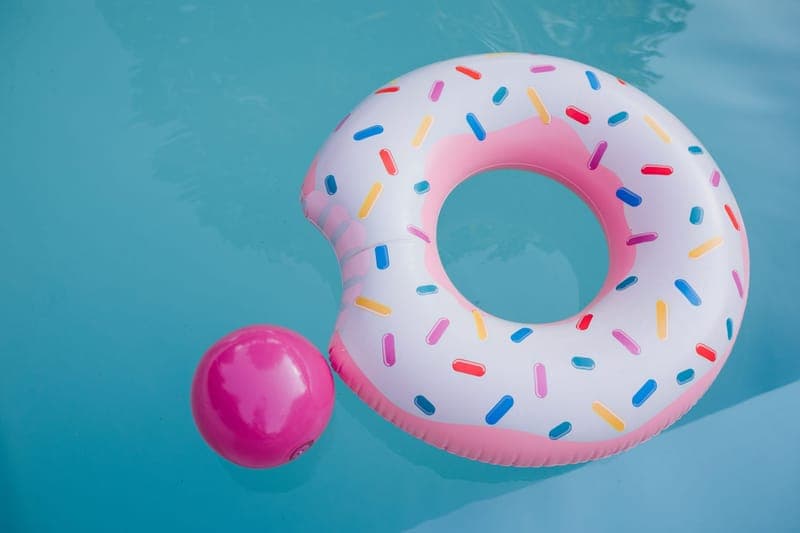
Intex Mega Chill II Floating Cooler
A floating cooler with a tethered lid — the accessory that stops one person swimming back to shore every ten minutes.
Specifications
- Capacity
- Approx. 24 cans plus ice
- Lid
- Inflatable, tethered
- Cup holders
- 6 on the rim
- Tether
- Rope loop
What works
- Tethered lid does not float away, which is the failure mode of every untethered floating cooler
- Rim cup holders mean drinks are not balanced on a float
- Ties to a dock or a raft so it stays with the group
- Cheap enough to be an impulse add-on to a float order
What doesn’t
- Insulation is minimal — ice does not survive a full hot afternoon
- Not a float; it holds nothing but cargo
Who it’s for
Any group spending several hours on the water away from a cooler on shore.
Bottom line
Not a float, but the single most-used item on a lake day. Pack more ice than you think you need.
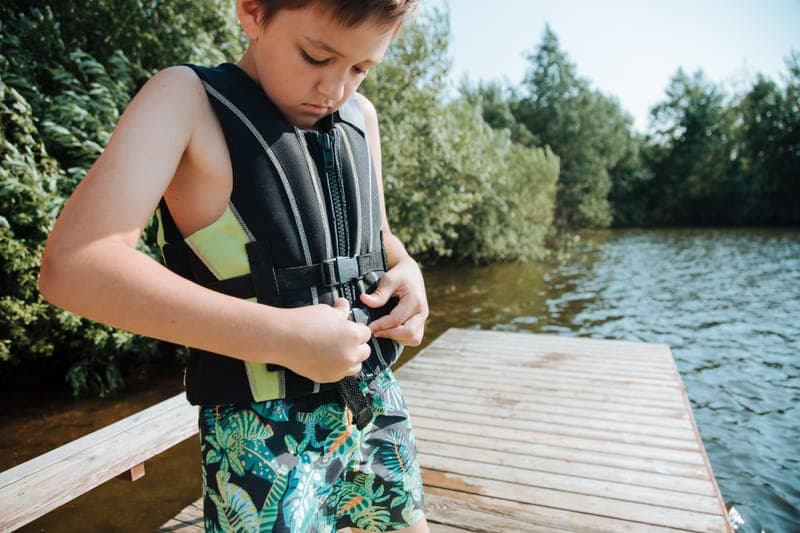
Stearns Puddle Jumper Deluxe
A USCG-approved Type III that children accept, because the arm floats leave the shoulders free.
Specifications
- USCG class
- Type III, approved
- Weight range
- 30-50 lbs
- Closure
- Single rear buckle
- Flotation
- Chest panel plus arm floats
What works
- Genuinely USCG-approved, unlike the water wings and arm bands it resembles
- The rear-only buckle is behind the child, so they cannot undo it themselves
- Children tolerate it for a whole afternoon, which is the property that actually keeps them in it
- Holds a swimmer upright and slightly forward, which suits pool and calm-lake play
What doesn’t
- Not designed to turn an unconscious wearer face-up — that is a Type I offshore jacket
- The upright-forward position teaches a vertical body posture that has to be unlearned in lessons
Who it’s for
A 30-50 lb child in a pool or on a calm lake shore, supervised at arm's length.
Bottom line
The most-worn kids' PFD in America for a reason. Check the printed USCG approval on the label, because look-alikes without it are everywhere.
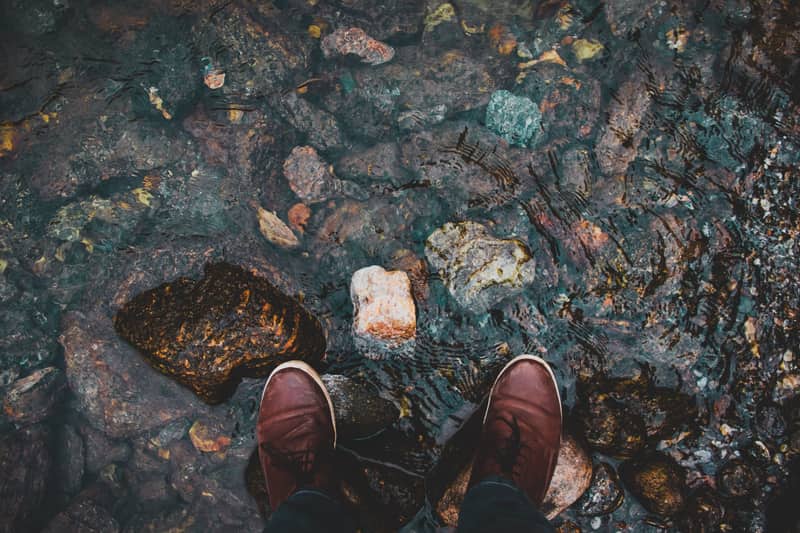
KEEN Newport H2
A closed-toe water sandal with a real rubber outsole — the only style that protects toes on a rocky shoreline.
Specifications
- Toe
- Closed, rubber bumper
- Outsole
- Non-marking rubber, lugged
- Closure
- Bungee lace
- Drainage
- Open side panels
What works
- The closed toe bumper is the feature — stubbed toes on submerged rocks are the actual injury at a lake
- Lugged rubber outsole grips wet rock and algae-covered boat ramps
- Bungee lace cinches once and stays, so it does not come off in mud
- Genuinely lasts long enough to hand down to a sibling
What doesn’t
- Heaviest option here and the slowest to dry
- Most expensive kids' water shoe in the category
Who it’s for
A child at a rocky, weedy or gravelly lake, or one who walks in and out of the water all day.
Bottom line
The lake pick. If the bottom is rock or the shore is gravel, nothing else in this list is adequate.
Intex River Run I Sport Lounge
A seated ring with a mesh bottom, backrest and cup holders — the cheapest genuinely comfortable float.
Specifications
- Capacity
- 1 adult
- Seat
- Mesh bottom, sit-in
- Cup holders
- 2
- Extras
- Backrest, grab rope, connector
What works
- Mesh bottom keeps you cool, which is the difference between an hour and ten minutes on a hot day
- Backrest means you can actually sit and relax rather than balance
- Connectors let several link together, so a group stays in one place
- Cheap and universally stocked
What doesn’t
- Vinyl seams are the failure point; a dock screw or a rock will end it
- Hard to get out of in deep water without tipping
Who it’s for
Adults drifting on a calm lake or a slow river, especially in groups.
Bottom line
The best value float on the water. Buy two; they are cheap and they puncture.
Questions
Frequently asked questions
What should I pack for a family lake day?
What do people always forget on a lake day?
How many towels do you need per person at a lake?
What should you do before letting kids into a lake?
Sources
Read next