Floats & Towables · Comparison
Towable Tube Safety
Speed, jacket fit and a spotter. Get those three right and the rest is detail.
The short answer
Tow children at 10-15 mph, slower for a first ride. Every rider wears a properly fitted USCG-approved life jacket with a leg or crotch strap, which is what stops the jacket riding up in a fall. A designated spotter watches the riders at all times, which most states require by law.
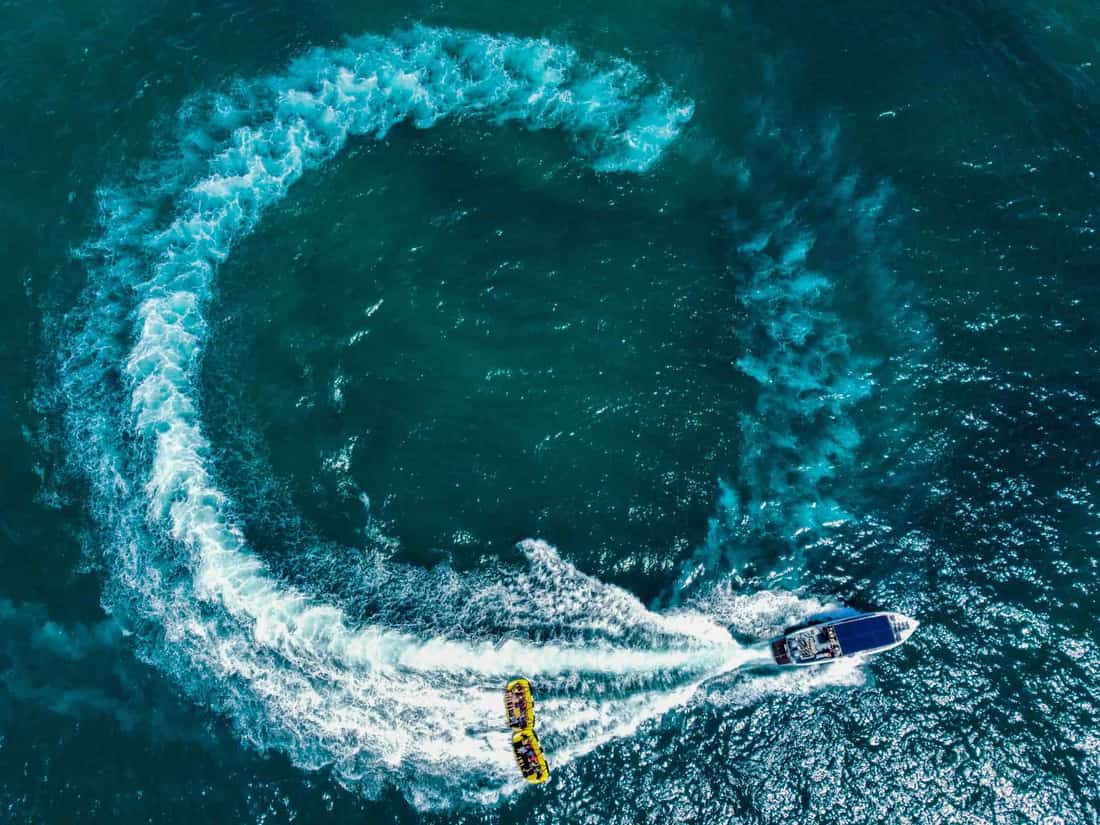
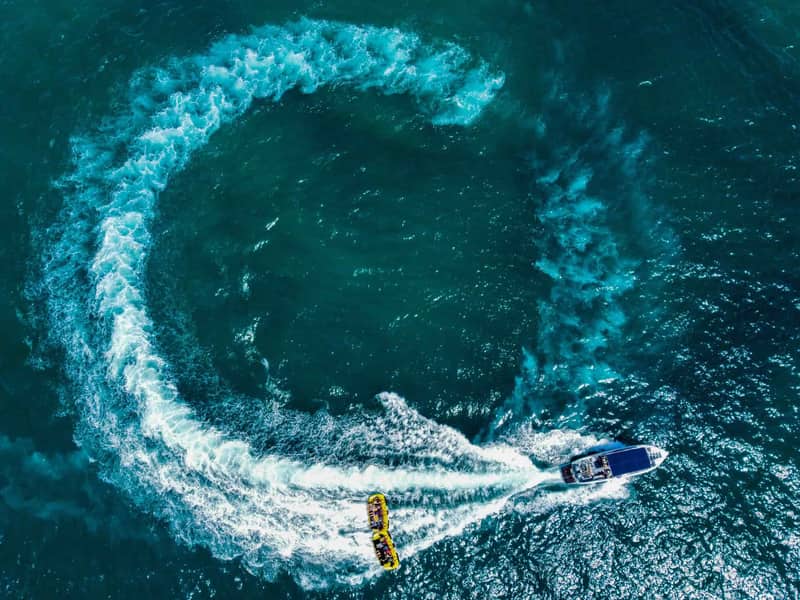
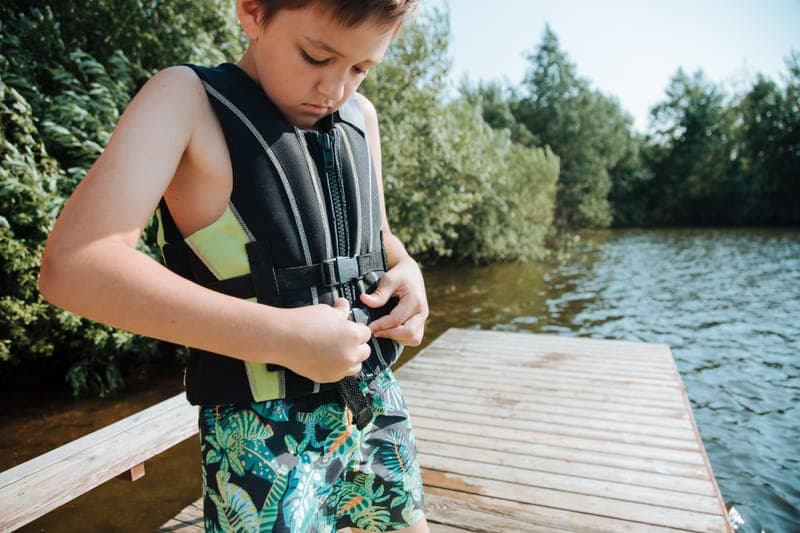
Photos on this page are licensed images that illustrate the category. They are not photographs of the specific products named, and no product image here is supplied by a manufacturer or retailer.
| Rider | Speed | Tube shape | Note |
|---|---|---|---|
| First ride, any age | 8-12 mph | Cockpit with backrest | Straight line, no whips |
| Children 6-9 | 10-15 mph | Deck or cockpit | Adult or sibling alongside |
| Children 10-12 | 12-18 mph | Deck | Gentle turns only |
| Teenagers | 15-20 mph | Low-profile deck or disc | Driver controls the whips, not the rider |
| Adults | Up to about 20-25 mph | Any | Manufacturer limits still apply |
Those are guidance figures, not legal limits, and the tube's own manufacturer guidance takes precedence. The principle underneath them is that the forces in a fall scale with speed, and a rider hitting water at 25 mph is in a very different situation from one hitting it at 12.
The three non-negotiables
1. A properly fitted approved life jacket, with a leg or crotch strap. The strap is what stops the jacket riding up over the head when a rider hits the water hard. A jacket without one is the wrong jacket for towing, whatever its rating. Fit it dry with the lift test — see life jacket sizing by weight.
2. A designated spotter. Someone whose only job is watching the riders and communicating with the driver. In most states this is a legal requirement rather than a suggestion, because the driver cannot watch the tube and the water ahead at the same time. Agree hand signals before you start: faster, slower, stop, rider down.
3. A rope rated for the rider count. Tow ropes carry a breaking-strength rating tied to how many riders the tube takes. An under-rated rope under load is a genuine hazard — it stores energy and releases it toward the boat. Match the rope to the tube, inspect it for fraying each season, and never knot a tow rope to shorten it.
Choose a safer setup if you are new to this
- Cockpit tube over deck tube for first-timers. The seat and backrest hold a rider in rather than requiring grip strength, which is what fails first on a child.
- Two riders including an adult, if the tube allows it. A nervous child with a parent alongside rides; the same child alone often does not.
- Padded handles with knuckle guards. Scraped knuckles are the most common injury and they end the afternoon.
- A straight-line tow for the first few runs. The whips and jumps come later, if at all.
- A rope length that keeps the tube out of the wake's roughest section, typically 50-60 feet for a family setup.
Driving the boat
- Take up the slack slowly before accelerating. A snatched rope is how riders come off at the start.
- Accelerate gradually to the target speed and hold it. Constant speed is far more comfortable than surging.
- Turn wide and gently. A tight turn slings the tube outside the wake at a much higher speed than the boat's, which is where the hardest falls happen.
- Watch for the tube starting to skip across the surface. That is the signal to slow down immediately.
- When a rider falls, throttle back and circle wide and slowly, approaching from downwind with the engine off or in neutral as you come alongside.
- Never reverse toward a person in the water.
Rules that vary and need checking
State law governs towing, and the requirements that differ most are: the minimum age for a towed rider, whether a spotter is mandatory and what age that spotter must be, mirror requirements in place of a spotter in some states, and permitted hours for towing — many states prohibit towing between sunset and sunrise.
Check the state you are boating in rather than the state you live in, and check before you launch rather than at the ramp. The Coast Guard's water sports safety guidance is a good starting point and state boating agencies publish the specifics.
Our picks for a safer setup
SportsStuff Big Mable
A padded, high-backed cockpit tube for two — the most secure-feeling seat in the category.
Specifications
- Riders
- 2
- Shape
- Cockpit with backrest
- Seating
- Padded, sit-in
- Cover
- Nylon
What works
- Backrest and deep seat mean a child is held in rather than hanging on, which converts refusals into rides
- Padded seating is comfortable enough for long, slow cruising
- Sits high, so riders stay noticeably drier than on a deck tube
- Also works as a lake lounger when it is not being towed
What doesn’t
- High profile catches wind and skips at speed, so it wants a slower tow
- Bulky to inflate, store and transport
Who it’s for
Children who are anxious about towing, or adults who want a comfortable cruise rather than airtime.
Bottom line
The confidence pick. If you want the ride to be gentle and the child to say yes, start here.
O'Brien Super Screamer
A deck tube that sits between approachable and exciting, which is exactly what a family with kids needs.
Specifications
- Riders
- 2
- Shape
- Deck (lie-down)
- Cover
- Nylon over bladder
- Valve
- Quick-inflate
What works
- Deck shape keeps riders low and flat, which is far less frightening for a first-timer than a cockpit tube
- EVA knuckle guards on the handles prevent the scraped knuckles that end rides early
- Nylon cover over the bladder is what makes a tube last more than one season
- Fits one adult and one child, so a nervous kid can ride with a parent
What doesn’t
- Deck riding position means you get hit by more spray than in a cockpit tube
- Two-rider capacity is limiting once you have three children
Who it’s for
A family towing children for the first time, or one child plus a parent.
Bottom line
The best first towable for a family. Every rider wears a properly fitted USCG-approved life jacket, and speed stays at 10-15 mph with kids aboard.
Stearns Youth Classic Series Vest
The plain nylon boating vest: three buckles, a leg strap, and enough flotation to be the one you tow behind a boat in.
Specifications
- USCG class
- Type III, approved
- Weight range
- 50-90 lbs
- Shell
- Durable nylon
- Closure
- 3 buckles plus leg strap
What works
- Leg strap is what stops a vest riding up over a child's head in a hard fall — do not buy a towing vest without one
- Nylon shell survives dock boards, boat carpet and a season of sun
- Three buckles let you tighten it properly at the chest and waist separately
- Cheap enough to buy one per child rather than sharing
What doesn’t
- Bulkier and hotter than a swim-focused vest, so kids take it off between rides
- Foam panels restrict arm movement, so it is poor for actual swimming
Who it’s for
A 50-90 lb child on a boat, on a towable tube, or on a dock.
Bottom line
The right jacket for boating and towing. For swimming, a Puddle Jumper or swim vest is more wearable.
The cockpit tube first, because it is the one that keeps a nervous rider aboard; the deck tube as the step on from it; and the youth vest because its leg strap is what makes it appropriate for towing. Full tube picks are in best towable tubes for kids.
Questions
Frequently asked questions
What is a safe speed to tow a tube with kids?
Is a spotter legally required for tubing?
What kind of life jacket do you need for tubing?
What is the safest towable tube shape?
Sources
Read next