
Roundup
Best Pool Floats (2026)
Six floats by purpose, with the vinyl-gauge rule that predicts how long each lasts.
Category
What survives a dock, what punctures on the first rock, and how to tow children safely.

This category splits into three things that get confused with each other: floats you drift on, mats you lie or stand on, and towables you get pulled behind a boat. They fail in different ways, they cost wildly different amounts, and buying the wrong one is the most common expensive mistake families make in lake gear.
The rule that governs almost all of it is material. Vinyl is cheap and punctures. Nylon-covered bladders survive a season of towing. Closed-cell foam cannot puncture at all, costs several times more, and needs somewhere to live. Match the material to where the thing will actually be used — a dock with exposed screws is a very different environment from a swimming pool.
Towables come with a safety requirement that is not optional: every rider wears a properly fitted, USCG-approved life jacket, and speeds stay low with children aboard. That is covered in detail in towable tube safety and in the life jackets hub.
Our picks
Roundups with a top pick, a cheaper pick and an upgrade.
Roundup
Six floats by purpose, with the vinyl-gauge rule that predicts how long each lasts.
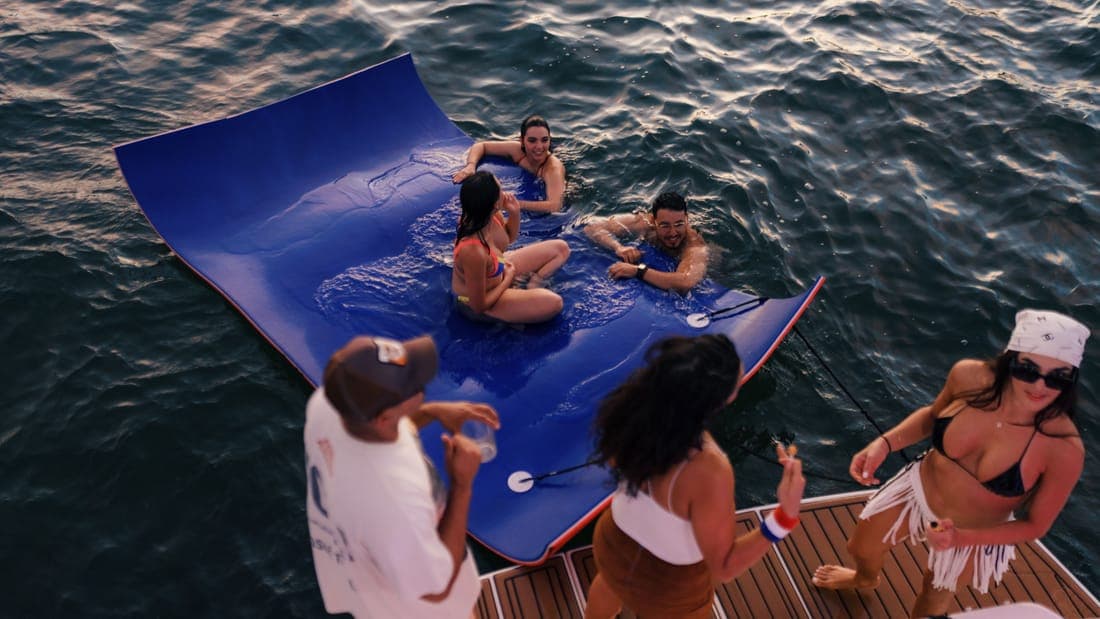
Roundup
Foam and inflatable mats compared, with real capacities and the size most families need.
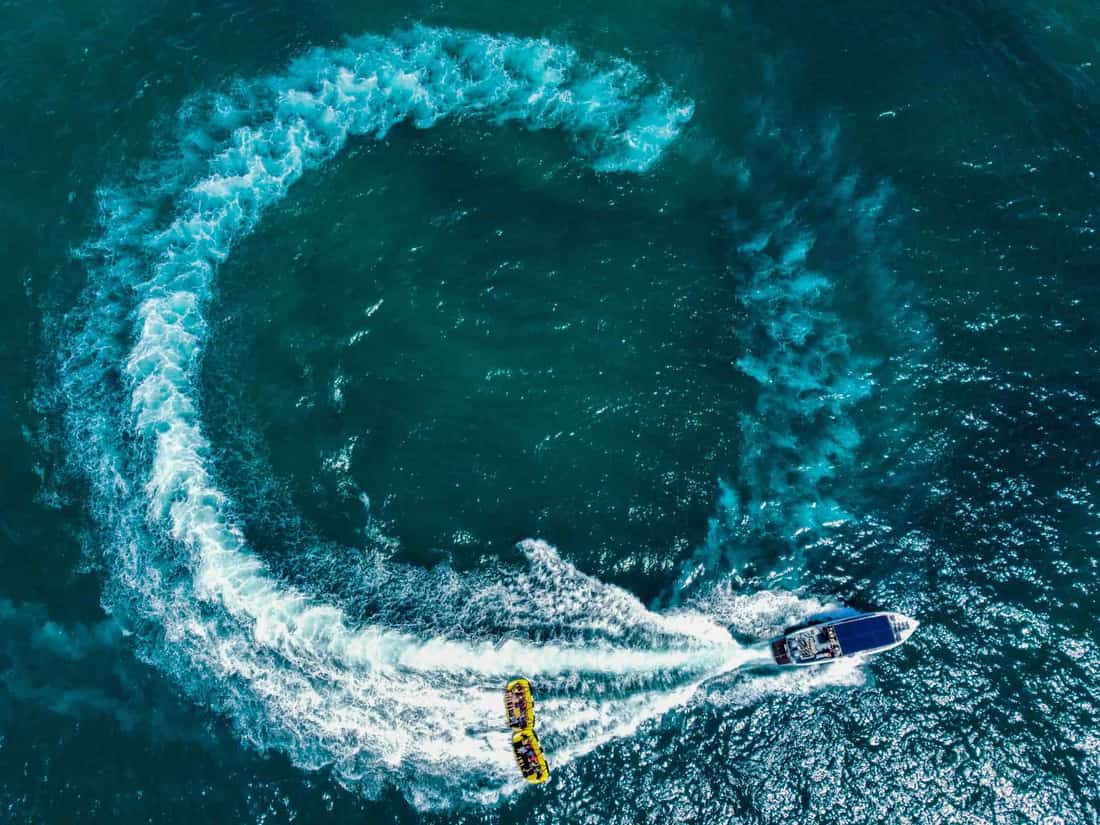
Roundup
Five towables by age and confidence, with tow speeds and the non-optional safety gear.
Roundup
The cheapest floats worth buying, what you give up, and the one upgrade worth making.
Roundup
Floats and coolers that actually keep drinks upright, including why tethered lids matter.
Photos on this page are licensed images that illustrate the category. They are not photographs of the specific products named, and no product image here is supplied by a manufacturer or retailer.
Straight comparisons
Decision tables for the choices people get stuck on.
Comparison
Tow speeds by age, jacket and rope requirements, spotter rules, and safer tube shapes.
Comparison
Why pool floats fail in a lake, and what construction actually survives open water.
Guides
Sizing, fit, care and the questions that come up most.
Guide
The six towable shapes in one line each, then which suits which rider.
Guide
Rider count, shape, cover, valve, rope and boat power — in the order that matters.
Guide
Storage, patching and inflation — the three things that decide whether a float sees a second summer.
Vinyl is what supermarket floats are made of. It is cheap, packs flat, and it will puncture — on gravel, on a dock board, on a dog's claws. Treat vinyl floats as consumable and buy them in multiples rather than buying one expensive one. A patch kit in the car is worth more than an upgrade.
Nylon-covered means a bladder inside a fabric shell, which is the standard for towable tubes. The number to look at is denier: 840-denier nylon is the durability tier that survives repeated seasons, and it is the difference between a tube that lasts five summers and one that splits in its second.
Closed-cell foam — the construction Rubber Dockie uses — cannot be punctured, needs no pump, and is ready the moment you arrive. It also weighs a lot, needs storage space, and costs several times an inflatable. It is the right buy if you have a dock or a cabin where it can live all season, and the wrong buy if you carry your gear to the water each time.
Deck tubes are lie-down designs. Riders stay low and flat, which is less frightening for a first-timer and easier to hold on to. Cockpit tubes have a seat and a backrest; riders sit in them, stay much drier, and feel held rather than clinging on — which is often what converts a nervous child into a willing one. Disc and chariot shapes are faster and more aggressive, and are for confident older kids and teens.
Rider count is worth paying for. A three-rider tube means all your children go at once rather than negotiating turns, and that changes the day more than any feature. Match it to your boat's pulling power: three riders on an underpowered boat never planes and the ride is dull.
If you are buying from scratch, the order that gets the most use per dollar is: one floating cooler, one float per person, then a mat, then a towable. The cooler sounds trivial and is the item that gets used every single outing — it is what stops somebody swimming back to shore every ten minutes.
Tether anything you care about. An unanchored float on an open lake moves surprisingly fast in light wind, and retrieving it is somebody's whole afternoon. Our lake day packing list covers the rest of the kit, and the budget guide works out what to buy first.
Questions
Start here
These two guides connect every category on the site — what to buy first when you are outfitting several people, and what to put in the bag before you leave.