Floats & Towables · Roundup
Best Lake Floats for Kids (2026)
Four floats sorted by age, plus the two lake-specific rules that do not apply in a pool.
The short answer
The Intex River Run I Sport Lounge is the pick for older children: a sit-in float with a mesh bottom that keeps a child in the seat rather than balanced on top of it. For younger children and for multiples, plain vinyl rings bought as a multipack are the sensible buy.
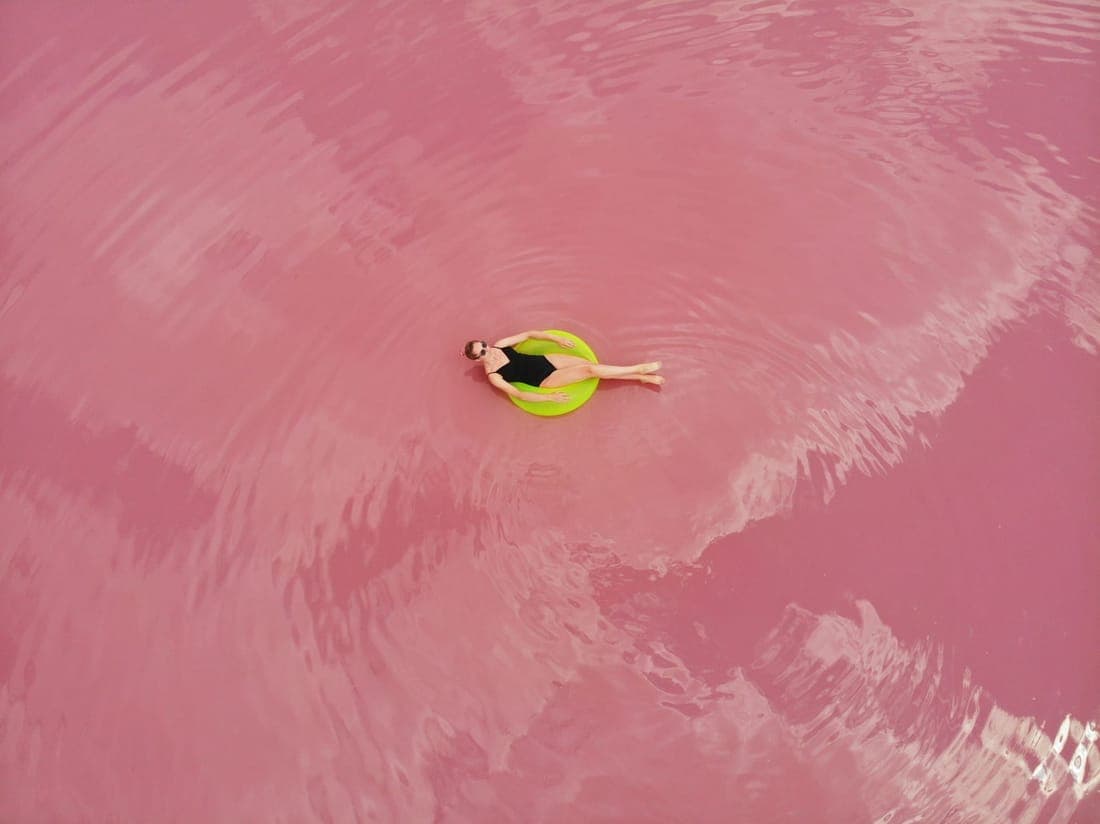
Product photos are the retailer’s own catalogue images, shown from the retailer’s servers and refreshed daily. Any other photo here is a licensed image that illustrates the category, not a photograph of the specific product named.
| # | Product | Best for | Capacity | Price |
|---|---|---|---|---|
| 1 | 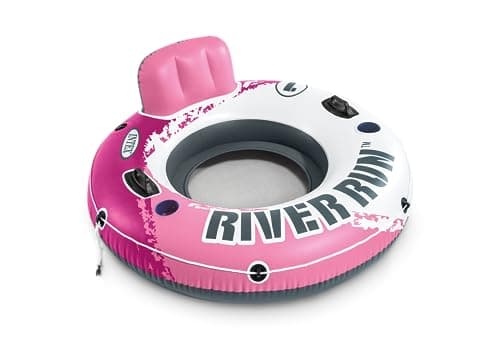 Top pick Intex River Run I Sport Lounge A seated ring with a mesh bottom, backrest and cup holders — the cheapest genuinely comfortable float. | Drifting, one adult | 1 adult | |
| 2 | Budget pick Intex Vinyl Swim Ring The plain inflatable ring. It floats, it costs almost nothing, and it will not survive the winter. | Cheapest float that works | 1 child or 1 adult by size | |
| 3 | Upgrade pick Rubber Dockie 9x6 Floating Water Mat The same puncture-proof foam construction at half the length — the version most families should actually buy. | Smaller families, easier storage | 9 x 6 ft | |
| 4 | 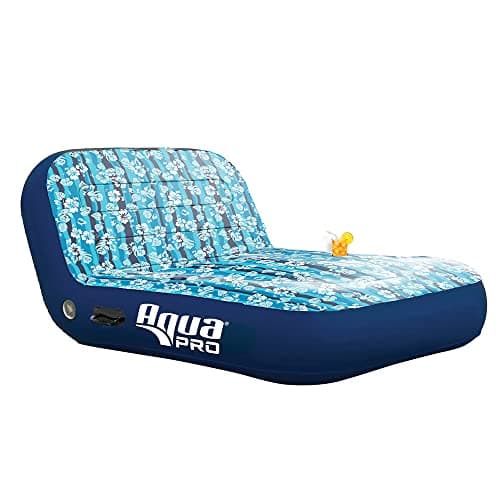 Also good Aqua Leisure Ultra Cushioned Comfort Lounge A thick-gauge cushioned lounger with a headrest and cup holders, built heavier than a supermarket float. | Comfort with cup holders | 1 adult |
A lake is not a pool, and it changes the buy
Two things make a lake different, and both of them point at the same decisions. The first is wind and drift: open water moves a float, and a shape that catches air moves fast. A child on a lounger can be fifty yards out before anyone looks up, which never happens in a pool because there is a wall.
The second is what the float lands on. Gravel, docks, submerged branches and dog claws all puncture thin vinyl, and there is no smooth pool deck to drag across. That pushes you either to the cheapest tier, where you treat floats as consumable, or to foam, where there is nothing to puncture.
The middle of the market — thick cushioned vinyl loungers — is still worth buying, but it is the tier that most rewards tethering and a bit of care about where you drag it. There is more on the difference in lake float vs pool float.
Depth is the third, quieter factor. In a pool a child who slides off a float stands up. In a lake the bottom drops away unpredictably, and the slide-off is the moment that matters. That is why sit-in shapes beat lie-on shapes for children who are not strong swimmers.
Intex River Run I Sport Lounge
A seated ring with a mesh bottom, backrest and cup holders — the cheapest genuinely comfortable float.
Specifications
- Capacity
- 1 adult
- Seat
- Mesh bottom, sit-in
- Cup holders
- 2
- Extras
- Backrest, grab rope, connector
What works
- Mesh bottom keeps you cool, which is the difference between an hour and ten minutes on a hot day
- Backrest means you can actually sit and relax rather than balance
- Connectors let several link together, so a group stays in one place
- Cheap and universally stocked
What doesn’t
- Vinyl seams are the failure point; a dock screw or a rock will end it
- Hard to get out of in deep water without tipping
Who it’s for
Adults drifting on a calm lake or a slow river, especially in groups.
Bottom line
The best value float on the water. Buy two; they are cheap and they puncture.
Intex Vinyl Swim Ring
The plain inflatable ring. It floats, it costs almost nothing, and it will not survive the winter.
Specifications
- Capacity
- 1 child or 1 adult by size
- Material
- Vinyl
- Sizes
- Several diameters
- Valve
- Standard
What works
- Cheapest way to get four children floating at once
- Packs completely flat, so a whole set fits in a bag
- Nothing to break beyond the seam
- Available at every supermarket in summer
What doesn’t
- Thin vinyl punctures on gravel, docks and dog claws
- No seat, no backrest, no cup holder — floating only
Who it’s for
A household outfitting several children who does not want to pay for gear that goes missing.
Bottom line
Buy these by the multipack and treat them as consumable. Spending more on a ring does not buy longer life.
Rubber Dockie 9x6 Floating Water Mat
The same puncture-proof foam construction at half the length — the version most families should actually buy.
Specifications
- Size
- 9 x 6 ft
- Capacity
- Approx. 3-4 adults / 750 lbs
- Construction
- Two-ply closed-cell foam, 1 3/8 in
- Shell
- Tuff-Hide membrane, Tear-Stop matrix
What works
- One adult can move and launch it, which the 18-footer does not allow
- Same foam construction, so it is equally puncture-proof
- Fits a family of four comfortably
- Stores rolled in a shed or a garage corner
What doesn’t
- Gets crowded quickly once guests arrive
- Still costs several times an inflatable mat
Who it’s for
A family of three to five with a lake spot but limited storage and no help carrying things.
Bottom line
The size to buy unless you know you regularly have eight people on the water.
Aqua Leisure Ultra Cushioned Comfort Lounge
A thick-gauge cushioned lounger with a headrest and cup holders, built heavier than a supermarket float.
Specifications
- Capacity
- 1 adult
- Material
- Heavy-gauge vinyl, cushioned
- Cup holders
- 2
- Features
- Headrest, backrest
What works
- Genuinely thicker vinyl than the budget tier, which is where float longevity comes from
- Cushioned surface is comfortable against skin over a long afternoon
- Headrest keeps your head out of the water while you actually relax
- Cup holders are molded rather than cut, so they hold shape
What doesn’t
- Heavier and slower to inflate than a plain ring
- Lounger shape catches wind and drifts fast on an open lake
Who it’s for
An adult who wants one float that lasts several summers rather than one per summer.
Bottom line
The middle of the float market and the right place to be. Tether it on open water or you will be swimming after it.
What to look for in a kids' lake float
A sit-in seat rather than a lie-on deck. A mesh-bottom float holds a child in a seated position with their legs in the water. It is harder to fall off, easier to get back onto, and far more stable when a wake arrives than lying on a flat surface.
A grab rope or a tether point. The single most useful feature on open water. Something to clip a line to means the float is where you left it, and a rope around the outside gives a child something to hold when they are getting back on.
Material matched to your shoreline. Rock and dock boards mean closed-cell foam or cheap replaceable vinyl. Sand and a soft bottom mean the cushioned vinyl tier is a sensible middle. Buying thick vinyl for a rocky shore is paying for durability the terrain will take back.
A bright color you can see. Visibility from shore and from a boat is a safety feature on open water. A float in a soft natural color is harder to spot at distance than a bright one, and distance is the thing you are managing.
Multiples, if you have multiples. Children do not share floats, and the argument is not worth the money saved. Two cheap rings beat one good lounger in a household with two children.
Which float by age
| Age / ability | Float type | What matters most |
|---|---|---|
| Under 1 | Nothing on open water | A baby float belongs in a pool, supervised |
| 1-3, non-swimmer | Held by an adult, in a life jacket | Contact supervision, not equipment |
| 4-6, learning | Sit-in ring, tethered | Legs in the water, something to hold |
| 7-10, competent | Sit-in lounge or mesh-bottom float | Can climb back on unassisted |
| 10+, strong swimmer | Lounger or foam mat | Stability and a place for friends |
| Several children at once | Vinyl rings, multipack | Cheap, replaceable, no arguments |
The foam mat question
A closed-cell foam mat is the one thing in this category that children use the whole day: they lie on it, push each other off it, use it as a swimming destination and as a base to climb back onto. It is puncture-proof, it does not deflate, and it lasts years rather than a season.
The objections are real: it costs several times an inflatable, and it is heavy. The smaller size is the one most families should buy — one adult can carry and launch it, which the big one does not allow. It also has to be anchored, because a large flat mat moves with the wind like everything else.
If you have a regular lake spot and more than one child, it is the purchase that replaces three seasons of inflatables. If you visit a lake twice a summer, it is not. The full comparison is in best lake floating mats.
Rules that stop a float becoming an incident
- A life jacket under the fun, every time. For any child who is not a strong swimmer, the float is a toy worn on top of real flotation. See best Coast Guard approved life jackets for kids.
- Tether anything that drifts. A line to a dock, a buoy or an anchor. Wind over open water moves a float faster than a child can swim against it.
- No floats where boats run. Stay inside a marked swimming area or close to your own shoreline, and keep floats bright and visible.
- Check the air before each outing. A float that has lost half its air overnight tips when a child climbs on, which is exactly when stability matters.
- Bring them in at the end of the day. A float left out overnight either leaves on the wind or sits in the sun; both shorten its life and the first one puts it in a channel.
Floats for babies are a separate decision with separate rules, and the short answer is that most of them are the wrong product for open water — see are pool floats safe for babies. The care and off-season storage that doubles a float's life is in float care and storage.
Questions
Frequently asked questions
What are the best lake floats for kids?
Are lake floats safe for kids?
What age can a child use a lake float alone?
Do lake floats pop easily?
How do you stop a lake float from drifting away?
Read next