Life Jackets & Safety · Roundup
Best Coast Guard Approved Life Jackets for Kids (2026)
Five approved jackets by weight range, and the label check that separates them from swim aids.
The short answer
For a 30-50 lb child the Stearns Puddle Jumper Deluxe is the pick: genuinely USCG-approved, and comfortable enough that children keep it on. For 50-90 lbs on a boat or a towable, the Stearns Youth Classic Series Vest with its leg strap is the right choice.
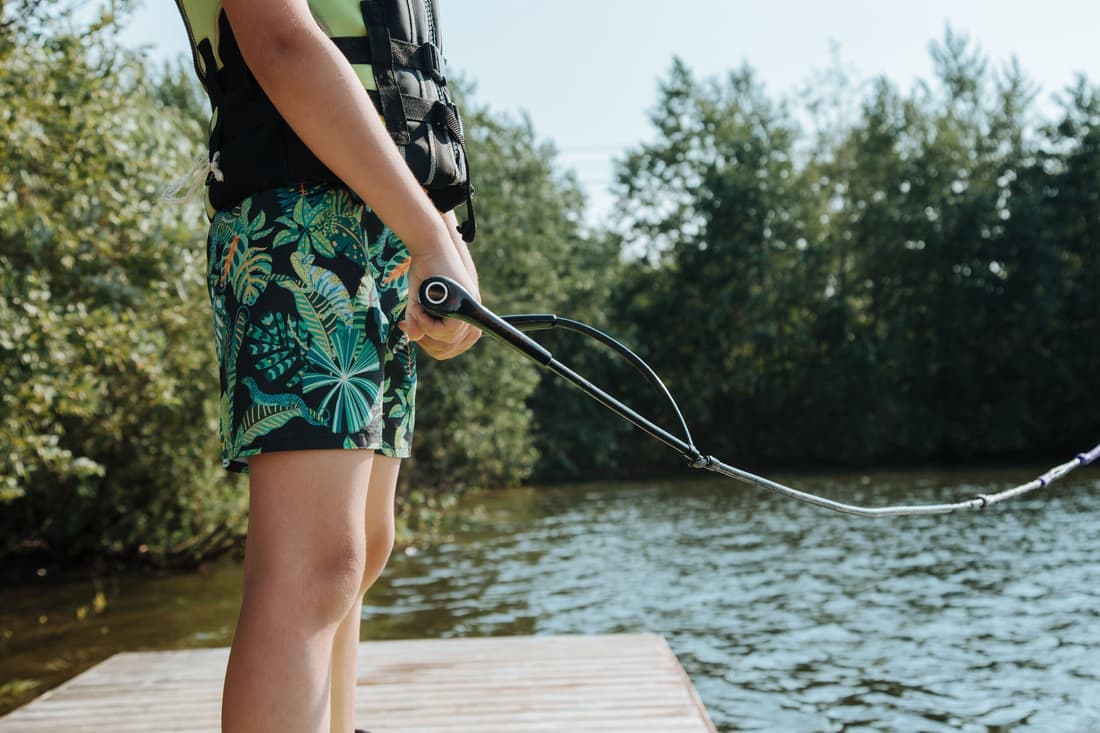
Photos on this page are licensed images that illustrate the category. They are not photographs of the specific products named, and no product image here is supplied by a manufacturer or retailer.
| # | Product | Best for | USCG class | Price |
|---|---|---|---|---|
| 1 | 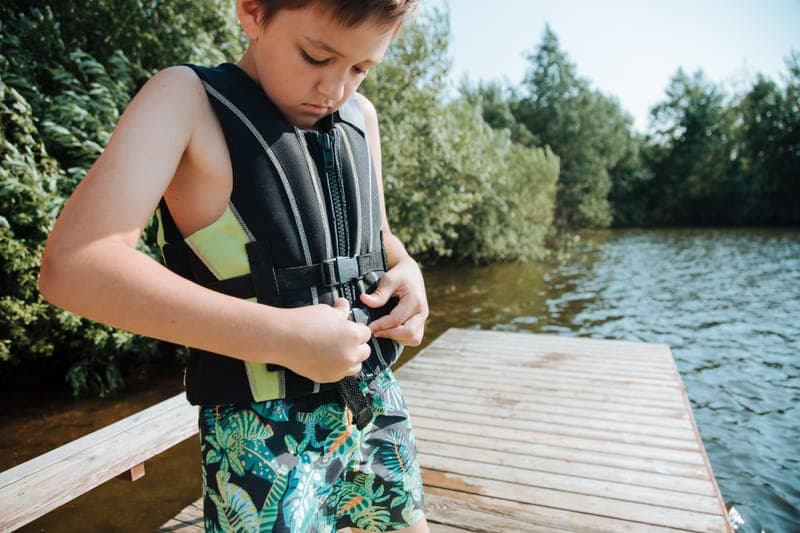 Top pick Stearns Puddle Jumper Deluxe A USCG-approved Type III that children accept, because the arm floats leave the shoulders free. | 30-50 lbs, learning to swim | Type III, approved | |
| 2 | Budget pick Stearns Youth Classic Series Vest The plain nylon boating vest: three buckles, a leg strap, and enough flotation to be the one you tow behind a boat in. | 50-90 lbs, boating | Type III, approved | |
| 3 | Upgrade pick Mustang Survival Lil' Legends 70 A softer, better-shaped child vest from a marine-safety brand — noticeably more comfortable than a foam-panel jacket. | Long days on a boat | Type III, approved | |
| 4 | 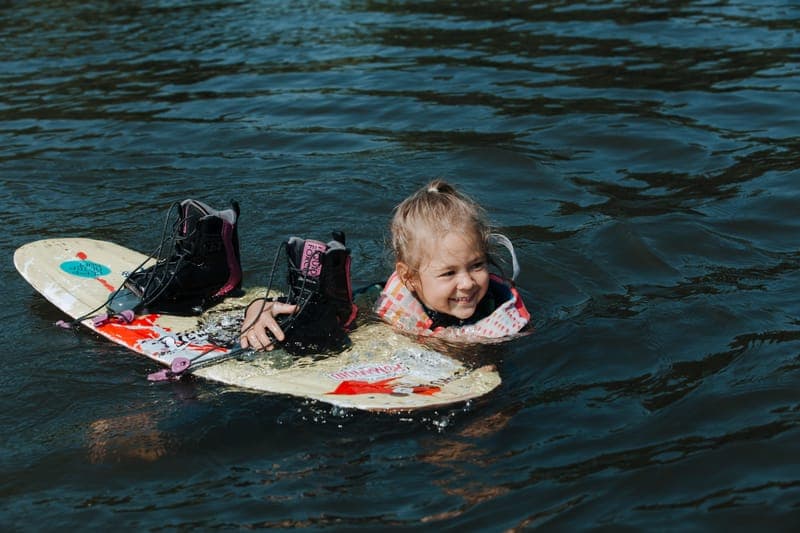 Also good Stearns Infant Classic Series Vest An infant vest with the two features that matter at this size: a head pillow and a crotch strap. | Under 30 lbs | Type II, approved | |
| 5 | Also good Stohlquist Nemo Infant PFD A better-cut infant PFD — the flotation sits where it does not press on the belly, so babies tolerate it longer. | Infants who fight a vest | Type II, approved |
Before anything else: read the label
This is the only category on this site where a wrong purchase is a safety issue rather than a money one, so we lead with the check rather than the picks. A genuine life jacket carries a printed US Coast Guard approval statement and an approval number on the inside label, along with the weight range it is certified for.
If that text is not there, the product is a swim aid. Arm bands, water wings, float suits and a great many puddle-jumper look-alikes are sold on the same shelf as approved jackets and look broadly similar. They are not approved, they do not satisfy boating law, and they do not provide the flotation an approved jacket does.
Every jacket recommended below carries that approval. Two products that families often consider alongside them — the Speedo Begin to Swim vest and the SwimWays Sea Squirts — do not, and we cover why in life jacket vs swim vest.
Stearns Puddle Jumper Deluxe
A USCG-approved Type III that children accept, because the arm floats leave the shoulders free.
Specifications
- USCG class
- Type III, approved
- Weight range
- 30-50 lbs
- Closure
- Single rear buckle
- Flotation
- Chest panel plus arm floats
What works
- Genuinely USCG-approved, unlike the water wings and arm bands it resembles
- The rear-only buckle is behind the child, so they cannot undo it themselves
- Children tolerate it for a whole afternoon, which is the property that actually keeps them in it
- Holds a swimmer upright and slightly forward, which suits pool and calm-lake play
What doesn’t
- Not designed to turn an unconscious wearer face-up — that is a Type I offshore jacket
- The upright-forward position teaches a vertical body posture that has to be unlearned in lessons
Who it’s for
A 30-50 lb child in a pool or on a calm lake shore, supervised at arm's length.
Bottom line
The most-worn kids' PFD in America for a reason. Check the printed USCG approval on the label, because look-alikes without it are everywhere.
Stearns Youth Classic Series Vest
The plain nylon boating vest: three buckles, a leg strap, and enough flotation to be the one you tow behind a boat in.
Specifications
- USCG class
- Type III, approved
- Weight range
- 50-90 lbs
- Shell
- Durable nylon
- Closure
- 3 buckles plus leg strap
What works
- Leg strap is what stops a vest riding up over a child's head in a hard fall — do not buy a towing vest without one
- Nylon shell survives dock boards, boat carpet and a season of sun
- Three buckles let you tighten it properly at the chest and waist separately
- Cheap enough to buy one per child rather than sharing
What doesn’t
- Bulkier and hotter than a swim-focused vest, so kids take it off between rides
- Foam panels restrict arm movement, so it is poor for actual swimming
Who it’s for
A 50-90 lb child on a boat, on a towable tube, or on a dock.
Bottom line
The right jacket for boating and towing. For swimming, a Puddle Jumper or swim vest is more wearable.
Mustang Survival Lil' Legends 70
A softer, better-shaped child vest from a marine-safety brand — noticeably more comfortable than a foam-panel jacket.
Specifications
- USCG class
- Type III, approved
- Weight range
- 30-50 lbs and 50-90 lbs options
- Shell
- Soft, segmented foam
- Closure
- Buckles plus crotch strap
What works
- Segmented foam bends with the body instead of holding a child in a rigid block
- Made by a company whose main business is commercial marine survival gear
- Crotch strap and a collar grab handle both included
- Comfortable enough for a full day out, which is what keeps it on
What doesn’t
- Two to three times the price of the basic Stearns vest
- Sizing runs slim; a stocky child may need the next band up
Who it’s for
A family that spends whole days on the water and has lost the argument about wearing the cheap vest.
Bottom line
Worth it if your child takes the vest off every twenty minutes. Otherwise the Stearns Classic is the same safety rating for far less.
Stearns Infant Classic Series Vest
An infant vest with the two features that matter at this size: a head pillow and a crotch strap.
Specifications
- USCG class
- Type II, approved
- Weight range
- Under 30 lbs
- Head support
- Flotation collar
- Closure
- Buckles plus crotch strap
What works
- The flotation collar supports an infant's head, which is the whole point at this weight
- Crotch strap stops the vest lifting off a small body in water
- Grab handle at the collar lets an adult lift the child straight out
- Type II turns most wearers face-up, which an infant cannot do for themselves
What doesn’t
- Bulky and warm, and most infants object to it initially
- A vest is never a substitute for arm's-length supervision at this age
Who it’s for
A baby or small toddler under 30 lbs on or near a boat.
Bottom line
Required kit if an infant is going on the water. Fit it dry, on land, and lift by the collar handle to check it does not slip off.
Stohlquist Nemo Infant PFD
A better-cut infant PFD — the flotation sits where it does not press on the belly, so babies tolerate it longer.
Specifications
- USCG class
- Type II, approved
- Weight range
- Under 30 lbs
- Head support
- Oversized collar float
- Closure
- Zip, buckles, crotch strap
What works
- Flotation is distributed away from the abdomen, which is why it is more comfortable sitting down
- Oversized collar gives more reliable head support than a thin pillow
- Zip plus buckles is genuinely quicker to fit on a wriggling baby
- Grab loop on the collar
What doesn’t
- Costs noticeably more than the basic Stearns infant vest
- Harder to find in stock, especially mid-season
Who it’s for
Families on the water often with an infant who has already refused a basic vest.
Bottom line
The upgrade pick for infants. Both are USCG Type II; this one is the one a baby will actually sit in.
What to look for in a kids' life jacket
The weight range, matched properly. Size by weight, not age. A jacket certified for 30-50 lbs on a 25 lb child will lift over their head in the water, because the flotation is calibrated for a heavier body. This is the single most common fitting error.
A crotch or leg strap. Not optional for children, and non-negotiable for towing. It is the thing that stops the jacket riding up over the head in a hard fall. A jacket without one should not be used behind a boat.
A grab handle at the collar, on anything for an infant or small toddler. It lets an adult lift the child straight out of the water, and it is also how you run the lift test described below.
Head support, for under 30 lbs. An infant jacket needs a flotation collar behind the head — an infant cannot hold their own head clear and the collar does it for them.
Comfort, which is a safety feature. The Coast Guard's own message is that jackets only work when worn. A cheap jacket a child removes every twenty minutes protects them less than a more comfortable one they keep on, and that is the honest case for the upgrade pick above.
The lift test: fit it dry, before you go
- Put the jacket on the child on land and fasten every buckle, zip and strap, including the crotch or leg strap.
- Tighten the straps so the jacket is snug at the chest and waist.
- Grip the jacket at the shoulders and lift the child straight up.
- Watch the jacket. If it rises past their ears, or their chin slips down inside the opening, it is too big.
- Tighten and retest. If it still lifts, it is the wrong size — go down a weight band.
Thirty seconds, and it is the check almost everybody skips. Full sizing detail in life jacket sizing by weight.
How much should you spend?
Less than you might think. A basic approved nylon vest is genuinely cheap and carries exactly the same USCG rating as a jacket costing three times as much. On safety alone, the cheap one is sufficient — approval is approval.
What more money buys is wearability: segmented foam that bends with the body, ventilation, better strap adjustment. That translates into a child who keeps the jacket on for a whole day rather than taking it off between rides, which is a real safety gain even though the rating is identical. Whether it is worth it depends entirely on whether your child currently keeps the cheap one on.
One thing not to economize on: buy one per child rather than sharing between siblings. Weight bands do not overlap enough for a shared jacket to fit both properly.
Will it last a second summer?
The jacket will. A nylon-shelled foam vest stored out of the sun lasts many seasons, and this is one of the few categories where buying for durability makes sense. What ends its useful life is the child growing out of the weight band, which for a young child happens in one or two seasons.
Check it before every season. Squeeze the foam panels for hard or crumbling spots, pull each strap firmly to test the stitching, and check the buckles latch cleanly. Foam that has gone stiff or a strap that has frayed at a buckle means the jacket is finished, whatever it looks like from outside. And re-run the lift test each spring — a child who grew over winter may have moved out of the band.
Questions
Frequently asked questions
How do I know if a kids' life jacket is Coast Guard approved?
What size life jacket does a 40 lb child need?
Does a kids' life jacket need a crotch strap?
How long do life jackets last?
Do children need to wear life jackets on a boat?
Sources
Read next