Life Jackets & Safety · Comparison
Puddle Jumper vs Life Jacket
The brand-name Puddle Jumper is approved. Most things that look like one are not.
The short answer
The Stearns Puddle Jumper is a genuine USCG-approved Type III device, and its label says so. Many similar-looking arm-float products are not approved at all. An approved Puddle Jumper is fine for pool and calm-lake play; a traditional vest is the better choice for boating and towing.
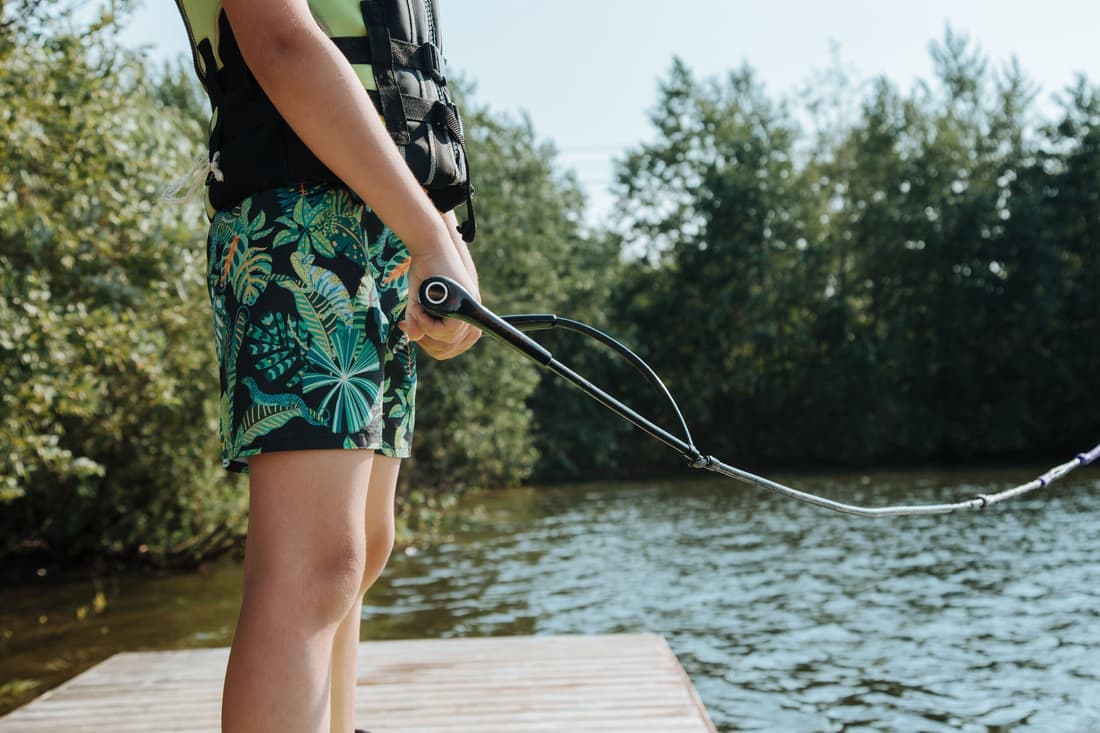
Photos on this page are licensed images that illustrate the category. They are not photographs of the specific products named, and no product image here is supplied by a manufacturer or retailer.
| Stearns Puddle Jumper | Traditional youth vest | |
|---|---|---|
| USCG approved | Yes — Type III (check the label) | Yes — Type II or III |
| Weight range | 30-50 lbs | Bands from under 30 lbs to 90 lbs |
| Flotation | Chest panel plus arm floats | Front and back foam panels |
| Closure | Single rear buckle, out of reach | 3 buckles plus leg or crotch strap |
| Leg / crotch strap | No | Yes on most |
| Body position in water | Upright, tilted slightly forward | Upright, more vertical |
| Arm movement | Free at the shoulder | Restricted by foam panels |
| Right for towing behind a boat | No — no leg strap | Yes |
| Right for pool and calm shore | Yes | Yes, but hotter and bulkier |
| How long children keep it on | Long — this is its real advantage | Shorter |
The label is the whole question
The reason this comparison exists is a genuine confusion, and it is not the parents' fault. Puddle Jumper is a brand name, owned by Stearns, and the product carries a printed US Coast Guard approval. But the shape has been widely copied, and the shelf next to it is full of arm-float products that look almost identical and carry no approval at all.
So the question is never really puddle jumper versus life jacket. It is approved versus not approved, and the answer is printed on the inside label of the thing in your hand. Look for the Coast Guard approval statement and the weight range. If they are absent, the product is a toy or a swim aid.
Choose an approved Puddle Jumper if...
- Your child is 30-50 lbs and the swimming is in a pool or at a calm lake shore.
- The problem you are solving is a child who takes a traditional vest off. This is its real advantage — arms free at the shoulder, single rear buckle, and children tolerate it for hours.
- You want a closure a child cannot undo themselves. The rear-only buckle is genuinely out of reach.
- You are supervising at arm's length, which is the condition under which it is designed to be used.
Choose a traditional vest if...
- There is a boat involved. A leg or crotch strap matters here and the Puddle Jumper does not have one.
- The child is being towed on a tube. Same reason, more emphatically — see towable tube safety.
- The child is under 30 lbs and needs head support, which means an infant vest with a flotation collar.
- The child is over 50 lbs, which is above the Puddle Jumper's band.
- You want the higher flotation and face-up turning tendency of a Type II design.
The body-position trade-off worth knowing
An arm-float design holds a child upright and tilted slightly forward, with the arms out. It is stable and children like it. It also teaches a vertical body posture, which is the opposite of the horizontal position swim lessons are trying to establish, and swim instructors will often say so.
That is not a safety objection — it is a learning one, and it matters if a child is in lessons. The usual resolution is to use an approved jacket for safety and a swim vest or nothing at all for supervised practice, rather than trying to make one product do both jobs.
Our picks
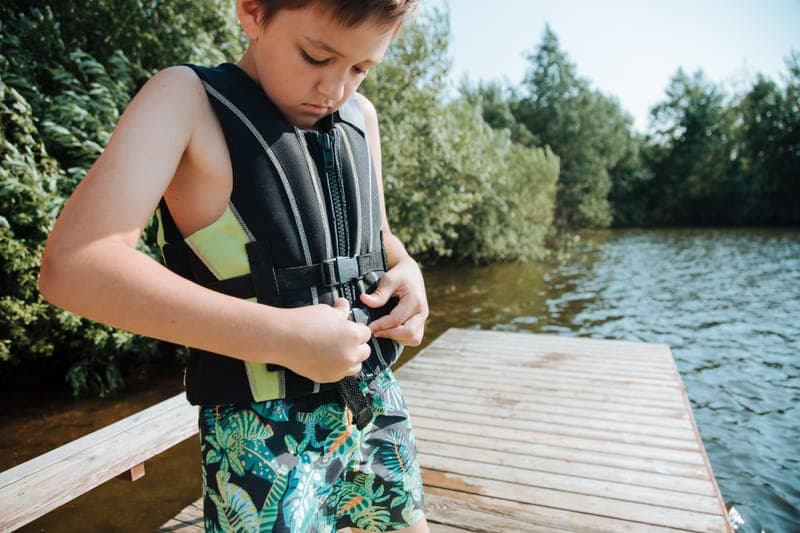
Stearns Puddle Jumper Deluxe
A USCG-approved Type III that children accept, because the arm floats leave the shoulders free.
Specifications
- USCG class
- Type III, approved
- Weight range
- 30-50 lbs
- Closure
- Single rear buckle
- Flotation
- Chest panel plus arm floats
What works
- Genuinely USCG-approved, unlike the water wings and arm bands it resembles
- The rear-only buckle is behind the child, so they cannot undo it themselves
- Children tolerate it for a whole afternoon, which is the property that actually keeps them in it
- Holds a swimmer upright and slightly forward, which suits pool and calm-lake play
What doesn’t
- Not designed to turn an unconscious wearer face-up — that is a Type I offshore jacket
- The upright-forward position teaches a vertical body posture that has to be unlearned in lessons
Who it’s for
A 30-50 lb child in a pool or on a calm lake shore, supervised at arm's length.
Bottom line
The most-worn kids' PFD in America for a reason. Check the printed USCG approval on the label, because look-alikes without it are everywhere.
Stearns Youth Classic Series Vest
The plain nylon boating vest: three buckles, a leg strap, and enough flotation to be the one you tow behind a boat in.
Specifications
- USCG class
- Type III, approved
- Weight range
- 50-90 lbs
- Shell
- Durable nylon
- Closure
- 3 buckles plus leg strap
What works
- Leg strap is what stops a vest riding up over a child's head in a hard fall — do not buy a towing vest without one
- Nylon shell survives dock boards, boat carpet and a season of sun
- Three buckles let you tighten it properly at the chest and waist separately
- Cheap enough to buy one per child rather than sharing
What doesn’t
- Bulkier and hotter than a swim-focused vest, so kids take it off between rides
- Foam panels restrict arm movement, so it is poor for actual swimming
Who it’s for
A 50-90 lb child on a boat, on a towable tube, or on a dock.
Bottom line
The right jacket for boating and towing. For swimming, a Puddle Jumper or swim vest is more wearable.
Mustang Survival Lil' Legends 70
A softer, better-shaped child vest from a marine-safety brand — noticeably more comfortable than a foam-panel jacket.
Specifications
- USCG class
- Type III, approved
- Weight range
- 30-50 lbs and 50-90 lbs options
- Shell
- Soft, segmented foam
- Closure
- Buckles plus crotch strap
What works
- Segmented foam bends with the body instead of holding a child in a rigid block
- Made by a company whose main business is commercial marine survival gear
- Crotch strap and a collar grab handle both included
- Comfortable enough for a full day out, which is what keeps it on
What doesn’t
- Two to three times the price of the basic Stearns vest
- Sizing runs slim; a stocky child may need the next band up
Who it’s for
A family that spends whole days on the water and has lost the argument about wearing the cheap vest.
Bottom line
Worth it if your child takes the vest off every twenty minutes. Otherwise the Stearns Classic is the same safety rating for far less.
Questions
Frequently asked questions
Is a puddle jumper Coast Guard approved?
Can you use a puddle jumper on a boat?
Is a puddle jumper safe for a 2 year old?
Do swim instructors recommend puddle jumpers?
Sources
Read next