Life Jackets & Safety · Guide
Life Jacket Sizing by Weight
Weight bands are the starting point. The lift test is the answer.
The short answer
Life jackets are sized by the wearer's weight, printed on the inside label. The bands are: infant under 30 lbs, child 30-50 lbs, youth 50-90 lbs, and adult over 90 lbs. Then verify fit with the lift test — fasten everything and lift by the shoulders; the jacket must not rise past the ears.
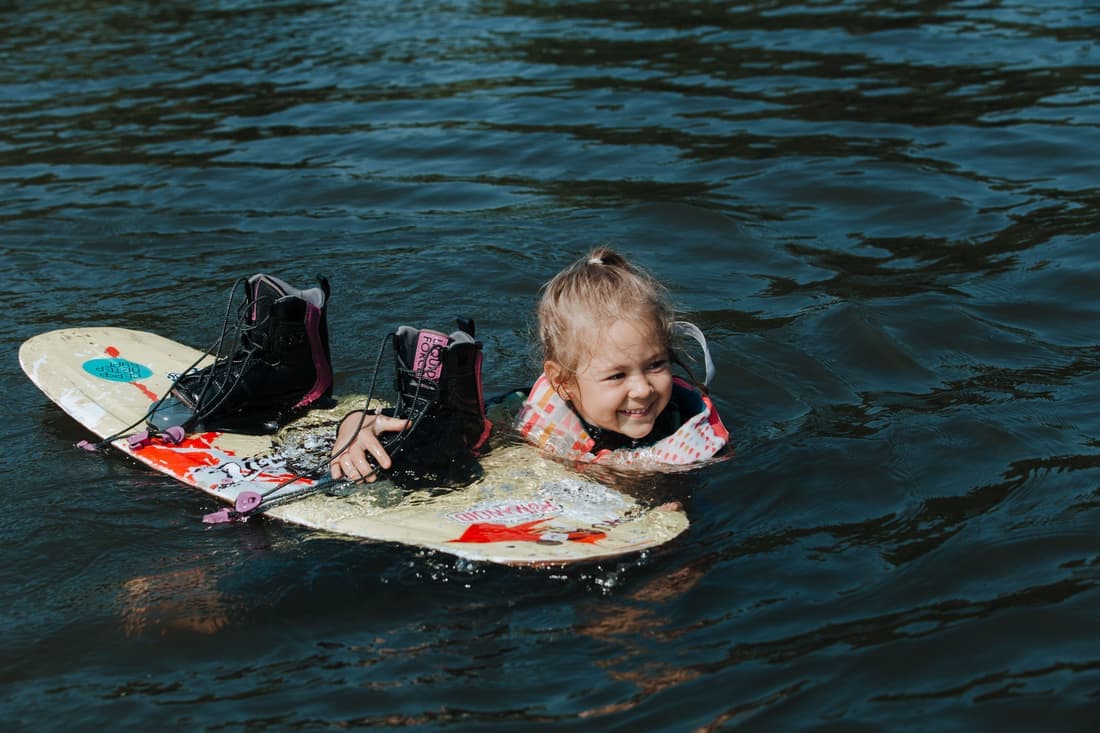
Photos on this page are licensed images that illustrate the category. They are not photographs of the specific products named, and no product image here is supplied by a manufacturer or retailer.
The weight bands
| Band | Weight | Typical age | Required features |
|---|---|---|---|
| Infant | Under 30 lbs | Birth to about 2 | Flotation collar, crotch strap, grab handle |
| Child | 30-50 lbs | About 2 to 6 | Crotch strap; rear closure is useful |
| Youth | 50-90 lbs | About 6 to 12 | Leg strap for towing; multiple buckles |
| Adult | Over 90 lbs | 12 and up | Chest sizing, adjustment points |
| Adult oversize | Over 90 lbs, larger chest | Adult | Check chest measurement as well as weight |
Weight, not age. The age column above is context, not a specification. A small six-year-old may still be in the child band and a large five-year-old may already be in youth. Put the child on a set of scales rather than estimating, because the failure mode of an oversized jacket is that it lifts off the body.
For adults, weight sets the band and chest measurement sets the fit within it. A jacket can be correct on weight and still not close properly on the chest, which is why adult vests have size ranges rather than a single universal size in the better lines.
The lift test
- Fit the jacket on land, with the wearer dry and calm.
- Fasten every buckle, zip and strap, including the crotch or leg strap.
- Tighten so it is snug at the chest and waist — you should not be able to get more than a flat hand between the jacket and the chest.
- Grip the jacket at both shoulders and lift straight up.
- The jacket must not rise past the ears, and the chin must not slip down inside the neck opening.
- If it lifts, tighten and retest. If it still lifts at full tightness, it is too big — go down a band.
For an infant jacket, lift by the collar grab handle instead of the shoulders. That is what the handle is for, and it is also how you would actually lift the baby out of the water.
Adults: weight sets the band, chest sets the fit
Adult jackets carry a weight minimum — commonly 90 lbs and up — and then a chest size range within that. The weight figure tells you the jacket has enough buoyancy for a body that size; the chest range tells you whether it will actually close and stay closed. Both have to be right.
Measure the chest around the fullest part, over the clothing you would actually wear on the water rather than bare-chested. Then check the jacket closes with the straps at roughly the middle of their adjustment, not at the end of it. A jacket fastened at maximum extension has no room left for a cool morning over a fleece, and one fastened at minimum will gape.
Universal-fit adult vests are the compromise: one wide chest range, adjusted by side straps. They satisfy the legal requirement and they fit nobody especially well, which is why they are the right purchase for spares and the wrong purchase for the jacket you personally wear all day.
Fitting over a rash guard or a wetsuit
Neoprene changes the fit and it also changes the physics. A wetsuit is buoyant, so a jacket fitted snugly over bare skin will be looser in the water once the suit is compressed at depth, and conversely a jacket fitted over a thick suit will be slack when worn without it.
Practical rule: fit the jacket wearing what you will actually wear. For a child in a rash guard that makes very little difference. For an early-season swimmer in a 3/2mm wetsuit it makes a real one, and it is worth re-running the lift test in the combination you plan to use.
Do not size up to accommodate a layer you might add later. An oversized jacket fails by riding up, which is the one failure mode that matters, and a slightly snug jacket over a thinner layer is the safer error.
When a child falls between two bands
This is common and the answer is consistent: go down, not up. A jacket at the top of a smaller band fits snugly and will not lift. A jacket at the bottom of a larger band has flotation calibrated for a heavier body and slack straps, and in water it rides up over the head — which is the exact failure the test above is designed to catch.
The temptation to size up for growth is understandable and it is the wrong instinct here. Unlike a swimsuit, a jacket that is too big does not merely fit badly, it fails at its job. If the child is close to outgrowing the smaller band, buy the smaller one anyway and replace it when they pass the threshold.
Checking fit in the water
Once the dry test passes, check it in shallow water with an adult holding on. A correctly fitted jacket keeps the chin and ears clear of the surface and the wearer does not have to work at it. If the jacket pushes up into the chin, or the child has to tilt their head back to keep their mouth clear, it is too big or wrongly positioned.
Do this at the start of each season rather than on the first outing of a trip. Children grow over winter, and a jacket that fit in September may be a band out by June.
What we recommend
Weigh the child, buy to the band, run the lift test before you leave the house, and repeat the test every spring. That is the whole process, it takes a few minutes, and it catches the problem that most families only discover in the water.
Picks by band are in best toddler life jackets for under 30 lbs, best kids' life jackets for 30-90 lbs, and best adult life jackets above that.
Our picks
The four weight bands in the table, one approved jacket each. Buy to the band, then run the lift test before you leave the house -- the band gets you the right jacket and the test confirms it fits this particular child.
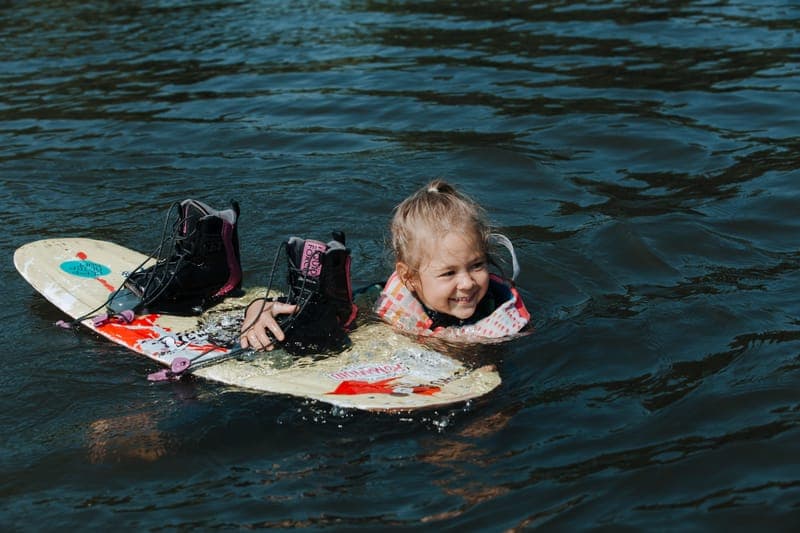
Stearns Infant Classic Series Vest
An infant vest with the two features that matter at this size: a head pillow and a crotch strap.
Specifications
- USCG class
- Type II, approved
- Weight range
- Under 30 lbs
- Head support
- Flotation collar
- Closure
- Buckles plus crotch strap
What works
- The flotation collar supports an infant's head, which is the whole point at this weight
- Crotch strap stops the vest lifting off a small body in water
- Grab handle at the collar lets an adult lift the child straight out
- Type II turns most wearers face-up, which an infant cannot do for themselves
What doesn’t
- Bulky and warm, and most infants object to it initially
- A vest is never a substitute for arm's-length supervision at this age
Who it’s for
A baby or small toddler under 30 lbs on or near a boat.
Bottom line
Required kit if an infant is going on the water. Fit it dry, on land, and lift by the collar handle to check it does not slip off.
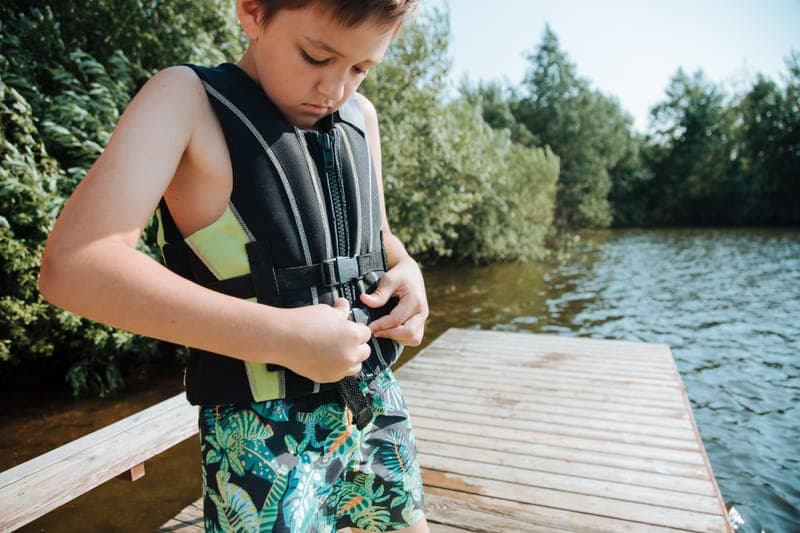
Stearns Puddle Jumper Deluxe
A USCG-approved Type III that children accept, because the arm floats leave the shoulders free.
Specifications
- USCG class
- Type III, approved
- Weight range
- 30-50 lbs
- Closure
- Single rear buckle
- Flotation
- Chest panel plus arm floats
What works
- Genuinely USCG-approved, unlike the water wings and arm bands it resembles
- The rear-only buckle is behind the child, so they cannot undo it themselves
- Children tolerate it for a whole afternoon, which is the property that actually keeps them in it
- Holds a swimmer upright and slightly forward, which suits pool and calm-lake play
What doesn’t
- Not designed to turn an unconscious wearer face-up — that is a Type I offshore jacket
- The upright-forward position teaches a vertical body posture that has to be unlearned in lessons
Who it’s for
A 30-50 lb child in a pool or on a calm lake shore, supervised at arm's length.
Bottom line
The most-worn kids' PFD in America for a reason. Check the printed USCG approval on the label, because look-alikes without it are everywhere.
Stearns Youth Classic Series Vest
The plain nylon boating vest: three buckles, a leg strap, and enough flotation to be the one you tow behind a boat in.
Specifications
- USCG class
- Type III, approved
- Weight range
- 50-90 lbs
- Shell
- Durable nylon
- Closure
- 3 buckles plus leg strap
What works
- Leg strap is what stops a vest riding up over a child's head in a hard fall — do not buy a towing vest without one
- Nylon shell survives dock boards, boat carpet and a season of sun
- Three buckles let you tighten it properly at the chest and waist separately
- Cheap enough to buy one per child rather than sharing
What doesn’t
- Bulkier and hotter than a swim-focused vest, so kids take it off between rides
- Foam panels restrict arm movement, so it is poor for actual swimming
Who it’s for
A 50-90 lb child on a boat, on a towable tube, or on a dock.
Bottom line
The right jacket for boating and towing. For swimming, a Puddle Jumper or swim vest is more wearable.

Onyx MoveVent Dynamic Paddle Vest
A ventilated paddling vest with high-cut armholes, so you can actually swim, paddle and lift children in it.
Specifications
- USCG class
- Type III, approved
- Size
- Adult S/M to XL/2XL
- Ventilation
- Mesh back panel
- Features
- High armholes, pockets, adjustable
What works
- High armholes and a mesh back make it wearable for hours in heat
- Multiple adjustment points get a real fit rather than a universal approximation
- Front pockets hold a phone in a dry bag and a set of keys
- Still a full Type III, so it satisfies the legal requirement
What doesn’t
- Costs several times a universal vest
- Mesh back offers no flotation behind the shoulders, so it sits lower in the water
Who it’s for
A parent who wears a PFD all day — paddling, supervising swimmers, getting in and out of a boat.
Bottom line
The adult vest people actually keep on. Modeling that in front of your children is worth more than the jacket costs.
Questions
Frequently asked questions
How do you size a life jacket for a child?
What if my child is between two life jacket sizes?
Can a child wear an adult life jacket?
How often should I check my child's life jacket fit?
Sources
Read next