Floats & Towables · Guide
Types of Towable Tubes Explained
Six shapes, one line each, then who each one is actually for.
The short answer
Deck tubes are lie-down and stable. Cockpit tubes have a seat and backrest and feel secure. Disc tubes are fast and carve hard. Chariot tubes sit riders up high. Ski tubes mimic a wakeboard stance. Banana tubes seat several riders in a line.
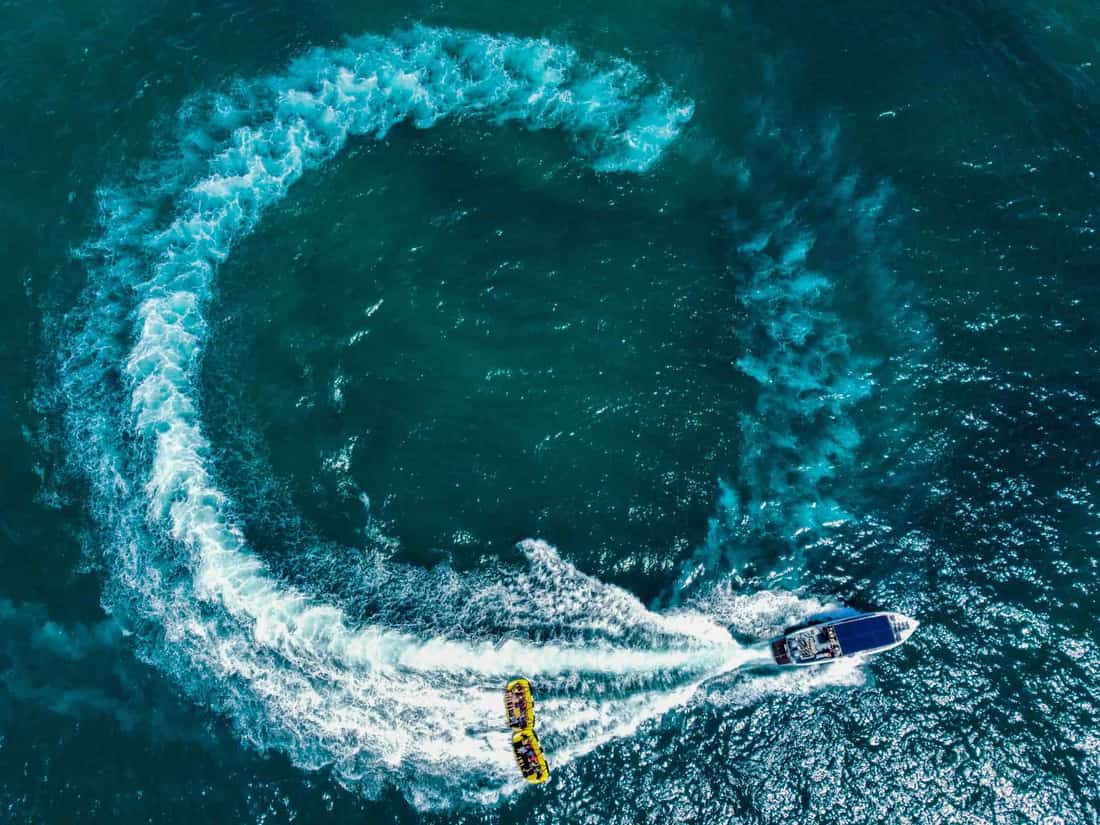
Photos on this page are licensed images that illustrate the category. They are not photographs of the specific products named, and no product image here is supplied by a manufacturer or retailer.
The six shapes
- Deck tube — a flat platform you lie on, holding handles in front. Stable, easy to hold, takes the most spray. The usual family first tube.
- Cockpit tube — a seat with a backrest inside a ring. Riders sit in it, stay dry, and feel held rather than clinging on. Best for nervous riders.
- Disc tube — a round low-profile tube for one or two, fast and quick to carve. For confident riders who find a deck tube tame.
- Chariot tube — riders sit upright and high, often facing forward in a row. Dry, sociable, catches more wind.
- Ski tube — a kneeling or standing platform that mimics a wakeboard stance, as a stepping stone toward wakeboarding.
- Banana / towable boat — an elongated tube seating three to six riders in a line. High capacity, needs real boat power.
Deck tubes
You lie flat, chest on a padded section, hands on handles ahead of you. The center of gravity is low, which makes it hard to flip, and the position means holding on is mostly about grip rather than about bracing your whole body.
The trade-off is spray: lying at surface level, you take the wake in the face. Some children find that thrilling and some find it the reason they will not go again. A deck tube with a raised front section reduces it noticeably.
Cockpit tubes
You sit inside the tube with your legs in front and your back against a padded rest. This is the most secure-feeling shape by some distance, and it is the one we recommend for a first ride and for nervous children.
It also sits high, which means two things: riders stay much drier, and the tube catches wind and skips more at speed. That makes it a shape for cruising rather than for going fast, which suits the audience it is best for. Many double as lake loungers when they are not being towed.
Disc and chariot tubes
Disc tubes are low, round and fast. They carve out of the wake readily and they reward a rider who knows how to shift their weight. They punish one who does not — losing grip is easy and the falls are harder.
Chariot tubes sit riders upright and high, usually in a row facing forward. They are dry and sociable and genuinely pleasant for a gentle tow, and they are the shape most affected by wind. Neither is a first tube for a child.
Ski tubes and banana tubes
A ski tube has a flat deck you kneel or stand on, with a handle on a short rope, and its point is to teach the balance and stance that wakeboarding needs without the boots and the learning curve. It is a specialist purchase for a family heading toward watersports rather than a general-purpose tube.
A banana or towable-boat shape seats three to six riders in a line and is enormous fun on flat water. It needs real pulling power, it is a big object to inflate and store, and every rider still needs an approved life jacket with a leg strap.
Choosing between them
| Shape | Riders | Best for | Weakness |
|---|---|---|---|
| Deck | 1-3 | Families, first tubes, all-round | Spray in the face |
| Cockpit | 1-2 | Nervous riders, cruising, doubling as a lounger | Catches wind, skips at speed |
| Disc | 1-2 | Confident riders, carving | Easy to lose grip |
| Chariot | 2-4 | Dry sociable cruising | Most affected by wind |
| Ski tube | 1 | Learning a wakeboard stance | Single purpose |
| Banana | 3-6 | Large groups on flat water | Needs power and storage |
Our picks
O'Brien Super Screamer
A deck tube that sits between approachable and exciting, which is exactly what a family with kids needs.
Specifications
- Riders
- 2
- Shape
- Deck (lie-down)
- Cover
- Nylon over bladder
- Valve
- Quick-inflate
What works
- Deck shape keeps riders low and flat, which is far less frightening for a first-timer than a cockpit tube
- EVA knuckle guards on the handles prevent the scraped knuckles that end rides early
- Nylon cover over the bladder is what makes a tube last more than one season
- Fits one adult and one child, so a nervous kid can ride with a parent
What doesn’t
- Deck riding position means you get hit by more spray than in a cockpit tube
- Two-rider capacity is limiting once you have three children
Who it’s for
A family towing children for the first time, or one child plus a parent.
Bottom line
The best first towable for a family. Every rider wears a properly fitted USCG-approved life jacket, and speed stays at 10-15 mph with kids aboard.
SportsStuff Big Mable
A padded, high-backed cockpit tube for two — the most secure-feeling seat in the category.
Specifications
- Riders
- 2
- Shape
- Cockpit with backrest
- Seating
- Padded, sit-in
- Cover
- Nylon
What works
- Backrest and deep seat mean a child is held in rather than hanging on, which converts refusals into rides
- Padded seating is comfortable enough for long, slow cruising
- Sits high, so riders stay noticeably drier than on a deck tube
- Also works as a lake lounger when it is not being towed
What doesn’t
- High profile catches wind and skips at speed, so it wants a slower tow
- Bulky to inflate, store and transport
Who it’s for
Children who are anxious about towing, or adults who want a comfortable cruise rather than airtime.
Bottom line
The confidence pick. If you want the ride to be gentle and the child to say yes, start here.
RAVE Sports Warrior
A faster, more aggressive deck tube for riders who have outgrown being towed gently.
Specifications
- Riders
- 1-2
- Shape
- Low-profile deck
- Cover
- Nylon with neoprene chest pad
- Ride
- Fast, carves hard
What works
- Low profile and hard-carving shape are what a bored teenager is actually asking for
- Neoprene chest pad makes a long ride tolerable rather than raw
- Narrow enough to whip outside the wake without dragging
- Holds air well across a full day
What doesn’t
- Too aggressive for younger children — it is easy to lose grip
- One or two riders only
Who it’s for
Confident older children and teenagers who want speed, on a boat with a driver who will manage it.
Bottom line
The upgrade for teens. Wrong tube for a first-timer or anyone under about ten.
Airhead Super Slice
A three-rider deck tube, which is the cheapest way to stop the sibling rotation argument.
Specifications
- Riders
- 3
- Shape
- Wing deck
- Cover
- 840-denier nylon
- Handles
- 6, with knuckle guards
What works
- Three riders means all your children go at once instead of taking turns
- 840-denier nylon is the durability tier that survives repeated seasons
- Wing shape is stable and slow to flip, which matters with three kids aboard
- Six padded handles, so nobody is holding the wrong thing
What doesn’t
- Needs a boat with real pulling power to plane with three riders
- Large enough that storage is a genuine problem in a small garage
Who it’s for
Families with three children, towed behind a boat with adequate power.
Bottom line
Buy on rider count. Three-up on one tube is more fun and less negotiation than two-up plus a waiting list.
Whichever shape you choose, the safety requirements are the same and they are not optional: approved life jackets with a leg strap, a designated spotter, a rope rated for the rider count, and 10-15 mph with children aboard. See towable tube safety.
Questions
Frequently asked questions
What is the difference between a deck tube and a cockpit tube?
Which towable tube type is best for families?
What is a ski tube for?
Do bigger towable tubes need a more powerful boat?
Read next