Lake Swimming Guides · Guide
What to Wear Swimming in a Lake
A lake asks for three things a pool never does: sun cover, footwear, and visibility.
The short answer
A lake swim calls for a swimsuit you can move in, a UPF 50+ rash guard for the hours in the sun, water shoes with a rubber sole for the bottom, and a bright cap so boats can see you. Goggles should be wide-lens and tinted, not a racing frame.
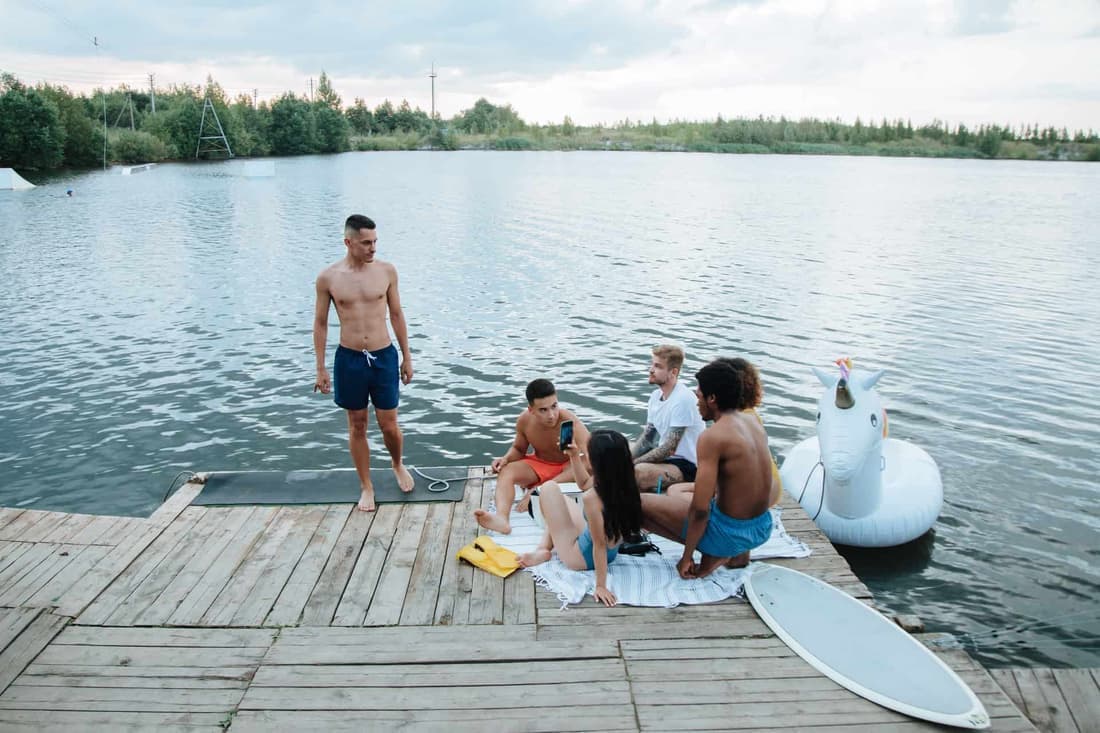
Product photos are the retailer’s own catalogue images, shown from the retailer’s servers and refreshed daily. Any other photo here is a licensed image that illustrates the category, not a photograph of the specific product named.
What a lake changes
Dressing for a pool is simple because a pool removes all the variables: the bottom is smooth, the water is a known temperature, there is shade somewhere, and nothing is moving across the surface except other swimmers. A lake puts all four variables back, and each one adds a specific item.
The sun is on you for hours. A lake day is not a 40-minute lap swim — it is three hours in and out of the water with the surface reflecting light back up at you. That is a clothing problem, not a sunscreen problem.
The bottom is unknown. Rock, shale, mussel shells, submerged branches, and in the Great Lakes region sharp zebra and quagga shells on almost every rock. Bare feet are the most common way a lake trip ends early.
The water is colder than it looks. Lakes stratify, so the surface can be pleasant and your feet can be in water ten degrees cooler. In June and September that decides how long anybody stays in.
Boats cannot see a head. A swimmer's head in chop is almost invisible from a motorboat at a hundred yards. A bright cap is a safety item, not an accessory.
The kit, from the skin out
| Layer | What | Why it is on the list |
|---|---|---|
| Swimsuit | Something you can swim in — training suit or lined trunks | Loose fabric drags; board shorts are a parachute |
| Sun layer | UPF 50+ long-sleeve rash guard | Blocks about 98% of UV, does not wash off or need reapplying |
| Feet | Water shoes with a lugged rubber sole | Sharp shells, rock and hot dock boards |
| Head | Bright silicone cap | Visibility to boats; warmth in cool water |
| Eyes | Wide-lens tinted goggles | Sighting a buoy or shoreline; glare off the surface |
| Safety | USCG-approved life jacket for children and non-swimmers | Required on boats and towables; sensible at a dock |
That is the whole list. Everything else — towels, shade, a dry bag — is for the shore rather than the swim, and the shore list is in lake day packing list.
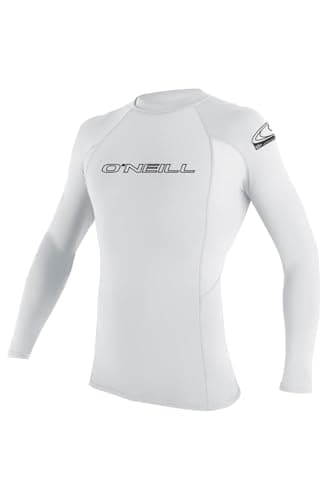
O'Neill Kids' Basic Skins UPF 50+
A close-fitting surf rash guard with minimal seams — the one that does not ride up when a child swims.
Specifications
- UPF
- 50+
- Fit
- Performance, close
- Sleeves
- Long
- Seams
- Minimal, flatlock
What works
- Close fit is the point — a loose swim shirt balloons and rides up, leaving the back exposed
- Flatlock seams do not chafe under the arms on a long day
- Holds UPF 50+ after repeated washing, unlike treated-fabric shirts
- Made by a surf brand, so it is built for repeated saltwater and chlorine
What doesn’t
- Sizing runs slim; check the chart rather than buying by age
- Close fit is harder to pull on over wet skin
Who it’s for
A child who swims and plays hard, where a loose shirt would not stay put.
Bottom line
The default kids' rash guard. Size up one if you want it to last two summers.
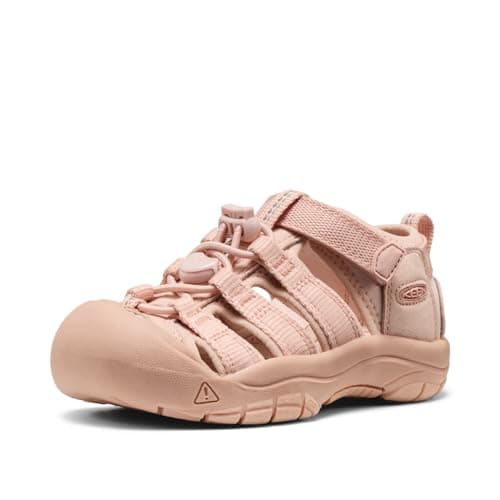
KEEN Newport H2
A closed-toe water sandal with a real rubber outsole — the only style that protects toes on a rocky shoreline.
Specifications
- Toe
- Closed, rubber bumper
- Outsole
- Non-marking rubber, lugged
- Closure
- Bungee lace
- Drainage
- Open side panels
What works
- The closed toe bumper is the feature — stubbed toes on submerged rocks are the actual injury at a lake
- Lugged rubber outsole grips wet rock and algae-covered boat ramps
- Bungee lace cinches once and stays, so it does not come off in mud
- Genuinely lasts long enough to hand down to a sibling
What doesn’t
- Heaviest option here and the slowest to dry
- Most expensive kids' water shoe in the category
Who it’s for
A child at a rocky, weedy or gravelly lake, or one who walks in and out of the water all day.
Bottom line
The lake pick. If the bottom is rock or the shore is gravel, nothing else in this list is adequate.
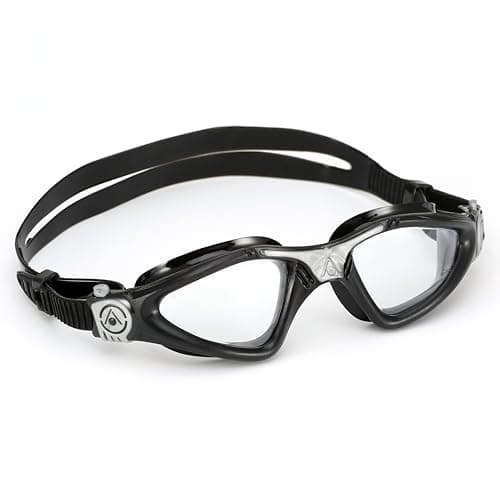
Aqua Sphere Kayenne
Wide curved lenses and a soft gasket — the comfortable choice for long swims rather than fast ones.
Specifications
- Fit
- Wide, adult
- Field of view
- 180-degree style
- Gasket
- Soft silicone, curved
- Lens
- Anti-fog, UV, tinted and mirrored options
What works
- Genuinely comfortable for an hour or more, which low-profile racing goggles are not
- Wide view is worth real money in open water where you are sighting off a buoy or a shoreline
- Easy-adjust buckles you can work while treading water
- Tinted and mirrored lenses cut lake glare
What doesn’t
- Too much drag for pool training sets
- Big lenses scratch if you skip the case
Who it’s for
An adult doing lake swims, triathlon training, or simply long comfortable distance.
Bottom line
The open-water pick for adults. Comfort over an hour beats a sleeker frame you take off at twenty minutes.
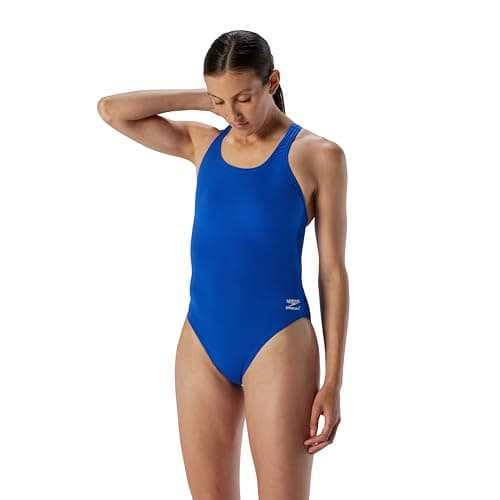
Speedo Women's Endurance+ Super Pro
Endurance+ fabric is the genuine article — it outlasts standard swim fabric several times over in chlorine.
Specifications
- Fabric
- Endurance+ (PBT), 100% chlorine-resistant
- Back
- Super Pro, high coverage
- Sizes
- Women's 28-40
- Lining
- Fully lined
What works
- PBT fabric does not degrade in chlorine — the fabric, not a coating, is what makes this last
- Super Pro back holds the shoulders without cutting in over a long swim
- Holds compression across a full season rather than going slack
- Fully lined, so it stays opaque wet
What doesn’t
- PBT has less stretch than standard swim fabric and feels firmer
- Costs roughly double a fashion one-piece
Who it’s for
A woman swimming laps weekly, or anyone tired of replacing a suit every summer.
Bottom line
Cheaper per swim than any fashion suit. If you swim in chlorine regularly, this is the only sensible fabric.
Why the rash guard is the highest-value item
Sunscreen works when it is applied correctly and reapplied every two hours, and essentially nobody does the second part on a lake day with children. A UPF 50+ rash guard blocks about 98 percent of UV across everything it covers, keeps doing it wet, and never needs reapplying.
So the sensible strategy is fabric for the torso and arms, and sunscreen for the gaps — face, ears, neck, hands, the tops of the feet. That is less sunscreen, applied to a smaller area, which is the version that actually gets done. The ratings themselves are explained in UPF ratings explained.
Buy it long-sleeved. A short-sleeve rash guard protects the half of the arm that burns least, which is a strange compromise for the same money. And for anyone swimming through weedy shallows, a rash guard is also the main practical defense against swimmer's itch.
Footwear: in the water, and on the way to it
Two different jobs, and most families end up with two pairs because the shoe that is good at one is poor at the other. A rubber-soled water shoe is what you wade and swim in: it grips wet rock, drains, and stays on a buoyant foot. A foam clog is what you walk down in: instant to dry, protects toes, and a child can put it on alone.
What a foam clog does not do is grip wet rock, because foam deforms rather than biting into the surface. That is the one rule worth remembering: foam soles out of the water, rubber soles in it. The full side-by-side is in water shoes vs Crocs, and if your shoreline is genuinely rocky, water shoes for rocky lake bottoms covers what sole to look for.
Cold water changes the answer
A rash guard provides almost no warmth — it is 1 mm or less of fabric and its job is sun. If the problem is cold rather than sun, the answer is neoprene, and the threshold is roughly this:
- Comfortable (roughly 75°F and up): swimsuit and rash guard. Nothing else needed.
- Bracing (roughly 65-75°F): add a silicone cap, which is where a surprising amount of heat goes, and keep sessions shorter.
- Cold (below roughly 65°F): a 2 mm wetsuit top or a full suit for anything longer than a dip, plus neoprene socks if your feet are the thing that ends the swim.
- Children, always one step warmer than you think. Smaller bodies lose heat faster, and the signal is shivering and blue lips rather than complaining.
The distinction between the two garments catches a lot of people out, because they look similar on a rack and cost similar money. It is laid out in rash guard vs wetsuit.
Goggles and caps for open water
Pool goggles are optimized for low drag and a clear lens, which is the wrong set of priorities outdoors. In a lake you need to lift your eyes and find a buoy, a dock or another swimmer, and you need to do it with the sun bouncing off the surface into your face.
That means a wide curved lens for the field of view and a tinted or mirrored lens for the glare. A soft wide gasket also stays comfortable for the length of time an open-water swim actually takes. The picks are in best swim goggles for open water.
The cap does two jobs at once: it holds the goggle strap so it does not ride up, and in a bright color it is what makes your head visible from a boat. Bright orange or yellow, not black — see best adult swim caps.
Dressing children for a lake
Same list, three differences. Buy the rash guard in a bright color, because a child in a bright top is findable in open water in a way a child in navy is not. Buy swimwear to the current size, because a loose suit drags and gets rejected. And for any child who is not a confident swimmer, a USCG-approved life jacket rather than a swim vest or arm bands, sized by weight band and worn with the crotch strap done up.
The color argument is made properly in best rash guard colors for kids, and the life jacket sizing in life jacket sizing by weight. For babies, water temperature and sun are the two limiting factors and they come before any of this: when can babies swim in a lake.
What it costs to outfit one person
A swimsuit, a long-sleeve rash guard, a pair of water shoes, a silicone cap and a pair of tinted goggles is the complete list, and none of those five items is expensive on its own. The two that earn their money several times over are the rash guard and the water shoes, because they are the two that prevent the things that end a lake day.
If you are outfitting a whole family at once and want the order to buy in, that is exactly the question answered in family swim gear on a budget.
Questions
Frequently asked questions
What should I wear to swim in a lake?
Do you need water shoes to swim in a lake?
Should you wear a shirt swimming in a lake?
What do you wear in a cold lake?
Can you wear regular clothes to swim in a lake?
Sources
Read next