Rash Guards · Comparison
Rash Guard vs Wetsuit
A rash guard is for sun. A wetsuit is for cold. They are not alternatives.
The short answer
A rash guard is thin stretch fabric for sun and chafe protection, and it adds almost no warmth. A wetsuit is neoprene that traps a warm water layer against the skin, and it is genuinely too hot for a summer lake day. Choose by what problem you have: sun or temperature.

Photos on this page are licensed images that illustrate the category. They are not photographs of the specific products named, and no product image here is supplied by a manufacturer or retailer.
| Rash guard | Wetsuit (2mm) | |
|---|---|---|
| Material | Stretch polyester / elastane, thin | Neoprene, 2mm and up |
| Primary purpose | Sun and chafe protection | Thermal insulation |
| Warmth added | Negligible | Substantial |
| Blocks UV | Yes, UPF-rated | Yes, as a side effect |
| Water temperature suited to | Warm — any | Roughly 62-70 F for 2mm |
| Comfortable on a hot day | Yes | No — genuinely overheats |
| Ease of getting on | Easy | A chore, especially when wet |
| Abrasion protection | Light | Good — rocks and docks |
| Cost | Low | High |
How each one works
A rash guard is a thin knit garment. It blocks UV because the fabric is dense enough to stop it passing, and it prevents chafe because it is smooth and close-fitting. It does not insulate in any meaningful way — a wet rash guard on a breezy day is if anything slightly cooling.
A wetsuit works on a completely different principle. Neoprene is a closed-cell foam full of nitrogen bubbles, which is a poor conductor of heat, and the suit lets a thin layer of water in and then holds it against the skin where your body warms it. That is why a wetsuit must fit snugly — a loose one flushes cold water through and does nothing.
So the two garments are not competing. One addresses radiation from above the water and one addresses conduction into the water, and knowing which problem you have is the entire decision.
Choose a rash guard if...
- The water is warm and the sun is the problem. This is most summer lake and pool swimming.
- The wearer is going in and out of the water repeatedly. A wetsuit is a chore to get on once, let alone five times.
- It is a hot day. A wetsuit on a hot day is genuinely uncomfortable and can cause overheating.
- You need something under a life jacket to stop chafe.
- Budget matters — a rash guard costs a fraction of a wetsuit.
Choose a wetsuit if...
- The water is cold enough that swimming time is limited by temperature rather than by interest.
- It is early or late season, or a northern lake, or spring-fed water.
- A child goes blue and starts shivering after ten minutes — that is the signal.
- There is real abrasion risk: rocky entries, docks, barnacles.
- Somebody is doing longer open-water swims and wants the buoyancy as well as the warmth.
Water temperature, roughly
| Water temp | Typical choice | Note |
|---|---|---|
| Above 75 F | Rash guard | Warmth is not the constraint |
| 70-75 F | Rash guard, or a neoprene top | Comfortable for most, chilly for children |
| 62-70 F | 2mm wetsuit or shorty | Children feel this well before adults do |
| 55-62 F | 3/2mm wetsuit | Add boots and a neoprene cap |
| Below 55 F | Thicker suit and full accessories | Cold shock is a real risk — be cautious |
These are indicative rather than prescriptive. Individual cold tolerance varies enormously, and children lose heat faster than adults because of their surface-area-to-mass ratio. A parent comfortable in a rash guard may well have a child who needs a wetsuit in the same water.
When you need both
Wear the rash guard under the wetsuit. It makes the suit far easier to pull on over dry skin, it prevents the neoprene chafing the neck and underarms, and on a cold-water day with strong sun it means you can take the wetsuit off and still be covered.
That combination is standard among surfers and open-water swimmers, and it is worth copying for a family doing early-season lake swims. See lake swimming safety on cold water generally — the initial cold-shock gasp is the part people underestimate.
Our picks

O'Neill Kids' Basic Skins UPF 50+
A close-fitting surf rash guard with minimal seams — the one that does not ride up when a child swims.
Specifications
- UPF
- 50+
- Fit
- Performance, close
- Sleeves
- Long
- Seams
- Minimal, flatlock
What works
- Close fit is the point — a loose swim shirt balloons and rides up, leaving the back exposed
- Flatlock seams do not chafe under the arms on a long day
- Holds UPF 50+ after repeated washing, unlike treated-fabric shirts
- Made by a surf brand, so it is built for repeated saltwater and chlorine
What doesn’t
- Sizing runs slim; check the chart rather than buying by age
- Close fit is harder to pull on over wet skin
Who it’s for
A child who swims and plays hard, where a loose shirt would not stay put.
Bottom line
The default kids' rash guard. Size up one if you want it to last two summers.
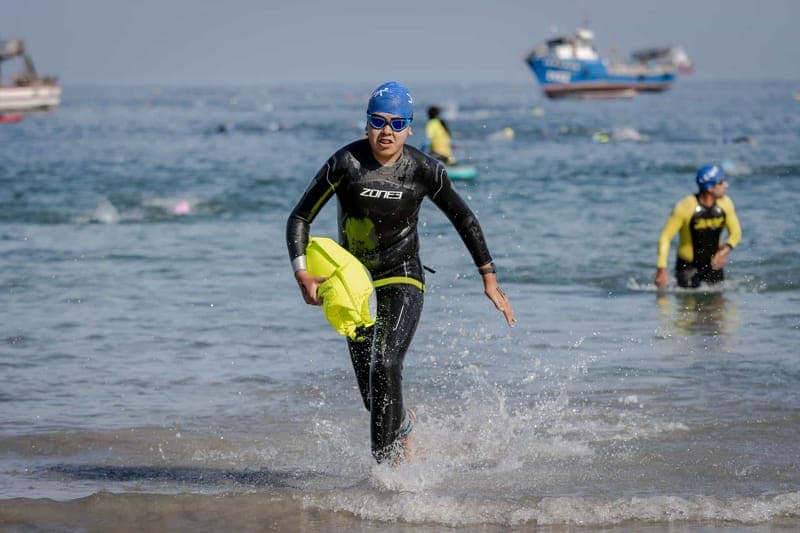
O'Neill Reactor-2 2mm Wetsuit
2mm neoprene for genuinely cold water — a different tool from a rash guard, solving a different problem.
Specifications
- Material
- 2mm neoprene
- Purpose
- Thermal insulation
- Closure
- Back zip
- Water temp
- Roughly 62-70 F
What works
- Neoprene traps a warm water layer, which is the only thing that extends time in cold water
- Also blocks UV, so it does a rash guard's job as a side effect
- Protects against scrapes on rocks and docks
- Back zip with a long pull is manageable for an older child alone
What doesn’t
- Far too warm for a hot summer lake day — this is not a sun garment
- Expensive, restrictive, and a genuine chore to get on and off
Who it’s for
Swimmers in cold water: early season lakes, northern water, or a child who goes blue after ten minutes.
Bottom line
Buy a wetsuit for temperature and a rash guard for sun. Buying the wrong one for the job is the common mistake.
Coolibar Kids' Ultimate Rash Guard
Sun-protection-first construction from the first clothing brand to carry the Skin Cancer Foundation Seal of Recommendation.
Specifications
- UPF
- 50+, built into the fabric
- Fit
- Relaxed
- Sleeves
- Long
- Certification
- Skin Cancer Foundation Seal
What works
- UPF comes from the knit itself rather than a coating, so it does not wash out
- Third-party recommendation from a named authority rather than a self-declared rating
- Softer, smoother hand than most performance rash guards
- Relaxed cut is easier to get on a reluctant child
What doesn’t
- Costs two to three times a standard rash guard
- Relaxed fit rides up more in active swimming than a performance cut
Who it’s for
A child with fair or reactive skin, a history of burning, or a medical reason to minimize UV.
Bottom line
The upgrade pick, and the right call if sun protection is a genuine medical concern rather than a convenience.
Questions
Frequently asked questions
Does a rash guard keep you warm?
Can you wear a rash guard instead of a wetsuit?
Do you wear a rash guard under a wetsuit?
What water temperature needs a wetsuit?
Read next