Rash Guards · Roundup
Best Wetsuits for Kids (2026)
Six suits sorted by how cold the water is, because that is the only question that matters.
The short answer
For a genuinely cold lake, the O'Neill Youth Reactor-2 3/2mm full suit is the pick: 3mm over the core where children lose heat, 2mm in the limbs so they can still swim. For cool water on a warm day, a 2mm springsuit like the Body Glove Phoenix is enough and costs a fraction as much.
Product photos are the retailer’s own catalogue images, shown from the retailer’s servers and refreshed daily. Any other photo here is a licensed image that illustrates the category, not a photograph of the specific product named.
| # | Product | Best for | Thickness | Price |
|---|---|---|---|---|
| 1 | 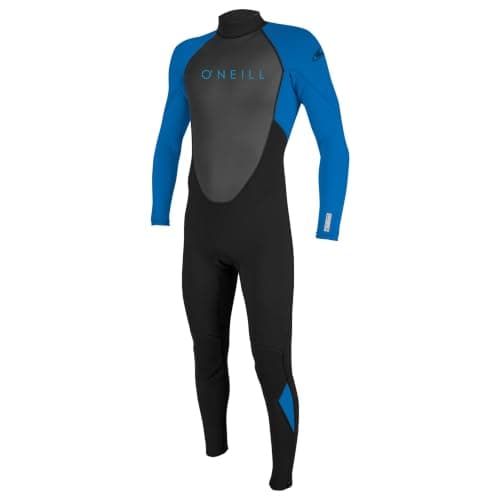 Top pick O'Neill Youth Reactor-2 3/2mm Back Zip Full Wetsuit A full-length 3/2mm suit from the brand that sets the entry price point — the one to buy if the water is genuinely cold. | Cold lake, whole season | 3mm body, 2mm arms and legs | |
| 2 | 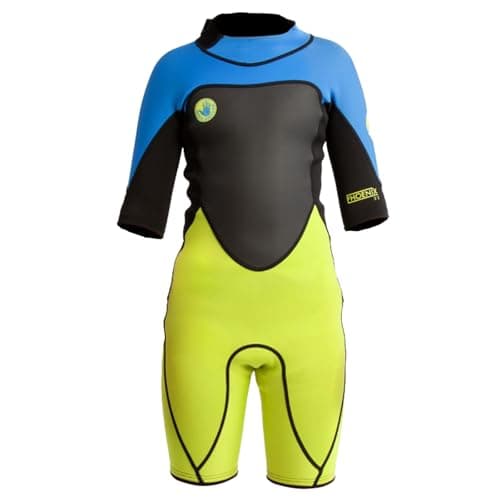 Budget pick Body Glove Phoenix 2mm Kids Wetsuit A 2mm back-zip springsuit at a price that makes a one-season purchase painless. | Cheapest useful suit | 2mm | |
| 3 | 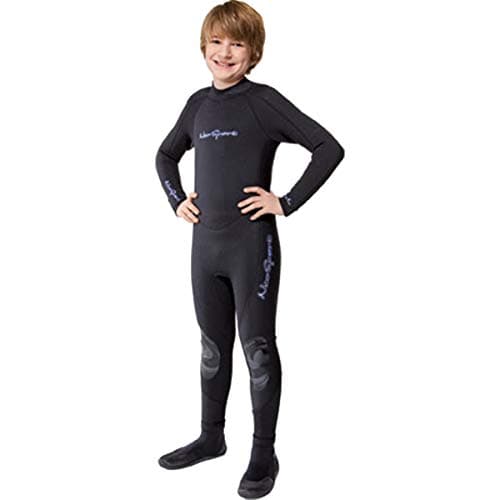 Upgrade pick NeoSport Junior Premium Neoprene 3mm Full Suit A uniform 3mm dive-style suit — warmer than any 3/2 here, and built for floating still in cold water rather than swimming fast. | Warmest of the lot | 3mm throughout | |
| 4 | 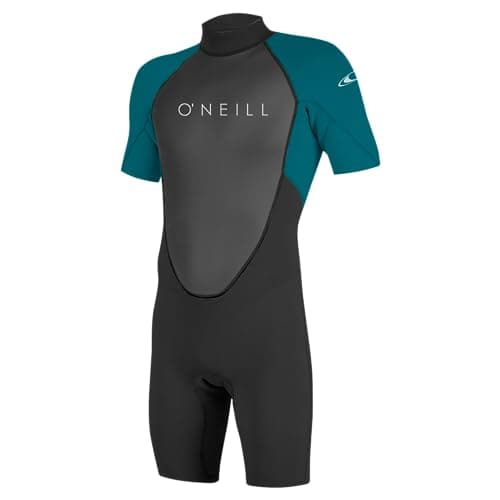 Also good O'Neill Youth Reactor-2 2mm Short Sleeve Spring Wetsuit The same suit with the arms and legs cut off — warmth over the core, full freedom everywhere else. | Cool water, warm air | 2mm | |
| 5 | 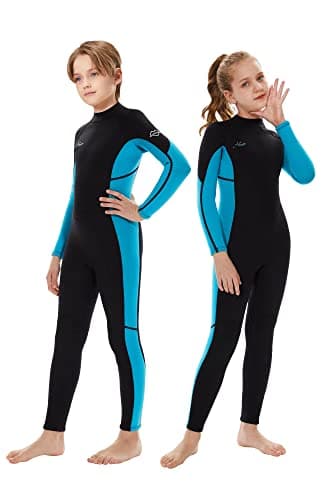 Also good Hevto Kids Wetsuit 3/2mm Neoprene Back Zip A full-length 3/2mm suit for roughly a third of the O'Neill — the compromise is finish, not thickness. | Full coverage on a budget | 3/2mm | |
| 6 | 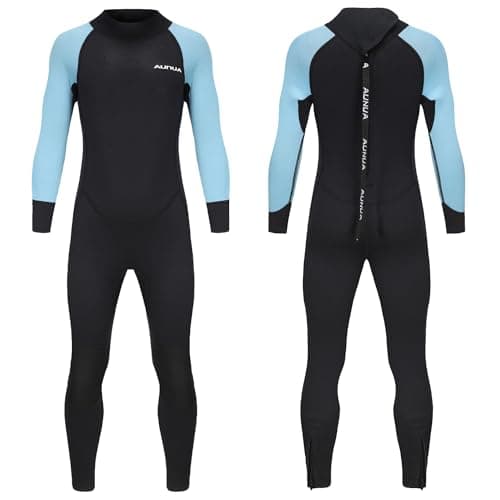 Also good Aunua Kids Wetsuit 3/2mm Full Wet Suit A stretch-focused 3/2mm full suit that runs into teen sizes, which is where most kids' wetsuit ranges stop. | Older kids and teens | 3/2mm |
Start with the water temperature, not the suit
A wetsuit is a thermal tool and nothing else. It does not float, it does not replace a life jacket, and buying the wrong thickness is the one mistake in this category that cannot be fixed by sizing. So before anything else: how cold is the water your child actually swims in?
Roughly 72 F and up — most lakes in late July and August in the lower half of the country — and a wetsuit is usually unnecessary. What a child wants there is sun cover, not insulation, which is a rash guard rather than neoprene.
Roughly 65-72 F is springsuit water. A 2mm shorty over the torso buys a child an extra hour before the shivering starts, and it does it without the fight that getting a full suit onto a damp, impatient seven-year-old involves.
Below roughly 65 F — June in a northern lake, anything spring-fed, anything deep — is full-suit water. A 3/2mm full suit is the standard answer, and a child in a shorty in that water will be out and wrapped in a towel in fifteen minutes.
If you do not know your lake's temperature, the useful proxy is how long your child currently lasts. A kid who gets out shivering after twenty minutes in a swimsuit is a kid a wetsuit will transform. A kid who swims for two hours and has to be called in does not need one.
O'Neill Youth Reactor-2 3/2mm Back Zip Full Wetsuit
A full-length 3/2mm suit from the brand that sets the entry price point — the one to buy if the water is genuinely cold.
Specifications
- Thickness
- 3mm body, 2mm arms and legs
- Neoprene
- UltraFlex
- Seams
- Flatlock stitched
- Entry
- Back zip, adjustable collar
What works
- 3mm through the core is where a child actually loses heat, and the thinner arms and legs keep the suit swimmable
- Flatlock seams are the right call for a kid: they breathe, so the suit is bearable when the sun comes out
- Back zip with a long pull means a seven-year-old gets out of it without a parent
- Sized by age across a wide range, so there is usually a size that fits a tall or short child
What doesn’t
- Flatlock seams let water through — this is a flushing suit, not a sealed one, so it warms you but never keeps you dry
- The most expensive kids' wetsuit most families will consider, and it will be outgrown
Who it’s for
A child who swims in a northern lake in June, or anyone who stays in the water past the point where lips go blue.
Bottom line
The default answer for cold water. Buy it if the swimming season is the reason you are shopping at all.
Body Glove Phoenix 2mm Kids Wetsuit
A 2mm back-zip springsuit at a price that makes a one-season purchase painless.
Specifications
- Thickness
- 2mm
- Cut
- Springsuit, short sleeve
- Entry
- Back zip
- Sizes
- Youth 8-16
What works
- Cheap enough that outgrowing it in one summer is not a real cost
- 2mm springsuit is the correct amount of suit for a lake that is cool rather than cold
- Back zip, so it goes on the same way the expensive suits do
- Low enough risk to buy on a maybe, which is how most families end up in a wetsuit at all
What doesn’t
- Thinner neoprene and basic seams mean it will not feel as warm as the O'Neill in the same thickness
- The youth size band starts at 8, so it is no help for a small child
Who it’s for
Families testing whether a wetsuit changes the day at all, and anyone with a fast-growing eight-to-twelve-year-old.
Bottom line
The sensible first wetsuit. Buy up only once you know the child will use it.
NeoSport Junior Premium Neoprene 3mm Full Suit
A uniform 3mm dive-style suit — warmer than any 3/2 here, and built for floating still in cold water rather than swimming fast.
Specifications
- Thickness
- 3mm throughout
- Cut
- Full suit
- Built for
- Diving, snorkeling, towing
- Entry
- Back zip
What works
- 3mm in the arms and legs too, so it is genuinely the warmest suit on this page
- Dive-grade construction is heavier-duty than a surf-brand entry suit at a similar price
- The right suit for snorkeling, where you float still and get cold fast
- Holds its shape over seasons better than budget stretch suits
What doesn’t
- Uniform 3mm restricts the arms and legs — a child swimming hard will notice and say so
- Heavier and slower to dry than everything else here
Who it’s for
Snorkeling, long sessions behind a tube, and any child who gets cold faster than their siblings.
Bottom line
Buy it for warmth, not for swimming. For a child who swims laps around the dock, the 3/2 is the better suit.
O'Neill Youth Reactor-2 2mm Short Sleeve Spring Wetsuit
The same suit with the arms and legs cut off — warmth over the core, full freedom everywhere else.
Specifications
- Thickness
- 2mm
- Cut
- Short sleeve, short leg
- Neoprene
- UltraFlex
- Entry
- Back zip
What works
- Covers the torso, which is the part that matters, and leaves the limbs free to swim properly
- Far easier to get on and off than a full suit — the single biggest reason a child will actually wear it
- Dries in a fraction of the time, so it is not still wet the next morning
- Meaningfully cheaper than the full suit
What doesn’t
- Does nothing for cold arms and legs, which is where most children complain first
- Not enough suit for genuinely cold water — buy the 3/2 full instead and do not split the difference
Who it’s for
A warm July afternoon on cool water, and kids who find a full suit claustrophobic.
Bottom line
The right shorty for most family lakes. If you are shopping because of June water, this is not enough.
Hevto Kids Wetsuit 3/2mm Neoprene Back Zip
A full-length 3/2mm suit for roughly a third of the O'Neill — the compromise is finish, not thickness.
Specifications
- Thickness
- 3/2mm
- Cut
- Full suit, long sleeve and leg
- Entry
- Back zip
- Sizes
- Toddler through youth
What works
- Full coverage at a price most families will accept for something that gets outgrown
- 3/2mm is real thickness — this is not a thin novelty suit dressed up as one
- Size range reaches down further than most youth suits, which matters for a small four-year-old
- The only way many families get a child into a full suit at all
What doesn’t
- Seam finish and neoprene stretch are visibly below the O'Neill, and a stiff suit is a suit a child fights
- Sizing reports are inconsistent — measure chest and height against the chart rather than ordering by age
Who it’s for
Cold-water days on a budget, and second children who will inherit the suit regardless of how it wears.
Bottom line
Good value for full coverage. Expect to replace it rather than hand it down twice.
Aunua Kids Wetsuit 3/2mm Full Wet Suit
A stretch-focused 3/2mm full suit that runs into teen sizes, which is where most kids' wetsuit ranges stop.
Specifications
- Thickness
- 3/2mm
- Cut
- Full suit
- Neoprene
- Stretch thermal
- Sizes
- Youth into teen
What works
- Carries on past the point where many youth ranges end, so a tall twelve-year-old is not forced into an adult suit
- Stretch-first build is easier to pull on than a stiff budget suit, which is most of the battle
- Full coverage at a mid-budget price
- Plain styling that an older child will not refuse to be seen in
What doesn’t
- Stretchier neoprene also feels thinner in use — it flushes more than a premium suit of the same rating
- Durability over several seasons is unproven next to the established surf brands
Who it’s for
Older children and teenagers who have outgrown the youth ranges but do not fill an adult small.
Bottom line
The size-gap answer. If your child still fits an O'Neill youth size, buy that instead.
What 3/2mm actually means
Every wetsuit is described by two numbers, and almost nobody explains them. 3/2mm means 3mm of neoprene over the torso and 2mm in the arms and legs. The thicker panel goes where your core is, because that is where the body defends heat hardest and where losing it matters. The thinner panels go in the limbs so that the child can still bend an elbow and kick.
A uniform 3mm suit — the NeoSport Junior here is one — is warmer than a 3/2 because the limbs are insulated too. It is also stiffer, and a child who has to fight the suit to swim will tell you about it within ten minutes. That trade is the whole reason 3/2 exists and why it is what most families should buy.
2mm suits come in two shapes. A 2mm full suit covers everything thinly; a 2mm springsuit (or 'shorty') covers the torso only, with short arms and legs. For a child, the springsuit is almost always the better version of 2mm: the torso is where the warmth matters, and short limbs mean a suit they can get in and out of themselves.
Why your child will still feel the water
A wetsuit is not a dry suit. It works by trapping a thin layer of water against the skin and letting the body warm it, which is why the first ten seconds of a cold lake feel exactly as cold in a wetsuit as out of one. Children who have been promised a wetsuit will make them warm are reliably disappointed by that first entry, so say so in advance.
How much water keeps flushing through depends on the seams. Flatlock seams are stitched through the neoprene — strong, breathable, and they leak a little at every seam. Sealed or taped seams leak far less and cost considerably more. Every suit on this page is flatlock, which is the right call for a child's suit: breathability stops the suit being unbearable the moment the child climbs out into the sun, and the extra warmth of sealed seams is not worth triple the price on something that gets outgrown.
Fit is the whole thing
A wetsuit that is too big does not work at all. Water flushes freely through the gaps, the trapped layer never warms, and the child is colder than they would be in a swimsuit because they are now wet and weighed down. This is the single most common wetsuit mistake parents make, and it comes from the instinct to buy a size up for growth.
Do not size up. A correctly fitted kids' wetsuit is snug everywhere — tight enough that it is a genuine effort to pull on dry, with no loose pockets behind the knees, in the small of the back or under the arms. It should feel like a firm hug and be slightly restrictive standing up. That is what correct feels like.
Measure, do not order by age. Kids' wetsuits are labeled by age (1 through 16 in most ranges), and those labels are a rough guide to height and chest, not to your child. Take a chest measurement and a height, then read the brand's own chart. A tall, slim ten-year-old and a stocky eight-year-old frequently wear the same suit size.
| Check | What right looks like | Why it matters |
|---|---|---|
| Torso length | No slack pocket in the lower back | A gap in the back flushes cold water with every stroke |
| Behind the knees | Neoprene lies flat, no bunching | Bunched neoprene chafes and makes kicking hard work |
| Under the arms | Snug, no loose fold | The armpit is the second-biggest flush point after the neck |
| Neck seal | Firm but not choking | A loose neck is where most of the cold water gets in |
| Zip pull | Long enough for the child to reach | A child who cannot undo it alone will not wear it twice |
| Ankles and wrists | Snug cuff, no gap | Open cuffs turn the suit into a water scoop |
Full suit or springsuit?
The honest answer for most family lakes is a springsuit, and the honest answer for cold water is a full suit. The failure case is buying a springsuit for cold water because it was cheaper and easier, then finding it did not solve the problem you bought it to solve.
There is one more argument for the springsuit that has nothing to do with temperature: a child will actually put it on. A full suit is a five-minute struggle, especially the second time when the suit is damp, and plenty of expensive full suits sit in a garage because the child decided the struggle was not worth it. A springsuit goes on in thirty seconds.
If the budget stretches to one suit and the water is borderline, buy the full suit and accept the struggle. If the water is clearly only cool, buy the springsuit and spend the difference on something else.
How much should you spend?
At the bottom of the range, a 2mm springsuit costs about as much as a decent pair of kids' water shoes, and it genuinely works for cool water. That is the right place to start if you are not yet sure a wetsuit will change the day at all — and for a lot of families it is also the right place to finish.
A budget full suit sits in the middle and is where the value is if you need full coverage. The thickness rating is real; what you give up against the premium suits is neoprene stretch and seam finish, and a stiffer suit is a suit the child resists. For a second child who will inherit it anyway, that trade is usually fine.
At the top, a brand-name 3/2 full suit costs several times the springsuit and buys you stretchier neoprene, better seam finish, a neck seal that actually seals, and a size range wide enough that a tall child can be fitted. It is worth it for a child who swims in cold water all season. It is not worth it for three warm-lake weekends a year.
Wetsuit, rash guard, or both?
These solve different problems and get confused constantly. A rash guard is a sun and abrasion layer with a UPF rating and no insulating value worth counting. A wetsuit is insulation with no meaningful sun rating. If the problem is a burned back, neoprene is the wrong purchase; if the problem is blue lips, a rash guard will not help. The full comparison is in rash guard vs wetsuit.
You can wear both, and on a cold bright day it is the right combination — rash guard underneath for sun on the arms when the suit comes off, wetsuit over the top. A thin rash guard also makes a damp full suit considerably easier to pull on, which is not a small thing.
Looking after it
Rinse the suit in fresh water inside and out after every use. Lake silt and sunscreen left in neoprene is what makes a suit smell within a week, and smell is the usual reason a child stops wearing a perfectly good wetsuit.
Dry it inside out, in shade, over something broad — a chair back or a wide hanger. Hung on a thin wire hanger, a wet suit stretches permanently at the shoulders; dried in direct sun, the neoprene hardens and loses stretch. Never put one in a dryer.
Store it flat or on a wide hanger rather than folded with creases, and never roll it up damp in a bag overnight. A suit looked after properly outlasts the child, which is the main argument for buying one good one if you have a younger sibling coming up behind - and the suits that fit that sibling now are in best baby wetsuits.
If the problem is cold feet rather than a cold body, neoprene socks are a cheaper and more targeted fix — see water shoes vs water socks.
Questions
Frequently asked questions
What thickness wetsuit does a child need for a lake?
Should a kids' wetsuit be tight?
What does 3/2mm mean on a wetsuit?
Is a wetsuit a life jacket?
Do you wear anything under a kids' wetsuit?
Can a wetsuit replace a rash guard?
Sources
Read next