Water Shoes · Comparison
Water Shoes vs Water Socks
Shoes protect. Socks warm. They solve different problems and work well together.
The short answer
Water shoes have a real sole and protect against rocks, shells and hot surfaces. Water socks are thin neoprene that provide warmth and chafe protection with almost no sole. If you need both, wear neoprene socks inside water shoes.
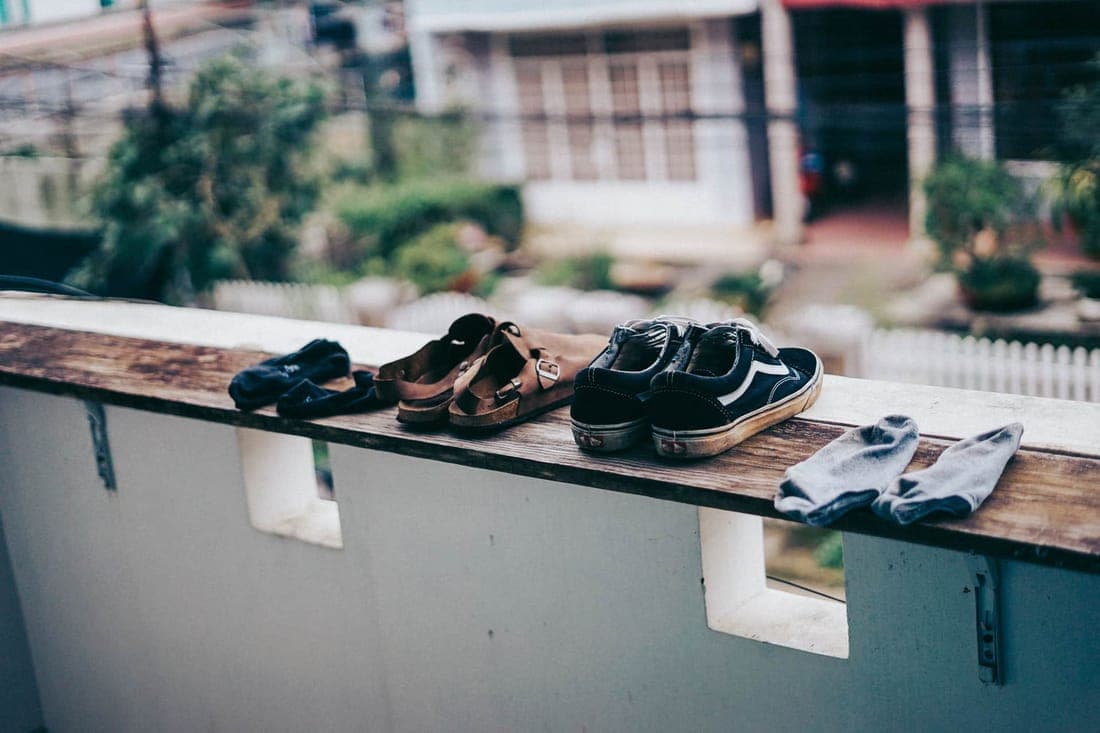
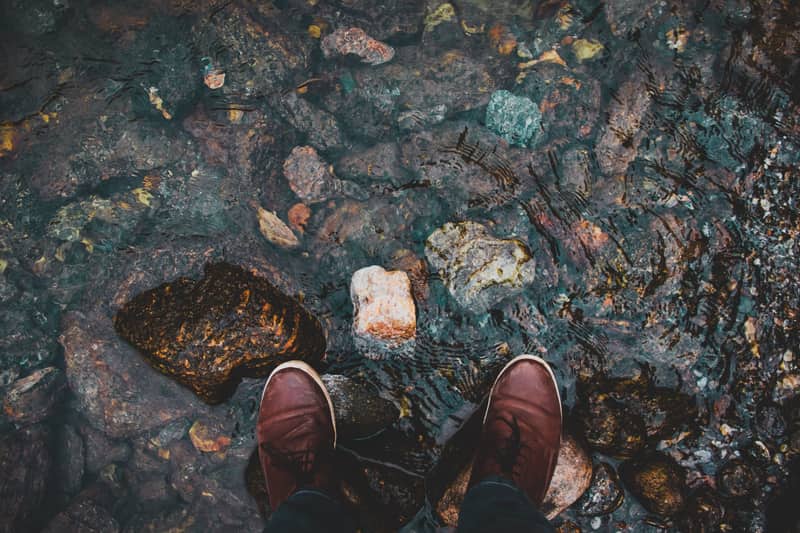
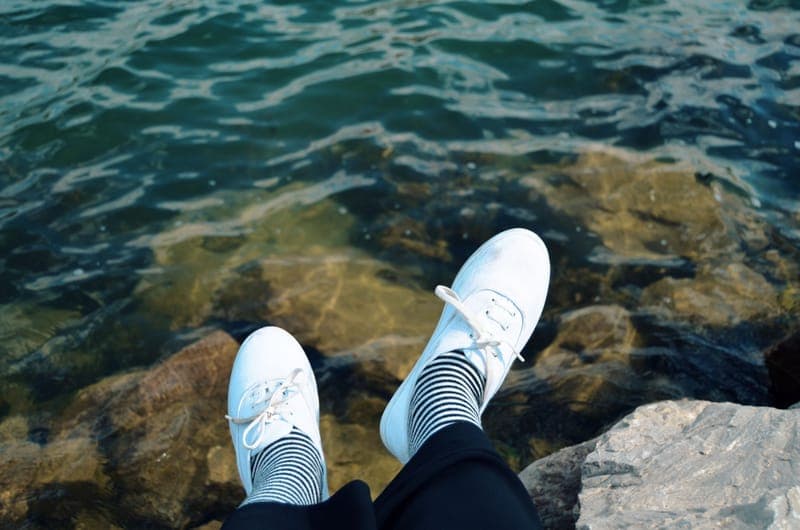
Photos on this page are licensed images that illustrate the category. They are not photographs of the specific products named, and no product image here is supplied by a manufacturer or retailer.
| Water shoes | Water socks | |
|---|---|---|
| Sole | Real rubber outsole | Thin grip print or none |
| Puncture protection | Good to excellent | Almost none |
| Warmth | None | Genuine — this is the point |
| Chafe protection inside fins or shoes | No | Yes |
| Grip on wet rock | Good with lugs | Poor |
| Grip on a dock or boat ramp | Good | Slippery |
| Packed size | Bulky | Almost nothing |
| Price | Low to high | Low |
| Right for | Rock, gravel, hot surfaces, walking | Cold water, fins, blisters |
What water socks are actually for
Neoprene socks are widely misunderstood as cheap water shoes, and they are not. They are a thin layer of closed-cell neoprene, and their two real functions are both things a shoe cannot do.
Warmth. Neoprene traps a thin layer of water against the skin and your body heats it, exactly as a wetsuit does. In cool water, feet are one of the first things to go numb, and socks genuinely extend how long a swim is comfortable. Nothing else in this category addresses temperature at all.
Chafe protection. Inside fins, inside a boot, or inside a water shoe. This is why divers and snorkellers wear them, and it is the fix for a child who blisters on the inner foot in shoes.
What they are not is protection. A sharp rock, a shell or a piece of glass goes straight through thin neoprene, and they are slippery on wet dock boards and boat ramps. Treating them as a shoe substitute is the mistake.
Choose water shoes if...
- The bottom is rock, gravel, shells or sharp weed.
- You will walk any distance — to the water, along a shoreline, on a trail.
- Hot sand or hot pool decking is a problem.
- You need grip on a dock, a boat ramp or wet concrete.
- It is for a child who will run in and out of the water all day.
Choose water socks if...
- The water is cool and feet get cold before anything else does.
- You or your child wear fins, which chafe badly on bare feet.
- Someone blisters inside their water shoes.
- You want something that packs to nothing as a just-in-case item.
- The surface is soft — sand or silt — and warmth is the only concern.
Wear both, and get everything
This is the answer most families should reach: neoprene socks inside water shoes. The socks give warmth and stop the shoe rubbing; the shoe gives the sole and the protection. It is also the fix for a shoe that is very slightly too large, because the sock takes up the volume.
Buy the shoe to fit with the sock on, not without. A snug water shoe plus a 2-3mm sock is a noticeably tighter fit than the shoe alone, and this is a common sizing mistake.
Our picks
KEEN Newport H2
A closed-toe water sandal with a real rubber outsole — the only style that protects toes on a rocky shoreline.
Specifications
- Toe
- Closed, rubber bumper
- Outsole
- Non-marking rubber, lugged
- Closure
- Bungee lace
- Drainage
- Open side panels
What works
- The closed toe bumper is the feature — stubbed toes on submerged rocks are the actual injury at a lake
- Lugged rubber outsole grips wet rock and algae-covered boat ramps
- Bungee lace cinches once and stays, so it does not come off in mud
- Genuinely lasts long enough to hand down to a sibling
What doesn’t
- Heaviest option here and the slowest to dry
- Most expensive kids' water shoe in the category
Who it’s for
A child at a rocky, weedy or gravelly lake, or one who walks in and out of the water all day.
Bottom line
The lake pick. If the bottom is rock or the shore is gravel, nothing else in this list is adequate.
Cressi Neoprene Water Socks
Thin neoprene socks: warmth and chafe protection, essentially no sole, and not a substitute for a shoe.
Specifications
- Material
- Neoprene, thin
- Sole
- Minimal grip print
- Purpose
- Warmth, chafe protection
- Sizes
- Child and adult
What works
- Keeps feet warm in cool water, which nothing else in this category does
- Stops fin and shoe chafe, the reason most people buy them
- Packs to nothing in a swim bag
- Cheap, and a genuinely different tool from a water shoe
What doesn’t
- Almost no puncture protection — a sharp rock or a shell goes straight through
- Slippery on wet boat ramps and dock boards
Who it’s for
Cool-water swimmers, anyone wearing fins, and children who blister inside water shoes.
Bottom line
Buy socks for warmth and chafe, shoes for protection. Wearing socks inside shoes covers both.
Speedo Kids' Surfwalker Pro
A slip-on water shoe with a thin rubber sole — everything a splash pad or pool deck needs, at a price that makes replacement painless.
Specifications
- Construction
- Stretch upper, rubber sole
- Closure
- Slip-on
- Weight
- Light
- Drainage
- Perforated sole
What works
- Cheap enough to buy a size up and a size down without thinking about it
- Thin rubber sole is grippy on wet pool decks, which is where kids actually slip
- Slip-on means a four-year-old manages it alone
- Packs flat in a swim bag
What doesn’t
- Thin sole transmits every rock; wrong for a stony lake bottom
- Stretch upper loosens over a season and starts slipping off
Who it’s for
Pools, splash pads, cruise decks and sandy beaches — anywhere the ground is flat.
Bottom line
The budget pick and genuinely adequate for smooth surfaces. Outfitting three kids? Buy these.
The closed-toe sandal for protection, the neoprene socks for warmth and chafe, the cheap slip-on if the terrain is flat and you just want something on the feet. Full range in best water shoes.
Questions
Frequently asked questions
Are water socks the same as water shoes?
Can you wear water socks instead of water shoes?
Do water socks keep your feet warm?
Can you wear water socks inside water shoes?
Read next