Water Shoes · Comparison
Water Shoes vs Sandals
Three things people wear to a lake. Only two of them work in the water.
The short answer
A closed-toe water shoe protects toes and stays on in water. A sport sandal walks better over distance but leaves the toes exposed. Flip-flops do neither — they come off immediately in water and offer no protection. For a mixed day, a sport sandal; for a rocky bottom, a water shoe.
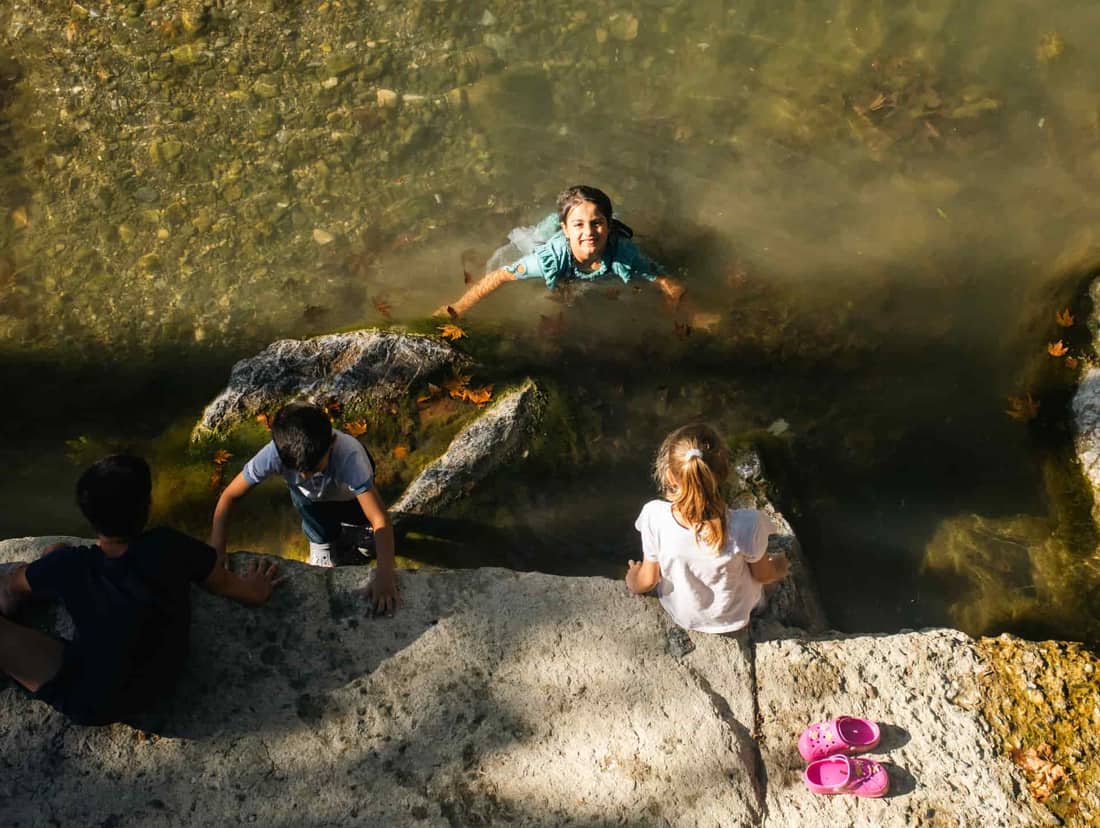
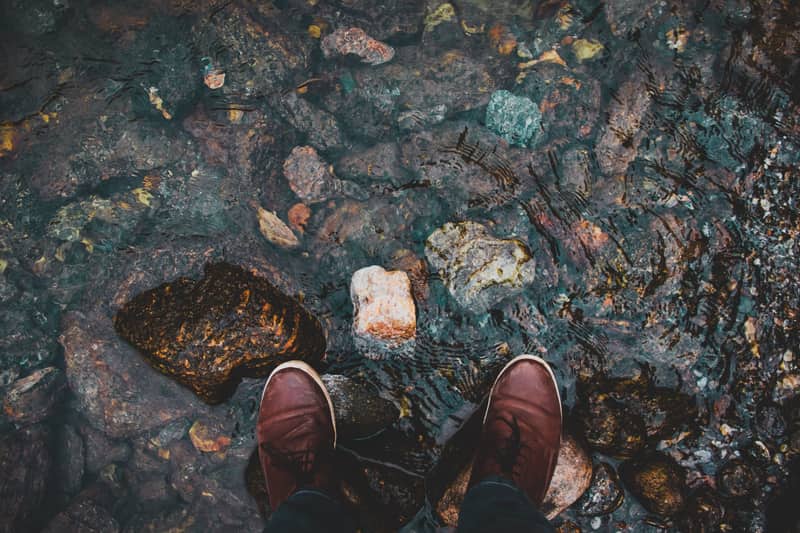
Photos on this page are licensed images that illustrate the category. They are not photographs of the specific products named, and no product image here is supplied by a manufacturer or retailer.
| Closed-toe water shoe | Sport sandal | Flip-flops | |
|---|---|---|---|
| Toe protection | Yes — rubber bumper | No | No |
| Stays on in water | Yes | Yes, if cinched | No |
| Walking comfort over distance | Moderate | Best | Poor |
| Drainage | Good | Excellent | Total |
| Grip on wet rock | Good | Good | Poor |
| Hot-surface protection | Yes | Yes | Yes, underfoot only |
| Ease on and off | Moderate | Moderate | Instant |
| Sand retention | Low | Traps sand in webbing | None |
| Right for | Rocky lake bottoms, rivers | Trail-and-wade days | Walking to the water, nothing else |
Flip-flops are a shore shoe and nothing more
Worth saying plainly because they are what most people actually bring. Flip-flops come off the instant a foot kicks in water, they offer no toe protection at all, and they are poor on a wet dock or a slope. They are excellent for walking twenty yards from a car to a towel, which is a real job — just not a water one.
If everyone in the family is in flip-flops and the bottom is rocky, somebody is going to cut a foot. That is the practical reality this comparison exists to address.
Choose a closed-toe water shoe if...
- The bottom is rock, gravel, shells or sharp weed. The toe bumper is the whole reason to choose this.
- There is current — a river, a spillway, a windy shoreline — and a shoe coming off is a real problem.
- A child will be running in and out of the water repeatedly without looking where they step.
- You want one shoe that handles wading, swimming and a short walk.
Choose a sport sandal if...
- The day involves real walking — a trail to a swimming hole, a campsite, a long shoreline.
- You want a cushioned footbed, which water shoes generally do not have.
- Heat and airflow matter more than toe protection.
- The bottom is sand or smooth stone rather than sharp rock.
The trade is real: an open toe walks cooler and more comfortably and leaves the toes unprotected. If the entry is rocky, a sandal is the wrong shoe even though it is the better walking shoe.
The sand problem
Sport sandals trap sand in their webbing and under the footbed, and trapped sand rubs. On a sandy beach a sandal that was comfortable on the walk in becomes a blister risk by mid-afternoon. Closed-toe water shoes with open side panels flush better; molded clogs flush best of all.
The fix is simple and worth doing: rinse the shoes, not just your feet, when you leave the water. Ten seconds of holding them under the surface and shaking removes most of it.
What a family actually needs
For most families the honest answer is two pairs and no flip-flops in the water: a cheap molded clog or slip-on for walking to and from the lake and for the pool, and a closed-toe water shoe for anyone going into a rocky bottom.
If your lake days are actually hikes with a swim at the end, invert that: buy the sport sandal as the main shoe and accept that the toes are exposed in the water. Full picks in best water shoes.
Our picks
KEEN Newport H2
A closed-toe water sandal with a real rubber outsole — the only style that protects toes on a rocky shoreline.
Specifications
- Toe
- Closed, rubber bumper
- Outsole
- Non-marking rubber, lugged
- Closure
- Bungee lace
- Drainage
- Open side panels
What works
- The closed toe bumper is the feature — stubbed toes on submerged rocks are the actual injury at a lake
- Lugged rubber outsole grips wet rock and algae-covered boat ramps
- Bungee lace cinches once and stays, so it does not come off in mud
- Genuinely lasts long enough to hand down to a sibling
What doesn’t
- Heaviest option here and the slowest to dry
- Most expensive kids' water shoe in the category
Who it’s for
A child at a rocky, weedy or gravelly lake, or one who walks in and out of the water all day.
Bottom line
The lake pick. If the bottom is rock or the shore is gravel, nothing else in this list is adequate.
Teva Kids' Hurricane XLT2
An open-toe sport sandal with three adjustment points — the right choice when the day is half trail, half water.
Specifications
- Toe
- Open
- Closure
- 3-point hook-and-loop
- Outsole
- Durabrasion rubber
- Footbed
- Cushioned, quick-dry webbing
What works
- Three adjustment points get a genuinely secure fit on an awkward foot
- Cushioned footbed makes it comfortable for miles, which water shoes are not
- Quick-dry webbing does not stay soggy overnight
- Grippy enough for wet rock despite being a sandal
What doesn’t
- Open toe gives no protection against submerged rocks
- Webbing traps sand and needs rinsing to stop rubbing
Who it’s for
A child on a day that mixes walking and wading — a trail to a swimming hole, a campsite by a lake.
Bottom line
The best walk-and-wade compromise. For a rocky swimming spot, the closed-toe Newport H2 is safer.
Merrell Hydro Moc
A one-piece molded clog with a heel strap, which is a clog that actually stays on in water.
Specifications
- Construction
- One-piece molded EVA
- Heel
- Adjustable strap
- Weight
- Very light
- Drainage
- Open ports
What works
- The heel strap is what separates this from a Croc — it does not float off a kicking foot
- One-piece EVA means nothing to delaminate and nothing to hold sand
- Rinses clean in seconds
- Light enough that children keep them on between water and shore
What doesn’t
- Soft EVA sole offers little protection against sharp rock
- Open design lets grit in, which then has to be rinsed out
Who it’s for
Children on sandy beaches, splash pads and docks who take shoes on and off twenty times a day.
Bottom line
The convenience pick, and a good one. Not the shoe for a rocky bottom.
Questions
Frequently asked questions
Are sandals OK for a lake?
Can you swim in sport sandals?
Do water shoes or sandals walk better?
Why do sport sandals cause blisters at the beach?
Read next