Water Shoes · Roundup
Best Water Shoes for Men (2026)
Six shoes sorted by terrain, with the fit notes that actually apply to a men's foot.
The short answer
The KEEN Men's Newport H2 is the pick for most men: a closed-toe water sandal with a lugged rubber outsole and a bungee lace, which is the only construction that protects toes on a rocky lake bottom. For sand and pool decks, the Speedo Surfwalker Pro 3.0 does everything needed for a fraction of the price.
Product photos are the retailer’s own catalogue images, shown from the retailer’s servers and refreshed daily. Any other photo here is a licensed image that illustrates the category, not a photograph of the specific product named.
| # | Product | Best for | Toe | Price |
|---|---|---|---|---|
| 1 | 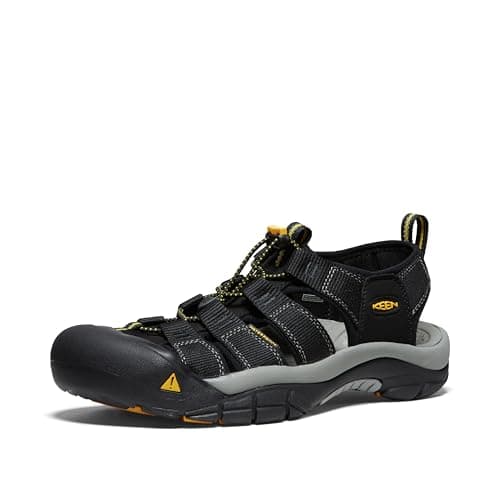 Top pick KEEN Men's Newport H2 The closed-toe water sandal most men should buy: a rubber toe bumper, a lugged outsole and a bungee lace that holds. | Rocky bottoms, all day | Closed, rubber bumper | |
| 2 | 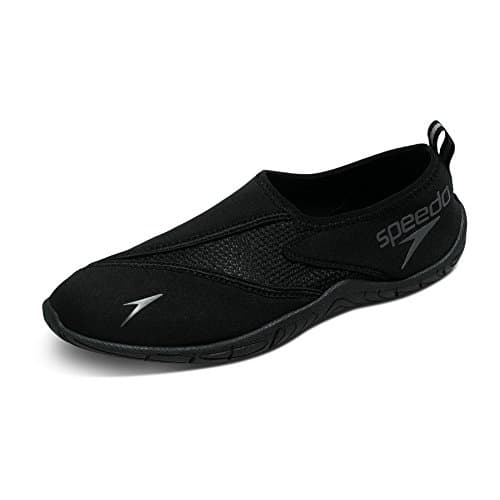 Budget pick Speedo Men's Surfwalker Pro 3.0 A thin-soled slip-on that does everything a pool deck, a sandbar or a splash pad needs, for very little money. | Cheapest useful pair | Stretch upper, rubber sole | |
| 3 | 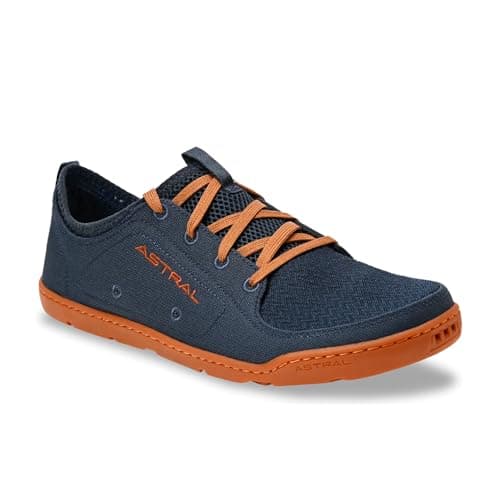 Upgrade pick Astral Men's Loyak A minimalist sneaker built around a razor-siped sticky-rubber sole — the best grip here, in a shoe that looks normal. | Grip on wet rock | G.15 non-marking rubber, razor siped | |
| 4 | 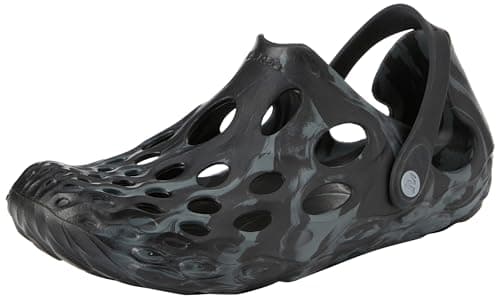 Also good Merrell Men's Hydro Moc A one-piece molded clog with a heel strap — a Croc that actually stays on a kicking foot. | On and off at the dock | One-piece molded EVA | |
| 5 | 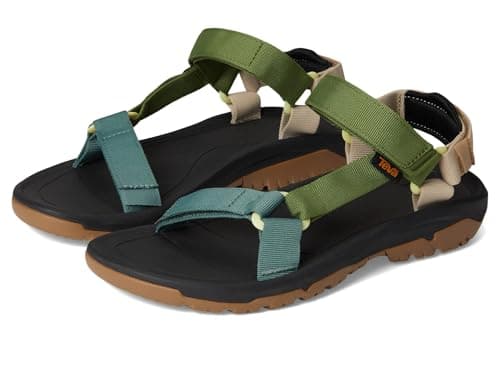 Also good Teva Men's Hurricane XLT2 An open-toe sport sandal with three adjustment points and a cushioned footbed — the right call when half the day is on a trail. | Walking then wading | Open | |
| 6 | 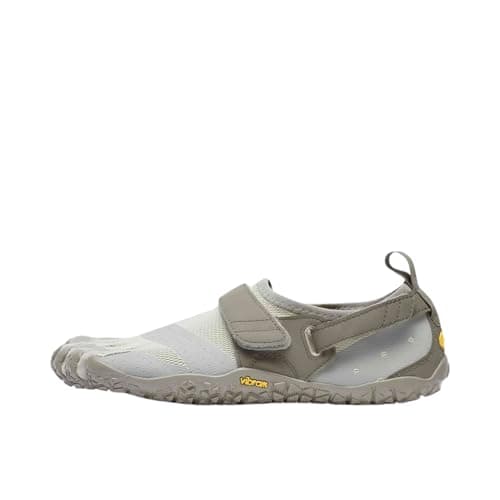 Also good Vibram Men's FiveFingers V-Aqua A toe shoe with a real Vibram outsole: the closest thing to barefoot that still protects the sole of your foot. | Barefoot feel, full sole | Individual toe pockets |
The bottom decides the shoe
What you are walking on sorts this entire category, and almost every men's water shoe roundup skips straight to brands instead. Answer this first and the choice is nearly made.
Rock, gravel, mussel shell or sharp weed needs a closed toe and a lugged rubber outsole. The injury that actually happens at a lake is a stubbed or split toe on a rock you could not see through the surface chop, and a molded EVA sole flexes around a rock rather than shielding you from it.
Wet, sloped rock — a boat ramp, a dam apron, the rocks beside a swimming hole — is a different problem again. There the risk is not your toes but your footing, and what solves it is a soft sticky rubber compound cut with sipes, the fine slits that channel the water film out from under the sole.
Sand, pool decks and splash pads need grip on wet concrete and something between hot surfaces and bare feet. A thin rubber sole does that for very little money, and paying more buys you nothing on flat ground.
And the question that catches men out more than anyone: will it stay on? A size 12 foot moving a lot of water generates real force on a loose shoe. Anything without a heel strap, a bungee or a lace comes off, and the lost one is always the second shoe.
KEEN Men's Newport H2
The closed-toe water sandal most men should buy: a rubber toe bumper, a lugged outsole and a bungee lace that holds.
Specifications
- Toe
- Closed, rubber bumper
- Outsole
- Non-marking rubber, lugged
- Closure
- Bungee lace
- Drainage
- Open side panels
What works
- The toe bumper is the whole argument — a submerged rock at walking pace is what breaks a toe
- Lugged rubber grips wet rock, algae and a slimy boat ramp, where foam soles slide
- Cinch the bungee once and it stays set for the season
- Comfortable enough to wear off the water, so it is one pair instead of two
What doesn’t
- Heaviest and slowest-drying shoe here — the footbed is still damp the next morning
- The webbing collects sand, and sand in webbing is what rubs the top of your foot raw
Who it’s for
Anyone wading in off rock or gravel, launching a boat, or walking shore-to-water all day.
Bottom line
The lake default. If the bottom is anything other than sand, start here.
Speedo Men's Surfwalker Pro 3.0
A thin-soled slip-on that does everything a pool deck, a sandbar or a splash pad needs, for very little money.
Specifications
- Construction
- Stretch upper, rubber sole
- Closure
- Slip-on
- Weight
- Light
- Drainage
- Perforated sole
What works
- Cheap enough to keep a pair in the car and stop thinking about it
- Thin rubber sole is grippy on wet concrete, which is where people actually fall
- Packs flat, so it lives in a swim bag rather than taking up a shoe slot
- Snug stretch upper means it does not fill and pump water like a loose shoe
What doesn’t
- Thin sole transmits every stone — genuinely the wrong shoe for a rocky lake
- The stretch upper loosens over a season and starts slipping at the heel
Who it’s for
Pool decks, sandy beaches, cruise decks, and anyone whose water is flat underfoot.
Bottom line
All most men need, if the bottom is sand. Spend more only when the bottom is hard.
Astral Men's Loyak
A minimalist sneaker built around a razor-siped sticky-rubber sole — the best grip here, in a shoe that looks normal.
Specifications
- Outsole
- G.15 non-marking rubber, razor siped
- Drainage
- Toe and heel ports, mesh upper
- Footbed
- Removable closed-cell EVA, zero drop
- Weight
- About 7.4 oz per shoe, men's 9
What works
- Siped sticky rubber is the grippiest sole in this group on wet, sloped rock
- Drains from the toe and heel while the mesh keeps most silt out
- Looks enough like a normal sneaker to wear into a restaurant afterwards
- Light for a closed shoe, and the insole comes out to dry separately
What doesn’t
- No toe bumper and a thin stack — protection is grip, not armor
- Costs as much as the Newport without the toe protection, which is the wrong trade for most lake families
Who it’s for
Paddlers, anglers and anyone scrambling on wet rock where slipping is the real risk.
Bottom line
Buy it for traction. If your worry is stubbing a toe rather than slipping, buy the Newport.
Merrell Men's Hydro Moc
A one-piece molded clog with a heel strap — a Croc that actually stays on a kicking foot.
Specifications
- Construction
- One-piece molded EVA
- Heel
- Adjustable strap
- Weight
- Very light
- Drainage
- Open ports
What works
- The heel strap is the difference between a water shoe and a shoe you lose in the water
- One-piece EVA has nothing to delaminate and holds no sand in a lining
- Rinses clean under a tap in seconds and dries by lunchtime
- Light enough that you stop noticing you are wearing them
What doesn’t
- Soft EVA sole gives almost nothing against a sharp rock — you feel every one
- The open design still lets grit in, and grit under a bare heel is a blister
Who it’s for
Dock and sandbar days, pontoon decks, and anyone taking shoes on and off twenty times.
Bottom line
The convenience pick, and a genuinely good one. Not the shoe for a stony bottom.
Teva Men's Hurricane XLT2
An open-toe sport sandal with three adjustment points and a cushioned footbed — the right call when half the day is on a trail.
Specifications
- Toe
- Open
- Closure
- 3-point hook-and-loop
- Outsole
- Durabrasion rubber
- Footbed
- Cushioned, quick-dry webbing
What works
- Three independent straps get a secure fit on a high or wide foot that a bungee cannot
- Cushioned footbed is comfortable for miles — closed water shoes are not
- Quick-dry webbing means it is not soggy at breakfast
- Grips wet rock better than its sandal looks suggest
What doesn’t
- Open toe offers no protection at all — wrong shoe for a rocky entry
- Webbing traps sand and needs a rinse before it starts chafing
Who it’s for
A hike to a swimming hole, a campsite on a lake, and anyone who wants one sandal for the whole trip.
Bottom line
The best walk-and-wade compromise. For rock, the closed-toe Newport is the safer shoe.
Vibram Men's FiveFingers V-Aqua
A toe shoe with a real Vibram outsole: the closest thing to barefoot that still protects the sole of your foot.
Specifications
- Construction
- Individual toe pockets
- Outsole
- Vibram rubber
- Fit
- Sized in EU, by foot length
- Drainage
- Quick-draining upper
What works
- You feel the bottom through it, which is exactly what some people want when wading
- Vibram rubber underfoot means sharp gravel stops being a problem even at barefoot thickness
- Grips better than a smooth-soled aqua sock by a wide margin
- Dries fast and takes up almost no bag space
What doesn’t
- Getting toes into the pockets wet is genuinely annoying, and some feet never fit it
- No toe protection above the sole, and the look puts plenty of people off
Who it’s for
Wading anglers, barefoot-shoe converts, and anyone who hates the dead feeling of a cushioned water shoe.
Bottom line
Excellent if the fit works for you. Try it on before a trip rather than on the dock.
What to look for in a men's water shoe
A closed toe, if the terrain is hard. A rubber toe bumper is the single most protective feature in the category and the reason closed-toe water sandals cost what they do. On a sandbar it is weight you are carrying for nothing.
Real drainage, in the right places. Open side panels, drain ports at the toe and heel, or a perforated sole let water out as fast as it comes in. A solid upper turns the shoe into a bucket, which is heavy, slow and a reliable way to raise a blister.
Grip you can see. Deep lugs for mud and loose rock; fine sipes in a soft compound for smooth wet rock. These are genuinely different soles for genuinely different hazards, and a hard-compound tread with neither is the worst of both.
Volume adjustment, not just length. Men's feet vary far more in instep volume than in length, and most water shoes come in one width. A bungee lace or a multi-strap closure takes up volume over a lower-volume foot and releases it over a high one, which no size number will do for you.
A snug fit, closer than a street shoe. A loose water shoe fills, pumps water with every step and slides on the foot — that sliding is what takes skin off. Do not buy half a size up for socks you will not be wearing.
Match the shoe to the terrain
| Terrain | Shoe type | Why |
|---|---|---|
| Rocky or gravelly lake bottom | Closed-toe water sandal, lugged sole | Toe protection plus grip on wet rock |
| Wet sloped rock, boat ramps | Siped sticky-rubber minimalist shoe | Sipes break the water film; soft rubber holds |
| Sandy beach or sandbar | Slip-on or clog with heel strap | Grip and hot-sand protection only |
| Pool deck / splash pad | Thin-sole slip-on | Grip on wet concrete, cheap to replace |
| River with current | Closed-toe sandal, cinched tight | Protection plus a shoe that cannot be pulled off |
| Trail then swim | Sport sandal, 3-point adjustment | Comfortable for miles, adequate for wading |
| Wading and fishing | Barefoot-style shoe with a real outsole | Feel for the bottom with a sole under it |
Sizing a men's water shoe
Water shoe sizing is less consistent than almost any other footwear category, because the shoes are built on lasts borrowed from sandals, sneakers and dive boots. Your street size is a starting point and nothing more.
Measure your foot in centimeters and read the brand's own chart. Stand on paper, mark heel and longest toe, measure. One brand's 10 and another's 10 can differ by most of a size, and a water shoe is a category where half a size of slop is the difference between comfortable and bleeding.
Expect European sizing on some models. Minimalist and dive-derived shoes are frequently sold in EU sizes with a US range printed alongside, and those conversions are approximate. If you are between two EU sizes, the foot length in centimeters is the number to trust.
Size for a bare foot unless you know you will wear socks. Plenty of men wear neoprene socks inside a water shoe for warmth or to stop chafe, and that genuinely takes up a half size. Decide which way you are wearing them before you order, not after. The detail on when socks make sense is in water shoes vs water socks, and the measuring method is in the water shoe sizing guide.
How much should you spend?
At the cheap end, a slip-on water shoe costs about as much as lunch and does everything a pool deck or a sandbar needs. If your water is flat underfoot, that is the correct amount to spend and the extra money genuinely buys you nothing.
In the middle sit the molded clogs with heel straps and the sport sandals. That money buys convenience and walking comfort rather than protection — worth it if you are on and off a boat all day, or if half the day is on a trail.
At the top, closed-toe water sandals and the siped-rubber minimalist shoes cost four or five times the cheap slip-on. What you get is toe protection or serious traction, plus a shoe that lasts several seasons rather than one. For an adult foot that is not growing, that durability argument is far stronger than it is for a child's shoe — this is a buy-once purchase in a way kids' water shoes never are.
Sandals, Crocs and the shore-shoe trap
A great many men do a lake day in flip-flops or an open clog, and for walking from the car to the water that is fine. The trap is treating them as water shoes. Both come off in water, neither protects a toe, and a foam clog on a wet, algae-covered ramp is actively worse than bare feet.
The dividing line is whether the shoe is attached to your heel. A pivoting strap or a fixed heel strap keeps a shoe on a kicking foot; an open back does not. The longer version of this argument, with the cases where each one wins, is in water shoes vs sandals and water shoes vs Crocs.
Making them last
Rinse in fresh water after every use, inside and out, and pull the insole if it comes out. Grit left inside a water shoe is what starts the rubbing that makes you stop wearing it, and lake silt dries into an abrasive.
Dry them properly, out of direct sun. A shoe left damp in a bag smells within two days and the smell never fully leaves webbing. Direct sun hardens EVA and degrades rubber, which costs you grip on exactly the surfaces you bought the shoe for.
Closed-toe sandals routinely last several seasons of weekend use. Cheap slip-ons stretch out and start slipping at the heel after a summer, which in water is a safety issue rather than cosmetic wear — when the heel starts lifting, replace them.
If the real problem is that the lake bottom near you is unwalkable rather than that your shoes are wrong, water shoes for rocky lake bottoms covers that case specifically.
One more thing worth saying on a family-lake site: if the water is cold enough that you are thinking about warmer footwear, the children are losing heat faster than you are. Neoprene on the body does far more than neoprene on the feet, and the thickness guide is in best wetsuits for kids.
Questions
Frequently asked questions
What are the best water shoes for men at a rocky lake?
Should men's water shoes be tight?
Are Crocs good water shoes for men?
What is the difference between a lugged sole and a siped sole?
Can you wear socks with water shoes?
How long do men's water shoes last?
Sources
Read next