Water Shoes · Comparison
Water Shoes vs Crocs
One is for the water. One is for the walk to the water. They are not interchangeable.
The short answer
Crocs are better on the shore: closed-toe, instantly dry, and a child can put them on alone. Water shoes are better in the water, because a rubber lugged sole grips wet rock where a foam clog slides, and a snug upper stays on where a clog floats off.
Product photos are the retailer’s own catalogue images, shown from the retailer’s servers and refreshed daily. Any other photo here is a licensed image that illustrates the category, not a photograph of the specific product named.
The short version
| Water shoes | Crocs (foam clog) | |
|---|---|---|
| Grip on wet rock | Good — lugged rubber outsole | Poor — smooth foam slides |
| Stays on while swimming | Yes, when sized correctly | No, floats off unless strapped |
| Toe protection | Closed-toe models, yes | Yes — fully enclosed toe box |
| Drying time | Minutes | Instant |
| A child can put them on | Mostly | Yes, easily |
| Hot dock boards and gravel paths | Fine | Fine |
| Price | Low to mid | Low to mid |
Read that table as a division of labor rather than a verdict. Crocs are genuinely excellent at being the shoe you walk to the water in and kick off; water shoes are the shoe you swim, wade and scramble in. Buying one to do both jobs is where the disappointment comes from.
The sole is the whole argument
Croslite and similar closed-cell foams are light, waterproof, soft and cushioned. On a dry surface they grip adequately. On wet, algae-covered rock they are slick, because foam deforms under load rather than biting into the surface, and there is no lug pattern to channel water away from the contact patch.
A water shoe's rubber outsole does both of those things. The rubber is harder, so it holds an edge on an irregular surface, and the tread gives water somewhere to go. That is not a marginal difference on a lake bottom — it is the difference between walking out confidently and going down on one hip.
If your shoreline is sand, none of this matters and a clog is fine everywhere. If it is rock, shale or anything with a biofilm on it, the sole decides. More on what to look for in water shoes for rocky lake bottoms.
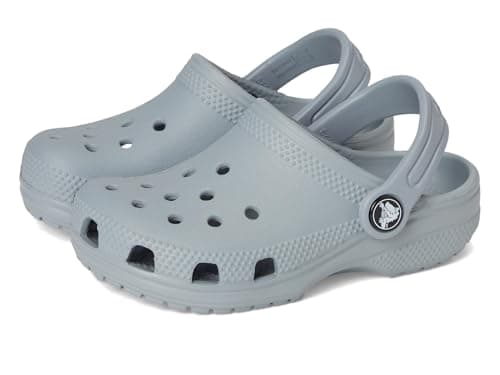
Crocs Kids' Classic Clog
Ventilated, cheap and everywhere — but they come off in water and rub, so they are a shore shoe.
Specifications
- Construction
- Croslite foam clog
- Heel
- Pivoting strap
- Drainage
- Ventilation ports
- Sizes
- Toddler through youth
What works
- Ventilation ports drain well and the foam does not hold water
- Trivially easy on and off, which is why children accept them
- Cheapest widely available option, in every color
- Foam is soft on hot pavement and pool decks
What doesn’t
- Parents consistently report blisters on the inner foot and shoes coming off in water
- Wide, loose fit means they are not a swimming shoe at all
Who it’s for
Walking to and from the water, poolside, and campsite wear — not in the lake.
Bottom line
Fine as a shore shoe, poor as a water shoe. If your child is going in over the ankle, buy something with a heel strap.
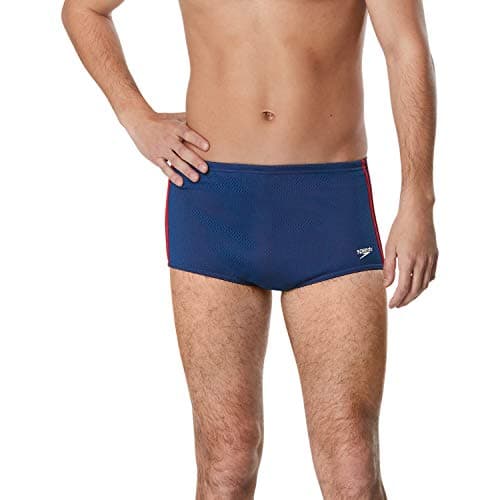
Speedo Kids' Surfwalker Pro
A slip-on water shoe with a thin rubber sole — everything a splash pad or pool deck needs, at a price that makes replacement painless.
Specifications
- Construction
- Stretch upper, rubber sole
- Closure
- Slip-on
- Weight
- Light
- Drainage
- Perforated sole
What works
- Cheap enough to buy a size up and a size down without thinking about it
- Thin rubber sole is grippy on wet pool decks, which is where kids actually slip
- Slip-on means a four-year-old manages it alone
- Packs flat in a swim bag
What doesn’t
- Thin sole transmits every rock; wrong for a stony lake bottom
- Stretch upper loosens over a season and starts slipping off
Who it’s for
Pools, splash pads, cruise decks and sandy beaches — anywhere the ground is flat.
Bottom line
The budget pick and genuinely adequate for smooth surfaces. Outfitting three kids? Buy these.
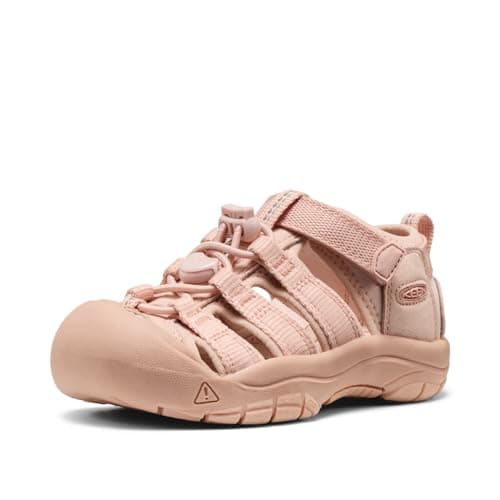
KEEN Newport H2
A closed-toe water sandal with a real rubber outsole — the only style that protects toes on a rocky shoreline.
Specifications
- Toe
- Closed, rubber bumper
- Outsole
- Non-marking rubber, lugged
- Closure
- Bungee lace
- Drainage
- Open side panels
What works
- The closed toe bumper is the feature — stubbed toes on submerged rocks are the actual injury at a lake
- Lugged rubber outsole grips wet rock and algae-covered boat ramps
- Bungee lace cinches once and stays, so it does not come off in mud
- Genuinely lasts long enough to hand down to a sibling
What doesn’t
- Heaviest option here and the slowest to dry
- Most expensive kids' water shoe in the category
Who it’s for
A child at a rocky, weedy or gravelly lake, or one who walks in and out of the water all day.
Bottom line
The lake pick. If the bottom is rock or the shore is gravel, nothing else in this list is adequate.
Staying on the foot
A clog is held on by friction and the shape of the instep, which works fine walking and fails as soon as the foot is buoyant and moving. Crocs float, so the moment one comes off it heads for the middle of the lake.
The heel strap helps substantially and most people never use it, because the strap-back position is more comfortable. Flipping the strap forward over the heel turns a clog into something that mostly stays on in shallow water. It is still not a swimming shoe.
Water shoes stay on because the upper is snug all the way around, which also means sizing matters more. Half an inch of toe room and a heel that does not lift is the target — the measuring method is in water shoe sizing guide.
Where Crocs genuinely win
- Toe protection on land. A fully enclosed foam toe box takes a stubbed toe on a dock board better than most water shoes do.
- Drying. There is nothing to dry. A clog is wearable thirty seconds after it comes out of the water, which matters at the end of a day.
- Independence. A three-year-old can put them on without help, every time, and that is worth real money to a parent.
- Hot surfaces. Thick foam insulates against a sun-baked dock better than a thin-soled water shoe.
- Washing. Rinse and done, with no fabric to hold lake smell.
Where water shoes win
- In the water. Grip, retention and a sole thin enough to feel what you are standing on.
- Wading and scrambling, including entering and leaving the water over rock.
- Sharp shells and debris, where a lugged rubber sole is a meaningfully better barrier than foam.
- Anything involving current, where a shoe coming off is a problem rather than an inconvenience.
- Long walks, because a foam clog with no heel retention becomes a blister after a mile.
So which should you buy?
If you are buying one pair and you spend your time in the water — swimming, wading, towing, launching a kayak — buy water shoes. If you are buying one pair and the water part is a quick dip from a sandy beach, the clog does more of your day.
Most families with children end up with both, and that is a sensible outcome rather than a failure of discipline: clogs live by the door for the walk down, water shoes live in the lake bag. Together they still cost less than one pair of technical adult sandals.
For a closed-toe shoe that genuinely does both jobs, the category to look at is a bungee-lace closed-toe sandal with a rubber bumper — heavier and dearer than either option here, and the only thing that is honestly good on rock and on a trail. The picks are in best water shoes and the toddler-specific version is in best water shoes for toddlers.
Questions
Frequently asked questions
Are Crocs good water shoes?
Can you swim in Crocs?
Do Crocs slip on wet rock?
Are water shoes or Crocs better for a lake?
Do water shoes protect against zebra mussel shells?
Read next