Water Shoes · Comparison
Water Shoes vs Swim Shoes
The labels are used interchangeably. The designs behind them are not.
The short answer
In practice 'swim shoes' means a thin-soled slip-on for pools and flat ground, and 'water shoes' covers everything up to a closed-toe sandal with a lugged rubber sole. Buy on terrain, not on the label: the Speedo Surfwalker Pro for smooth surfaces, the KEEN Newport H2 if the bottom is rock.
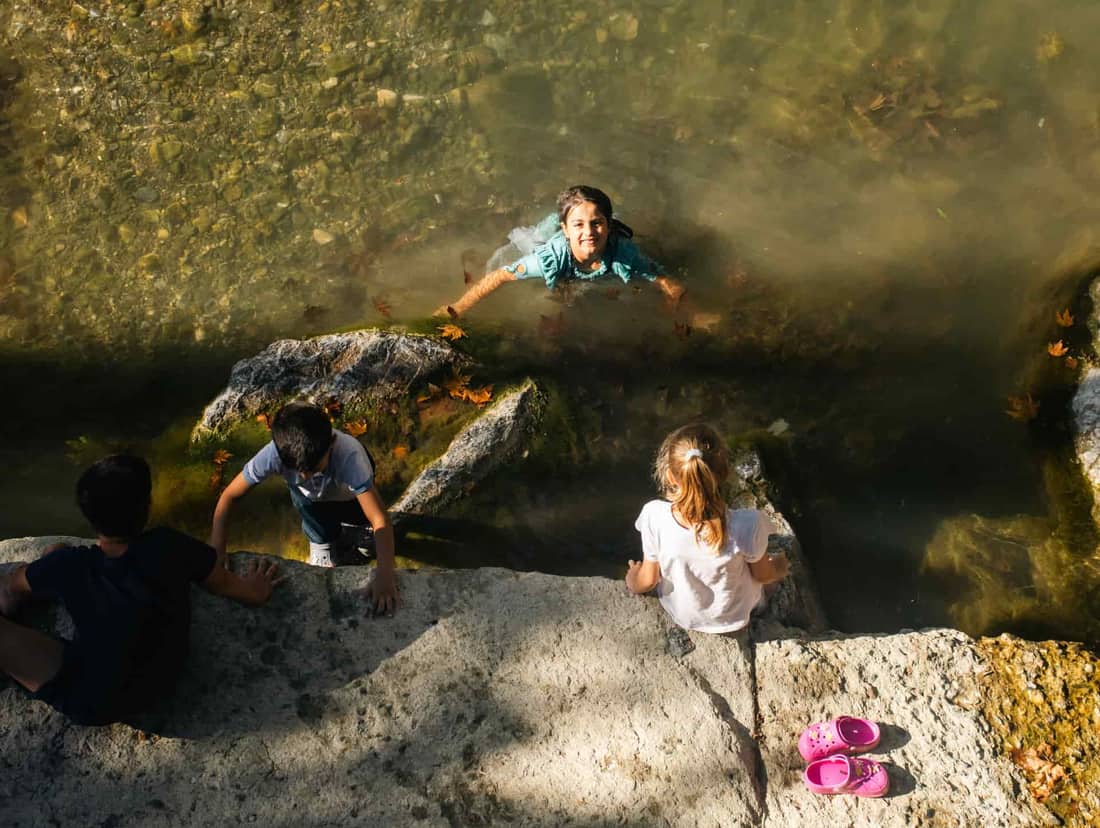
Product photos are the retailer’s own catalogue images, shown from the retailer’s servers and refreshed daily. Any other photo here is a licensed image that illustrates the category, not a photograph of the specific product named.
| # | Product | Best for | Construction | Price |
|---|---|---|---|---|
| 1 | 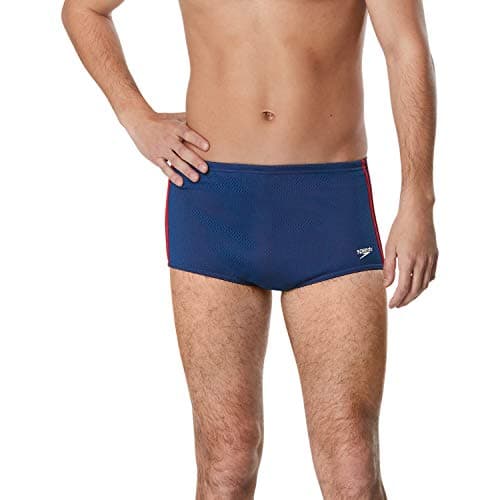 Top pick Speedo Kids' Surfwalker Pro A slip-on water shoe with a thin rubber sole — everything a splash pad or pool deck needs, at a price that makes replacement painless. | Cheapest useful pair | Stretch upper, rubber sole | |
| 2 | 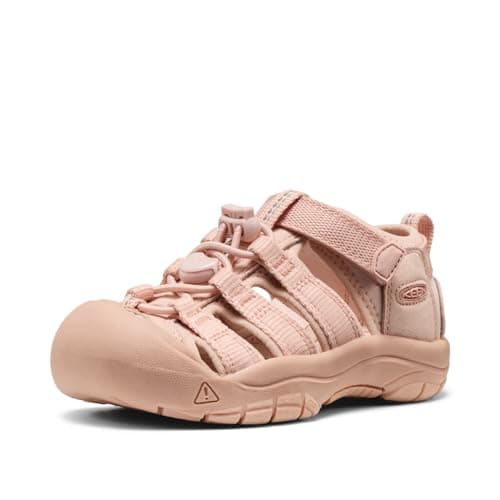 Upgrade pick KEEN Newport H2 A closed-toe water sandal with a real rubber outsole — the only style that protects toes on a rocky shoreline. | Rocky lake bottoms | Closed, rubber bumper | |
| 3 | 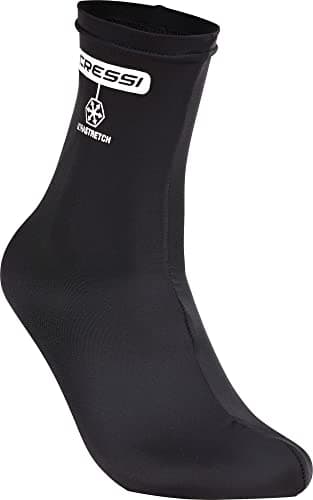 Also good Cressi Neoprene Water Socks Thin neoprene socks: warmth and chafe protection, essentially no sole, and not a substitute for a shoe. | Warmth and blister prevention | Neoprene, thin | |
| 4 | 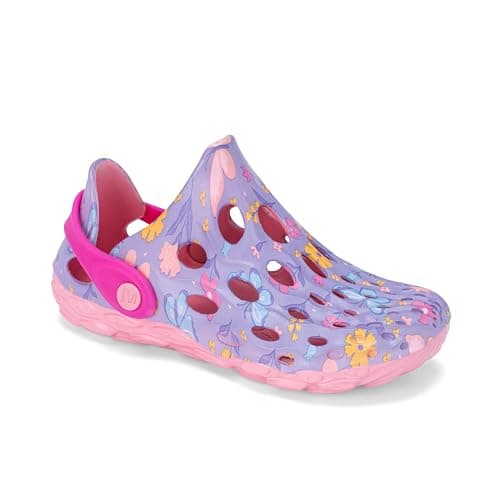 Also good Merrell Hydro Moc A one-piece molded clog with a heel strap, which is a clog that actually stays on in water. | On and off all day | One-piece molded EVA |
There is no official difference, and that is the problem
Neither term is a standard. Manufacturers use both, retailers use both, and the same shoe is routinely listed as a water shoe on one site and a swim shoe on another. If you are trying to work out which one you need, the labels will not help you.
What is consistent is how the words are used in practice. 'Swim shoe' almost always means a thin, flexible slip-on — a stretch upper with a perforated rubber sole, designed to go in the water and provide grip and a barrier between your foot and a hot or rough surface. Also sold as aqua socks, pool shoes or beach socks.
'Water shoe' is the broader term and covers that slip-on plus three other designs: molded clogs with heel straps, open-toe sport sandals with multiple adjustment points, and closed-toe water sandals with a rubber toe bumper and a lugged outsole. The last of those is a very different product from a swim shoe, and it is four or five times the price.
So the useful question is not which term to search for. It is what is under the water where you swim — and that question has a clear answer every time.
Speedo Kids' Surfwalker Pro
A slip-on water shoe with a thin rubber sole — everything a splash pad or pool deck needs, at a price that makes replacement painless.
Specifications
- Construction
- Stretch upper, rubber sole
- Closure
- Slip-on
- Weight
- Light
- Drainage
- Perforated sole
What works
- Cheap enough to buy a size up and a size down without thinking about it
- Thin rubber sole is grippy on wet pool decks, which is where kids actually slip
- Slip-on means a four-year-old manages it alone
- Packs flat in a swim bag
What doesn’t
- Thin sole transmits every rock; wrong for a stony lake bottom
- Stretch upper loosens over a season and starts slipping off
Who it’s for
Pools, splash pads, cruise decks and sandy beaches — anywhere the ground is flat.
Bottom line
The budget pick and genuinely adequate for smooth surfaces. Outfitting three kids? Buy these.
KEEN Newport H2
A closed-toe water sandal with a real rubber outsole — the only style that protects toes on a rocky shoreline.
Specifications
- Toe
- Closed, rubber bumper
- Outsole
- Non-marking rubber, lugged
- Closure
- Bungee lace
- Drainage
- Open side panels
What works
- The closed toe bumper is the feature — stubbed toes on submerged rocks are the actual injury at a lake
- Lugged rubber outsole grips wet rock and algae-covered boat ramps
- Bungee lace cinches once and stays, so it does not come off in mud
- Genuinely lasts long enough to hand down to a sibling
What doesn’t
- Heaviest option here and the slowest to dry
- Most expensive kids' water shoe in the category
Who it’s for
A child at a rocky, weedy or gravelly lake, or one who walks in and out of the water all day.
Bottom line
The lake pick. If the bottom is rock or the shore is gravel, nothing else in this list is adequate.
Cressi Neoprene Water Socks
Thin neoprene socks: warmth and chafe protection, essentially no sole, and not a substitute for a shoe.
Specifications
- Material
- Neoprene, thin
- Sole
- Minimal grip print
- Purpose
- Warmth, chafe protection
- Sizes
- Child and adult
What works
- Keeps feet warm in cool water, which nothing else in this category does
- Stops fin and shoe chafe, the reason most people buy them
- Packs to nothing in a swim bag
- Cheap, and a genuinely different tool from a water shoe
What doesn’t
- Almost no puncture protection — a sharp rock or a shell goes straight through
- Slippery on wet boat ramps and dock boards
Who it’s for
Cool-water swimmers, anyone wearing fins, and children who blister inside water shoes.
Bottom line
Buy socks for warmth and chafe, shoes for protection. Wearing socks inside shoes covers both.
Merrell Hydro Moc
A one-piece molded clog with a heel strap, which is a clog that actually stays on in water.
Specifications
- Construction
- One-piece molded EVA
- Heel
- Adjustable strap
- Weight
- Very light
- Drainage
- Open ports
What works
- The heel strap is what separates this from a Croc — it does not float off a kicking foot
- One-piece EVA means nothing to delaminate and nothing to hold sand
- Rinses clean in seconds
- Light enough that children keep them on between water and shore
What doesn’t
- Soft EVA sole offers little protection against sharp rock
- Open design lets grit in, which then has to be rinsed out
Who it’s for
Children on sandy beaches, splash pads and docks who take shoes on and off twenty times a day.
Bottom line
The convenience pick, and a good one. Not the shoe for a rocky bottom.
The real comparison
| Swim shoe (thin slip-on) | Water shoe (closed-toe sandal) | |
|---|---|---|
| Toe protection | None | Rubber bumper — the whole point |
| Sole | Thin, perforated rubber | Thick, lugged rubber |
| Grip on wet rock | Poor to adequate | Good |
| Stays on in deep water | Usually, if snug | Yes — bungee or strap closure |
| Swimming in them | Barely noticeable | Noticeable drag |
| Drying time | Fast | Slower |
| Price | Lowest | Four to five times more |
| Lasts | One season | Several, or until the foot grows |
The row that decides most purchases is toe protection, because the injury that ends a lake afternoon is a stubbed or cut toe on a rock nobody could see. A thin sole flexes around a rock rather than shielding you from it, and no amount of grip makes up for that.
The row that decides the rest is price. On sand, a pool deck or a splash pad, the thin slip-on does the entire job and the expensive sandal is protection you will never use. Paying four times more for a flat-ground shoe is the most common way to waste money in this category.
Which one for where you swim
| Where you swim | What to buy |
|---|---|
| Sandy beach | Swim shoe — thin slip-on, or a clog with a heel strap |
| Pool deck, splash pad | Swim shoe — grip on wet concrete is the whole requirement |
| Rocky or gravelly lake bottom | Water shoe — closed toe, lugged sole |
| Weedy or mussel-shelled bottom | Water shoe — closed toe, no exceptions |
| River with current | Water shoe — closed toe, cinched tight |
| Cold water, or blistering feet | Neoprene socks, alone or inside either shoe |
| Walk in, then swim | Sport sandal with 3-point adjustment |
One pairing is worth highlighting because people treat it as an either-or when it is not: neoprene socks are not a third kind of shoe. They provide warmth and chafe protection and essentially no sole, and they work best worn inside a shoe rather than instead of one. The full comparison is in water shoes vs water socks.
Can you actually swim in either?
Yes, with a real difference between them. A thin slip-on or a pair of neoprene socks barely affects swimming at all — you forget they are on. A closed-toe water sandal is noticeably draggy and slightly heavy, which is fine for wading and walking in but not pleasant for swimming any distance.
Whichever you wear in deep water needs something holding it to the heel. A shoe without a heel strap comes off a kicking foot, which is why so many lake bottoms have a single lost clog sitting on them. Open clogs are shore shoes, not water shoes, regardless of how they are marketed.
What to look for, whichever term you search
- A heel strap or bungee cinch for anything worn deeper than the ankle.
- A lugged rubber outsole if you will be on wet rock, algae-covered ramps or a boat ladder. Smooth EVA is slippery on all three.
- Genuine drainage — open side panels and a perforated sole. A solid upper turns the shoe into a bucket.
- A snug fit, and check the width. Width rather than length is where sizing usually fails, and brands vary considerably — the detail is in our water shoe sizing guide.
- Fast-drying materials. Webbing and EVA dry overnight; padded fabric linings stay damp and start to smell within days.
- A toe bumper if and only if the terrain is hard. On sand it is dead weight you are paying for.
What we would buy for a family
The practical split for most households is cheap thin-soled swim shoes for everyone, plus one good closed-toe pair for whoever walks the furthest or swims off the roughest shoreline. That is less total spend than mid-range shoes all round and it covers both failure modes.
Add neoprene socks if anyone blisters inside their shoes or the water is cold enough that feet are the first thing to give up. They are inexpensive and they solve a problem no shoe solves.
And if your regular swimming spot is rocky, buy the closed-toe sandals properly rather than hoping a slip-on will do. They routinely outlast a child's foot and hand down to a sibling, which changes the arithmetic entirely if you have more than one child — the detail is in water shoes for rocky lake bottoms.
Questions
Frequently asked questions
What is the difference between water shoes and swim shoes?
Can you swim in water shoes?
Do I need water shoes or swim shoes for a rocky lake?
Are swim shoes worth buying for a pool or splash pad?
Are Crocs water shoes?
Read next