Baby & Toddler · Guide
When Can Babies Swim in a Lake?
Around six months is the usual answer. The water decides more than the age does.
The short answer
Most babies can go in a lake from around six months, once they hold their head up well and you can keep them warm. Age is the smaller factor: water temperature, water quality and shade decide whether a particular lake on a particular day is suitable, and the first visits should be short, shallow and in arms.
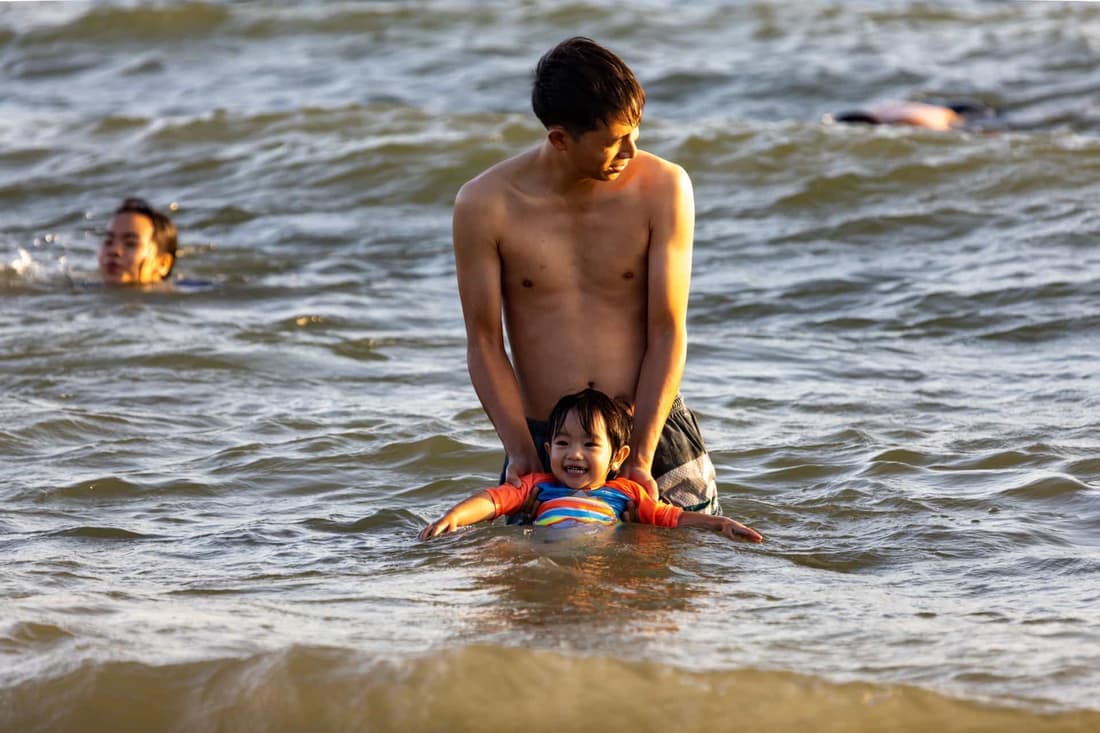
Product photos are the retailer’s own catalogue images, shown from the retailer’s servers and refreshed daily. Any other photo here is a licensed image that illustrates the category, not a photograph of the specific product named.
The age, and why it is the least interesting part
The common answer is around six months, and it is a reasonable one. By then most babies hold their head up well, have enough body mass to hold onto some heat, and can be comfortably supported in arms in shallow water. Infant water classes typically start in that window too.
There is no regulation setting a minimum, and your paediatrician is the right person to ask about your particular baby — especially a baby born prematurely, or one with a heart, lung or skin condition. What follows is about the water rather than the baby, because that is the part most first-time guidance skips.
A lake is genuinely different from a pool for a baby, in three ways that all matter more than whether they are five months or seven: it is colder, its water quality varies day to day, and there is usually no shade.
The three conditions that actually decide it
Temperature. This is the big one, and it is the reason a lot of first lake swims go badly. Babies lose heat far faster than adults — more surface area relative to their mass, and much less ability to generate heat by moving. Water that feels pleasant to you can chill a baby in minutes. Below about 80°F, keep it to a brief dip; much below that and a baby is better off playing at the water's edge than being in it.
Water quality. The CDC's guidance on oceans, lakes and rivers is clear that untreated natural water carries germs that chlorinated water does not, and that the main route in is swallowing it. Babies are the most likely swimmers to swallow water and the least able to tolerate the consequences. Check for posted advisories before you go, avoid water after heavy rain while runoff is still washing in, and stay out of anything with visible algae scum.
Shade. A lake shore in the middle of a summer day is one of the most exposed environments a baby can be in — open sky overhead plus reflection off the water. Paediatric guidance for infants is shade and clothing first, sunscreen only for the bits that cannot be covered. If there is no natural shade at your spot, you are bringing shade with you or you are going at a different time of day.
What a first lake swim needs
Less than you would think, and most of it is about warmth and sun rather than swimming.
- A swim diaper. Not a regular nappy, which swells with water and fails. A swim diaper is designed to hold a solid accident and let water pass — the difference is explained in swim diaper vs regular diaper.
- UPF 50+ cover and a hat. Fabric does the work that sunscreen cannot do reliably on a baby. Our picks are in best baby rash guards.
- Two towels and a dry change. One to wrap in immediately, one because the first is wet. A baby that gets warm again quickly has a good memory of the water.
- Shade you can set up. An umbrella or a pop-up. This is the item people leave at home and then wish they had.
- A USCG-approved infant life jacket, if a boat or a dock is involved. Required kit on the water, and a Type II with a head collar and crotch strap is what an infant needs.
- Nothing inflatable as a safety device. A baby float with a canopy is a lovely thing for a calm, warm, shallow swim with a parent holding on. It is a toy, not a flotation device.
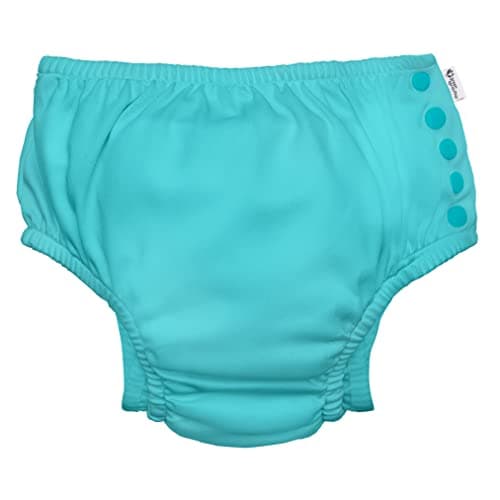
i play. by green sprouts Reusable Swim Diaper
The reusable standard: a snug three-layer diaper with a UPF 50+ outer that meets public-pool rules.
Specifications
- Type
- Reusable
- Layers
- 3, with absorbent inner
- UPF
- 50+ outer
- Sizes
- 6 months to 5T
What works
- Snug leg elastic is what public pools actually check for, and this passes
- Pays for itself in about a month of weekly swimming
- Sizes run up to 5T, well past where disposables stop being practical
- Machine washable and survives a full season
What doesn’t
- Has to be rinsed immediately after use or it smells
- Absorbs nothing meaningful, so it is containment only — it does not hold urine
Who it’s for
A baby or toddler swimming weekly or more, where disposables become a recurring cost.
Bottom line
The reusable to buy. Own two so one is always dry; a single one is not enough for back-to-back sessions.
Stearns Infant Classic Series Vest
An infant vest with the two features that matter at this size: a head pillow and a crotch strap.
Specifications
- USCG class
- Type II, approved
- Weight range
- Under 30 lbs
- Head support
- Flotation collar
- Closure
- Buckles plus crotch strap
What works
- The flotation collar supports an infant's head, which is the whole point at this weight
- Crotch strap stops the vest lifting off a small body in water
- Grab handle at the collar lets an adult lift the child straight out
- Type II turns most wearers face-up, which an infant cannot do for themselves
What doesn’t
- Bulky and warm, and most infants object to it initially
- A vest is never a substitute for arm's-length supervision at this age
Who it’s for
A baby or small toddler under 30 lbs on or near a boat.
Bottom line
Required kit if an infant is going on the water. Fit it dry, on land, and lift by the collar handle to check it does not slip off.
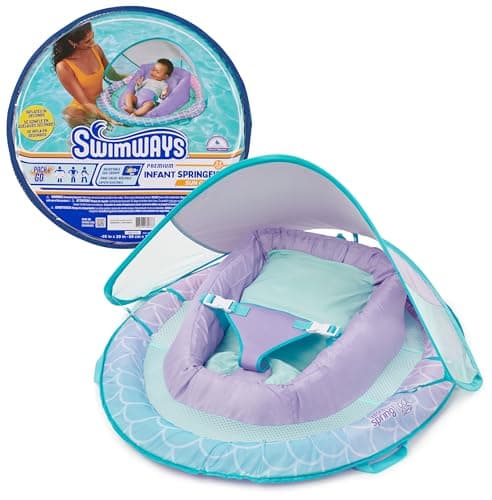
SwimWays Infant Spring Float with Canopy
The same design scaled down for a baby who cannot sit up unaided yet, with more back support and a smaller seat.
Specifications
- Age
- 3-9 months
- Canopy
- Included
- Seat
- Mesh, supported
- Design
- Inner-spring outer ring
What works
- Fills the gap the 9-24 month floats leave: a 4 month old simply does not fit those seats safely
- More back and head support than the older-baby version, which is the whole point at this age
- Same inner-spring ring and canopy approach as its bigger sibling
- Folds flat for a lake bag like the rest of the Spring Float range
What doesn’t
- An extremely short useful life — months, not summers, and then you need the 9-24 month float
- Costs about the same as the bigger float you will buy next, which makes it a hard second purchase to justify
- Still not a safety device, and a baby this age needs an adult's hands on the float, not just nearby
- SwimWays does not publish a weight limit as prominently for this model as for the 9-24 month one
Who it’s for
A 3-9 month old on a first calm-water outing, held by an adult rather than left to drift.
Bottom line
Buy it only if your baby is genuinely under 9 months this season. Otherwise skip straight to the 9-24 month float.
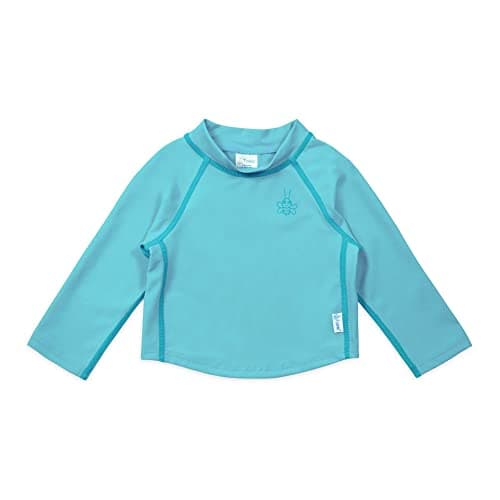
i play. by green sprouts Baby Rashguard Shirt
A simple UPF 50+ baby swim shirt from the brand that dominates baby swim gear, at a price you can buy two of.
Specifications
- UPF
- 50+
- Sizes
- 6 months to 4T
- Sleeves
- Long and short options
- Fabric
- Quick-dry polyester blend
What works
- Cheap enough to own a dry spare, which matters more than fabric quality with a baby
- Matches the same brand's swim diapers and swimsuits for sizing
- Quick-dry fabric so a wet shirt is not a cold shirt
- Simple pull-on with a wide neck
What doesn’t
- Thinner than Coolibar and the rating is a fabric claim rather than a third-party seal
- Colors fade noticeably after a season
Who it’s for
Babies who need sun cover on ordinary days rather than all-day beach exposure.
Bottom line
The budget baby pick. Two of these beats one premium shirt when half your wardrobe is always wet.
Roughly what to expect by age
| Age | In a lake? | What it looks like |
|---|---|---|
| Under 2 months | No | Too little heat regulation; wait |
| 2-6 months | Edge of the water | Feet in, held, very short, warm days only |
| 6-12 months | Yes, briefly | In arms, shallow, 10-15 minutes, warm water |
| 12-24 months | Yes | Walking in the shallows, still touch supervision |
| 2-3 years | Yes | Longer sessions; an approved vest for deeper water |
Treat the time limits as the point rather than the detail. Short and warm is what makes a first lake visit a success; long and cold is what produces a baby who screams at the sight of water next time.
Picking the spot, not just the day
For a baby you want a shallow, gently shelving, sandy entry — somewhere you can stand comfortably with water at your knees and no sudden drop-off. Rocky or weedy bottoms make carrying a baby in genuinely hazardous for the person doing the carrying, which is the real risk in that scenario.
Water that warms up is also shallow water, so a shallow bay on the sunny side of a lake is both easier to stand in and several degrees warmer than open water. Early afternoon is the warmest part of the day for water temperature and the worst for UV, which is the compromise you are managing.
If the shoreline is rough, water shoes for the adult carrying the baby are worth more than any baby gear on the list — see water shoes for rocky lake bottoms. And it is worth walking the entry yourself before you bring the baby down to it. How to assess a swimming spot in general is in how to find a swimming lake near you.
When to call it off
Skip the swim, without debating it, if any of these apply: a posted advisory or closure, visible algae bloom or scum on the surface, heavy rain in the last day or two, water that is cold enough to make you hesitate, an unexplained rash or stomach illness in the family, or a shoreline you cannot safely carry a baby across.
And in the baby themselves: shivering, blue lips or fingertips, or simply going quiet and still. Babies do not always protest about being cold — going quiet is a sign to get out and warm up, not a sign that they are enjoying it.
One lake-specific irritation worth knowing in advance: swimmer's itch, a short-lived rash from a parasite in shallow, weedy water. It is unpleasant rather than dangerous, and towelling off briskly as soon as you come out reduces the risk — the detail is in swimmer's itch. A full first-visit list is in baby's first lake day checklist.
Questions
Frequently asked questions
What age can a baby swim in a lake?
Can a 3 month old go in a lake?
How cold is too cold for a baby in a lake?
Is lake water safe for babies?
Does a baby need a life jacket in a lake?
Do babies need a swim diaper in a lake?
Sources
Read next