Rash Guards · Roundup
Best Baby Rash Guards (2026)
Five UPF 50+ tops for the age when sunscreen is the wrong first answer.
The short answer
The SwimZip Kids' Long Sleeve Rash Guard is the best baby rash guard because of one feature: a full-length front zip, which is what makes a wet top removable from a baby without a fight. For the youngest babies with the thinnest skin, the Coolibar Mini Blake is the softer certified UPF 50+ option.
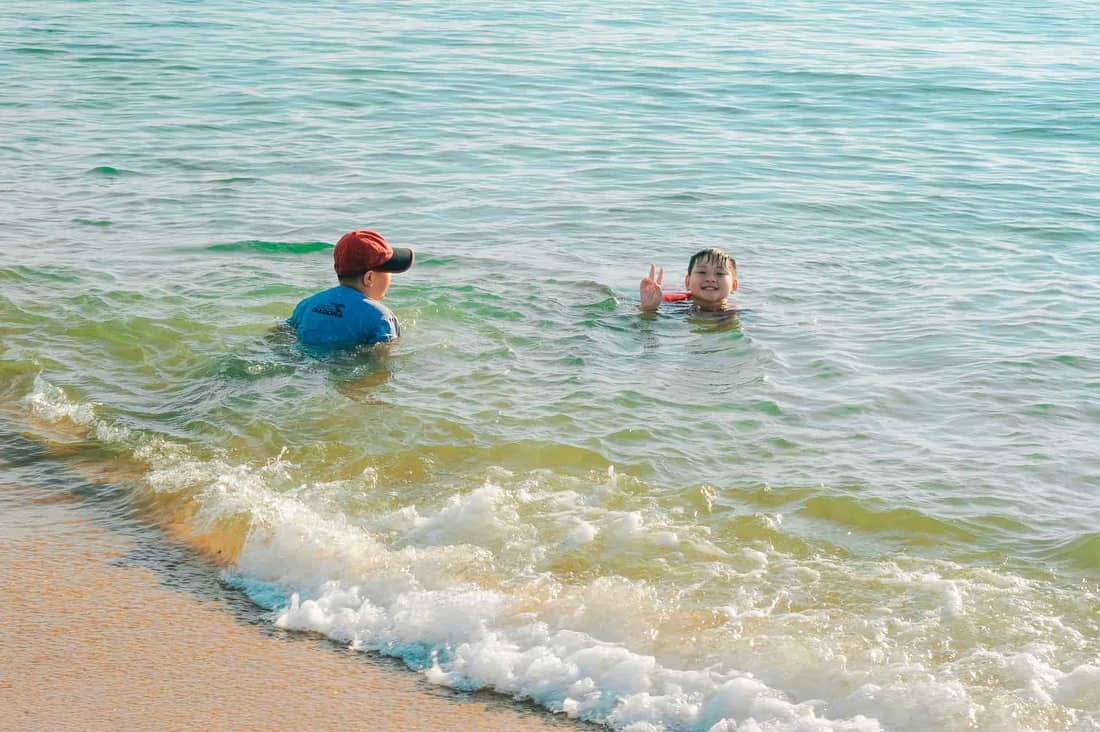
Product photos are the retailer’s own catalogue images, shown from the retailer’s servers and refreshed daily. Any other photo here is a licensed image that illustrates the category, not a photograph of the specific product named.
| # | Product | Best for | Closure | Price |
|---|---|---|---|---|
| 1 | 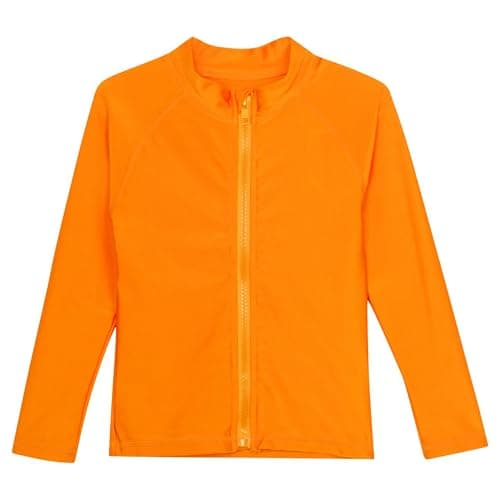 Top pick SwimZip Kids' Long Sleeve Rash Guard A full-length front zip, which is the single feature that makes a wet rash guard removable from a toddler. | Toddlers, full-length zip | 50+ | |
| 2 | Upgrade pick Coolibar Mini Blake Kids' Rash Guard Coolibar's certified UPF 50+ knit in a soft toddler cut, for the age when skin is thinnest. | Babies and young toddlers | 50+, built into the fabric | |
| 3 | 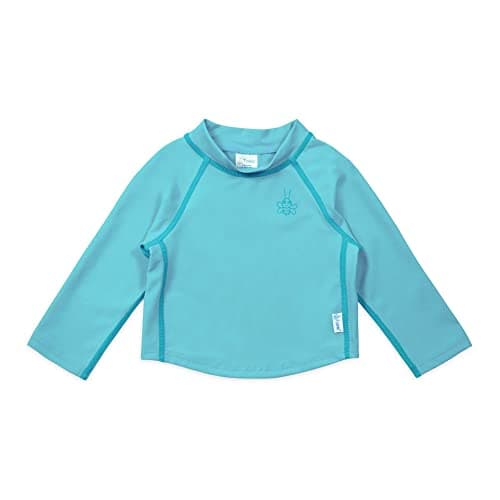 Budget pick i play. by green sprouts Baby Rashguard Shirt A simple UPF 50+ baby swim shirt from the brand that dominates baby swim gear, at a price you can buy two of. | Cheapest baby UPF option | 50+ | |
| 4 | Also good UV Skinz Kids' Long Sleeve Rash Guard Certified UPF 50+ at a mid-market price, in a cut that suits children who are still growing fast. | Best value UPF 50+ | 50+, certified | |
| 5 | 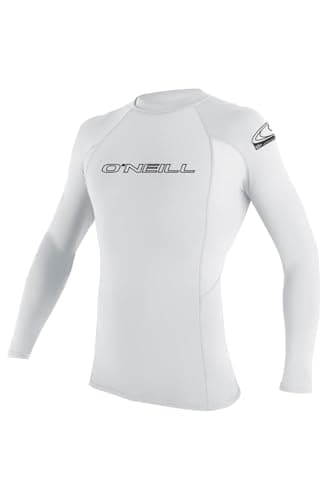 Also good O'Neill Kids' Basic Skins UPF 50+ A close-fitting surf rash guard with minimal seams — the one that does not ride up when a child swims. | Active kids, ages 4-14 | 50+ |
Why a baby gets fabric rather than sunscreen
For babies this is not a style decision. The American Academy of Pediatrics' guidance for infants is to keep them out of direct sun and to use shade and clothing as the first line of protection, with sunscreen reserved for the small areas that cannot be covered. A rash guard is how you do the clothing part.
The reason is that fabric protection does not depend on application. Sunscreen has to be applied thickly enough, everywhere, and reapplied every two hours and after every dip — and in practice almost nobody manages the recommended amount, which means the real-world protection is well below the number on the bottle. A UPF 50+ top delivers its rating for as long as it is on.
On a baby there is a second argument: skin surface area relative to body size is at its highest and the skin itself is at its thinnest. Covering the torso, shoulders and upper arms with fabric removes the largest and most exposed area from the sunscreen problem entirely.
SwimZip Kids' Long Sleeve Rash Guard
A full-length front zip, which is the single feature that makes a wet rash guard removable from a toddler.
Specifications
- UPF
- 50+
- Closure
- Full-length front zip
- Sleeves
- Long
- Sizes
- Baby through youth
What works
- The full zip turns a two-adult wrestling match into a five-second job
- Zip garage at the chin stops the pinch that makes toddlers refuse zipped tops
- Certified UPF 50+ across the size range
- Baby sizes actually exist, which most rash-guard brands skip
What doesn’t
- The zip is a stiff line down the chest, noticeable lying on a float
- Zip is the part that eventually fails
Who it’s for
Babies and toddlers, or any child who fights having a wet top pulled over their head.
Bottom line
Buy the zip version for anyone under about four. The convenience is worth more than the fabric difference.
Coolibar Mini Blake Kids' Rash Guard
Coolibar's certified UPF 50+ knit in a soft toddler cut, for the age when skin is thinnest.
Specifications
- UPF
- 50+, built into the fabric
- Fit
- Soft toddler cut
- Sleeves
- Long
- Certification
- Skin Cancer Foundation Seal
What works
- Same certified knit as the adult and older-child ranges, not a lesser toddler fabric
- Soft enough not to irritate very young skin
- Wide neck opening so it clears a toddler's head without a fight
- Holds its rating through the wash cycles a toddler garment actually gets
What doesn’t
- Expensive for a garment outgrown in a single season
- No zip version in the smallest sizes
Who it’s for
Babies and toddlers spending real time outdoors, where sunscreen alone is not the right answer.
Bottom line
For a baby, fabric coverage beats sunscreen on the parts it covers. Worth the price for the youngest children only.
i play. by green sprouts Baby Rashguard Shirt
A simple UPF 50+ baby swim shirt from the brand that dominates baby swim gear, at a price you can buy two of.
Specifications
- UPF
- 50+
- Sizes
- 6 months to 4T
- Sleeves
- Long and short options
- Fabric
- Quick-dry polyester blend
What works
- Cheap enough to own a dry spare, which matters more than fabric quality with a baby
- Matches the same brand's swim diapers and swimsuits for sizing
- Quick-dry fabric so a wet shirt is not a cold shirt
- Simple pull-on with a wide neck
What doesn’t
- Thinner than Coolibar and the rating is a fabric claim rather than a third-party seal
- Colors fade noticeably after a season
Who it’s for
Babies who need sun cover on ordinary days rather than all-day beach exposure.
Bottom line
The budget baby pick. Two of these beats one premium shirt when half your wardrobe is always wet.
UV Skinz Kids' Long Sleeve Rash Guard
Certified UPF 50+ at a mid-market price, in a cut that suits children who are still growing fast.
Specifications
- UPF
- 50+, certified
- Fit
- Regular
- Sleeves
- Long
- Extras
- Zip-neck options
What works
- Certified rating at a price most families will actually repeat next size up
- Regular cut splits the difference between performance and relaxed
- Zip-neck versions are much easier on a toddler
- Holds color through a season of chlorine
What doesn’t
- Fabric is slightly heavier and dries slower than a surf-brand rash guard
- Fewer size options at the top of the range
Who it’s for
Families buying two or three rash guards at once and replacing them annually.
Bottom line
The value pick. Certified UPF 50+ is the only spec that matters and this delivers it cheaply.
O'Neill Kids' Basic Skins UPF 50+
A close-fitting surf rash guard with minimal seams — the one that does not ride up when a child swims.
Specifications
- UPF
- 50+
- Fit
- Performance, close
- Sleeves
- Long
- Seams
- Minimal, flatlock
What works
- Close fit is the point — a loose swim shirt balloons and rides up, leaving the back exposed
- Flatlock seams do not chafe under the arms on a long day
- Holds UPF 50+ after repeated washing, unlike treated-fabric shirts
- Made by a surf brand, so it is built for repeated saltwater and chlorine
What doesn’t
- Sizing runs slim; check the chart rather than buying by age
- Close fit is harder to pull on over wet skin
Who it’s for
A child who swims and plays hard, where a loose shirt would not stay put.
Bottom line
The default kids' rash guard. Size up one if you want it to last two summers.
The fastening decides whether you use it
Everything about a baby rash guard is secondary to how it comes off, and this is where most parents learn the hard way. A wet long-sleeve top pulled over a baby's head is a genuinely unpleasant experience for both of you — the sleeves bind on wet arms, the neck catches on the ears, and it happens at the end of a swim when the baby is cold and tired.
| Fastening | Getting it on | Getting it off wet | Best for |
|---|---|---|---|
| Full-length front zip | Easy — lay it open | Easy, no pulling over the head | Babies and toddlers, all ages |
| Quarter zip at the neck | Moderate | Still goes over the head | Older toddlers |
| Snap shoulder | Easy | Easy | Youngest babies, nappy-change era |
| Pullover | Fine dry | Difficult and unpopular | Children over about four |
| One-piece sunsuit | Easy if it zips | Easy, and nothing rides up | All-day outdoor swims |
For anyone under about four, buy the zip version. It is the single feature most likely to decide whether the top is used every time or abandoned after a fortnight, and that matters far more than a small difference in fabric quality between brands.
What to look for in a baby rash guard
- Certified UPF 50+, stated as a rating rather than implied by words like 'sun safe'. UPF 50+ blocks at least 98% of UV, and the certification is what makes it a claim rather than a hope — the detail is in UPF ratings explained.
- A full-length front zip or snap shoulders. See above. This is the usability feature.
- Long sleeves and a high-ish neck, because the point is coverage. A short-sleeve rash guard leaves the shoulders and forearms exposed, which is where babies burn.
- A soft, flat-seamed knit. Baby skin marks easily and a bulky seam under an arm chafes within an hour.
- Quick-drying polyester, so the top is not cold and clammy after a break. Cotton is the wrong fabric entirely here.
- A fit that is close but not tight. Loose fabric lets UV through where it lifts away, and very tight fabric stretches thin and reduces its own rating.
Rash guard, sunsuit or swimsuit with sleeves?
Three garments overlap heavily at this age and the choice is mostly about nappy access.
A separate rash guard plus a swim diaper is the most flexible. The top comes off independently, the diaper gets changed without undressing the whole baby, and you can wear the top over a swim nappy or over a swimsuit. It is also the cheapest route if you need several.
A one-piece long-sleeve sunsuit gives the best total coverage, with nothing to ride up at the waist — the right answer for a full day in open sun. The cost is that a nappy change means taking the whole garment off.
A swimsuit with built-in sleeves and an integrated diaper is the fewest items to manage and the most convenient for short, frequent swims. Our baby swimwear picks cover those in best baby swimwear.
Sizing, and the one place to size up
Baby rash guards are sized by age in months, and unusually that works reasonably well here, because the garment is a knit top rather than a compression swimsuit. Where a one-piece swimsuit one size too big is unwearable, a rash guard one size too big is simply a bit roomy.
So this is the item where sizing up for next summer is a sensible bet. One size, not two: fabric that lifts well away from the skin protects the skin beneath it less well, and sleeves that hang over the hands get chewed.
What does not work is reaching for a toddler size on a small baby to save a purchase. The neck and the sleeve openings will be wrong, and the top will slide off a shoulder in the water, which is exactly the shoulder you were trying to cover.
How much should you spend?
The value answer for a baby is two cheap certified UPF 50+ tops rather than one premium one, and the reason is laundry: at this age half your swim wardrobe is always wet. Two inexpensive tops in rotation get used more than one good one that is drying.
Spend more in two specific situations. For the youngest babies, or a child with sun-sensitive or eczema-prone skin, the softer premium knits are genuinely nicer against very thin skin and worth the money for the short window they fit. And for all-day outdoor exposure — a week at a lake, a boat holiday — total coverage is worth paying for, and a sunsuit beats a top plus swimsuit.
Whatever you buy, the top is only part of it. Shade, a wide-brimmed hat and timing the day away from the strongest sun matter at least as much — the full approach is in baby sun protection at the lake.
Will it last a second summer?
Usually not, and not because it wears out: babies grow out of this size range within a season. That is the strongest argument against buying at the top of the market, and the strongest argument for buying something that hands down to a sibling.
What does shorten a rash guard's life is chlorine and heat. Rinse in cold water after every swim and dry in shade — never in a tumble dryer, which degrades the elastane and, over time, the fabric's ability to hold its shape close to the skin.
Questions
Frequently asked questions
What is the best rash guard for a baby?
Do babies need rash guards?
Is a rash guard better than sunscreen for a baby?
Should I size up a baby rash guard?
Rash guard or sunsuit for a baby?
Sources
Read next