Baby & Toddler · Guide
Baby's First Lake Day Checklist
Everything to pack, in the order it matters, plus the timings that make it go well.
The short answer
Pack shade first, then sun cover, then twice the diapers you expect to need. Go early or late to avoid peak UV, keep the first session short, and if a boat is involved bring a USCG-approved infant vest fitted dry at home beforehand.
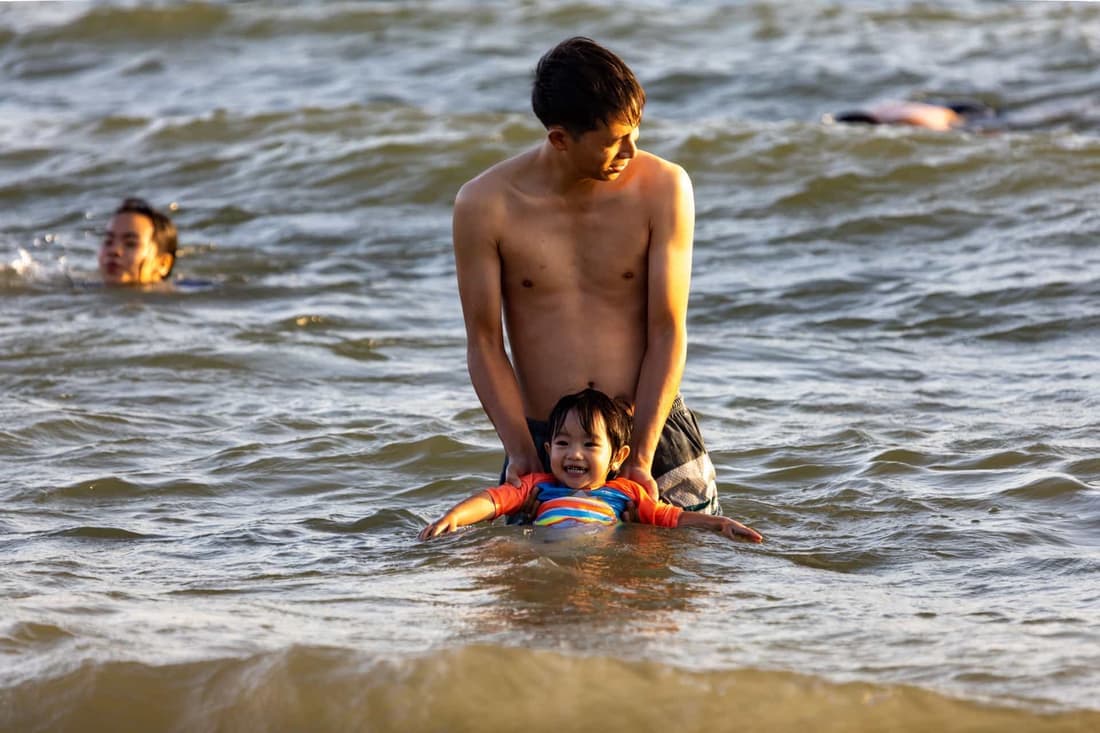
Photos on this page are licensed images that illustrate the category. They are not photographs of the specific products named, and no product image here is supplied by a manufacturer or retailer.
Shade and sun — pack this first
- An umbrella or pop-up shade tent that can be moved as the sun moves. This is the most important item on the list.
- A wide-brim hat with a neck flap.
- A long-sleeve UPF 50+ top or a suit with sun protection built in.
- Sunscreen for the face, ears, backs of hands and tops of feet — and ask your pediatrician first if the baby is under 6 months.
- A lightweight muslin or blanket for extra shade and for the journey.
Full reasoning in baby sun protection. The short version: shade beats fabric, fabric beats sunscreen, and going outside the peak UV hours beats all three.
Diapers and changing
- Swim diapers — two reusables so one is always dry, or one disposable per expected swim.
- Regular diapers, twice as many as you think. They cover before, between, after and the drive home.
- A zipped wet bag for wet reusables and swimsuits.
- Wipes and a changing mat. There is nowhere clean to lay a baby down at a lake.
- Plastic bags for soiled disposables where there is no bin.
- Hand sanitizer, since the CDC's healthy-swimming guidance is clear about washing hands after changes and there is rarely a sink.
And the rule that overrides everything: a baby with diarrhea stays out of the water. No diaper changes that.
Clothing and warmth
- Two swimsuits, because a wet one on a cold baby ends the outing.
- Two towels — one for drying, one for laying down or wrapping.
- A hooded towel or a warm layer for straight after the water. Babies lose heat fast and lake water is colder than a pool.
- A complete change of dry clothes, including socks.
- A jumper or fleece, even in summer. Wind off water is colder than it looks.
Food, water and comfort
- More feeds than usual. Heat increases fluid needs, and a baby cannot ask.
- Drinking water for the adults, in quantity. Dehydrated parents make worse decisions.
- Snacks, if the baby is on solids.
- Somewhere flat, shaded and clean to lie down — a travel mat or a blanket over a towel.
Safety gear
- A USCG-approved infant life jacket if a boat, a dock or deep water is involved. Fit it dry at home first — see life jacket sizing by weight.
- A baby float with a canopy, understood as a shade tool rather than a flotation device.
- A first-aid kit, including something for cuts from rocks and shells.
- A charged phone in a dry bag, and knowledge of where the nearest road access is.
Timing, which matters more than the kit
- Go early or late. Before about 10am or after about 4pm avoids peak UV and peak heat.
- Keep the first session short — half an hour in the water is plenty for a first time.
- Get in gradually. Lake water is colder than a pool and a sudden immersion upsets babies.
- Watch for shivering and blue lips, and get out at the first sign rather than the second.
- Leave before anyone is miserable. Ending a good outing early is what makes the next one easy.
Before you leave the car
- Walk the water's edge yourself. Find the drop-off, the rocks, and where the shade will be in two hours.
- Set up shade before anything else, and before the baby is out in the sun.
- Decide who is watching the water if there are older children too, and say it out loud. See lake swimming safety.
- Put the sun cover on before you get to the shore, not after.
What we recommend
Shade, sun cover, twice the diapers, two of everything that gets wet, and a short first session outside the middle of the day. If a boat is involved, an approved infant vest fitted at home a week earlier.
The gear picks above are the four items that do the most work. Everything else on this page you probably already own.
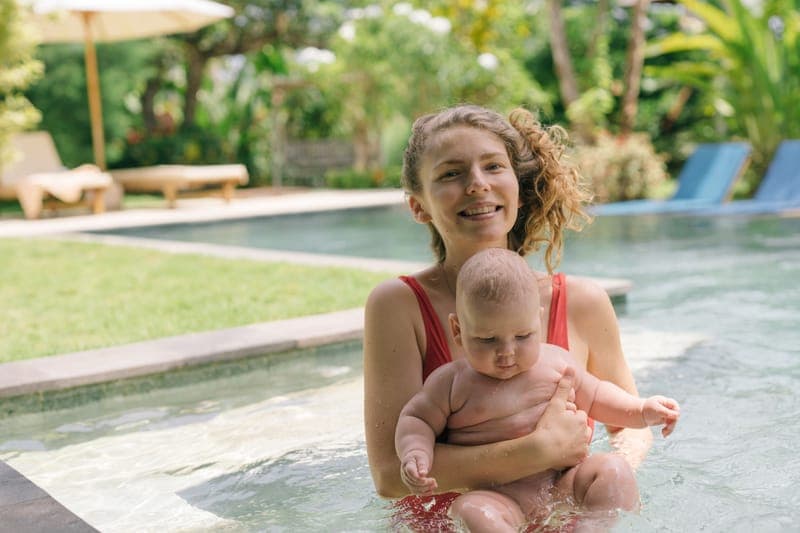
SwimWays Baby Spring Float
A fabric-seated baby float with an inner spring frame and a removable sun canopy — shade is the point.
Specifications
- Age
- Approx. 9-24 months
- Seat
- Fabric, leg holes
- Canopy
- Removable, UPF-rated
- Frame
- Inner spring, folds flat
What works
- The canopy is the reason to buy it — a baby on open water needs shade more than anything else
- Fabric seat with leg holes holds a baby upright rather than letting them slump
- Spring frame folds flat into a bag, so it travels
- Wide base is stable in calm water
What doesn’t
- Not a flotation device and gives no protection if it tips — an adult stays within arm's reach, always
- Calm water only; useless in chop or wake
Who it’s for
Babies from about nine months on a calm lake edge or in a pool, with an adult in the water.
Bottom line
A shade tool, not a safety device. On a boat or in open water a baby needs a USCG-approved infant vest instead.
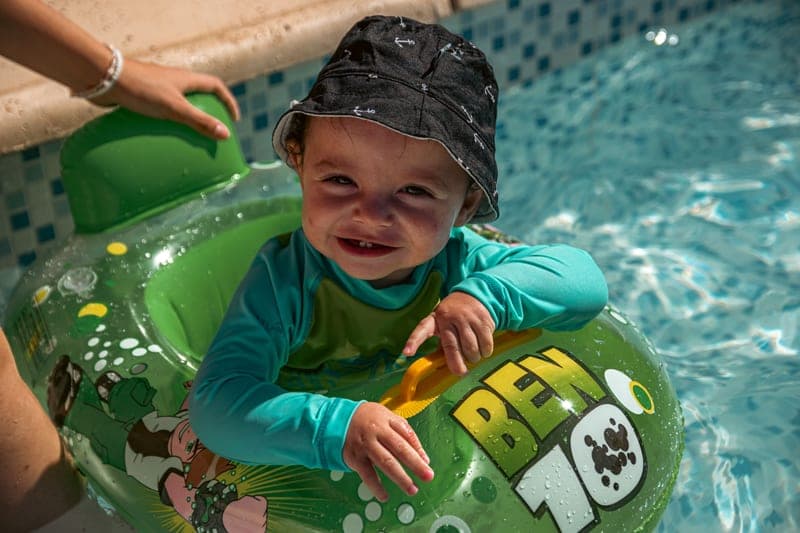
i play. by green sprouts Reusable Swim Diaper
The reusable standard: a snug three-layer diaper with a UPF 50+ outer that meets public-pool rules.
Specifications
- Type
- Reusable
- Layers
- 3, with absorbent inner
- UPF
- 50+ outer
- Sizes
- 6 months to 5T
What works
- Snug leg elastic is what public pools actually check for, and this passes
- Pays for itself in about a month of weekly swimming
- Sizes run up to 5T, well past where disposables stop being practical
- Machine washable and survives a full season
What doesn’t
- Has to be rinsed immediately after use or it smells
- Absorbs nothing meaningful, so it is containment only — it does not hold urine
Who it’s for
A baby or toddler swimming weekly or more, where disposables become a recurring cost.
Bottom line
The reusable to buy. Own two so one is always dry; a single one is not enough for back-to-back sessions.
i play. by green sprouts Baby Swimsuit
A UPF 50+ baby swimsuit with the reusable swim diaper built in — one garment, no waistband gap.
Specifications
- UPF
- 50+
- Swim diaper
- Built in, reusable
- Sizes
- 3 months to 3T
- Closure
- Shoulder snaps
What works
- Removes the gap between diaper and suit where babies get sunburnt
- Shoulder snaps make changing a wriggling baby genuinely faster
- Meets the snug-containment standard most baby swim classes require
- One garment to pack instead of two
What doesn’t
- Whole suit has to come off to deal with the diaper
- Slower to dry than a separate suit and diaper
Who it’s for
Babies in swim classes or short lake sessions.
Bottom line
Great for a thirty-minute class. For a whole day out, separates are more practical.
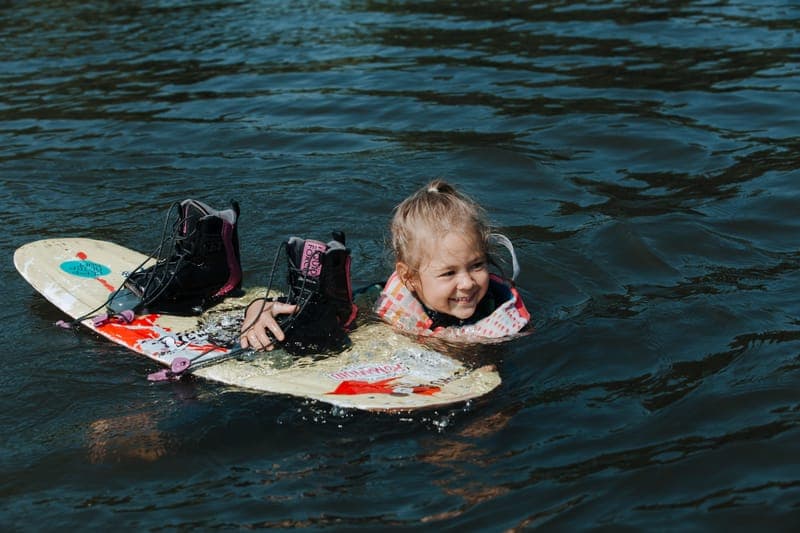
Stearns Infant Classic Series Vest
An infant vest with the two features that matter at this size: a head pillow and a crotch strap.
Specifications
- USCG class
- Type II, approved
- Weight range
- Under 30 lbs
- Head support
- Flotation collar
- Closure
- Buckles plus crotch strap
What works
- The flotation collar supports an infant's head, which is the whole point at this weight
- Crotch strap stops the vest lifting off a small body in water
- Grab handle at the collar lets an adult lift the child straight out
- Type II turns most wearers face-up, which an infant cannot do for themselves
What doesn’t
- Bulky and warm, and most infants object to it initially
- A vest is never a substitute for arm's-length supervision at this age
Who it’s for
A baby or small toddler under 30 lbs on or near a boat.
Bottom line
Required kit if an infant is going on the water. Fit it dry, on land, and lift by the collar handle to check it does not slip off.
Questions
Frequently asked questions
What do you need for a baby's first time at a lake?
How long should a baby's first swim be?
What time of day is best to take a baby to a lake?
Does a baby need a life jacket at a lake?
Sources
Read next