Rash Guards · Guide
Best Rash Guard Colors for Kids
Dark blocks marginally more UV. Bright makes your child findable in open water. One of those matters more.
The short answer
Darker, more saturated colors absorb slightly more UV than pale ones in the same fabric, but the effect is small. Bright colors make a swimmer far easier to see in open water, which is a real safety benefit. For lake swimming, choose bright over dark.
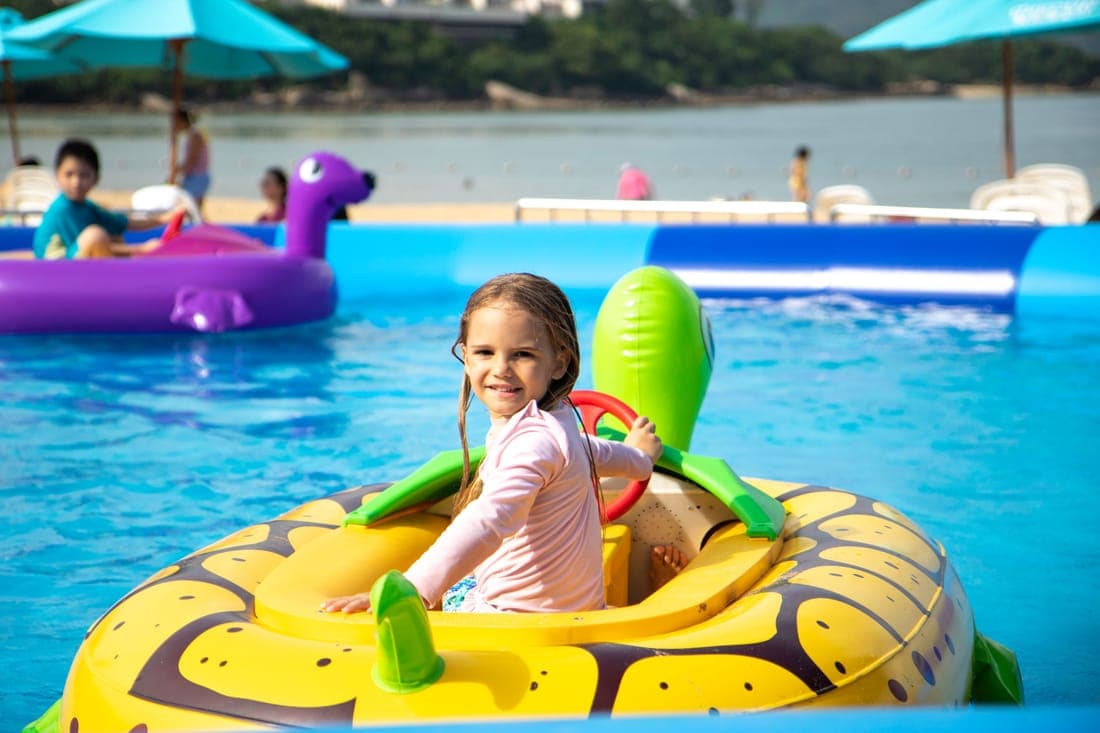
Photos on this page are licensed images that illustrate the category. They are not photographs of the specific products named, and no product image here is supplied by a manufacturer or retailer.
Does color affect UV protection?
Yes, slightly. Dye absorbs UV, so a darker and more saturated fabric stops a little more of it than a pale version of the same fabric. A navy rash guard genuinely offers marginally more protection than a white one in identical construction.
The word doing the work there is marginally. Fabric structure and fiber choice dominate the UPF rating, and both garments will carry the same certified rating if they are made the same way. The difference between a UPF 50+ navy shirt and a UPF 50+ white shirt is inside the margin that the 50+ label already covers.
Where color matters much more is in an unrated garment. A dark cotton t-shirt does meaningfully better than a white one — but both are poor, around UPF 5-7, and neither is a substitute for a proper rash guard.
The visibility argument, which is bigger
In open water a child's body is mostly submerged and what is visible from a distance is a small patch of fabric and a head. From a boat, from a dock, from the shore — a swimmer is genuinely hard to spot, and the color of what they are wearing is the single biggest factor in whether you can keep track of them.
The colors that work against open water are high-visibility orange, hot pink, bright yellow-green and bright red. They contrast against blue, green and gray water and against a bright surface. The colors that disappear are blue, dark green, gray, black and white — white in particular vanishes against surface glare and foam.
This is not a theoretical concern. Open-water swimming events use bright caps and tow floats specifically because a head in water is hard to see, and the same logic applies to a child at a lake. Pair a bright rash guard with a bright swim cap and a child becomes considerably easier to keep eyes on.
So which wins?
| Where | Priority | Choose |
|---|---|---|
| Open lake or river | Visibility | Hi-vis orange, hot pink, bright yellow-green |
| Ocean / surf | Visibility | Hi-vis orange or pink — contrasts with foam |
| Supervised pool | Either | Whatever the child will wear |
| All-day open sun, fair skin | UV, marginally | A saturated mid-to-dark tone in a certified fabric |
| Child with a strong preference | Cooperation | Whatever they will keep on |
For lake swimming, visibility wins. The UV difference between a bright and a dark certified UPF 50+ garment is negligible, and being able to see your child is not.
The factor that beats both
Whether the child will actually wear it. A rash guard in a color a seven-year-old refuses is a rash guard in a bag, and a bag provides no UPF at all.
This is worth taking seriously rather than treating as a joke. Let the child choose from a shortlist you have already filtered — two or three bright options in a certified fabric — and you get the safety benefit and the cooperation. Presenting a single navy shirt as a decision already made is how garments end up unworn.
What we recommend
Buy a certified UPF 50+ rash guard in a bright, high-visibility color, and let the child pick from the bright options. That gets you effectively all of the available UV protection, a genuine safety improvement in open water, and a garment that stays on.
If sun exposure is a medical concern, prioritize knit-based construction and coverage — long sleeves, a longer body, a sunsuit — over color. Those choices change the outcome; color does not. Full detail in UPF ratings explained.
UV Skinz Kids' Long Sleeve Rash Guard
Certified UPF 50+ at a mid-market price, in a cut that suits children who are still growing fast.
Specifications
- UPF
- 50+, certified
- Fit
- Regular
- Sleeves
- Long
- Extras
- Zip-neck options
What works
- Certified rating at a price most families will actually repeat next size up
- Regular cut splits the difference between performance and relaxed
- Zip-neck versions are much easier on a toddler
- Holds color through a season of chlorine
What doesn’t
- Fabric is slightly heavier and dries slower than a surf-brand rash guard
- Fewer size options at the top of the range
Who it’s for
Families buying two or three rash guards at once and replacing them annually.
Bottom line
The value pick. Certified UPF 50+ is the only spec that matters and this delivers it cheaply.
O'Neill Kids' Basic Skins UPF 50+
A close-fitting surf rash guard with minimal seams — the one that does not ride up when a child swims.
Specifications
- UPF
- 50+
- Fit
- Performance, close
- Sleeves
- Long
- Seams
- Minimal, flatlock
What works
- Close fit is the point — a loose swim shirt balloons and rides up, leaving the back exposed
- Flatlock seams do not chafe under the arms on a long day
- Holds UPF 50+ after repeated washing, unlike treated-fabric shirts
- Made by a surf brand, so it is built for repeated saltwater and chlorine
What doesn’t
- Sizing runs slim; check the chart rather than buying by age
- Close fit is harder to pull on over wet skin
Who it’s for
A child who swims and plays hard, where a loose shirt would not stay put.
Bottom line
The default kids' rash guard. Size up one if you want it to last two summers.
SwimZip Kids' Long Sleeve Rash Guard
A full-length front zip, which is the single feature that makes a wet rash guard removable from a toddler.
Specifications
- UPF
- 50+
- Closure
- Full-length front zip
- Sleeves
- Long
- Sizes
- Baby through youth
What works
- The full zip turns a two-adult wrestling match into a five-second job
- Zip garage at the chin stops the pinch that makes toddlers refuse zipped tops
- Certified UPF 50+ across the size range
- Baby sizes actually exist, which most rash-guard brands skip
What doesn’t
- The zip is a stiff line down the chest, noticeable lying on a float
- Zip is the part that eventually fails
Who it’s for
Babies and toddlers, or any child who fights having a wet top pulled over their head.
Bottom line
Buy the zip version for anyone under about four. The convenience is worth more than the fabric difference.
Questions
Frequently asked questions
Do dark colors block more UV?
What color rash guard is best for visibility in water?
Does a white rash guard protect from the sun?
Should I let my child choose the color?
Sources
Read next