Water Shoes · Guide
Do Babies Need Water Shoes?
Not before they walk. After that, the shoreline decides, not the age.
The short answer
A baby who is not yet walking does not need water shoes — they are carried, and a shoe on a non-weight-bearing foot does nothing. Once a baby walks, the surface decides: hot sand, dock boards, gravel and shells are all genuine reasons, a soft sandy beach is not.
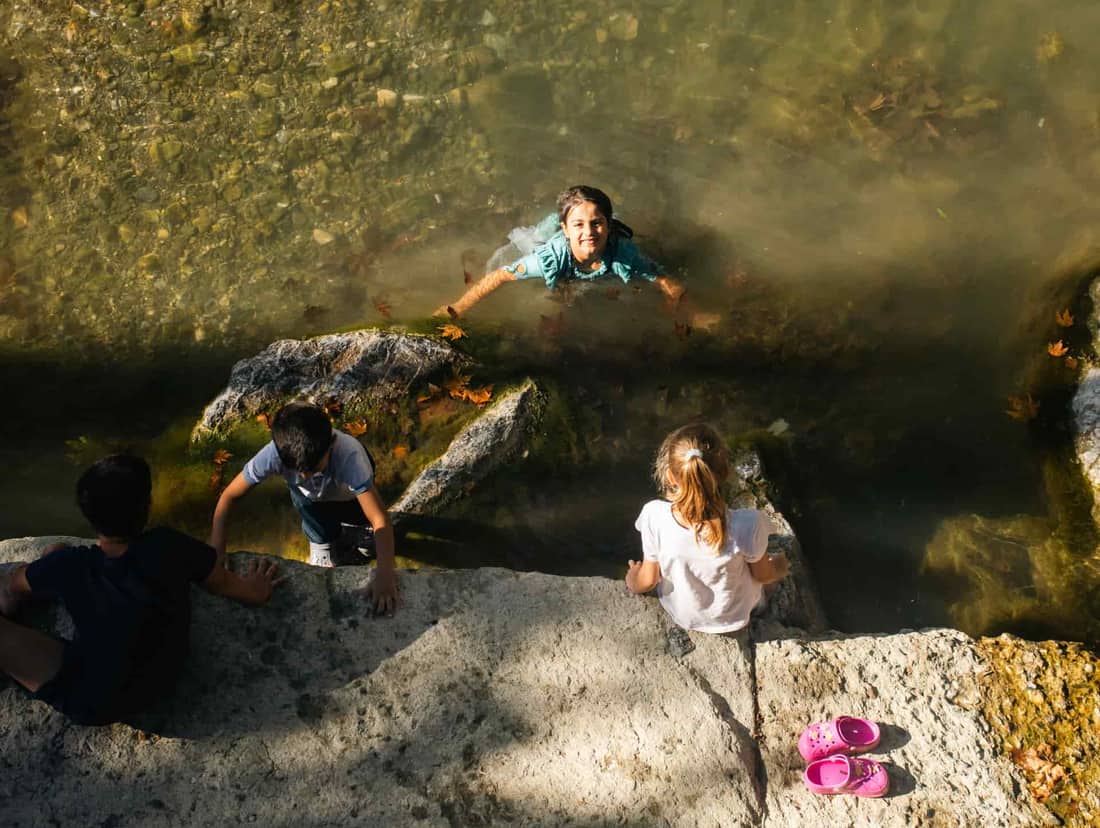
Product photos are the retailer’s own catalogue images, shown from the retailer’s servers and refreshed daily. Any other photo here is a licensed image that illustrates the category, not a photograph of the specific product named.
Before walking: no
A baby who is not yet on their feet is carried to the water, held in it, and carried back. A shoe on a foot that never bears weight protects against nothing, falls off constantly, and is one more wet item in the bag.
There are two partial exceptions, and both are about temperature rather than protection. A neoprene sock keeps a baby's feet warm in cold water, and small bodies lose heat fast. And on a blazing hot dock, something between a baby's feet and the boards is sensible even if they are only standing briefly while being held.
Neither of those is a water shoe in the usual sense. Both are a thin soft layer, and a soft layer is the right answer for a pre-walking baby in every case.
What a baby genuinely does need at a lake is covered elsewhere — shade, a UPF layer, a swim diaper that meets the rules, and an adult within arm's reach. The full list is in baby's first lake day checklist.
After walking: it depends on the surface
Once a baby is walking, the question stops being about age and becomes a question about what is under their feet. New walkers fall over a lot, land on their hands and knees, and have very soft soles that have never been toughened by walking barefoot outdoors.
Hot surfaces are the most under-rated reason. A sun-baked dock, a concrete pool surround or dark sand can be hot enough to hurt in seconds, and a toddler will not reliably tell you before standing on it.
Sharp surfaces come next. Gravel, shells, broken twigs and zebra mussels on freshwater rocks are all genuine cut risks on a soft foot, and a cut foot ends the day for everyone.
Slippery surfaces are the safety case rather than the comfort case. Algae-covered rock and wet dock boards are slippery, a new walker is unstable to begin with, and a rubber outsole grips where bare skin and foam do not.
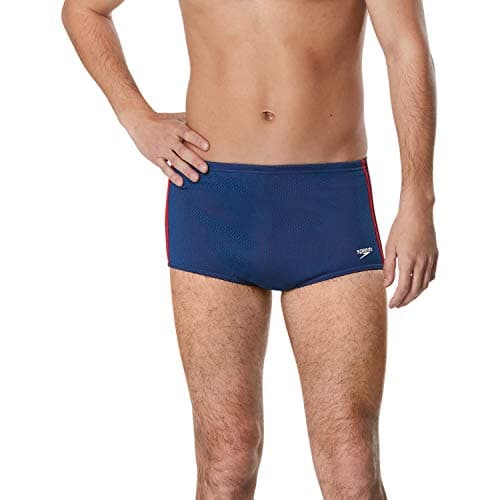
Speedo Kids' Surfwalker Pro
A slip-on water shoe with a thin rubber sole — everything a splash pad or pool deck needs, at a price that makes replacement painless.
Specifications
- Construction
- Stretch upper, rubber sole
- Closure
- Slip-on
- Weight
- Light
- Drainage
- Perforated sole
What works
- Cheap enough to buy a size up and a size down without thinking about it
- Thin rubber sole is grippy on wet pool decks, which is where kids actually slip
- Slip-on means a four-year-old manages it alone
- Packs flat in a swim bag
What doesn’t
- Thin sole transmits every rock; wrong for a stony lake bottom
- Stretch upper loosens over a season and starts slipping off
Who it’s for
Pools, splash pads, cruise decks and sandy beaches — anywhere the ground is flat.
Bottom line
The budget pick and genuinely adequate for smooth surfaces. Outfitting three kids? Buy these.
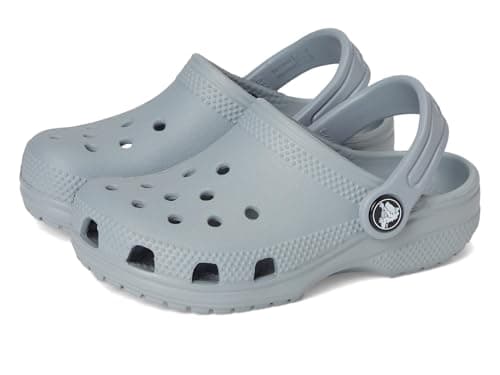
Crocs Kids' Classic Clog
Ventilated, cheap and everywhere — but they come off in water and rub, so they are a shore shoe.
Specifications
- Construction
- Croslite foam clog
- Heel
- Pivoting strap
- Drainage
- Ventilation ports
- Sizes
- Toddler through youth
What works
- Ventilation ports drain well and the foam does not hold water
- Trivially easy on and off, which is why children accept them
- Cheapest widely available option, in every color
- Foam is soft on hot pavement and pool decks
What doesn’t
- Parents consistently report blisters on the inner foot and shoes coming off in water
- Wide, loose fit means they are not a swimming shoe at all
Who it’s for
Walking to and from the water, poolside, and campsite wear — not in the lake.
Bottom line
Fine as a shore shoe, poor as a water shoe. If your child is going in over the ankle, buy something with a heel strap.
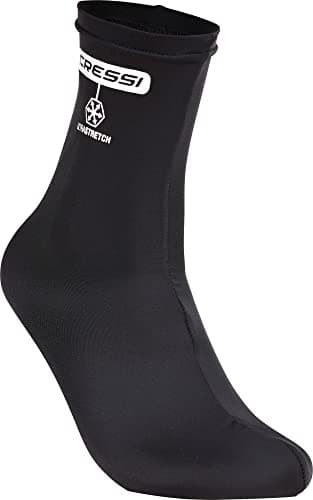
Cressi Neoprene Water Socks
Thin neoprene socks: warmth and chafe protection, essentially no sole, and not a substitute for a shoe.
Specifications
- Material
- Neoprene, thin
- Sole
- Minimal grip print
- Purpose
- Warmth, chafe protection
- Sizes
- Child and adult
What works
- Keeps feet warm in cool water, which nothing else in this category does
- Stops fin and shoe chafe, the reason most people buy them
- Packs to nothing in a swim bag
- Cheap, and a genuinely different tool from a water shoe
What doesn’t
- Almost no puncture protection — a sharp rock or a shell goes straight through
- Slippery on wet boat ramps and dock boards
Who it’s for
Cool-water swimmers, anyone wearing fins, and children who blister inside water shoes.
Bottom line
Buy socks for warmth and chafe, shoes for protection. Wearing socks inside shoes covers both.
What to buy, by surface
| Surface | What they need | Why |
|---|---|---|
| Soft sand only | Nothing | Sand is the one surface bare feet handle well |
| Hot sand or hot dock | Any slip-on with a sole | Insulation, not protection |
| Gravel, shells, rock | Closed toe, rubber outsole | Cuts and stubbed toes |
| Wet dock boards, algae | Rubber outsole with tread | Grip, which foam does not give |
| Cold water, long sessions | Neoprene socks | Warmth, not protection |
| Splash pad, pool deck | Thin slip-on | Grip on wet concrete, cheap to replace |
What to look for in a toddler water shoe
Something that holds the heel. A strap or a stretch collar. A shoe that comes off in water is lost in a lake, and a loose shoe on an unsteady walker is a trip hazard rather than a protection.
A sole with actual tread. Smooth foam slides on wet rock. A rubber outsole with a lug pattern is the difference between walking out of the water and going down.
Easy on and off, because they will refuse. A toddler who fights a shoe will win eventually. Wide openings and a single strap get the shoe on in one attempt, which is usually the only attempt you get.
Drainage. A shoe that holds water is heavy on a small foot and rubs. Perforated soles and open uppers let it out as fast as it goes in.
Cheap enough to lose. You will lose one. Toddler water shoes are a consumable, and the right spend is the lowest one that has a real sole and a heel strap.
The practical case parents actually make
Most parents who buy water shoes for a toddler are not solving a cut risk. They are solving the fact that a toddler who steps on something sharp or hot once will refuse to walk anywhere for the rest of the trip, and will have to be carried over ground you were hoping to cover on foot.
That is a legitimate reason and worth the small amount of money involved. A pair of cheap slip-ons removes a category of afternoon-ending incident at roughly the price of lunch.
What they do not do is make water safer. A toddler in water shoes is exactly as likely to get into difficulty as a toddler without them, and the only thing that changes that is an adult within arm's reach. Toddler-specific picks are in best water shoes for toddlers, and the broader age question is in do kids need water shoes.
Questions
Frequently asked questions
Do babies need water shoes?
At what age do kids need water shoes?
Are water socks good for babies?
Do water shoes make a baby safer in the water?
What size water shoes should I buy for a toddler?
Read next