Life Jackets & Safety · Comparison
Paddle Vest vs Life Jacket
Same approval, different cut — and the cut is the reason one of them gets worn all day.
The short answer
A paddle vest is a life jacket. It is the same inherently buoyant, Coast Guard approved Type III device as a standard foam vest, cut with high armholes and a ventilated back so you can paddle, swim and lift children in it. The Onyx MoveVent Dynamic is the paddle vest to buy; a plain Type III like the Onyx General Purpose Vest is cheaper and fine as a spare.
Product photos are the retailer’s own catalogue images, shown from the retailer’s servers and refreshed daily. Any other photo here is a licensed image that illustrates the category, not a photograph of the specific product named.
| # | Product | Best for | USCG class | Price |
|---|---|---|---|---|
| 1 | 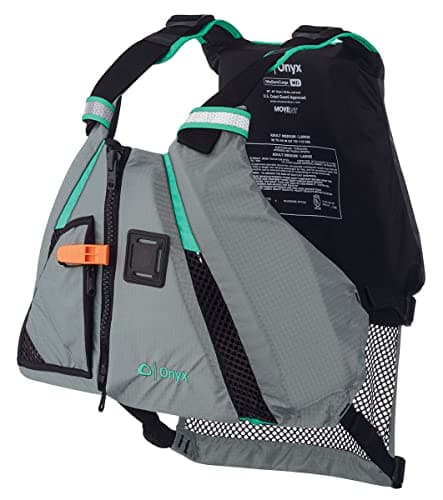 Top pick Onyx MoveVent Dynamic Paddle Vest A ventilated paddling vest with high-cut armholes, so you can actually swim, paddle and lift children in it. | Adults who are active | Type III, approved | |
| 2 | 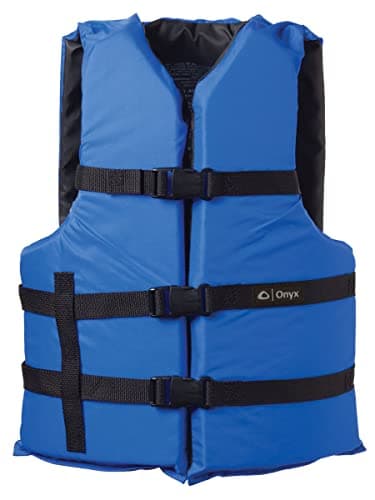 Budget pick Onyx General Purpose Vest The plain, cheap, USCG-approved adult vest you keep three of in the boat locker. | Spare jackets for guests | Type III, approved | |
| 3 | Also good Stearns Youth Classic Series Vest The plain nylon boating vest: three buckles, a leg strap, and enough flotation to be the one you tow behind a boat in. | 50-90 lbs, boating | Type III, approved |
They are the same category of device
The first thing to clear up is that this is not a safety comparison. A paddle vest sold in the United States as an approved personal flotation device carries the same Coast Guard approval as the orange foam vest in your boat locker, and in the older classification both are Type III — an inherently buoyant flotation aid for calm inland water where help is close at hand.
What differs is the pattern the foam is cut into. A paddle vest is shaped around the fact that you are sitting down and moving your arms through a full rotation: the armholes are cut high and wide, the foam is split into segments rather than one slab, the torso is short so it clears a kayak seat or a cockpit rim, and the back panel is usually mesh rather than foam so it does not press against a seat back.
A standard Type III boating vest is cut for standing and sitting still. Longer body, foam all the way round, lower armholes. It is cheaper to make, it is perfectly adequate for a passenger, and it is the jacket most families own because it is the one the marina sells by the stack.
Onyx MoveVent Dynamic Paddle Vest
A ventilated paddling vest with high-cut armholes, so you can actually swim, paddle and lift children in it.
Specifications
- USCG class
- Type III, approved
- Size
- Adult S/M to XL/2XL
- Ventilation
- Mesh back panel
- Features
- High armholes, pockets, adjustable
What works
- High armholes and a mesh back make it wearable for hours in heat
- Multiple adjustment points get a real fit rather than a universal approximation
- Front pockets hold a phone in a dry bag and a set of keys
- Still a full Type III, so it satisfies the legal requirement
What doesn’t
- Costs several times a universal vest
- Mesh back offers no flotation behind the shoulders, so it sits lower in the water
Who it’s for
A parent who wears a PFD all day — paddling, supervising swimmers, getting in and out of a boat.
Bottom line
The adult vest people actually keep on. Modeling that in front of your children is worth more than the jacket costs.
Onyx General Purpose Vest
The plain, cheap, USCG-approved adult vest you keep three of in the boat locker.
Specifications
- USCG class
- Type III, approved
- Size
- Adult universal
- Shell
- Nylon
- Closure
- Zip plus straps
What works
- Cheapest route to meeting the legal requirement of one wearable PFD per person aboard
- Universal adult sizing covers most guests without a fitting
- Stores flat and survives a locker
- Bright colors that are actually visible in the water
What doesn’t
- Basic foam construction is hot and restrictive for a full day
- Universal sizing fits nobody especially well
Who it’s for
Boat owners who need spare approved jackets for passengers.
Bottom line
Buy these as spares, not as your own jacket. Legal compliance is the job and it does it.
Stearns Youth Classic Series Vest
The plain nylon boating vest: three buckles, a leg strap, and enough flotation to be the one you tow behind a boat in.
Specifications
- USCG class
- Type III, approved
- Weight range
- 50-90 lbs
- Shell
- Durable nylon
- Closure
- 3 buckles plus leg strap
What works
- Leg strap is what stops a vest riding up over a child's head in a hard fall — do not buy a towing vest without one
- Nylon shell survives dock boards, boat carpet and a season of sun
- Three buckles let you tighten it properly at the chest and waist separately
- Cheap enough to buy one per child rather than sharing
What doesn’t
- Bulkier and hotter than a swim-focused vest, so kids take it off between rides
- Foam panels restrict arm movement, so it is poor for actual swimming
Who it’s for
A 50-90 lb child on a boat, on a towable tube, or on a dock.
Bottom line
The right jacket for boating and towing. For swimming, a Puddle Jumper or swim vest is more wearable.
What actually changes on the water
| Paddle vest | Standard Type III vest | |
|---|---|---|
| USCG approval | Type III, inherently buoyant | Type III, inherently buoyant |
| Armholes | High and wide, cut for rotation | Lower, cut for standing |
| Back panel | Usually mesh or thin foam | Full foam |
| Torso length | Short — clears a seat | Longer |
| Heat in July | Ventilated, noticeably cooler | Hot within an hour |
| Price | Two to three times more | Cheapest approved option |
| The job it is for | The jacket you wear all day | Spares for guests and passengers |
The high armholes are the feature that matters most, and not only for paddling. A parent supervising swimmers is constantly reaching, lifting a child onto a dock, climbing a boat ladder and swimming a few strokes. A standard vest rides up into the armpits every time you lift your arms, and that is the single most common reason an adult takes a life jacket off.
Ventilation is the second. Foam across the whole back is genuinely hot in midsummer, and a mesh back panel changes an adult's willingness to keep the thing on from about an hour to all afternoon. That is not a comfort luxury — a jacket in the bow locker provides no flotation at all.
The third difference is one nobody mentions in the product copy: a short-torso vest is far easier to swim in. If you expect to get in the water wearing it, the standard vest's longer body rides up around your ears the moment you start kicking.
What to look for in a paddle vest
- A printed US Coast Guard approval statement. Plenty of neoprene 'water sports vests' are sold with no approval at all. If it is not printed on the label, it is not an approved device — see how to tell if a life jacket is Coast Guard approved.
- High, open armholes you can rotate through without the foam catching under your arm.
- A mesh or low-bulk back if you will sit in a seat or against a boat cushion.
- Adjustment at the sides and the shoulders, so the vest can be cinched down far enough that it will not ride up over your head in the water.
- Segmented front foam rather than one slab — that is what lets the vest bend as you lean forward to paddle.
- Pockets only if you actually want them. They add bulk and they are the first thing to snag on a boat ladder.
How much should you spend?
For a family outfitting several people, the honest split is one paddle vest for each adult who genuinely spends the day in and out of the water, and plain approved Type III vests for everyone else. A paddle vest costs roughly two to three times a basic vest, and the money buys wearability rather than flotation. A jacket that is going to sit under a seat sits under a seat just as well at a third of the price.
Spend the money if you are the parent in the water. You are modelling the behaviour the children will copy, and a comfortable adult vest is the cheapest way to make that happen. Our wider adult picks are in best life jackets for adults.
Do not spend it on children. Paddle vests for kids exist, but a child's vest needs a crotch strap and a snug fit far more than it needs ventilation, and the plain youth vest is the better buy — see best Coast Guard approved life jackets for kids.
Where a paddle vest is the wrong answer
Towing. Being towed behind a boat needs a jacket rated for it, and some devices are explicitly excluded on the label. For tubing and waterskiing, a youth or adult vest with a leg strap is the right tool — the detail is in towable tube safety.
Infants and small toddlers. They need Type II, with a flotation collar and a crotch strap, so their head is supported by the jacket rather than by them. No Type III of any cut does that job.
Rough or remote water. If help is not minutes away, the whole Type III category is the wrong class of device, and the cut of the vest is irrelevant to that question.
A non-swimmer who is not being supervised at arm's length. A flotation aid is not supervision. The CDC's drowning guidance puts close, constant adult supervision ahead of equipment for exactly this reason.
If paddling is what you are buying for, the shortlist of approved vests cut for it is in best life jackets for kayaking.
Questions
Frequently asked questions
Is a paddle vest a life jacket?
Is a paddle vest as safe as a regular life jacket?
Can you use a paddle vest for tubing or waterskiing?
Do children need a paddle vest?
Sources
Read next