Life Jackets & Safety · Roundup
Best Throwable Flotation Devices (2026)
Six approved Type IV devices, sorted by the only question that matters: how far do you need to throw it?
The short answer
The Onyx Throwable Foam Boating Cushion is the pick for most boats: a US Coast Guard approved Type IV cushion with webbing straps, cheap enough to keep one aboard and one on the dock. If you need to reach a swimmer thirty feet out rather than five, a 20 in ring buoy throws straight and far where a cushion tumbles.

Product photos are the retailer’s own catalogue images, shown from the retailer’s servers and refreshed daily. Any other photo here is a licensed image that illustrates the category, not a photograph of the specific product named.
| # | Product | Best for | Type | Price |
|---|---|---|---|---|
| 1 | 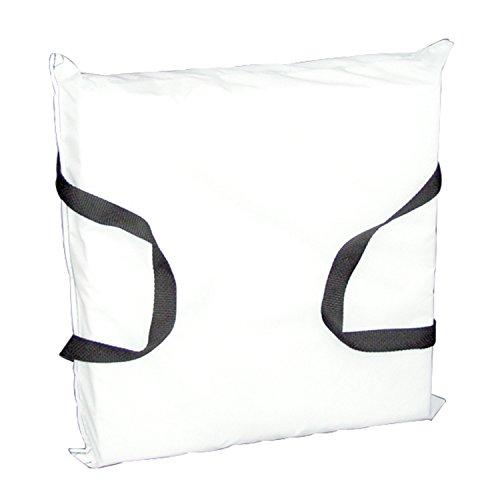 Top pick Onyx Throwable Foam Boating Cushion The default approved throwable on American boats: a PE foam cushion in a nylon oxford shell with webbing straps you can throw by or carry by. | The one to keep aboard | USCG approved Type IV throwable | |
| 2 | 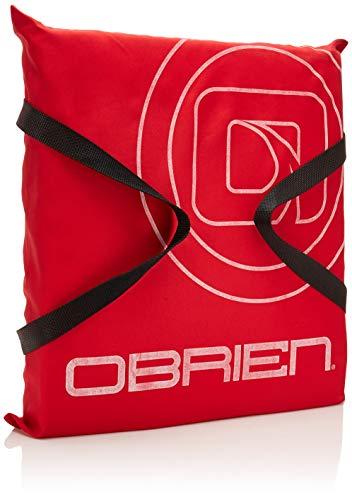 Budget pick O'Brien Throwable Foam Seat Cushion The same 15 x 16 in approved cushion format at the lowest price on the shelf, from the watersports brand that also makes the tube you are towing. | Cheapest approved cushion | USCG approved Type IV throwable | |
| 3 | 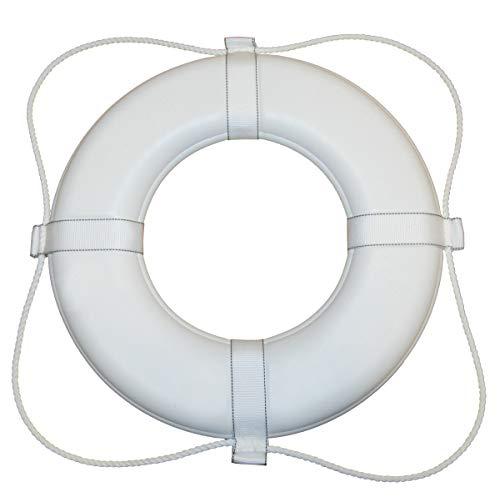 Upgrade pick Taylor Made 20-Inch Vinyl-Coated Foam Life Ring A real 20 in ring buoy with grab lines and a published buoyancy figure - the device you want if the person in trouble is thirty feet out rather than five. | A throw that carries | 20 in | |
| 4 | 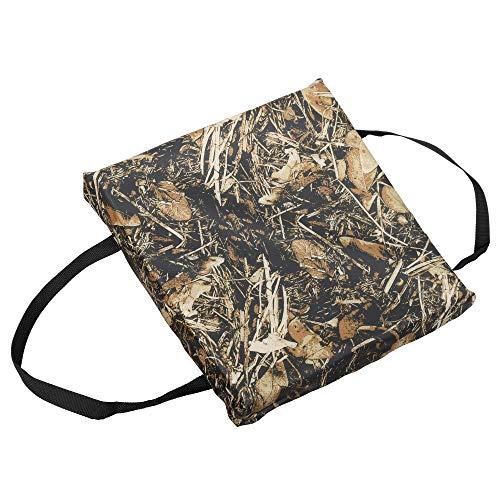 Also good Airhead Type IV Throwable Cushion A slim PE foam cushion with two nylon loop straps sized so a person in the water can put both arms through them rather than grip with cold hands. | Hugging while you wait | USCG approved Type IV throwable | |
| 5 | 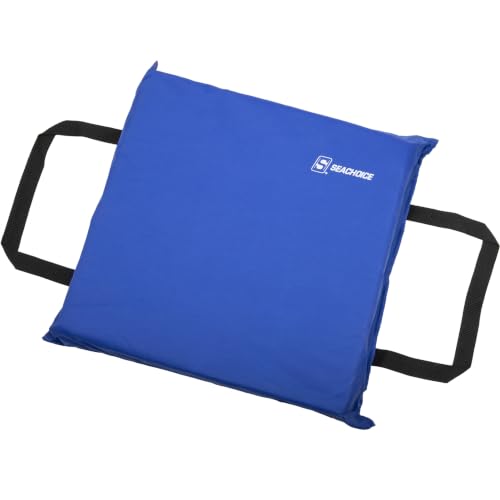 Also good Seachoice Emergency Marine Foam Flotation Cushion A square 15 in approved cushion sold in genuinely visible colors - safety yellow and red - which is the one cushion spec that changes the outcome. | High-visibility colors | USCG approved Type IV throwable | |
| 6 | 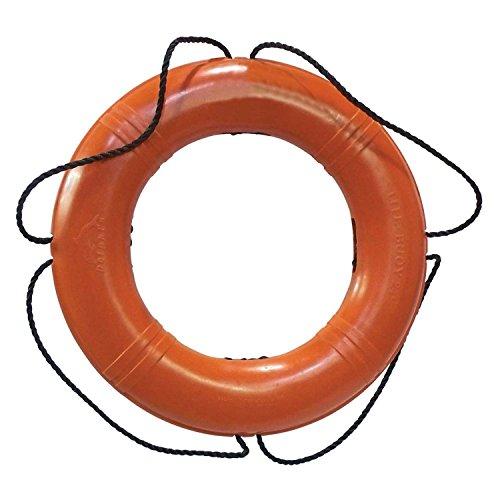 Also good Dock Edge Dolphin Life Ring Buoy, 20-Inch A roto-molded hard-shell ring over a closed-cell foam core, warranted for seven years outdoors - built for a bracket on a dock rather than a locker on a boat. | A dock ring that lasts | 20 in |
The one piece of safety gear with a legal trigger
Most of what a family buys for a lake is a judgment call. A throwable is not. Federal law is specific: under 33 CFR 175.15, no person may use a recreational vessel 16 feet or more in length unless one throwable personal flotation device is on board, in addition to the wearable life jackets required for everyone aboard. That is the whole rule, and it is why a flat square cushion is sold at every marina in the country.
There are two exemptions worth knowing. Canoes and kayaks of 16 feet and over are specifically excused from the throwable requirement under 33 CFR 175.17 - they still need a wearable per person. Racing shells, racing sculls, racing canoes and kayaks, and sailboards are excused from the throwable requirement too. Everything else over 16 feet carries one.
The rule also has a condition that is easy to miss and routinely fails an inspection: the throwable has to be immediately available. A cushion zipped into a bow locker under a cooler is not available, and a boarding officer will say so. It belongs somewhere a person can reach it in two seconds from where they are sitting, in the open, visible to everyone aboard.
The number the regulation actually sets
This is the single most useful fact in the category, because almost no cushion on the market publishes a buoyancy figure. The specification does. Under 46 CFR 160.049, an approved buoyant plastic-foam cushion must provide not less than 20 pounds of buoyancy and must have not less than 225 square inches of top surface area. The kapok and fibrous-glass specification, 46 CFR 160.048, sets the same 20 pound floor and the same 225 square inch minimum, with a thickness of two to three inches.
So when a cushion listing is silent on buoyancy - and Onyx, O'Brien, Airhead and Seachoice all are - the approval statement itself tells you the device provides at least 20 pounds. That is enough to keep an adult's head and shoulders out of the water while they hold on, and it is nowhere near enough to float an adult who is not holding on. It is a handhold, not flotation.
Ring buoys are a different specification and a different number. Taylor Made publishes 16.5 pounds minimum buoyancy for its 20 inch and 24 inch rings - lower than a cushion's 20 pound floor, which surprises people. The ring's advantage is not buoyancy; it is that a ring flies true and a cushion tumbles.
How we picked these six
We have not thrown six devices across a lake and timed them, and will not pretend to have. What we did do is check that every device here is currently sold and in stock as this page was written, read every published figure the maker and its chandlers provide, and record the gaps - because in this category the absence of a number, and the inconsistency of the approval wording, are the two most useful things to know before buying.
The approval wording deserves particular attention. Retailers selling the same Taylor Made ring describe it variously as "USCG approved" and as "inspected and tested in accordance with U.S. Coast Guard regulations," which are not the same claim. Only the printed label on the device you receive settles it, and that is the thing to check when the box arrives rather than the thing to assume from a listing. We have put that in the cons rather than smoothing it over.
The six things that decide which throwable to buy
- Cushion or ring, which is really a question about distance. A cushion is a flat slab: it tumbles, it catches wind, and a realistic accurate throw is a few yards. A ring buoy is weighted at its circumference, flies straight and goes two or three times as far. Buy the cushion for a swim platform and the ring for a dock, a swim raft or open water.
- Color, and it is a safety spec. White is the most common cushion color and the worst one: in glare and foam a white cushion is nearly invisible at twenty yards. Safety yellow, red and international orange all read against water in every light. If you buy on one spec, buy on this.
- Grab straps or arm loops. Every cushion here has webbing. The difference is what they are sized for. Carry-sized straps are for throwing by and gripping. Airhead's loops are sized for a person to put both arms through, which matters for a cold or tired swimmer who can no longer grip.
- Whether it has a line, and it does not. Nothing on this page ships with rope. A throwable without a line attached is a one-throw device: if you miss, you have handed the lake a cushion. Buy 50 to 75 feet of floating polypropylene line with it and tie it on.
- Where it is going to live. A cushion lives on a boat, doubles as a seat and wears out from being sat on. A hard-shell ring lives on a bracket at a dock and survives weather for years. These are genuinely different purchases, and a household with a dock needs both.
- Condition, because approval depends on it. The device has to be in serviceable condition to count as approved - no rips, no tears, a legible label. A cushion used as a seat all summer fades, chalks and splits at the seams, and a chalky cushion is not a compliant one.
Onyx Throwable Foam Boating Cushion
The default approved throwable on American boats: a PE foam cushion in a nylon oxford shell with webbing straps you can throw by or carry by.
Specifications
- Approval
- USCG approved Type IV throwable
- Size
- About 15 x 16 x 2.5 in
- Buoyancy
- At least 20 lb (46 CFR 160.049 minimum)
- Foam
- Closed-cell PE foam
- Shell
- Nylon oxford, abrasion-resistant
- Colors
- Red, blue, white and camo variants
What works
- Satisfies the throwable requirement for a recreational vessel 16 ft or longer on its own
- The webbing straps are what make it throwable with any accuracy - you throw by the strap, not by the corner
- Nylon oxford shell survives being stepped on, sat on and stuffed under a bow seat all season
- Doubles as a seat cushion, which is the reason it stays on the boat instead of in a locker
- Cheap enough that a lakefront household can keep one on the dock as well as one on the boat
What doesn’t
- A cushion is a poor throw compared with a ring - it tumbles, and it does not carry far into a headwind
- It is not a wearable device and does not count toward the wearable life jacket required per person
- Onyx does not publish a per-product buoyancy figure, so the 20 lb minimum in the regulation is all you can rely on
- A faded, chalky or torn shell voids the approval, and a cushion used as a seat all summer fades fast
Who it’s for
Any boat 16 ft or longer, and any family with a regular swimming dock.
Bottom line
Buy it, strap it where you can grab it in two seconds, and replace it when the shell goes chalky.
O'Brien Throwable Foam Seat Cushion
The same 15 x 16 in approved cushion format at the lowest price on the shelf, from the watersports brand that also makes the tube you are towing.
Specifications
- Approval
- USCG approved Type IV throwable
- Size
- 15 x 16 x 2.5 in
- Weight
- About 1.6 lb
- Buoyancy
- At least 20 lb (46 CFR 160.049 minimum)
- Shell
- Nylon over a foam core
- Colors
- Red, blue and yellow
What works
- The least expensive way to make a 16 ft boat legal, and it is a real approved device rather than a pool cushion
- Under two pounds, so it throws further than its price suggests
- The yellow version is the most visible cushion on this page once it is in the water
- Grab straps on both faces, so it does not matter which way up you pick it up
What doesn’t
- O'Brien publishes no spec sheet of its own - every dimension here comes from retailers, and the UPCs disagree between color variants
- No stated buoyancy figure beyond the regulation minimum
- Thin nylon shell: this is the cushion that wears out first if it lives under a seat
- Same cushion-vs-ring limitation - it is for a swimmer a few yards away, not thirty
Who it’s for
A boat owner buying a throwable because the law says so, and spending as little as possible on it.
Bottom line
A legitimate budget pick. It meets the same standard as the Onyx; it just will not last as long.
Taylor Made 20-Inch Vinyl-Coated Foam Life Ring
A real 20 in ring buoy with grab lines and a published buoyancy figure - the device you want if the person in trouble is thirty feet out rather than five.
Specifications
- Diameter
- 20 in
- Buoyancy
- 16.5 lb minimum, per Taylor Made
- Body
- Foam core with a vinyl outer coating
- Grab lines
- Rope grab line around the ring
- Also sold as
- 24 in (#361 white, #364 orange)
- Label check
- Approval wording varies by listing
What works
- A ring throws straight and far, which a cushion does not - this is the difference between reaching someone and not
- The grab line gives a swimmer something to hold with a whole hand, and gives you something to tie a heaving line to
- Taylor Made publishes a 16.5 lb minimum buoyancy figure, which almost nothing else in this category does
- Vinyl over foam resists scuffs and dock rash better than a bare foam ring
- Sold in 20 in and 24 in, so you can match the ring to the span of water you are covering
What doesn’t
- Three to four times the price of an approved cushion, which is why most boats carry the cushion
- Retailers disagree on whether this exact model is formally USCG approved or only inspected and tested to USCG rules - the printed label on the ring you receive is the only answer that counts
- A 20 in ring needs somewhere to live: it is bulky and it wants a bracket, not a locker
- No rope is included, and a ring without a line attached is a one-throw device
Who it’s for
A lakefront dock, a pontoon with a swim platform, or anyone who wants to throw to a swimmer at distance.
Bottom line
The upgrade worth making if you have a dock. Buy a line with it and read the label when it arrives.
Airhead Type IV Throwable Cushion
A slim PE foam cushion with two nylon loop straps sized so a person in the water can put both arms through them rather than grip with cold hands.
Specifications
- Approval
- USCG approved Type IV throwable
- Shape
- Square cushion, slim profile
- Foam
- PE foam with a nylon cover
- Straps
- Two nylon loops - carry or arms-through
- Buoyancy
- At least 20 lb (46 CFR 160.049 minimum)
- Colors
- White, red, blue, camo, stars and stripes
What works
- The loop straps are the real feature: a cold, tired swimmer can hook both arms through and stop having to hold on
- Slim profile stows flat under a seat or against a hull side rather than taking a seat cushion's worth of space
- Airhead states plainly that it satisfies the Coast Guard throwable requirement for all boats
- The widest color range here, which matters because the white one is the hardest to see in foam and chop
What doesn’t
- Airhead's own listings disagree on which colors exist, so confirm the color before ordering
- No dimensions or buoyancy figures published on the retailer spec panels we could find
- Slim means less to grab for a strong swimmer who just wants a handhold
- Not a wearable device, and nothing about the arm loops changes that
Who it’s for
A boat that already has a throwable and wants the better one, or a family who want a cushion a child could cling to.
Bottom line
The arm loops make it the most useful cushion on the page for an actual rescue. Buy it in a color you can see.
Seachoice Emergency Marine Foam Flotation Cushion
A square 15 in approved cushion sold in genuinely visible colors - safety yellow and red - which is the one cushion spec that changes the outcome.
Specifications
- Approval
- USCG approved Type IV throwable
- Size
- 15 x 15 in, square
- Buoyancy
- At least 20 lb (46 CFR 160.049 minimum)
- Colors
- Safety yellow, red, blue, camouflage
- Straps
- Webbing grab straps
- Use
- Throwable, also used as a seat
What works
- Safety yellow is the most findable color here once a cushion is floating in chop at dusk
- Square 15 in format fits the small lockers and bow compartments on a runabout
- Seachoice is a marine-parts brand, so the cushion is sold through chandlers alongside the rest of a boat's safety kit
- Priced in line with the other approved cushions while offering a genuinely hi-vis color
What doesn’t
- 15 x 15 in is the smallest cushion here, so there is slightly less to grab
- The camouflage version defeats the purpose of a throwable - buy the yellow or the red
- Listings state the size as a clothing size on some retailers, which makes the spec table confusing
- No published buoyancy figure beyond the regulation minimum
Who it’s for
Anyone who has watched a white cushion disappear into glare and wants one they can actually see.
Bottom line
Pick the safety yellow. In this category, color is a safety spec and not a style choice.
Dock Edge Dolphin Life Ring Buoy, 20-Inch
A roto-molded hard-shell ring over a closed-cell foam core, warranted for seven years outdoors - built for a bracket on a dock rather than a locker on a boat.
Specifications
- Diameter
- 20 in
- Weight
- About 4.1 lb
- Body
- Roto-molded polyethylene over closed-cell foam
- Approvals
- USCG, Canadian Coast Guard and DOT, per maker
- Standards
- Maker cites SOLAS Standard 7483
- Warranty
- 7 years on the ring body, per maker
What works
- The hard roto-molded shell is the one here built to live outdoors on a bracket year-round
- A seven-year warranty against weather, fire, oil and gas is unusually specific for a safety device at this price
- Orange is the right color for a ring, and the US version ships with black grab ropes
- Dual approvals mean the same ring is legal either side of the border, which matters on border lakes
What doesn’t
- Dock Edge does not publish a buoyancy figure in pounds, so there is no number to compare against the Taylor Made's 16.5 lb
- Heavier than a vinyl-coated ring, which shortens the throw for a smaller adult
- A hard shell hurts if it lands on someone, so aim beside a swimmer and never at them
- At 20 in it is the smaller of the two sizes Dock Edge sells; the 24 in is the one for wider water
Who it’s for
A family with their own dock, a swim raft or a boathouse - somewhere a ring can be mounted and left.
Bottom line
The ring to mount and forget. If it is going on a boat instead, the lighter vinyl-coated ring throws better.
Reach, throw, row, do not go
That sequence is the standard water-rescue priority for an untrained rescuer, and it is the reason this page exists on a family gear site rather than only on a boating one. The failure mode in a lake drowning is not that nobody tried: it is that somebody swam out. A struggling person in the water will climb anybody who comes within reach, and an untrained rescuer who swims out frequently becomes the second casualty.
A throwable turns a swim into a throw, and that is its entire value. On a boat it is a legal requirement; at the end of a dock where children swim, it is the cheapest meaningful safety improvement a lakefront household can make, and almost nobody makes it. A cushion on a hook at the top of the dock steps costs about as much as a cheap pair of goggles.
If the device is for a dock rather than a boat, buy the ring and mount it. A ring on a bracket with a coiled line is visible, obvious to a guest who has never been there before, and throwable by a teenager. A cushion in a deck box is none of those things. The rest of the shoreline rules - supervision, the swim line, what the water itself does - are in lake swimming safety.
How to actually throw one
- Shout first, throw second. The person in the water has to know something is coming and look for it. A device that lands silently behind a panicking swimmer does nothing.
- Aim past and beside them, not at them. A hard-shell ring landing on someone's head is a real injury. Throw a few feet beyond and to one side, then pull it into reach on the line.
- Throw underhand, by the strap, downwind. A cushion thrown overhand by a corner sails. Held by the webbing strap and thrown underhand it goes where you aimed it. Account for wind - these are light objects with a lot of surface.
- Stand on the line, or tie it off. The most common mistake is throwing a device with an untied line and watching both go. Step on the standing end, or make it fast to a cleat or a post, before you throw.
- Brace yourself before you pull. Pulling a panicking adult in on a line can pull a standing rescuer off a dock. Sit down, or get low, and pull from a stable position.
- Do not get in the water. If the throw misses and there is nothing else to throw, the next step is a boat or a call - not a swim.
Throw bags, horseshoe buoys and what is not approved
Two things get sold alongside approved throwables and are frequently mistaken for them. A rescue throw bag - a stuff sack with 50 to 70 feet of floating line - is the tool whitewater rescuers actually use, and it throws further and more accurately than any cushion. It is not an approved Type IV device and does not satisfy the federal carriage requirement, because it provides no flotation. Buy one in addition if you like; do not buy one instead.
Horseshoe buoys are the other one. The open-ended horseshoe shape is standard on sailboats because a swimmer can get into it without putting it over their head, and many are approved - but approval varies by model and the label is the only authority. If you are buying a horseshoe, check for the printed approval statement the same way you would on a jacket, using the method in how to tell if a life jacket is Coast Guard approved.
Inflatable throwables exist too and are approved in at least one case - a compact inflatable cushion that arms with a CO2 cylinder. They solve a stowage problem on a small boat and introduce a maintenance one: a cylinder to check and rearm, exactly as on a wearable inflatable. The trade-off is the same one laid out in inflatable vs foam life jackets, and for a family boat we would still take foam.
Inspecting and storing a throwable
A throwable is the piece of safety equipment most likely to be quietly out of compliance, because it spends its life being sat on and nobody looks at it. Once a season, take it out and check four things: the shell for splits and chalking, the seams where the webbing attaches, the webbing itself for fraying, and the label for legibility. Any one of those failing retires the device - you do not repair an approved device, and patching, re-stitching or adding foam voids the approval outright.
Storage kills more cushions than use. UV turns a nylon shell powdery and brittle, and a cushion left strapped to a bow seat all summer gets a full season of it. Rinse it in fresh water after a lake trip, let it dry, and store it out of the sun over winter. A ring buoy on an outdoor bracket is designed for exactly that exposure - Dock Edge warrants its ring body for seven years in all climatic conditions - which is why the hard-shell ring is the right choice for anything that is going to live outdoors.
The same seasonal check applies to everything else in the locker, and a throwable is the quickest item on the list. Our guide to how long life jackets last covers the inspection for wearables, and how to clean a life jacket covers doing it without damaging the foam.
What to buy alongside it
A throwable is one line on a boat's safety list and it is the cheap line. The expensive and more important one is a wearable approved jacket that fits every person aboard - best adult life jackets and best kids' life jackets cover those by weight band, and life jacket sizing by weight is the chart to buy from.
If the boat tows, the throwable sits alongside two other requirements worth getting right: an observer, and a jacket with a leg strap on anybody being towed. Towable tube safety covers both. And for the adult who swims away from the boat rather than being towed behind it, the visibility gear is a different purchase - best open water swim buoys covers the tow floats that make a swimmer's head visible to a boat in the first place.
Anglers are the group most likely to be missing one of these, because the throwable is the requirement nobody remembers. The wearable side of the same boat's kit is in best life jackets for fishing.
Questions
Frequently asked questions
Is a throwable flotation device required on a boat?
How much buoyancy does a Type IV cushion have?
Does a boat cushion count as a life jacket?
Is a ring buoy better than a cushion?
Does a throwable come with a rope?
Is a rescue throw bag a Type IV device?
When should a throwable cushion be replaced?
Sources
- 33 CFR 175.15 - one throwable PFD required on a recreational vessel 16 ft or longer
- 33 CFR 175.17 - exemptions, including canoes and kayaks 16 ft and over
- 46 CFR 160.049 - buoyant cushion specification: 20 lb minimum buoyancy, 225 sq in minimum top surface
- Fisheries Supply - Onyx Throwable Foam Cushion (Type IV, PE foam, nylon oxford shell)
- Taylor Made - Life Rings (20 in / 24 in, 16.5 lb minimum buoyancy)
- Dock Edge - Life Ring Buoy 20 in (roto-molded shell, closed-cell foam, 7-year warranty)
Read next