Water Shoes · Roundup
Best Water Shoes for Kayaking (2026)
Five picks judged on two things a lake shoe is never asked about: how little room they take in a footwell, and how they behave on a slick ramp.
The short answer
The Astral Loyak is the pick for kayaking: a zero-drop, low-volume shoe with a siped G.15 rubber outsole, so it fits inside a cockpit and grips a wet launch. The budget pick is a pair of Cressi neoprene water socks, which take up almost no room and keep your feet warm in cold water.
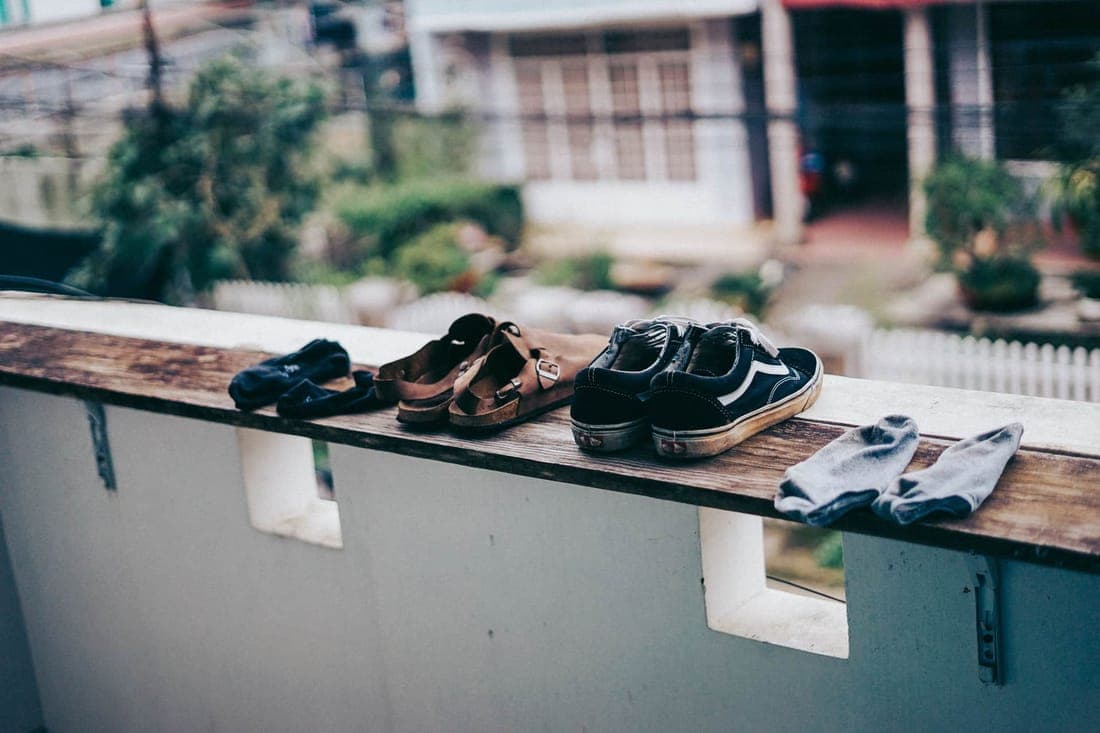
Product photos are the retailer’s own catalogue images, shown from the retailer’s servers and refreshed daily. Any other photo here is a licensed image that illustrates the category, not a photograph of the specific product named.
| # | Product | Best for | Outsole | Price |
|---|---|---|---|---|
| 1 | 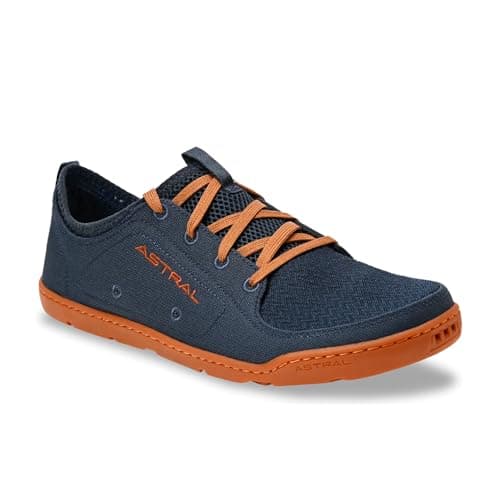 Top pick Astral Men's Loyak A minimalist sneaker built around a razor-siped sticky-rubber sole — the best grip here, in a shoe that looks normal. | Grip on wet rock | G.15 non-marking rubber, razor siped | |
| 2 | 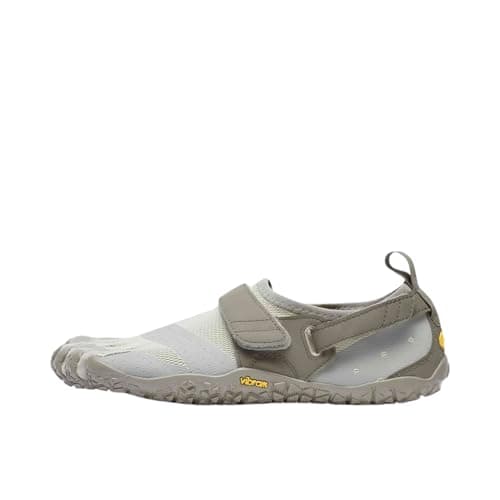 Also good Vibram Men's FiveFingers V-Aqua A toe shoe with a real Vibram outsole: the closest thing to barefoot that still protects the sole of your foot. | Barefoot feel, full sole | Individual toe pockets | |
| 3 | 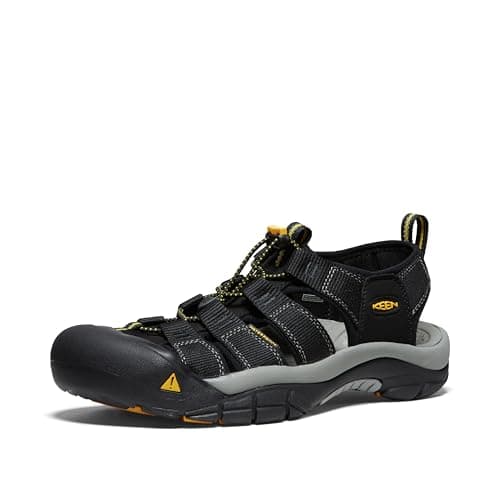 Also good KEEN Men's Newport H2 The closed-toe water sandal most men should buy: a rubber toe bumper, a lugged outsole and a bungee lace that holds. | Rocky bottoms, all day | Closed, rubber bumper | |
| 4 | 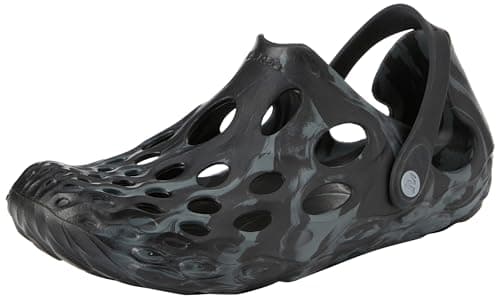 Also good Merrell Men's Hydro Moc A one-piece molded clog with a heel strap — a Croc that actually stays on a kicking foot. | On and off at the dock | One-piece molded EVA | |
| 5 | 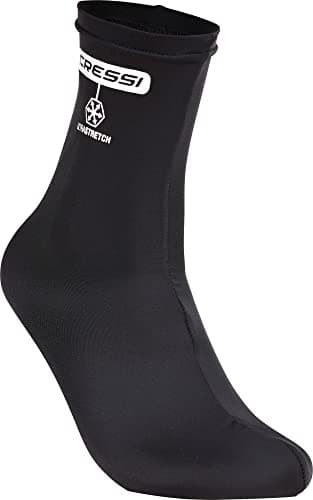 Budget pick Cressi Neoprene Water Socks Thin neoprene socks: warmth and chafe protection, essentially no sole, and not a substitute for a shoe. | Warmth and blister prevention | Neoprene, thin |
A kayak changes what a water shoe has to be
Everything that makes a good lake shoe - a thick protective sole, a chunky lugged outsole, a padded collar - works against you in a boat. A sit-in kayak has a footwell with a fixed amount of room, and a bulky sole eats it. You end up with your heels jammed, your knees high, and a shoe you have to take off to get your feet onto the pegs.
So the specification inverts. You want low volume, a flat or zero-drop profile, a thin but grippy sole, and a heel you can slide against plastic without it catching. That is a paddling shoe rather than a hiking sandal, and the two are easy to confuse in a product listing.
The second kayak-specific requirement is the launch. You carry the boat down a concrete ramp or a mud bank with both hands occupied, which is the least forgiving footing of the entire day. Wet concrete with a film of algae is where a hard-compound outsole simply lets go. Siped soft rubber is the answer, and it is a compound choice rather than a tread choice.
Astral Men's Loyak
A minimalist sneaker built around a razor-siped sticky-rubber sole — the best grip here, in a shoe that looks normal.
Specifications
- Outsole
- G.15 non-marking rubber, razor siped
- Drainage
- Toe and heel ports, mesh upper
- Footbed
- Removable closed-cell EVA, zero drop
- Weight
- About 7.4 oz per shoe, men's 9
What works
- Siped sticky rubber is the grippiest sole in this group on wet, sloped rock
- Drains from the toe and heel while the mesh keeps most silt out
- Looks enough like a normal sneaker to wear into a restaurant afterwards
- Light for a closed shoe, and the insole comes out to dry separately
What doesn’t
- No toe bumper and a thin stack — protection is grip, not armor
- Costs as much as the Newport without the toe protection, which is the wrong trade for most lake families
Who it’s for
Paddlers, anglers and anyone scrambling on wet rock where slipping is the real risk.
Bottom line
Buy it for traction. If your worry is stubbing a toe rather than slipping, buy the Newport.
Vibram Men's FiveFingers V-Aqua
A toe shoe with a real Vibram outsole: the closest thing to barefoot that still protects the sole of your foot.
Specifications
- Construction
- Individual toe pockets
- Outsole
- Vibram rubber
- Fit
- Sized in EU, by foot length
- Drainage
- Quick-draining upper
What works
- You feel the bottom through it, which is exactly what some people want when wading
- Vibram rubber underfoot means sharp gravel stops being a problem even at barefoot thickness
- Grips better than a smooth-soled aqua sock by a wide margin
- Dries fast and takes up almost no bag space
What doesn’t
- Getting toes into the pockets wet is genuinely annoying, and some feet never fit it
- No toe protection above the sole, and the look puts plenty of people off
Who it’s for
Wading anglers, barefoot-shoe converts, and anyone who hates the dead feeling of a cushioned water shoe.
Bottom line
Excellent if the fit works for you. Try it on before a trip rather than on the dock.
KEEN Men's Newport H2
The closed-toe water sandal most men should buy: a rubber toe bumper, a lugged outsole and a bungee lace that holds.
Specifications
- Toe
- Closed, rubber bumper
- Outsole
- Non-marking rubber, lugged
- Closure
- Bungee lace
- Drainage
- Open side panels
What works
- The toe bumper is the whole argument — a submerged rock at walking pace is what breaks a toe
- Lugged rubber grips wet rock, algae and a slimy boat ramp, where foam soles slide
- Cinch the bungee once and it stays set for the season
- Comfortable enough to wear off the water, so it is one pair instead of two
What doesn’t
- Heaviest and slowest-drying shoe here — the footbed is still damp the next morning
- The webbing collects sand, and sand in webbing is what rubs the top of your foot raw
Who it’s for
Anyone wading in off rock or gravel, launching a boat, or walking shore-to-water all day.
Bottom line
The lake default. If the bottom is anything other than sand, start here.
Merrell Men's Hydro Moc
A one-piece molded clog with a heel strap — a Croc that actually stays on a kicking foot.
Specifications
- Construction
- One-piece molded EVA
- Heel
- Adjustable strap
- Weight
- Very light
- Drainage
- Open ports
What works
- The heel strap is the difference between a water shoe and a shoe you lose in the water
- One-piece EVA has nothing to delaminate and holds no sand in a lining
- Rinses clean under a tap in seconds and dries by lunchtime
- Light enough that you stop noticing you are wearing them
What doesn’t
- Soft EVA sole gives almost nothing against a sharp rock — you feel every one
- The open design still lets grit in, and grit under a bare heel is a blister
Who it’s for
Dock and sandbar days, pontoon decks, and anyone taking shoes on and off twenty times.
Bottom line
The convenience pick, and a genuinely good one. Not the shoe for a stony bottom.
Cressi Neoprene Water Socks
Thin neoprene socks: warmth and chafe protection, essentially no sole, and not a substitute for a shoe.
Specifications
- Material
- Neoprene, thin
- Sole
- Minimal grip print
- Purpose
- Warmth, chafe protection
- Sizes
- Child and adult
What works
- Keeps feet warm in cool water, which nothing else in this category does
- Stops fin and shoe chafe, the reason most people buy them
- Packs to nothing in a swim bag
- Cheap, and a genuinely different tool from a water shoe
What doesn’t
- Almost no puncture protection — a sharp rock or a shell goes straight through
- Slippery on wet boat ramps and dock boards
Who it’s for
Cool-water swimmers, anyone wearing fins, and children who blister inside water shoes.
Bottom line
Buy socks for warmth and chafe, shoes for protection. Wearing socks inside shoes covers both.
What to look for
Low volume and a flat profile. Zero drop, a thin midsole, no raised heel. Measure your footwell if you paddle a sit-in boat; the shoe that fits a sit-on-top may not fit a cockpit at all.
Siped soft rubber. Fine razor cuts across a soft non-marking compound is what grips a wet ramp and a wet deck. Non-marking matters twice over here because you are standing on someone's gelcoat.
Drainage ports, not just a mesh upper. A shoe that fills and stays full is heavy and cold. Toe and heel ports move water out while you are still walking.
Heel retention you can trust in mud. A launch bank will pull an unsecured shoe off your foot and keep it. A bungee lace or a fastened heel strap is the minimum.
Warmth, if your water is cold. Thin neoprene adds no bulk and makes a real difference in spring and fall. Socks under a roomy shoe is a common, sensible combination.
How the five compare
| Model | Outsole | Drainage | Bulk in a cockpit |
|---|---|---|---|
| Astral Men's Loyak | G.15 non-marking, razor siped | Toe and heel ports, mesh upper | Low - zero drop, about 7.4 oz per shoe |
| Vibram Men's FiveFingers V-Aqua | Vibram rubber | Quick-draining upper | Lowest - toe pockets, minimal sole |
| KEEN Men's Newport H2 | Non-marking lugged rubber | Open side panels | High - closed toe bumper and thick sole |
| Merrell Men's Hydro Moc | Molded EVA | Open ports | Medium - light, but a deep foot box |
| Cressi Neoprene Water Socks | Minimal grip print | Neoprene, drains slowly | Lowest - fits inside almost anything |
What about the shoe you already own
An old pair of running shoes is the classic kayak mistake. The sole is thick, the heel is raised, the foam absorbs water and holds a pound of it, and the outsole is tuned for dry asphalt. They are not dangerous; they are just the wrong tool, and they stay wet for two days afterward.
A clog is a worse option still, because it will float away the first time you step out in waist-deep water. If you are set on something slip-on, look at the molded models with a fastened heel strap - the comparison is in water shoes vs Crocs and the direct substitutes are in Crocs alternatives for the water.
The rest of the kit
Footwear is the small decision on a paddling day. The large one is the life jacket: a paddle vest with high armholes and a ventilated back exists so that you keep it on for three hours rather than sitting on it, and the models are in best life jackets for kayaking. If a foam vest is the thing you never wear, the inflatable options are in best inflatable life jackets.
A phone in a sealed pouch on a leash, not in a pocket - the pouch options and the honest reading of what an IP rating promises are in best waterproof phone pouches.
How much to spend
A real paddling shoe is the most expensive thing on this page and the only one designed for the job rather than adapted to it. If you paddle a few times a summer, neoprene socks plus whatever closed shoe you own is a perfectly rational answer, and it costs less than a tank of gas. If you paddle every week, the shoe pays for itself in not having to take it off at the put-in.
Everything under a hard fifty-dollar ceiling is collected in best water shoes under $50. Prices here come from the site's daily price run with their as-of date under each buy button.
Questions
Frequently asked questions
What are the best water shoes for kayaking?
Can you wear running shoes kayaking?
Are Crocs good for kayaking?
Do you need shoes at all in a kayak?
What do you wear kayaking in cold water?
Read next