Rash Guards · Roundup
Best Shorty Wetsuits (2026)
Three picks and one honest rule: a shorty is for cool water on a warm day, and nothing colder.
The short answer
The O'Neill Youth Reactor-2 2mm spring suit is the pick: UltraFlex neoprene and a short-sleeve, short-leg cut that a child will actually keep on. The budget pick is the SEAC Dolphin at 1.5mm, which costs less and is the right thickness for genuinely warm days.

Product photos are the retailer’s own catalogue images, shown from the retailer’s servers and refreshed daily. Any other photo here is a licensed image that illustrates the category, not a photograph of the specific product named.
| # | Product | Best for | Thickness | Price |
|---|---|---|---|---|
| 1 | 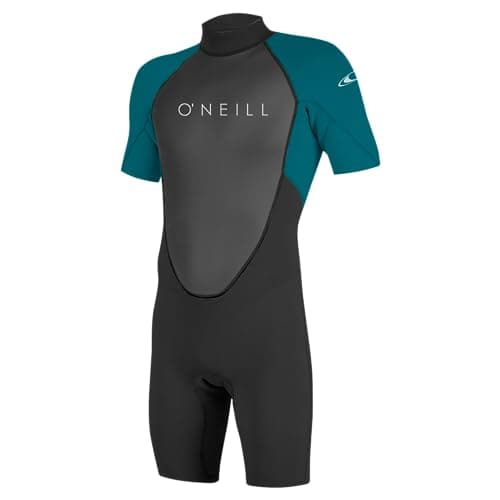 Top pick O'Neill Youth Reactor-2 2mm Short Sleeve Spring Wetsuit The same suit with the arms and legs cut off — warmth over the core, full freedom everywhere else. | Cool water, warm air | 2mm | |
| 2 | 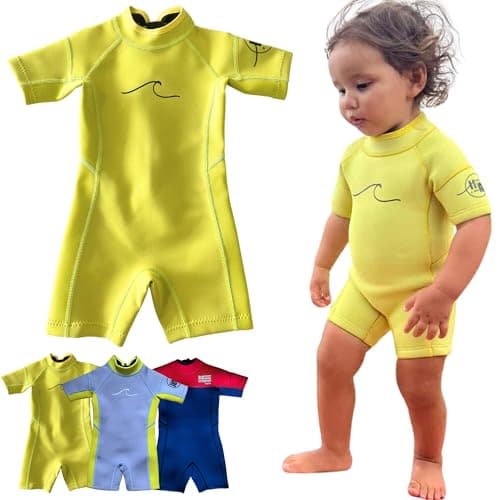 Also good Selective HA Baby Toddler Neoprene Shorty Wetsuit A small-maker shorty offered in 1.5mm or 2.5mm, including Yamamoto neoprene - unusually soft for a suit this small. | Softest neoprene, baby sizes | 1.5mm or 2.5mm, by option | |
| 3 | 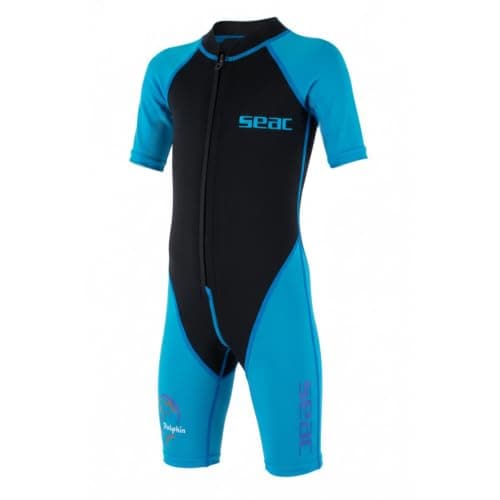 Budget pick SEAC Dolphin 1.5mm Shorty Wetsuit A thin neoprene-and-spandex shorty for preschoolers - the suit for a warm afternoon on water that is merely cool. | Warm days, cool water | 1.5mm |
What a shorty is actually for
A shorty - also sold as a spring suit or a springsuit - is a wetsuit with short sleeves and short legs, usually 1.5mm to 2mm thick. It covers the core, which is where body heat is lost fastest, and leaves the limbs free. That makes it the right suit for one specific situation: water cool enough to end a swim early, air warm enough that a full suit would cook you.
On a lake in June that describes almost every afternoon. The water is still in the low sixties while the air is in the eighties, and a child who lasts fifteen minutes in swim trunks will last an hour in a shorty. That is the entire value proposition, and it is a big one for a family whose day is decided by how long the children stay in.
What a shorty is not is cold-water gear. Bare arms and legs lose heat fast, and no 1.5mm shorty is going to make 58-degree water pleasant. At that point you want a full suit, and the thickness ladder is laid out in rash guard vs wetsuit.
O'Neill Youth Reactor-2 2mm Short Sleeve Spring Wetsuit
The same suit with the arms and legs cut off — warmth over the core, full freedom everywhere else.
Specifications
- Thickness
- 2mm
- Cut
- Short sleeve, short leg
- Neoprene
- UltraFlex
- Entry
- Back zip
What works
- Covers the torso, which is the part that matters, and leaves the limbs free to swim properly
- Far easier to get on and off than a full suit — the single biggest reason a child will actually wear it
- Dries in a fraction of the time, so it is not still wet the next morning
- Meaningfully cheaper than the full suit
What doesn’t
- Does nothing for cold arms and legs, which is where most children complain first
- Not enough suit for genuinely cold water — buy the 3/2 full instead and do not split the difference
Who it’s for
A warm July afternoon on cool water, and kids who find a full suit claustrophobic.
Bottom line
The right shorty for most family lakes. If you are shopping because of June water, this is not enough.
Selective HA Baby Toddler Neoprene Shorty Wetsuit
A small-maker shorty offered in 1.5mm or 2.5mm, including Yamamoto neoprene - unusually soft for a suit this small.
Specifications
- Thickness
- 1.5mm or 2.5mm, by option
- Neoprene
- Yamamoto or conventional, by option
- Cut
- Short sleeve shorty / springsuit
- Sizes
- Baby through toddler, incl. 2T
What works
- You choose the thickness, which no other baby suit here lets you do
- The Yamamoto option is markedly softer and stretchier than standard neoprene, so a baby fights it less
- Made in genuinely small sizes, below where the toddler surf ranges start
- A shorty cut in 2.5mm is warmer than any 2mm wrap while still being easy to put on
What doesn’t
- Most expensive option here after the O'Neill, for a suit with the shortest useful life
- Small maker: sizing guidance is thin and there is little independent feedback to check it against
- Options are confusing - thickness, neoprene type and sleeve length all vary by listing, so read the variant you are actually adding to the cart
Who it’s for
A parent who already knows their baby hates stiff neoprene, and who wants to pick the thickness themselves.
Bottom line
The one to buy if softness is the problem you are solving. Otherwise the Splash About wrap does most of the job for less than half the money.
SEAC Dolphin 1.5mm Shorty Wetsuit
A thin neoprene-and-spandex shorty for preschoolers - the suit for a warm afternoon on water that is merely cool.
Specifications
- Thickness
- 1.5mm
- Cut
- Short sleeve, short leg
- Fabric
- Neoprene and spandex
- Sizes
- From about age 2
What works
- 1.5mm stretches far more than 2mm, so a toddler can still move and a parent can still get it on
- Thin enough to dry by the end of the afternoon rather than overnight
- A conventional shorty cut rather than a wrap, which some children prefer because it looks like what older siblings wear
- Dive-brand construction, so the seams are better than the price suggests
What doesn’t
- 1.5mm is the thinnest suit here - it buys maybe half an hour, not an afternoon
- Starts around age two, so it is no use for a baby
- Sized by age in European bands, so measure rather than trusting the number
Who it’s for
A two-to-five-year-old on a July lake that is cool rather than cold.
Bottom line
A sensible light option. If your child's lips go blue in it, you needed 2mm and should not have split the difference.
The three compared
| Suit | Thickness | Cut | Sizes |
|---|---|---|---|
| O'Neill Youth Reactor-2 Spring | 2mm UltraFlex | Short sleeve, short leg, back zip | Youth |
| Selective HA Baby Toddler Shorty | 1.5mm or 2.5mm by option | Short sleeve shorty | Baby through toddler, incl. 2T |
| SEAC Dolphin Shorty | 1.5mm | Short sleeve, short leg | From about age 2 |
Thickness is the number that matters and the one most listings bury. A 1.5mm shorty is a warm-day suit; a 2mm shorty is noticeably warmer and stiffer; a 2.5mm shorty is close to the practical limit before a full suit makes more sense. A suit sold without a stated thickness is a suit whose thickness you should assume is the thinnest it could be.
What to look for
A stated neoprene thickness. 1.5mm, 2mm, 2.5mm. Not a vague thermal claim. Everything about whether the suit suits your lake follows from this one figure.
A back zip with a long leash. A child cannot get into a wetsuit unaided, and a zip pull that reaches is what lets them get out of it unaided. This is a bigger quality-of-life feature than the neoprene grade.
A snug fit with no gap at the small of the back. A wetsuit works by holding a thin layer of water against the skin and warming it. Loose anywhere means cold water flushing through, which is worse than no suit at all because it keeps doing it.
Flatlock seams at this thickness. Glued and blind-stitched seams are warmer and belong on thicker suits. On a 1.5mm or 2mm shorty, flatlock is standard, durable and perfectly adequate.
Soft neoprene at the arm and leg openings. The shorty's weak point is chafing at the cuff, particularly on a child's thighs. Smooth, soft binding is the detail that stops a suit being refused on day three.
Shorty, full suit or rash guard
A rash guard is not a wetsuit. It is a UPF 50+ layer that stops sunburn and chafe, it provides essentially no warmth, and it is what you want on a hot day in warm water. If sun is your problem, buy a rash guard - the options are in best kids' rash guards and best rash guards for adults.
A shorty is the warm-air, cool-water answer, and it is the suit a family uses most often in practice. A full suit is for genuinely cold water, early and late season, and for a child who gets cold fast regardless of the thermometer. The kids' full-suit field is in best wetsuits for kids, the under-$100 field across both cuts is in best wetsuits under $100, and for the smallest swimmers there is best baby wetsuits.
Fitting and caring for a shorty
- Try it dry. A correctly sized wetsuit is hard to get on and feels tight standing up - that is the fit, not a mistake.
- Check the small of the back and the backs of the knees for gaps. Those are where flushing starts.
- Make the child squat and reach overhead. If the shoulders restrict that, go up a size rather than hoping it stretches.
- Rinse inside and out with fresh water after every swim, every time.
- Dry it folded over a wide hanger or a rail - never on a wire hanger, which puts a permanent crease through the shoulder - and always out of direct sun.
Neoprene dies from sunlight, heat and being stored damp, not from being swum in. A suit rinsed and dried in the shade lasts several seasons and is the one piece of lake kit that genuinely passes down to a sibling.
Questions
Frequently asked questions
What is the best shorty wetsuit?
How cold is too cold for a shorty wetsuit?
Is a shorty wetsuit better than a rash guard?
What thickness shorty wetsuit should I buy?
Should a shorty wetsuit be tight?
Read next