Rash Guards · Roundup
Best Wetsuits Under $100 (2026)
Five suits under a hundred dollars, sorted by the only number that decides whether a wetsuit works: thickness.
The short answer
The O'Neill Reactor-2 2mm is the pick under $100 and the one adult suit here, rated by O'Neill for roughly 62-70 F water. The budget pick is the Body Glove Phoenix 2mm kids' springsuit, which costs a fifth as much and is the cheapest suit on the page worth owning.
Product photos are the retailer’s own catalogue images, shown from the retailer’s servers and refreshed daily. Any other photo here is a licensed image that illustrates the category, not a photograph of the specific product named.
| # | Product | Best for | Thickness | Price |
|---|---|---|---|---|
| 1 | 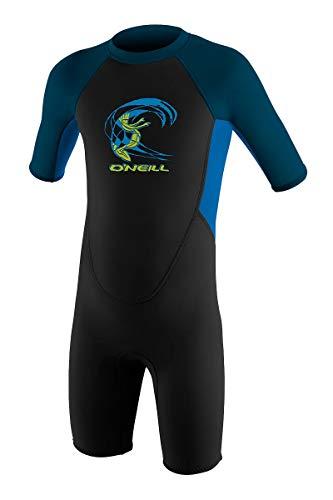 Top pick O'Neill Reactor-2 2mm Wetsuit 2mm neoprene for genuinely cold water — a different tool from a rash guard, solving a different problem. | Cold water, not sun | 2mm neoprene | |
| 2 | 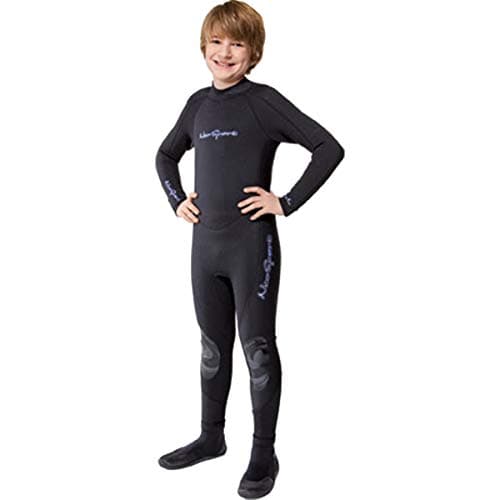 Upgrade pick NeoSport Junior Premium Neoprene 3mm Full Suit A uniform 3mm dive-style suit — warmer than any 3/2 here, and built for floating still in cold water rather than swimming fast. | Warmest of the lot | 3mm throughout | |
| 3 | 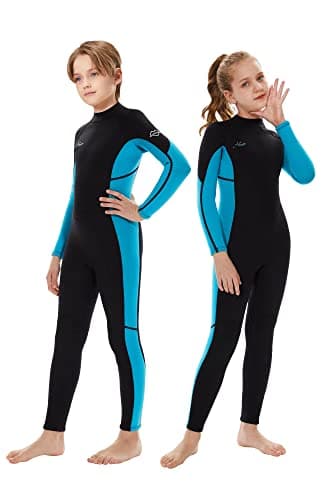 Also good Hevto Kids Wetsuit 3/2mm Neoprene Back Zip A full-length 3/2mm suit for roughly a third of the O'Neill — the compromise is finish, not thickness. | Full coverage on a budget | 3/2mm | |
| 4 | 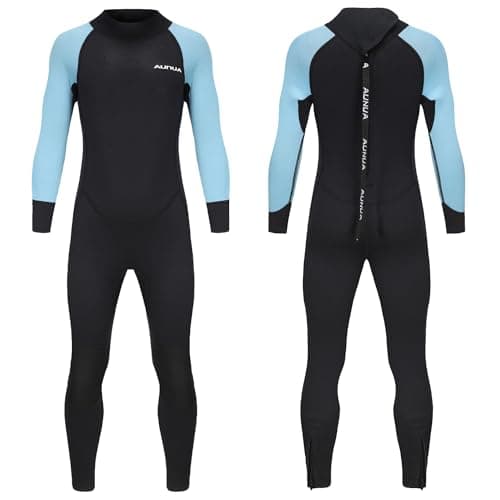 Also good Aunua Kids Wetsuit 3/2mm Full Wet Suit A stretch-focused 3/2mm full suit that runs into teen sizes, which is where most kids' wetsuit ranges stop. | Older kids and teens | 3/2mm | |
| 5 | 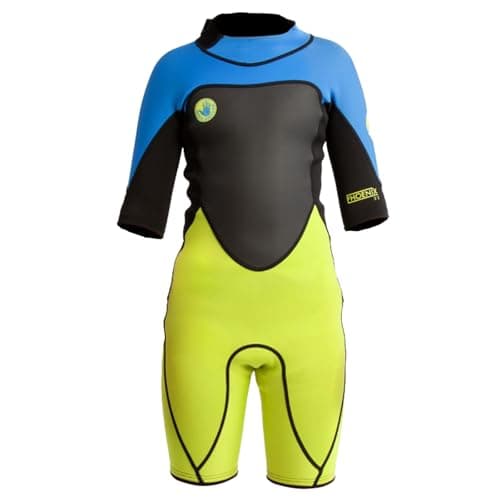 Budget pick Body Glove Phoenix 2mm Kids Wetsuit A 2mm back-zip springsuit at a price that makes a one-season purchase painless. | Cheapest useful suit | 2mm |
A hundred dollars buys a real wetsuit
Wetsuits are the one category on this site where the top of the market runs into four figures, which makes the ceiling worth stating plainly: under a hundred dollars you can buy genuine neoprene in a stated thickness with a working zip, and it will keep a swimmer in the water for an hour instead of ten minutes. What the expensive suits buy is flexibility, seam sealing and warmth-for-thickness - not the basic function.
For a lake household, the shape of the problem is usually children rather than adults. Children get cold far faster than grown-ups, they grow out of suits annually, and they are the reason the afternoon ends early. Four of the five picks here are youth or junior suits for exactly that reason, and at these prices a growth spurt is an inconvenience rather than a loss.
Every price on this page is read by the site's daily price run and stamped with its date under the buy button. A suit that climbs above a hundred dollars loses its place rather than keeping it.
O'Neill Reactor-2 2mm Wetsuit
2mm neoprene for genuinely cold water — a different tool from a rash guard, solving a different problem.
Specifications
- Material
- 2mm neoprene
- Purpose
- Thermal insulation
- Closure
- Back zip
- Water temp
- Roughly 62-70 F
What works
- Neoprene traps a warm water layer, which is the only thing that extends time in cold water
- Also blocks UV, so it does a rash guard's job as a side effect
- Protects against scrapes on rocks and docks
- Back zip with a long pull is manageable for an older child alone
What doesn’t
- Far too warm for a hot summer lake day — this is not a sun garment
- Expensive, restrictive, and a genuine chore to get on and off
Who it’s for
Swimmers in cold water: early season lakes, northern water, or a child who goes blue after ten minutes.
Bottom line
Buy a wetsuit for temperature and a rash guard for sun. Buying the wrong one for the job is the common mistake.
NeoSport Junior Premium Neoprene 3mm Full Suit
A uniform 3mm dive-style suit — warmer than any 3/2 here, and built for floating still in cold water rather than swimming fast.
Specifications
- Thickness
- 3mm throughout
- Cut
- Full suit
- Built for
- Diving, snorkeling, towing
- Entry
- Back zip
What works
- 3mm in the arms and legs too, so it is genuinely the warmest suit on this page
- Dive-grade construction is heavier-duty than a surf-brand entry suit at a similar price
- The right suit for snorkeling, where you float still and get cold fast
- Holds its shape over seasons better than budget stretch suits
What doesn’t
- Uniform 3mm restricts the arms and legs — a child swimming hard will notice and say so
- Heavier and slower to dry than everything else here
Who it’s for
Snorkeling, long sessions behind a tube, and any child who gets cold faster than their siblings.
Bottom line
Buy it for warmth, not for swimming. For a child who swims laps around the dock, the 3/2 is the better suit.
Hevto Kids Wetsuit 3/2mm Neoprene Back Zip
A full-length 3/2mm suit for roughly a third of the O'Neill — the compromise is finish, not thickness.
Specifications
- Thickness
- 3/2mm
- Cut
- Full suit, long sleeve and leg
- Entry
- Back zip
- Sizes
- Toddler through youth
What works
- Full coverage at a price most families will accept for something that gets outgrown
- 3/2mm is real thickness — this is not a thin novelty suit dressed up as one
- Size range reaches down further than most youth suits, which matters for a small four-year-old
- The only way many families get a child into a full suit at all
What doesn’t
- Seam finish and neoprene stretch are visibly below the O'Neill, and a stiff suit is a suit a child fights
- Sizing reports are inconsistent — measure chest and height against the chart rather than ordering by age
Who it’s for
Cold-water days on a budget, and second children who will inherit the suit regardless of how it wears.
Bottom line
Good value for full coverage. Expect to replace it rather than hand it down twice.
Aunua Kids Wetsuit 3/2mm Full Wet Suit
A stretch-focused 3/2mm full suit that runs into teen sizes, which is where most kids' wetsuit ranges stop.
Specifications
- Thickness
- 3/2mm
- Cut
- Full suit
- Neoprene
- Stretch thermal
- Sizes
- Youth into teen
What works
- Carries on past the point where many youth ranges end, so a tall twelve-year-old is not forced into an adult suit
- Stretch-first build is easier to pull on than a stiff budget suit, which is most of the battle
- Full coverage at a mid-budget price
- Plain styling that an older child will not refuse to be seen in
What doesn’t
- Stretchier neoprene also feels thinner in use — it flushes more than a premium suit of the same rating
- Durability over several seasons is unproven next to the established surf brands
Who it’s for
Older children and teenagers who have outgrown the youth ranges but do not fill an adult small.
Bottom line
The size-gap answer. If your child still fits an O'Neill youth size, buy that instead.
Body Glove Phoenix 2mm Kids Wetsuit
A 2mm back-zip springsuit at a price that makes a one-season purchase painless.
Specifications
- Thickness
- 2mm
- Cut
- Springsuit, short sleeve
- Entry
- Back zip
- Sizes
- Youth 8-16
What works
- Cheap enough that outgrowing it in one summer is not a real cost
- 2mm springsuit is the correct amount of suit for a lake that is cool rather than cold
- Back zip, so it goes on the same way the expensive suits do
- Low enough risk to buy on a maybe, which is how most families end up in a wetsuit at all
What doesn’t
- Thinner neoprene and basic seams mean it will not feel as warm as the O'Neill in the same thickness
- The youth size band starts at 8, so it is no help for a small child
Who it’s for
Families testing whether a wetsuit changes the day at all, and anyone with a fast-growing eight-to-twelve-year-old.
Bottom line
The sensible first wetsuit. Buy up only once you know the child will use it.
Thickness is the spec. Everything else is comfort
A wetsuit traps a thin layer of water and your body warms it. How much heat it keeps is mostly a function of neoprene thickness, which is why suits are named by their millimeters. A two-number suit - 3/2mm - means thicker neoprene through the torso and thinner at the limbs for flexibility, which is the standard construction and a good thing.
As a rough ladder for a freshwater lake: 1.5-2mm shorty for cool water and warm air, 2mm full for water in the low to high sixties, 3/2mm full for the low sixties and a child who gets cold, 3mm throughout for the coldest end of a swimming season. Nothing on this page is a cold-water suit for an adult doing a long open-water swim - that is a different purchase at a different price.
The five compared
| Suit | Thickness | Cut | Who it is for |
|---|---|---|---|
| O'Neill Reactor-2 | 2mm | Full suit, back zip | Adults, roughly 62-70 F water per O'Neill |
| NeoSport Junior Premium | 3mm throughout | Full suit, back zip | The warmest here - diving, snorkeling, towing |
| Hevto Kids 3/2mm | 3/2mm | Full suit, long sleeve and leg | Toddler through youth, full coverage |
| Aunua Kids 3/2mm | 3/2mm | Full suit, stretch thermal neoprene | Older kids into teen sizes |
| Body Glove Phoenix | 2mm | Springsuit, short sleeve, back zip | Youth 8-16, warm days |
What you give up under $100
Seam sealing. Budget suits use flatlock seams, which are durable, comfortable and let a little water through. Glued and blind-stitched seams keep more warmth and start above this ceiling. On a 2mm or 3/2mm suit in summer water, flatlock is a reasonable trade.
Neoprene flexibility. Premium suits use lighter, stretchier neoprene that feels like clothing. Budget neoprene is stiffer, which matters to a swimmer doing front crawl for an hour and barely at all to a child jumping off a dock.
Zip quality and entry design. Chest zips and smooth-skin seals are premium features. A back zip with a long leash is what you get here, and it is the easier design for a child to be helped into anyway.
Precise sizing. Budget brands offer fewer size breaks, so the fit is less exact. Since a loose wetsuit flushes cold water through and a tight one restricts the shoulders, this is the one place where the saving can genuinely cost you - measure rather than guess.
Fitting a budget suit
- Measure height, chest and weight and use the brand's own chart. Wetsuit sizing does not transfer between brands.
- A correctly sized suit is hard to pull on dry and feels tight standing up. That is the fit working.
- Check the small of the back and the backs of the knees. Gaps there are where cold water flushes in.
- Have the wearer squat and reach overhead. Restriction at the shoulders means size up rather than hoping it gives.
- For a child, do not buy a size up for next year - a loose suit is colder than no suit, and this is the category where that is literally true.
Rinse inside and out with fresh water after every swim, dry it folded over a wide rail rather than on a wire hanger, and keep it out of direct sun. Neoprene is killed by heat, UV and being stored damp, not by swimming. Looked after that way, even a cheap suit passes down to a sibling.
If a shorty is the cut you actually want, those are in best shorty wetsuits. The kids' field in full is in best wetsuits for kids, the baby sizes are in best baby wetsuits, and the question of whether you need warmth or just sun cover is settled in rash guard vs wetsuit.
Questions
Frequently asked questions
What is the best wetsuit under $100?
Are cheap wetsuits any good?
What thickness wetsuit do I need for a lake?
What does 3/2mm mean on a wetsuit?
Should I size up a child's wetsuit?
Read next