Swim Goggles · Guide
Kids' Swim Goggles That Cover the Nose
The product you are looking for is called a swim mask, and it solves a real problem.
The short answer
Goggles that cover the nose are sold as swim masks rather than goggles, and the Aqua Sphere Vista is the one to buy: it seals around the whole eye area and the nose, so no water goes up the nose and nothing presses on the eye socket. The cost is drag and mouth-only breathing, neither of which matters to a child who is not racing.
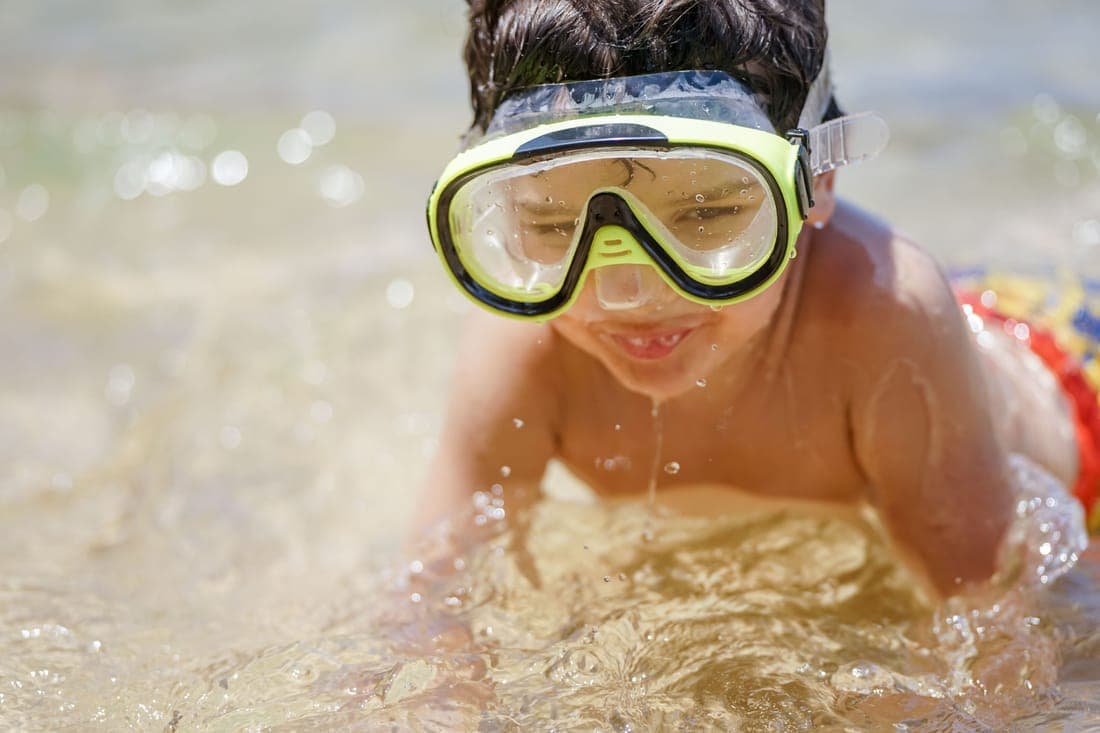
Product photos are the retailer’s own catalogue images, shown from the retailer’s servers and refreshed daily. Any other photo here is a licensed image that illustrates the category, not a photograph of the specific product named.
What you are actually searching for
Conventional swim goggles seal in two separate rings, one around each eye, and leave the nose exposed. A product that covers the nose as well is a swim mask: one continuous seal running around the outside of both eyes and underneath the nose, with a single lens across the front.
Masks are sold in the goggle aisle but rarely described as nose-covering goggles, which is why they are hard to find if that is the phrase in your head. Once you know the word, the category is small and easy to navigate.
What you do not want is a snorkelling mask. Those seal around the nose in a pocket you can equalise with, they sit much deeper, and they are built to be worn face-down on the surface rather than swum in. For a child learning to swim, a swim mask is the right tool and a snorkel mask is a different sport.
Why a child wants the nose covered
In our experience there are three distinct reasons parents go looking for this, and all three are legitimate.
Water up the nose is the fear that stops a child putting their face in. It stings, it is startling, and for a nervous beginner it is the thing that ends the lesson. A mask removes the possibility entirely, and a child who will put their face in the water is a child who can start learning to swim.
Eye pressure. Goggles seal by pressing a gasket into the soft tissue around the eye socket, and some children simply will not tolerate it. A mask seals out on the cheekbone and brow and puts no pressure on the socket at all — which is also the answer to swim goggles that do not leave marks.
Repeated leaking on an unusual face shape. A narrow or very wide nose bridge gives a two-cup goggle almost nothing to seal against. A single continuous gasket does not care about the bridge.
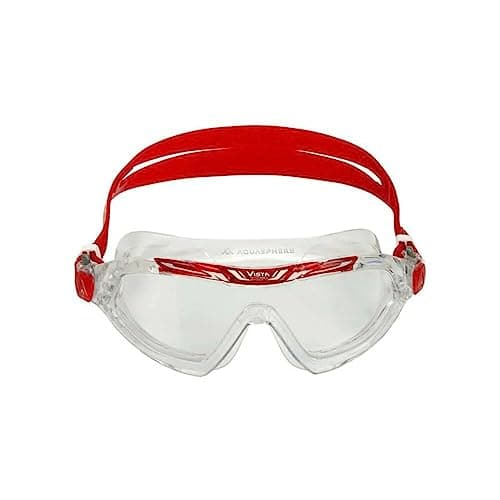
Aqua Sphere Vista
A swim mask, not goggles: it seals around the whole eye area and the nose, so nothing presses on the eye socket.
Specifications
- Type
- Swim mask
- Seal
- Around eyes and nose
- Field of view
- Very wide
- Lens
- Anti-fog, UV
What works
- No pressure on the eye socket at all, which solves the most common reason a child refuses goggles
- Covers the nose, so water does not go up it — a real fear for beginners
- Very large field of view
- Sizing runs wide enough to cover older children as well as adults
What doesn’t
- Bulky and draggy, so it is wrong for anyone swimming laps for time
- You breathe through the mouth only, which takes some children a session to accept
Who it’s for
A child who has rejected two or three pairs of conventional goggles, or who panics about water up the nose.
Bottom line
The escape hatch when nothing else works. Not a training choice — but a child in a mask is a child in the water.
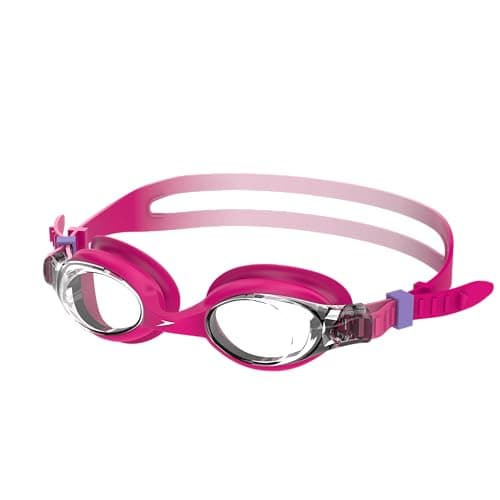
Speedo Kids' Skoogles
The softest, most forgiving gasket in the category — it seals even when a child pulls it on crooked.
Specifications
- Age range
- 3-8 years
- Gasket
- Oversized soft silicone
- Frame
- One-piece, flexible
- Lens
- Anti-fog, UV
What works
- Very forgiving fit — the gasket is deep enough that a crooked pull-on still seals
- Wide, shallow lens avoids the pressure ring that makes small children refuse goggles
- Single-strap adjustment a four-year-old can manage
- Widely stocked, so a mid-trip replacement is realistic
What doesn’t
- Soft gasket leaves a visible mark after a long session
- Too loose on the face of a child over about 8
Who it’s for
A toddler or young child who has tried goggles once and hated them. This is the pair that usually fixes that.
Bottom line
Buy these if the problem is refusal rather than leaking. Comfort is what they optimize for and it works.
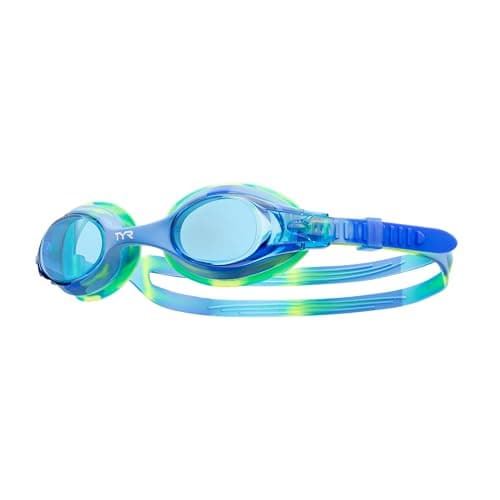
TYR Kids' Swimple
Oversized soft gaskets on a one-piece frame, which is the combination that actually seals a small face.
Specifications
- Age range
- 3-10 years
- Gasket
- Silicone, oversized
- Frame
- One-piece
- Lens
- Anti-fog, UV
What works
- One-piece frame has no nose-bridge adjustment to get wrong, which removes the most common source of leaks on small faces
- Soft silicone gasket sits wide of the eye socket, so it seals against cheek rather than thin skin
- Hypoallergenic silicone matters for kids who react to latex straps
- Cheap enough to replace mid-season without a conversation about it
What doesn’t
- No bridge adjustment at all, so a very narrow or very wide face has no fallback
- Strap clip is fiddly for a child to adjust alone
Who it’s for
A child between about 3 and 10 who is in the water for lessons and lake days rather than training, and who has already lost or broken a pair.
Bottom line
The default first pair. If you are buying goggles for a child under 10 and do not want to think about it, buy these.
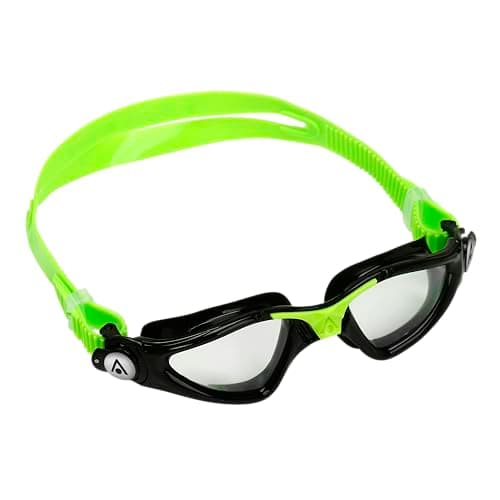
Aqua Sphere Kayenne Jr.
A wide curved lens that gives a genuinely panoramic view — the useful choice where a child cannot see the bottom.
Specifications
- Age range
- 6-12 years
- Field of view
- Wide, 180-degree style
- Gasket
- Soft silicone, curved
- Lens
- Anti-fog, UV, tinted options
What works
- The wide lens is not a gimmick in murky water — peripheral vision is how a child keeps track of a parent or a dock
- Curved gasket spreads pressure across the cheekbone instead of the eye socket
- Quick-adjust buckles work with wet hands
- Tinted versions cut glare off open water, the actual complaint on bright lake days
What doesn’t
- Larger lens is more exposed and picks up scratches faster in a beach bag
- Bulkier than a low-profile pair, so a competitive swimmer will not want them
Who it’s for
A child who swims mostly in open water — a lake, a river, a bay — rather than a clear pool.
Bottom line
The lake pick. Where visibility is poor, field of view is worth more than a sleeker frame.
What a mask costs you
| Swim mask | Conventional goggles | |
|---|---|---|
| Water up the nose | Prevented | Possible |
| Pressure on the eye socket | None | Yes — that is the seal |
| Field of view | Very wide | Narrow to moderate |
| Drag in the water | High | Low |
| Breathing | Mouth only | Nose or mouth |
| Swim team and lessons | Often not allowed for strokes | Standard |
| Price | Higher | From very little |
Two of those rows deserve honest emphasis. Mouth-only breathing takes most children a session to get used to, and a few never like it. And drag makes a mask the wrong choice for anything timed — if your child is on a summer swim team, they will need conventional goggles for sets regardless of what they wear the rest of the time.
Some lesson programmes also prefer conventional goggles, on the reasonable grounds that learning to blow bubbles out of your nose is part of learning to swim. That is a conversation worth having with the instructor rather than a reason to rule a mask out — a mask that gets a frightened child into the water first is doing the more important job.
If a mask is too much, try these first
A mask is not the only way to address the underlying complaint, and for some children a very forgiving conventional goggle is enough.
- An oversized soft gasket on a one-piece frame. Deep enough that a crooked pull-on still seals, with no bridge adjustment to get wrong. This fixes refusal far more often than parents expect.
- A wide curved lens in the open-water style. More comfortable across the cheekbone and much better peripheral vision, which is its own reassurance in murky water.
- A nose clip with ordinary goggles. Cheap, and it addresses water up the nose specifically. Some children find a clip more intrusive than a mask; it costs very little to find out.
- Correct strap tension. Over-tightening is the most common cause of both leaks and marks, and it is free to fix — the method is in kids' goggle fit guide.
Sizing a mask for a child
Masks are sized more loosely than goggles, and most are sold in one adult-ish size that runs wide enough to suit older children too. For a child under about six, a very soft one-piece goggle usually fits better than any mask does.
The fit test is the same one that works for every goggle: press it onto a dry face with the strap loose and let go. If it holds for a second or two on suction alone, the seal is right. If it drops immediately, it is the wrong shape for that face and strap tension will not rescue it.
Then tighten the strap only until the mask stops moving, and no further. A mask pulled tight is uncomfortable in exactly the way the child was trying to avoid, and the extra tension buys no additional seal.
What we would buy
If a child is frightened of water up the nose, or has already refused two or three pairs of goggles, buy the mask. It is more expensive than a cheap pair of goggles and far cheaper than a summer of arguments at the water's edge.
If the complaint is vaguer than that — goggles are 'annoying', or they leaked once — start with a soft oversized one-piece goggle. It costs a fraction as much, it fixes the problem more often than not, and it leaves the mask available as the next step. Our full picks by age are in best kids' swim goggles.
Questions
Frequently asked questions
Are there swim goggles that cover the nose?
Are swim masks good for kids who are scared to put their face in?
Can kids use a snorkel mask for swimming?
Will a swim mask be allowed at swim lessons or on a team?
Is a nose clip a cheaper alternative?
Read next