Swimsuits · Guide
Swimsuit Sizing Guide
Four measurements, two sizing systems, and the one measurement almost nobody takes.
The short answer
Measure chest, waist, hip and torso length, then buy against the brand's own chart. Training brands size girls' suits by chest in inches, which is far more reliable than age sizing. Do not size up for growth — a loose swimsuit drags in the water and gets rejected.
Photos on this page are licensed images that illustrate the category. They are not photographs of the specific products named, and no product image here is supplied by a manufacturer or retailer.
The four measurements
- Chest / bust — around the fullest part, tape level all the way round, snug but not pulled tight.
- Waist — at the natural waist, the narrowest point, usually just above the navel.
- Hip — around the fullest part of the hips and seat.
- Torso length — from the top of one shoulder, straight down the front, through the crotch, and back up to the same shoulder. Keep the tape snug against the body.
Torso length is the measurement almost nobody takes and the one that explains most fit complaints. A suit can match your chest, waist and hip perfectly and still dig into the shoulders because the body is longer than the suit's pattern assumes. If suits always ride up on you or your child, measure this.
Two sizing systems that are not comparable
Training brands — Speedo, TYR, Dolfin, Arena — size girls' and women's suits by chest measurement in inches. A 26 is a 26 inch chest, whether the child is seven or nine. It is precise, comparable between brands, and the reason we recommend measuring rather than guessing.
Fashion brands size by dress size or by age, which is neither precise nor comparable. An age-8 swimsuit from two brands can differ by a full inch and a half of chest, and by more in torso length.
Where a brand publishes a chart with actual measurements, use it. Where it only gives an age, treat the size as a rough guide and expect to try it.
Kids' sizing reference
| Age | Chest | Training size | Note |
|---|---|---|---|
| 4-5 | 22-23 in | 22-24 | Wide variation at this age |
| 6-7 | 23-24 in | 24 | Measure; do not assume |
| 8-9 | 24-26 in | 24-26 | The most common size band |
| 10-11 | 26-28 in | 26-28 | Torso length starts to vary a lot |
| 12-13 | 28-30 in | 28-30 | Many move to adult sizing here |
| 14+ | 30-32 in | 30-32 or adult XS | Adult training sizing overlaps |
These are indicative and the variation at any age is wide. Use them to sanity-check a measurement, not to replace one.
Do not size up for growth
This is the single most common swimsuit buying mistake, and the reasoning is specific to water. A swimsuit works by staying against the body. A loose one fills with water, drags, shifts, and rides up, and a child who has to keep adjusting a suit stops wanting to wear it.
If you want two summers from one purchase, buy a sunsuit or a rash guard slightly generous instead — those tolerate looseness better, though they do ride up more. For a swimsuit relying on fit, buy to current size and buy cheap if the child is growing fast.
When to size down
- New PBT suits. Chlorine-resistant fabric stretches less than nylon-elastane, so it should feel firm at first. If it feels comfortable straight away it may be too large and will be loose within a few swims.
- Between sizes on chest. Take the smaller one for a competition or training suit; compression is part of the point.
- Fashion suits with generous cuts. Many run large relative to training sizing.
And when to size up: if the torso measurement is at or above the top of the range, even when the chest is mid-range. Length is the constraint there, and a brand with a longer cut is a better answer than a bigger size.
Fitting checks in the shop
- Raise both arms fully overhead. The suit should not ride up at the leg or pull at the shoulders.
- Reach down and touch your toes. It should not gape at the chest or slide at the seat.
- Run a finger under each strap — you want it snug, not tight enough to leave a mark standing still.
- Check the leg openings sit flat rather than cutting in or gaping.
- For a child, get them to jump. A suit that shifts on a jump will shift in water.
Our picks
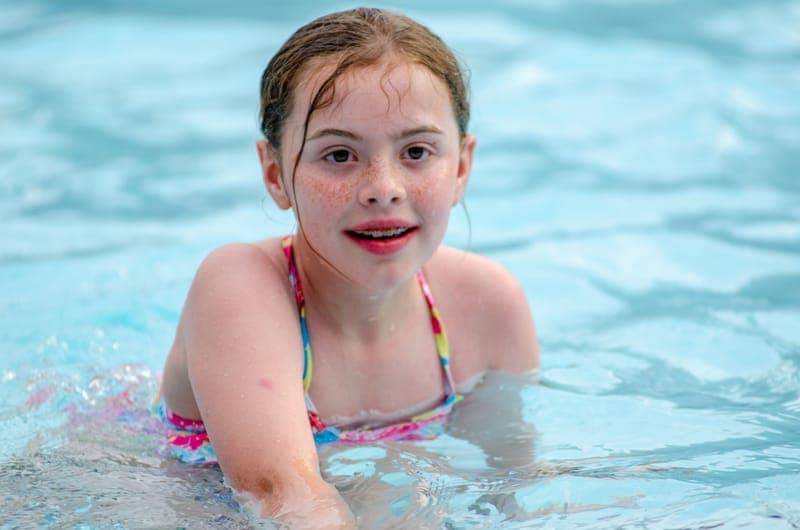
Speedo Girls' Solid Racerback
A plain chlorine-resistant racerback — the suit that survives a full season of weekly lessons.
Specifications
- Fabric
- Chlorine-resistant polyester blend
- Back
- Racerback
- Sizes
- Girls 4-16
- Lining
- Front lined
What works
- Chlorine-resistant fabric holds shape and color where a fashion suit goes see-through by August
- Racerback straps do not slide off shoulders mid-lesson, which is the real reason kids tug at suits
- Full coverage, so a child is not adjusting it every time they climb out
- Cheap enough to own two so one is always dry
What doesn’t
- Plain and unfashionable — older children may object
- Chlorine-resistant fabrics feel stiffer than fashion swim fabric
Who it’s for
A girl in weekly lessons or on a summer team, where a suit gets chlorinated repeatedly.
Bottom line
The workhorse. If your child is in a pool every week, buy this rather than a fashion suit and replace it half as often.
Dolfin Girls' Uglies One Piece
Training-grade chlorine-resistant fabric in loud prints — the compromise between durable and wearable.
Specifications
- Fabric
- Chlorine-resistant polyester
- Back
- V-back and racerback options
- Sizes
- Girls 22-32 (chest)
- Prints
- Wide seasonal range
What works
- Same durability tier as a plain training suit, in prints children actually choose themselves
- Sized by chest measurement rather than age, which fits real bodies far better
- Signature striped straps make it easy to identify in a pile of identical suits
- Holds up through a full competitive season
What doesn’t
- Chest sizing means you have to measure rather than guess
- Prints rotate seasonally, so re-buying the same one next size up may not be possible
Who it’s for
A girl who refuses plain suits but needs training-grade durability.
Bottom line
The pick that ends the argument. Measure the chest before ordering; age sizing does not apply here.
Hanna Andersson Kids' One Piece
A generously cut UPF 50+ one piece with genuine torso length, which is the fit problem most suits ignore.
Specifications
- UPF
- 50+
- Cut
- Generous torso length
- Sizes
- Toddler through youth 16
- Fabric
- Recycled polyester blend
What works
- Cut long through the body — the fix for a child whose suits ride up and dig at the shoulders
- UPF 50+ across the covered area, so it is sun protection as well as a swimsuit
- Heavier fabric that does not thin out after a season
- Sizes run true, so next year's size is predictable
What doesn’t
- Priced well above a training suit
- Not chlorine-resistant fabric, so heavy pool use shortens its life
Who it’s for
A tall or long-torsoed child, or one who swims mostly outdoors where UPF matters.
Bottom line
The fit pick. If suits always ride up on your child, the problem is torso length and this is the answer.
Questions
Frequently asked questions
How do I choose a swimsuit size?
What size swimsuit for an 8 year old?
Should swimsuits be tight?
Should I buy a bigger swimsuit for my child to grow into?
Read next