Swim Caps · Roundup
Best Swim Caps for Beginners (2026)
Your first cap should be easy to put on. Everything else can wait.
The short answer
Start with a thicker elastomeric silicone cap — the Speedo Elastomeric Silicone is the beginner pick, because the extra thickness makes it far easier to pull on and much slower to tear than a standard cap. If comfort matters more to you than keeping water off your hair, a lycra cap is the gentlest thing you can wear.

Product photos are the retailer’s own catalogue images, shown from the retailer’s servers and refreshed daily. Any other photo here is a licensed image that illustrates the category, not a photograph of the specific product named.
| # | Product | Best for | Material | Price |
|---|---|---|---|---|
| 1 | 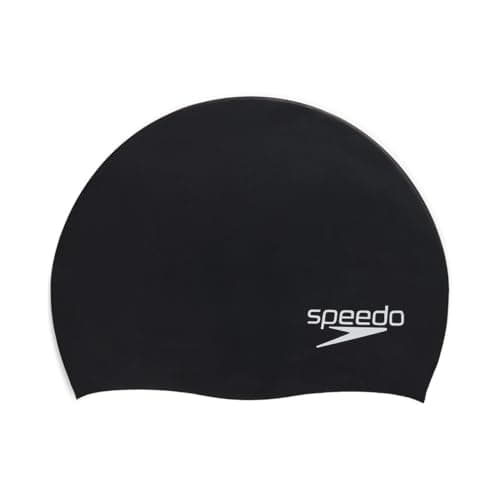 Top pick Speedo Elastomeric Silicone Cap A thicker, stretchier silicone than the standard cap — easier to pull on and slower to tear. | Adults, short hair | Elastomeric silicone | |
| 2 | Also good Speedo Lycra Swim Cap The most comfortable cap you can buy and the least waterproof — a hair-keeper, not a water-blocker. | Comfort, not dryness | Lycra / polyester blend | |
| 3 | 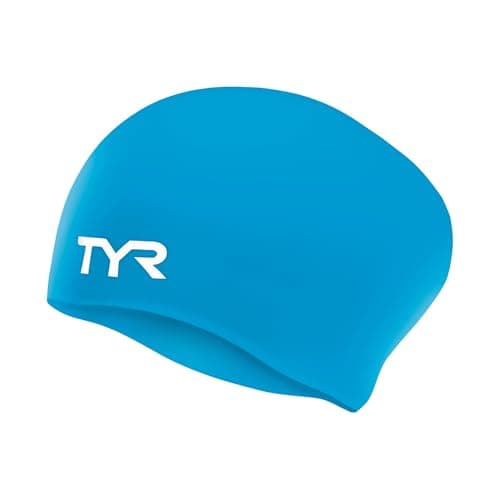 Also good TYR Long Hair Wrinkle-Free Silicone Cap An asymmetric cap with extra volume at the back, which is the only design that takes a bun without squeezing. | Braids, buns, thick hair | Silicone | |
| 4 | 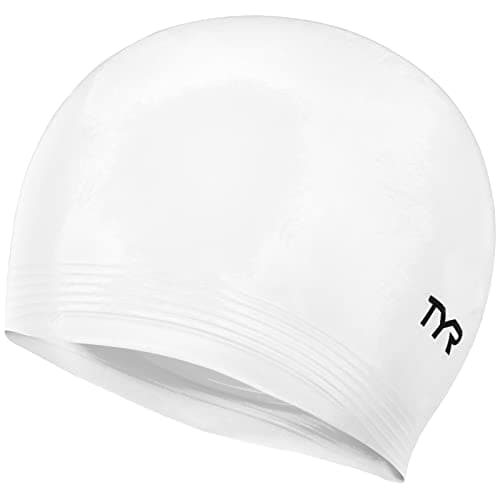 Budget pick TYR Latex Swim Cap Thin, tight and fast, and cheap enough to treat as disposable — with all the downsides of latex. | Cheapest racing fit | Latex | |
| 5 | 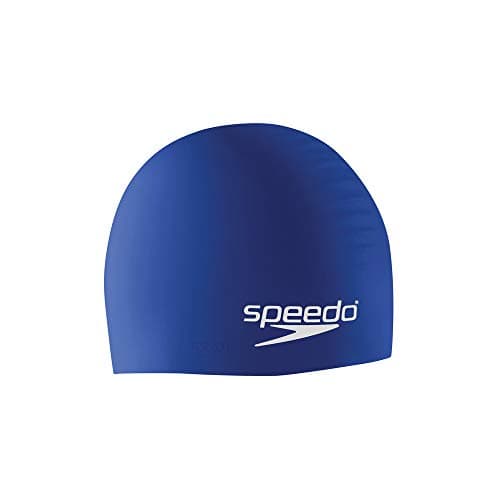 Also good Speedo Junior Silicone Cap A properly sized junior silicone cap, which is the difference between a cap a child wears and one that rolls off. | Ages 6-14 | Silicone |
Decide what you want the cap to do
Beginners buy swim caps for four different reasons and the right cap is different for each. Working out which one is yours takes a second and saves you the usual two wasted purchases.
To keep hair out of your face and off the goggle strap. The most common reason, and the easiest to satisfy — any cap does it, including the most comfortable one.
To protect hair from chlorine. A cap reduces exposure substantially but does not eliminate it. Silicone does more than lycra here, and wetting your hair with clean water before you put the cap on does more than the choice of material.
To keep hair dry. This is the expectation that leads to disappointment: no cap keeps hair genuinely dry, because the seal at the hairline is not watertight. The honest version is in do swim caps keep your hair dry.
To be warmer, or faster. Warmth in cool open water is real and a silicone cap delivers it. Speed is measured in hundredths and is irrelevant to anyone reading a beginners' page.
Speedo Elastomeric Silicone Cap
A thicker, stretchier silicone than the standard cap — easier to pull on and slower to tear.
Specifications
- Material
- Elastomeric silicone
- Fit
- One size, adult
- Hair length
- Short to medium
- Seal
- Smooth interior
What works
- Stretches further than standard silicone, so pulling it on does not feel like a wrestling match
- Thicker walls resist the fingernail tears that kill most caps
- Keeps a low profile, so it works for lap swimming
- Holds warmth usefully in cool lake water
What doesn’t
- No room for long hair at all
- Thicker silicone is warmer than most people want in a heated pool
Who it’s for
An adult with short or medium hair swimming laps who is tired of replacing torn caps.
Bottom line
The durable everyday adult cap. Long hair needs a long-hair cap, not a thicker standard one.
Speedo Lycra Swim Cap
The most comfortable cap you can buy and the least waterproof — a hair-keeper, not a water-blocker.
Specifications
- Material
- Lycra / polyester blend
- Fit
- Soft, stretchy
- Water resistance
- Minimal
- Hair length
- Any, including long
What works
- No pulling, no snagging, no pressure — it feels like a fabric hat
- Fits long hair without a specialist shape
- Comfortable for an hour or more in open water
- Sun protection for the scalp on a bright lake day
What doesn’t
- Does not keep hair meaningfully dry — water passes straight through
- Fabric stretches out over a season and stops gripping
Who it’s for
Someone who wants hair kept out of their face and off their goggle strap, and does not care about dryness.
Bottom line
The right cap if the goal is comfort or keeping hair contained. The wrong cap if the goal is dry hair.
TYR Long Hair Wrinkle-Free Silicone Cap
An asymmetric cap with extra volume at the back, which is the only design that takes a bun without squeezing.
Specifications
- Material
- Silicone
- Shape
- Asymmetric, extra rear volume
- Hair length
- Long, braided, locs
- Finish
- Wrinkle-free
What works
- The extra rear volume is real, not marketing — a ponytail or bun goes in without dragging hair forward
- Silicone does not catch and tear hair the way latex does
- Wrinkle-free molding means fewer creases to leak at
- Holds its shape across a season rather than going slack
What doesn’t
- The asymmetric shape is easy to put on backwards, which undoes the whole point
- Warmer than lycra, which is noticeable in a heated pool
Who it’s for
Anyone with hair past the shoulders, braids, locs, or volume that a standard cap crushes.
Bottom line
The long-hair default. If a standard cap has ever given you a headache, this is the fix.
TYR Latex Swim Cap
Thin, tight and fast, and cheap enough to treat as disposable — with all the downsides of latex.
Specifications
- Material
- Latex
- Fit
- Very snug, adult
- Thickness
- Thin
- Drag
- Lowest of the three materials
What works
- Lowest drag of any cap material, which is why it survives in competitive swimming
- Cheapest cap worth buying, often sold in multipacks
- Thin enough that it does not trap heat
- Grips the head without slipping
What doesn’t
- Pulls hair noticeably going on and off — the single biggest reason people switch to silicone
- Tears easily and cannot be worn by anyone with a latex allergy
Who it’s for
A racer counting hundredths, or someone who wants a multipack of cheap caps and has short hair.
Bottom line
Buy latex for speed or price, never for comfort. For a child, buy silicone instead.
Speedo Junior Silicone Cap
A properly sized junior silicone cap, which is the difference between a cap a child wears and one that rolls off.
Specifications
- Material
- Silicone
- Age range
- 6-14 years
- Head size
- Junior, approx. 19-21 in
- Fit
- Standard dome
What works
- Sized for a child's head rather than being an adult cap in a smaller box
- Silicone does not pull hair on the way off, which is why children abandon latex
- Thick enough to survive being stuffed in a wet bag
- Cheap enough to own two so one is always dry
What doesn’t
- No extra volume, so it crushes long hair
- Plain shape offers no help getting it on — a parent still does it for younger kids
Who it’s for
A school-age child in lessons or on a summer team with short to medium hair.
Bottom line
The kids' default. For a child with long hair, buy a long-hair cap instead and skip the tears.
Which material to start with
| Silicone | Latex | Lycra | |
|---|---|---|---|
| Easy to pull on | Yes, especially thicker versions | Fiddly and grabs hair | Easiest of all |
| Durability | A season or more | Weeks — treat as disposable | Long, but it is not sealing |
| Water resistance | Best available | Good | Minimal |
| Comfort | Good | Can feel tight; latex allergies exist | Best |
| Price | Low | Lowest | Low |
| Beginner verdict | Start here | Only for a cheap multipack | Start here if comfort is the goal |
For most beginners the answer is a thicker elastomeric silicone cap. The extra thickness is the whole point: it stretches wider over your hands, it does not catch hair the way thin silicone does, and it tolerates the clumsy pulling that a first-time cap-wearer inevitably applies. A standard thin silicone cap is cheaper and tears far sooner in exactly those hands.
Choose lycra instead if you already know the goal is comfort — hair contained, nothing tight, no effort. Choose latex only if you want a multipack of cheap caps, have short hair, and have no latex allergy. The full material comparison is in silicone vs latex vs lycra.
If you have long or thick hair, buy a long-hair cap
This is the most important sentence on the page for about half the people reading it. A standard cap stretched over a bun, a braid or thick curly hair is a cap that is already at its limit before you start, and it will tear, slide off, or hurt — frequently all three.
Long-hair caps are a real product category with a bubble of extra volume at the back, and extra-large caps exist for locs, afros and protective styles. They cost barely more than a standard cap, and they are the difference between a cap you wear and a cap you blame. The picks are in best swim caps for long hair.
What to look for in a first cap
- Thickness. Thicker silicone is easier to handle and lasts longer. This matters more than brand.
- The right size. Standard adult silicone fits roughly 21 to 23 inches of head circumference; junior caps are smaller and extra-large caps exist. Measure rather than guess — see what size swim cap do I need.
- A smooth interior, which slides over hair instead of grabbing it.
- Extra volume at the back if your hair is long, thick or tied up.
- No latex, if anyone in the household has a latex sensitivity.
- Two caps rather than one. Caps tear and they get left in lockers, and they are cheap enough that a spare is the sensible purchase.
Why your first cap tore
Almost always technique rather than a faulty cap, and the fix is free. The failure mode is pulling the cap on from the front by its edge with fingernails, which concentrates all the force on one point of thin silicone.
The method that works: put both hands inside the cap, spread it open with the backs of your fingers rather than your nails, place the front edge at your hairline, and roll the cap back over your head in one motion. Wet hair first — dry hair grabs silicone and that friction is what tears caps and pulls hair. The step-by-step is in how to put on a swim cap.
One more habit worth starting now: goggles go under the cap strap, or the cap goes on first and the goggles over it. Either way the cap holds the strap in place so it does not ride up the back of your head mid-length.
How much should you spend?
Very little. Swim caps are one of the few categories where the sensible purchase is near the bottom of the range, because the expensive caps are competition products optimized for drag rather than for durability or comfort.
Buy one thicker silicone cap in the correct size, or a long-hair cap if that is you, and buy a second one at the same time. That total is still less than a single premium racing cap, and it means a torn cap never cancels a swim.
Rinse it in fresh water after each swim, dry it, and store it flat rather than screwed up in a bag. Chlorine and friction are what age silicone, and a cap looked after properly will see out a season comfortably.
Questions
Frequently asked questions
What kind of swim cap is best for beginners?
Silicone or lycra for a first swim cap?
Why does my swim cap keep tearing?
Do beginners need a swim cap at all?
What size swim cap should a beginner buy?
Read next