Swim Caps · Guide
Do Swim Caps Keep Your Hair Dry?
No. Here is what they do instead, and what actually protects hair from chlorine.
The short answer
No swim cap keeps hair dry. Water enters at the hairline on every cap made, because a cap is not a seal. A thick silicone cap keeps hair damp rather than soaked, which is a real benefit — but if the goal is dry hair, no product on the market delivers it.
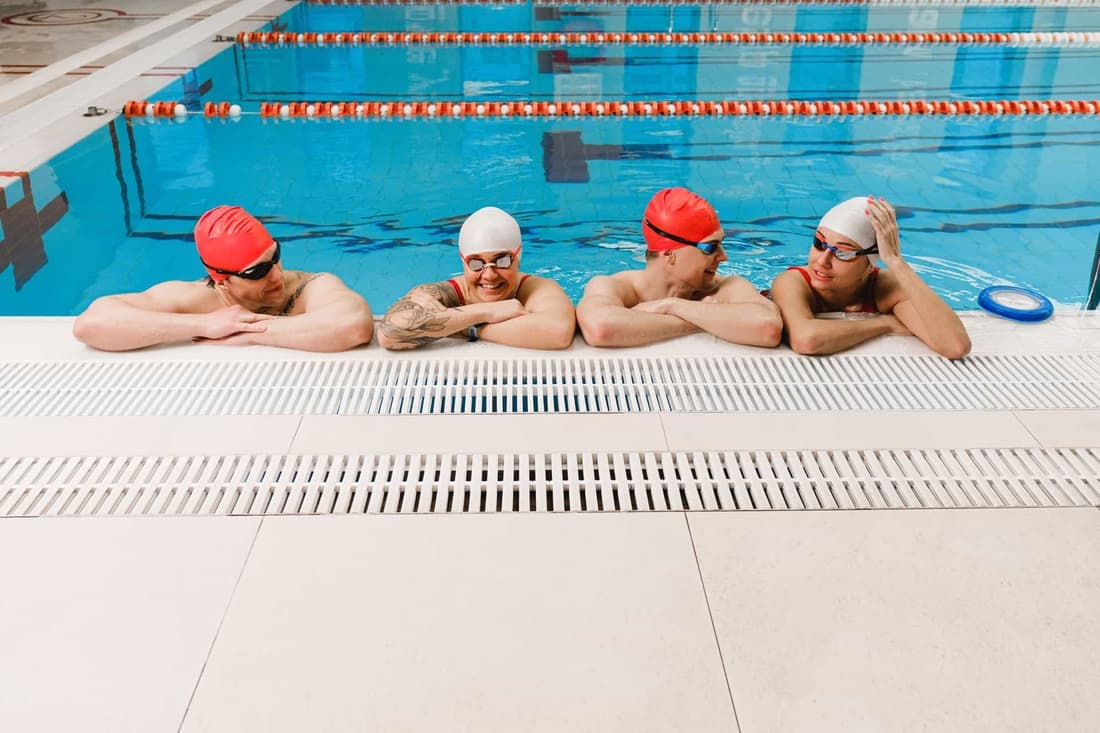
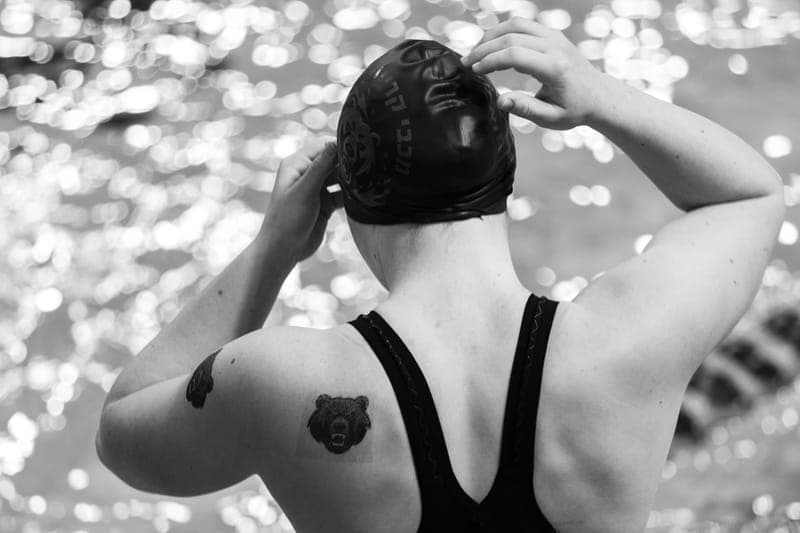
Photos on this page are licensed images that illustrate the category. They are not photographs of the specific products named, and no product image here is supplied by a manufacturer or retailer.
Why no cap is waterproof
A swim cap has one opening, and that opening sits on skin and hair along the hairline. There is no gasket and no sealing surface. When you submerge, water pressure pushes water along that boundary, and hair — which is essentially a bundle of channels — gives it a path.
You can reduce the flow. A thick silicone cap sitting smoothly with no folds, put on over neatly gathered hair, admits less than a loose fabric cap over a bun. But it is a matter of degree, and the gap between the best and worst case is damp versus soaked, not dry versus wet.
Anything marketed as a waterproof swim cap is either overstating it or is a different product — a neoprene cap with a chin strap, which is for warmth in cold water and still is not watertight.
What a cap does do
- Keeps hair out of your face and out of the goggle gasket, which is the most common cause of goggle leaks on children.
- Stops the goggle strap pulling hair, which is the reason goggles and caps are so often bought together.
- Reduces drag, measurably in racing and irrelevantly for recreational swimming.
- Adds warmth, which is worth having in cool open water and unwelcome in a heated pool.
- Reduces how much chlorinated water reaches the hair — the partial version of the thing people want.
- Protects the scalp from sun on long outdoor swims, particularly a fabric cap.
- Makes a swimmer visible from a dock or a boat, if it is a bright color.
Which material keeps hair driest
| Material | Keeps hair driest? | Note |
|---|---|---|
| Thick silicone | Best of the three | Still not dry; damp after a long swim |
| Thin silicone | Good | Folds more easily, and folds admit water |
| Latex | Moderate | Tight but thin; pulls hair |
| Lycra / polyester | Poor | Fabric — water passes straight through |
| Two caps layered | Best available | A latex cap under a silicone one; warm |
How much water gets in, and where
Water enters a cap in three places, and knowing which one is yours tells you whether a different cap would help. The hairline is the main route on every cap: the front edge sits on skin and hair and there is no seal, so water tracks along the hair shafts and under the edge. Nothing on the market fixes this.
Folds and creases are the second route, and this one is fixable. A cap that is wrinkled across the crown — because it is too large, or because hair is bunched underneath it — has channels running from the edge inward. A smooth cap over neatly gathered hair admits noticeably less than a wrinkled one, which is why the put-on technique matters more than most people expect.
The nape is the third, and it is the one that gets worse as a cap ages. Silicone loses a little elasticity over seasons, and the rear edge stops gripping. If a cap that used to keep hair damp now lets it soak, check whether the rear edge still lies flat against the neck when you tip your head forward.
One more variable people do not consider: how you swim. A head that stays mostly out of the water in breaststroke keeps hair far drier than one rotating through freestyle, and a dive or a jump forces water in under pressure in a way that ordinary swimming does not. The same cap performs very differently across those.
What actually protects hair from chlorine
This is the useful part, because it works and it is nearly free.
- Rinse hair thoroughly in fresh water before you swim. Hair absorbs water until it is saturated. If it is already full of clean water, it takes up much less chlorinated water. This is the single most effective thing on the list and almost nobody does it.
- Wear a cap, for the partial reduction described above.
- Rinse again immediately after getting out, before the hair dries and leaves chlorine sitting in it.
- Condition after swimming. Chlorine strips the natural oils that keep hair flexible; replacing them is what prevents the brittleness.
- Keep hair loose rather than crushed inside a too-small cap. Mechanical abrasion is a real cause of damage, particularly for braids and locs.
What we recommend
Buy a thick silicone cap with enough volume for the hair, and adjust the expectation: the cap is for keeping hair out of the way and reducing chlorine exposure, not for getting out of the pool with dry hair.
Then do the pre-swim rinse. It costs thirty seconds, it does more than the cap, and it is the piece of advice that actually changes how hair looks after a summer of swimming. Our material comparison is in silicone vs latex vs lycra.
Our picks
If the goal is keeping hair as dry as a cap can manage, thickness is what matters and the elastomeric cap is the thickest here. The long-hair cap trades a little of that for volume. The lycra cap keeps hair contained and makes no pretence of keeping it dry.
Speedo Elastomeric Silicone Cap
A thicker, stretchier silicone than the standard cap — easier to pull on and slower to tear.
Specifications
- Material
- Elastomeric silicone
- Fit
- One size, adult
- Hair length
- Short to medium
- Seal
- Smooth interior
What works
- Stretches further than standard silicone, so pulling it on does not feel like a wrestling match
- Thicker walls resist the fingernail tears that kill most caps
- Keeps a low profile, so it works for lap swimming
- Holds warmth usefully in cool lake water
What doesn’t
- No room for long hair at all
- Thicker silicone is warmer than most people want in a heated pool
Who it’s for
An adult with short or medium hair swimming laps who is tired of replacing torn caps.
Bottom line
The durable everyday adult cap. Long hair needs a long-hair cap, not a thicker standard one.
TYR Long Hair Wrinkle-Free Silicone Cap
An asymmetric cap with extra volume at the back, which is the only design that takes a bun without squeezing.
Specifications
- Material
- Silicone
- Shape
- Asymmetric, extra rear volume
- Hair length
- Long, braided, locs
- Finish
- Wrinkle-free
What works
- The extra rear volume is real, not marketing — a ponytail or bun goes in without dragging hair forward
- Silicone does not catch and tear hair the way latex does
- Wrinkle-free molding means fewer creases to leak at
- Holds its shape across a season rather than going slack
What doesn’t
- The asymmetric shape is easy to put on backwards, which undoes the whole point
- Warmer than lycra, which is noticeable in a heated pool
Who it’s for
Anyone with hair past the shoulders, braids, locs, or volume that a standard cap crushes.
Bottom line
The long-hair default. If a standard cap has ever given you a headache, this is the fix.
Speedo Lycra Swim Cap
The most comfortable cap you can buy and the least waterproof — a hair-keeper, not a water-blocker.
Specifications
- Material
- Lycra / polyester blend
- Fit
- Soft, stretchy
- Water resistance
- Minimal
- Hair length
- Any, including long
What works
- No pulling, no snagging, no pressure — it feels like a fabric hat
- Fits long hair without a specialist shape
- Comfortable for an hour or more in open water
- Sun protection for the scalp on a bright lake day
What doesn’t
- Does not keep hair meaningfully dry — water passes straight through
- Fabric stretches out over a season and stops gripping
Who it’s for
Someone who wants hair kept out of their face and off their goggle strap, and does not care about dryness.
Bottom line
The right cap if the goal is comfort or keeping hair contained. The wrong cap if the goal is dry hair.
Questions
Frequently asked questions
Is there any swim cap that keeps hair completely dry?
Does wearing two swim caps keep hair drier?
How do I protect my hair from chlorine when swimming?
Are swim caps worth wearing at all?
Read next