Swim Caps · Guide
What Size Swim Cap Do I Need?
Measure above the ears, then read the table. The awkward cases are at the bottom.
The short answer
Measure head circumference with a soft tape above the ears and across the middle of the forehead. Roughly 19 to 21 inches is a junior cap, 21 to 23 inches is a standard adult cap, and above 23 inches — or any significant hair volume — needs a large or extra large.

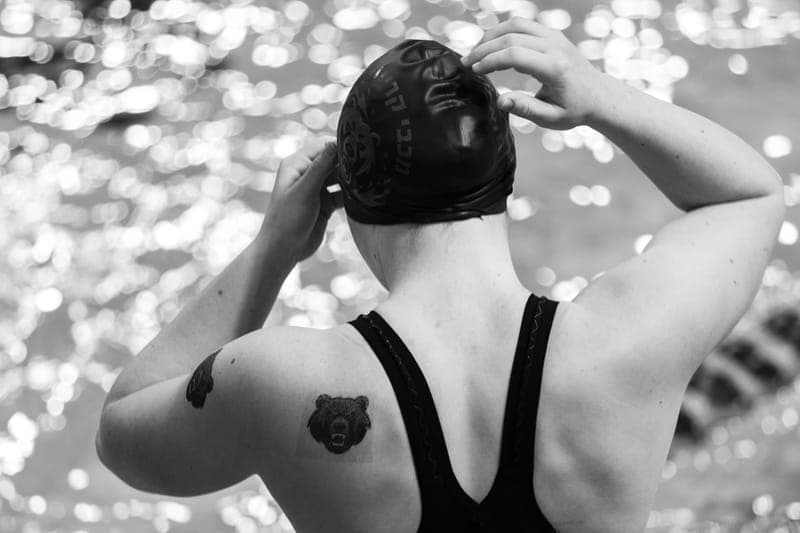
Photos on this page are licensed images that illustrate the category. They are not photographs of the specific products named, and no product image here is supplied by a manufacturer or retailer.
How to measure
- Use a soft tape measure. A piece of string marked with a pen and then laid against a ruler works just as well.
- Run it around the widest part of the head: just above the ears and across the middle of the forehead, roughly an inch above the eyebrows.
- Keep it level all the way round and snug but not tight.
- Read the measurement in inches or centimeters and take it twice to be sure.
Measure over dry, unstyled hair. If the hair will be in a bun or braids for swimming, measure the head only and treat the hairstyle as a separate volume question — that is the part the table below cannot do for you.
Swim cap sizing chart
| Head circumference | Cap size | Typical wearer |
|---|---|---|
| Under 19 in / 48 cm | Small kids' | Ages 3-6 |
| 19-21 in / 48-53 cm | Junior | Ages 6-12 |
| 21-22.5 in / 53-57 cm | Adult standard | Most adults, short to medium hair |
| 22.5-23.5 in / 57-60 cm | Adult large | Larger heads, or medium hair volume |
| Over 23.5 in / 60 cm | Extra large | Large heads, or high hair volume |
| Any, with braids / locs / afro | Extra large (volume) | Protective and textured styles |
When the cap is the right size and still rides up
This is the most common sizing complaint and it is usually not a sizing problem. A cap rides up because something inside it is pushing the crown away from the skull, and that something is almost always hair.
Hair gathered high creates a lump under the crown that lifts the cap and levers the rear edge off the nape. Once the rear edge lifts, the cap starts rolling. The fixes, in order of how likely they are to work:
- Gather the hair low and loose — a low ponytail or a loose twist at the nape rather than a high bun.
- Move to a cap with genuine extra volume rather than a larger standard dome. See best swim caps for long hair.
- Put the cap on front-edge-first at the hairline and draw it back, rather than stretching it over the crown. See how to put on a swim cap.
- If it is a lycra cap that has stretched out with age, replace it — fabric caps lose their grip after about a season.
What will not work is going up a size in the same shape. A bigger dome has the same problem with more slack.
Sizing for hair volume, not just head size
Head circumference is only half the measurement. The other half is how much room the hair needs, and no brand publishes a chart for that. This is the practical translation:
| Hair | What the cap has to accommodate | Cap to buy |
|---|---|---|
| Short, above the ear | Nothing | Standard, sized to the head |
| Medium, to the shoulders | A low twist at the nape | Standard, or long-hair for comfort |
| Long, below the shoulders | A low ponytail | Long-hair (extra interior volume) |
| Thick, or a high bun | A bulk at the back of the crown | Asymmetric long-hair with a rear bulge |
| Braids or locs | Length and bulk together | Extra large, volume in the crown |
| Afro or protective style | Height above the skull | Extra large, designed for the style |
The reason this matters more than head size: a cap that is correct on the head and short on volume gets pushed off the back, and the instinctive response — buying the next size up in the same shape — produces a looser cap with the same problem. Shape beats size here.
Why brands size differently
Two silicone caps both sold as one-size adult can differ by an inch of usable circumference, because the stretch depends on the thickness and the formulation of the silicone as well as the molded dimensions. A thicker elastomeric cap stretches further than a thin standard one from the same brand.
In practice that means a measurement near the top of a range is worth treating as a size up, and that a cap that fitted from one brand does not guarantee the same nominal size fits from another. If you have found one that works, note the exact model — it is the single most useful thing to write down in this category.
Signs the cap is too small or too big
- Too small: a headache after ten minutes, a red pressure line across the forehead, or the edge visibly cutting in.
- Too small: the cap will not reach the nape at the back without being pulled hard.
- Too big: wrinkles and folds across the crown, and water pooling visibly inside.
- Too big: it slides forward over the eyebrows while swimming.
- Right: it sits smoothly from hairline to nape, you forget it is there, and it leaves no mark.
What we recommend
For children, measure and buy for the measurement rather than the age — that single step solves most kids' cap problems, because the junior band covers a very wide range of real heads. For adults with short hair, a one-size adult silicone cap is almost certainly right.
For anyone with hair past the ears, skip the size question and buy for volume instead. It is the variable that actually determines whether the cap stays on, and it is the one the sizing chart cannot capture.
Our picks
Sized to the bands in the table: a junior cap for 19-21 inches, a smaller kids' cap for under 19, a standard adult cap for 21-23, and a long-hair cap for the case the chart cannot capture -- where the head fits and the hair does not.

Speedo Junior Silicone Cap
A properly sized junior silicone cap, which is the difference between a cap a child wears and one that rolls off.
Specifications
- Material
- Silicone
- Age range
- 6-14 years
- Head size
- Junior, approx. 19-21 in
- Fit
- Standard dome
What works
- Sized for a child's head rather than being an adult cap in a smaller box
- Silicone does not pull hair on the way off, which is why children abandon latex
- Thick enough to survive being stuffed in a wet bag
- Cheap enough to own two so one is always dry
What doesn’t
- No extra volume, so it crushes long hair
- Plain shape offers no help getting it on — a parent still does it for younger kids
Who it’s for
A school-age child in lessons or on a summer team with short to medium hair.
Bottom line
The kids' default. For a child with long hair, buy a long-hair cap instead and skip the tears.
TYR Kids' Silicone Cap
Runs smaller than most junior caps, which is what a four- or five-year-old actually needs.
Specifications
- Material
- Silicone
- Age range
- 4-10 years
- Head size
- Small junior
- Fit
- Snug dome
What works
- Genuinely small — it stays on a preschooler's head instead of riding up
- Smooth silicone interior, so it goes on without a fight
- Bright colors make a small swimmer easy to spot in open water
- Chlorine-resistant across a full season of lessons
What doesn’t
- Snug fit is tight on a bigger seven- or eight-year-old
- No long-hair version in this size
Who it’s for
A preschooler or early primary child whose junior cap keeps sliding off.
Bottom line
Buy this when the standard junior cap is too big. Sizing is the whole problem with kids' caps.
Speedo Elastomeric Silicone Cap
A thicker, stretchier silicone than the standard cap — easier to pull on and slower to tear.
Specifications
- Material
- Elastomeric silicone
- Fit
- One size, adult
- Hair length
- Short to medium
- Seal
- Smooth interior
What works
- Stretches further than standard silicone, so pulling it on does not feel like a wrestling match
- Thicker walls resist the fingernail tears that kill most caps
- Keeps a low profile, so it works for lap swimming
- Holds warmth usefully in cool lake water
What doesn’t
- No room for long hair at all
- Thicker silicone is warmer than most people want in a heated pool
Who it’s for
An adult with short or medium hair swimming laps who is tired of replacing torn caps.
Bottom line
The durable everyday adult cap. Long hair needs a long-hair cap, not a thicker standard one.
TYR Long Hair Wrinkle-Free Silicone Cap
An asymmetric cap with extra volume at the back, which is the only design that takes a bun without squeezing.
Specifications
- Material
- Silicone
- Shape
- Asymmetric, extra rear volume
- Hair length
- Long, braided, locs
- Finish
- Wrinkle-free
What works
- The extra rear volume is real, not marketing — a ponytail or bun goes in without dragging hair forward
- Silicone does not catch and tear hair the way latex does
- Wrinkle-free molding means fewer creases to leak at
- Holds its shape across a season rather than going slack
What doesn’t
- The asymmetric shape is easy to put on backwards, which undoes the whole point
- Warmer than lycra, which is noticeable in a heated pool
Who it’s for
Anyone with hair past the shoulders, braids, locs, or volume that a standard cap crushes.
Bottom line
The long-hair default. If a standard cap has ever given you a headache, this is the fix.
Questions
Frequently asked questions
Do swim caps have sizes?
How do you measure for a swim cap?
What size swim cap for a 10 year old?
Should a swim cap be tight?
Read next