Lake Swimming Guides · Roundup
Best Swimming Headphones (2026)
Bluetooth does not work underwater. That one fact decides this entire category, and most listings bury it.
The short answer
The Shokz OpenSwim Pro is the pick for most swimmers: 32 GB of onboard MP3 storage means it plays with no phone anywhere near the water, and Shokz publishes a real rating (IP68, 2 m fresh water for about two hours). For a fraction of the price, the FINIS Duo does the same job with 4 GB and no Bluetooth at all.
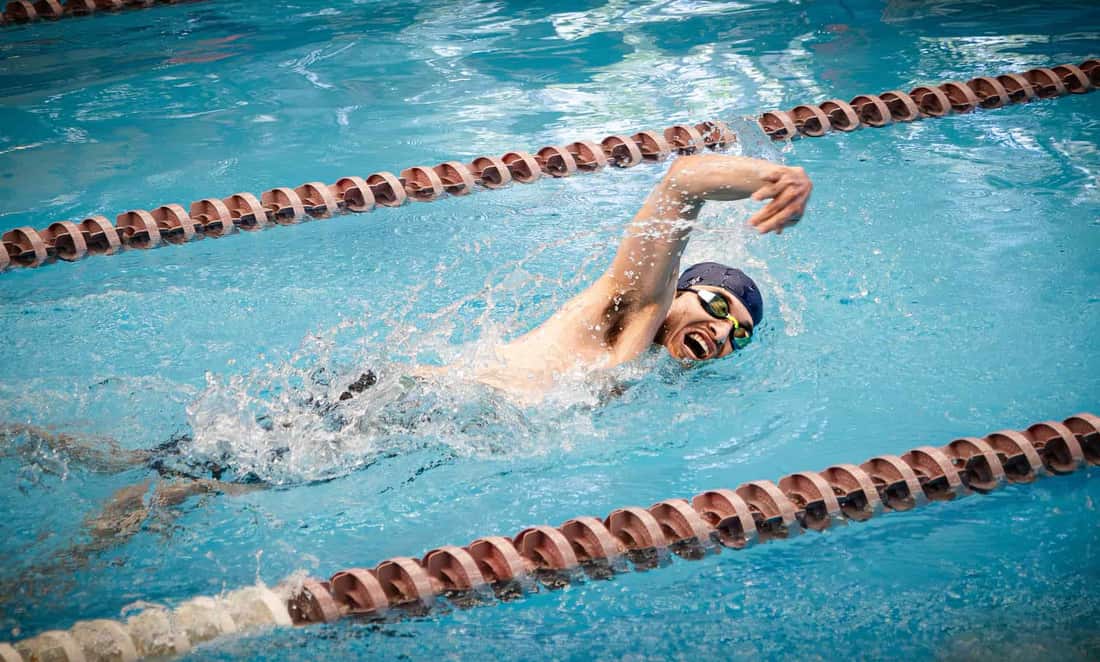
Product photos are the retailer’s own catalogue images, shown from the retailer’s servers and refreshed daily. Any other photo here is a licensed image that illustrates the category, not a photograph of the specific product named.
| # | Product | Best for | Storage | Price |
|---|---|---|---|---|
| 1 | 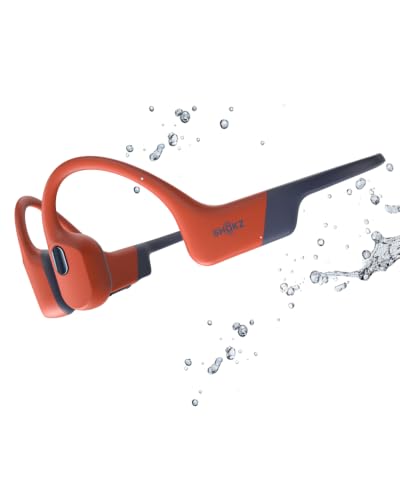 Top pick Shokz OpenSwim Pro The one pair most swimmers should buy: 32 GB of onboard storage so it works with no phone in the water at all, and the only IP68 claim here that states a depth AND a duration. | The default for swimming | 32 GB MP3 (Shokz estimates ~8,000 songs) | |
| 2 | 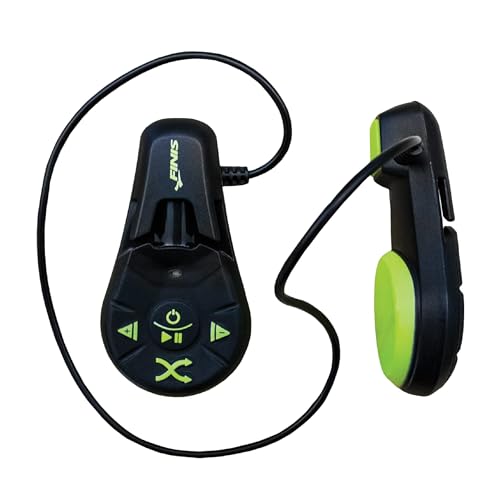 Budget pick FINIS Duo Underwater MP3 Player The budget pick, and it comes from a swim brand rather than a marketplace seller: 4 GB, bone conduction, and a published depth-and-time figure instead of a badge. | Cheapest sane option | 4 GB (retailers state up to about 1,000 songs) | |
| 3 | 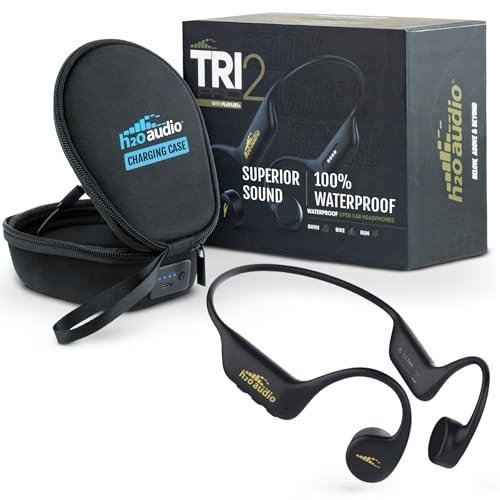 Upgrade pick H2O Audio TRI 2 PRO Multi-Sport The upgrade pick: 8 GB of onboard Playlist+ storage, a charging case, and the deepest published submersion figure on this page at 12 feet. | Deepest published rating | 8 GB (Playlist+ MP3 mode) | |
| 4 | 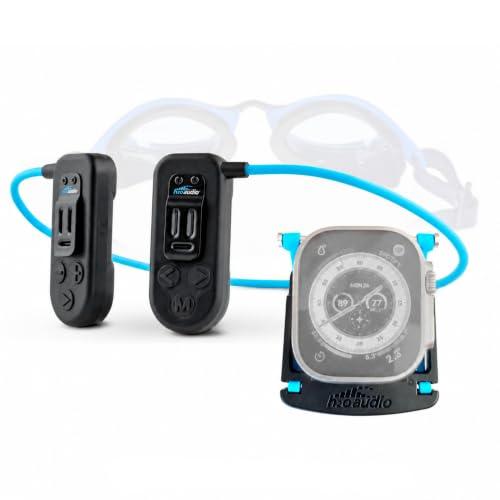 Also good H2O Audio Sonar 2 PRO The pick for a swimmer who already wears a smartwatch: 8 GB of onboard storage plus the one trick that makes underwater Bluetooth work - keeping the source inches away on the goggle strap. | Streaming from a watch | 8 GB (maker states ~2,000 songs / 130 hours) | |
| 5 | 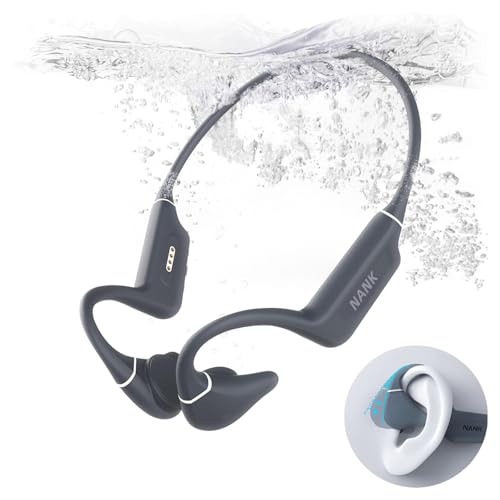 Also good NANK Runner Diver2 Pro The middle of the market: 32 GB and dual-mode Bluetooth for less than the Shokz, from the brand formerly sold as Naenka. | Mid-price 32 GB | 32 GB MP3 mode | |
| 6 | 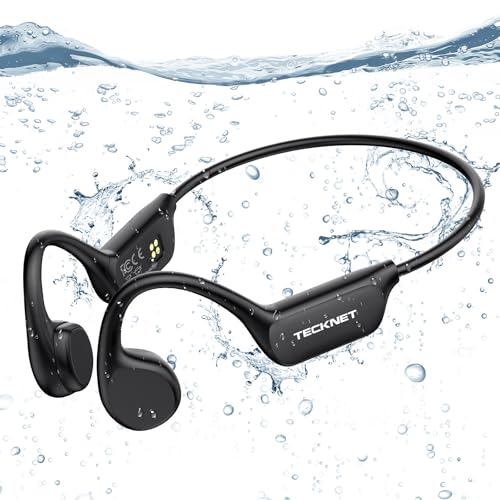 Also good TECKNET Bone Conduction Swimming Headphones The cheapest unit here that is actually built for swimming rather than merely water-resistant - bought with open eyes about what is not published. | Lowest price that works | 32 GB MP3 mode, per the listing |
The one fact that decides this whole category
Bluetooth does not travel through water. The 2.4 GHz band that every pair of wireless earbuds uses is absorbed almost immediately by water, which is why a phone on the pool deck cannot reach headphones on your head once your head goes under. It is not a quality problem or a pairing problem. It is physics, and no amount of money fixes it.
That single fact splits the market in two. Headphones that work in water store the music on themselves - an MP3 player built into the headband - and play it with nothing else involved. Headphones that only stream over Bluetooth will cut out the moment you push off the wall, no matter how high the waterproof rating on the box is. Both types are sold on the same shelf, with the same marketing language, at the same prices.
How we picked these six
We have not swum a thousand yards in six pairs of headphones with a stopwatch, and we are not going to claim we have. What we did do is confirm every model here is currently sold and in stock as this page was written, then pull every published figure - storage, water rating, stated depth and duration, battery life, weight - from the maker's own specification where one exists and from retailer spec sheets and hands-on reviews where it does not.
That exercise sorts the category more sharply than any listening test would. Three makers publish a depth AND a duration: Shokz states 2 m of fresh water for about two hours, H2O Audio publishes submersion to 12 feet on both of its picks, and FINIS's retailer spec sheet states 10 feet for 30 minutes. The rest publish a bare IP68 or IPX8 badge, which under IEC 60529 means "continuous immersion under conditions specified by the manufacturer" - and when the manufacturer specifies no conditions, the code tells you nothing you can hold them to.
Battery figures were the other thing worth checking twice. The FINIS Duo is listed at 7 hours by Amazon and two swim retailers and at 60 hours by a dive retailer. The NANK Runner Diver2 is published at 8 hours in one place and 10 in another. Where sources disagree we have printed the disagreement rather than the flattering number.
The six things that actually decide which pair to buy
- Onboard storage, in gigabytes. This is the whole purchase. Without it the headphones do not work underwater. 4 GB holds roughly a thousand songs and is enough for a season; 32 GB is more than anyone will fill. Anything advertised as waterproof with no storage figure is the wrong product.
- A depth AND a duration, not just a code. IP68 and IPX8 both sound definitive and neither specifies a depth on its own. Shokz, H2O Audio and FINIS all state a figure you can check against how you swim. The cheaper units state a code and stop. That gap is most of what you are paying for at the top of the market.
- Whether you want it on land too. The dual-mode units (Shokz, H2O Audio, NANK) run Bluetooth on a run or a bike and switch to MP3 in the water, so one purchase covers everything. The FINIS Duo has no Bluetooth at all, which makes it cheaper and simpler and strictly a swim device.
- Your music library, not your streaming account. MP3 mode plays MP3 files. The albums you have downloaded for offline listening in Spotify or Apple Music are encrypted and will not transfer to any of these. If every piece of music you own lives inside a subscription, understand that you are signing up to either buy files or use free sources before you buy the hardware.
- Ear plugs, which nobody includes. Bone conduction sends sound through your cheekbones, and it sounds thin and tinny once your ear canals fill with water. Plugging your ears actually makes bone conduction louder and fuller underwater, which is counterintuitive and completely real. Budget for a set of plugs with any pick on this page.
- How it attaches to everything else on your head. You are already wearing goggles and possibly a cap. A wraparound headband (Shokz, H2O Audio, NANK) competes with a cap strap; a clip-on unit (FINIS) hangs off the goggle strap and can slide. Neither is wrong, but try the combination you already own before you decide.
Shokz OpenSwim Pro
The one pair most swimmers should buy: 32 GB of onboard storage so it works with no phone in the water at all, and the only IP68 claim here that states a depth AND a duration.
Specifications
- Onboard storage
- 32 GB MP3 (Shokz estimates ~8,000 songs)
- Water rating
- IP68 per IEC 60529; Shokz states 2 m fresh water, ~2 hours
- Battery
- Up to 9 h Bluetooth, up to 6 h MP3 mode
- Charge time
- About 1.5 hours to full
- Bluetooth
- 5.4 - for land use only
- Weight
- 27.3 g per retailer spec
What works
- Dual mode: Bluetooth on the run or the bike, MP3 mode in the water - one purchase covers both, and the swim mode needs no phone
- 32 GB is more storage than any swimmer will fill, so you load music once and stop managing files
- Shokz publishes a depth and a duration (2 m, about 2 hours) rather than a bare IP68 badge with no test behind it
- Bone conduction leaves the ear canal open, which matters in a lake where you want to hear a boat
- A real brand with a published warranty, which in swim audio is the exception
What doesn’t
- The most expensive mainstream option here, and the color variants are often priced differently for the identical product - compare all of them before you buy
- MP3 mode means actual MP3 files: nothing saved offline in Spotify or Apple Music will transfer, because those downloads are encrypted
- Loading music is a cable-and-drag-and-drop job on a computer, not a phone app
- Open-ear bone conduction loses low end once your ears fill with water - pairing it with ear plugs is the known fix, and Shokz does not include any
- Bluetooth is useless in the water no matter what the box says, so if you only ever wanted wireless streaming while swimming, no product here does that
Who it’s for
The adult doing real laps or an open-water mile who wants one pair of headphones for swimming and for everything else.
Bottom line
If you are only going to research this category once, buy this and be done. The onboard storage is what makes it work in water.
FINIS Duo Underwater MP3 Player
The budget pick, and it comes from a swim brand rather than a marketplace seller: 4 GB, bone conduction, and a published depth-and-time figure instead of a badge.
Specifications
- Onboard storage
- 4 GB (retailers state up to about 1,000 songs)
- Water rating
- Tested to 10 ft (3 m) for 30 minutes per the retailer spec sheet
- Battery
- 7 hours per Amazon's own listing and two swim retailers
- Bluetooth
- None - MP3 playback only
- Formats
- MP3 and WMA
- Worn
- Clips to the goggle strap behind the head
What works
- A third to a quarter the price of the bone-conduction headphones above, from a company that only makes swim gear
- No Bluetooth at all is a feature rather than a lack: there is no pairing, no phone and nothing to go wrong at the wall
- Clips onto an existing goggle strap, so there is no second headband competing with your cap
- FINIS states a depth and a duration - 3 m for 30 minutes - which is more than most of this category will commit to
- 4 GB is genuinely enough for a season of swim playlists
What doesn’t
- Battery claims are contested: Amazon's listing and two swim retailers say 7 hours, one dive retailer's spec sheet claims 60 - treat 7 as the number
- No Bluetooth means it is a pool-and-lake device only, with no use on a run or a bike
- No screen, so track selection is by feel through two buttons
- The goggle-strap clip is the weak point - it can slide on a thin strap, and it puts the unit where a tumble turn will knock it
- MP3 and WMA files only, loaded over a cable; streaming downloads will not play
Who it’s for
A swimmer who wants music in the water and nothing else, and anyone buying a second unit for a teenager.
Bottom line
The honest budget answer. It does the one job, it comes from a swim brand, and nothing here is being oversold.
H2O Audio TRI 2 PRO Multi-Sport
The upgrade pick: 8 GB of onboard Playlist+ storage, a charging case, and the deepest published submersion figure on this page at 12 feet.
Specifications
- Onboard storage
- 8 GB (Playlist+ MP3 mode)
- Water rating
- IPX8, published as submersion to 12 ft (3.6 m)
- Battery
- 9 h Bluetooth; about 6 h in memory mode per review testing
- Charge time
- About 2 hours; charging case included
- Weight
- 33 g per H2O Audio; reviews report 32-35 g
- Modes
- Bluetooth on land, onboard MP3 in water
What works
- The deepest figure published by any maker here - 12 ft rather than the 2 m most of the category claims
- A charging case is included, which is the difference between a dead unit at a 6 a.m. swim and a charged one
- Built for triathletes, so the same pair is intended to survive the swim, the bike and the run
- Playlist+ is real onboard storage, so the swim mode works with no phone within a hundred yards
What doesn’t
- Reviewers are consistent that sound quality is the compromise here - Tom's Guide rated it well for the pool and poorly everywhere else
- The most expensive pick on this page
- Buying trap: the non-PRO TRI 2 is the same hardware WITHOUT onboard MP3 storage, which makes it close to useless for swimming - check the listing says PRO or Playlist+
- Published weight differs between H2O Audio's own page and reviews (32-35 g), which is small but it is the kind of inconsistency worth knowing about
Who it’s for
Triathletes, and anyone whose swimming is deep, long or cold enough that a 2 m rating feels like the floor rather than the ceiling.
Bottom line
Buy it for the depth rating, the case and the triathlon use - not for the audio. Make sure the listing says PRO.
H2O Audio Sonar 2 PRO
The pick for a swimmer who already wears a smartwatch: 8 GB of onboard storage plus the one trick that makes underwater Bluetooth work - keeping the source inches away on the goggle strap.
Specifications
- Onboard storage
- 8 GB (maker states ~2,000 songs / 130 hours)
- Water rating
- IPX8, published as submersion to 12 ft (3.6 m)
- Battery
- Up to 8 h standalone per review testing (one retailer claims 10)
- Clip
- Removable slim metal goggle clip
- Bluetooth in water
- Works only at a few inches - watch on the goggle strap
- Modes
- Onboard MP3, or Bluetooth from a clipped watch
What works
- The only pick here designed around the underwater Bluetooth problem rather than ignoring it: clip the watch to your goggles and the signal only crosses a few inches of water
- That makes streaming playlists from an Apple Watch, Garmin or Fitbit workable in the pool, which no MP3-only unit can do
- Still has 8 GB of onboard storage, so the watch trick is optional rather than required
- Same 12 ft published submersion figure as the TRI 2 PRO, at a lower price
What doesn’t
- Battery figures do not agree between a hands-on review (8 hours) and a retailer listing (10) - we could not reconcile them
- The watch-on-the-goggles setup is genuinely fiddly, and it only works because Bluetooth underwater carries about four inches
- You are paying for a feature that needs a swim-capable smartwatch you already own
- Bone conduction without ear plugs sounds thin once water is in your ears, same as every pick here
Who it’s for
A swimmer who already trains with a waterproof smartwatch and wants their actual streaming playlists in the water.
Bottom line
The clever one. If you own a swim watch this is the pick; if you do not, buy the OpenSwim Pro instead.
NANK Runner Diver2 Pro
The middle of the market: 32 GB and dual-mode Bluetooth for less than the Shokz, from the brand formerly sold as Naenka.
Specifications
- Onboard storage
- 32 GB MP3 mode
- Water rating
- IP69 per NANK for the Pro; the non-Pro Diver2 is listed IP68
- Battery
- Contested - 8 h in one review of a sibling model, 10 h on a retailer listing
- Bluetooth
- 5.4 per the listing - land use; MP3 mode in water
- Driver
- Bone conduction; one review reports a 16 mm driver
- Also sold as
- Runner Diver2 (non-Pro), at a lower price
What works
- Same 32 GB storage as the Shokz for less money, and the same dual Bluetooth-plus-MP3 arrangement
- Genuinely aimed at swimmers rather than being a running headphone with a waterproof sticker
- Reviewed independently by several hands-on outlets, which separates it from the no-name tier below
- Soft rubber band and onboard memory were the two things reviewers consistently liked
What doesn’t
- The specs are a mess across listings: the company renamed itself from Naenka to NANK, and the Diver2, Diver2 Pro and Runner Pro2 get mixed up on retailer pages - read the model name twice
- The plain non-Pro Runner Diver2 sells for materially less with an IP68 rating, so check whether you are paying for the Pro on purpose
- No manufacturer depth-and-duration figure we could find behind the IP69 claim, unlike Shokz and H2O Audio
- Battery life is published as 8 hours in one place and 10 in another, with no spec sheet to settle it
- Reviewers describe the sound as midrange-heavy, with little bass or treble
Who it’s for
The swimmer who wants 32 GB and dual mode but will not pay flagship money for it, and who does not mind checking a model number.
Bottom line
A reasonable middle option. Confirm which Diver2 the listing is actually selling before you click buy.
TECKNET Bone Conduction Swimming Headphones
The cheapest unit here that is actually built for swimming rather than merely water-resistant - bought with open eyes about what is not published.
Specifications
- Onboard storage
- 32 GB MP3 mode, per the listing
- Water rating
- IP68, manufacturer-declared - no depth or duration stated
- Battery
- Up to 10 hours, per the listing
- Modes
- Bluetooth on land, MP3 in water
- Independent testing
- None we could find
- Price tier
- About a fifth of the flagship
What works
- Costs about what a pair of goggles and a cap costs, which makes it the only pick here you can buy for a teenager without wincing
- Has the one feature that matters - onboard MP3 storage - which many cheaper 'waterproof' headphones do not
- 32 GB on paper, which is as much as the flagship claims
- Cheap enough to treat as a one-season item, which is the honest maintenance plan for any sealed electronic in lake water
What doesn’t
- IP68 here is a manufacturer declaration with no stated depth and no stated duration - there is nothing to hold them to if it floods
- No independent review coverage we could find, so every figure is the seller's own
- No meaningful warranty address compared with Shokz, FINIS or H2O Audio
- Expect the fit, the controls and the file transfer to all be a step rougher than the branded units
Who it’s for
A swimmer who wants to find out whether they will actually use music in the water before spending flagship money, and anyone kitting out a teenager.
Bottom line
The right first purchase if you are unsure. Buy it, use it for a season, and upgrade if you find you swim with it every time.
Bone conduction versus sealed earbuds in a lake
Every pick on this page is bone conduction: a transducer sits on the cheekbone in front of the ear and vibrates sound through bone instead of pushing air down the ear canal. In a pool that is a design choice. In a lake it is close to a safety feature, because your ear canals stay open and you can hear a boat motor, a whistle or somebody shouting from a dock. Sealed in-ear waterproof earbuds exist and they sound better, but they take your hearing away in open water, which is a trade we would not make on an unguarded lake.
The honest downside of bone conduction is the sound. Low frequencies need air movement to be felt, and bone conduction moves very little air, so bass is weak before you even get in the water. Once water gets in your ears, the bone-conducted signal has to compete with a canal full of liquid, and the result goes thin. This is why experienced swimmers wear ear plugs with bone conduction headphones - plugging the canal stops the competition and the sound gets noticeably better.
If you already own ear plugs for swimmer's ear, you are set. If you do not, our roundup of the best swim ear plugs covers the options, including the moldable putty plugs that most people find seal best under a cap. One caution worth repeating: plugs plus headphones means two things in and around your ears at once in open water, so keep somebody on the shore watching.
What the waterproof ratings on these boxes really mean
IPX8 and IP68 are the two codes you will see, and under IEC 60529 the "8" in the second position means continuous immersion under conditions the manufacturer specifies - not a fixed depth. The 6 in IP68 adds dust protection; the X in IPX8 just means dust was not tested. A unit rated IPX8 with no stated depth and a unit rated IP68 with no stated depth tell you equally little about whether they survive a thousand yards of freestyle.
The practical reading is simple. Treat the published figure as the limit, not the starting point: 2 m for two hours covers any lap swim and any open-water session that is not a dive. Treat a bare code with no numbers as a splash rating until the maker says otherwise. And treat all of it as a fresh-water figure unless the maker states salt water, because salt is harder on seals and on contacts than lake water is.
This is the same gap we found when we looked at waterproof phone pouches, where one maker claims 100 feet and another claims 3.3 feet on the identical IPX8 code. The lesson carries across both categories: the number a maker is willing to print next to the code is the real specification.
Loading music onto them, and why that is the annoying part
Every MP3-mode unit here is loaded the same way: plug it into a computer with the supplied cable, where it appears as a USB drive, then drag files across. It takes two minutes once and then you do not think about it again for a season. What catches people out is the file question rather than the process.
Subscription downloads are encrypted and will not play. That rules out the offline library inside Spotify, Apple Music, YouTube Music and Amazon Music, which is where most people's music now lives. Your options are files you already own, purchased downloads, free and legal sources such as podcast feeds and audiobooks you have downloaded as files, or a service that sells unencrypted files. It is worth sorting out which of those applies to you before spending flagship money on the hardware.
The one pick that sidesteps the problem is the H2O Audio Sonar 2 PRO, which can take a Bluetooth stream from a smartwatch clipped to your goggle strap. That works because Bluetooth underwater carries a few inches - roughly four - so a watch sitting on your head is close enough when a phone on the deck is not. It is a real solution and a genuinely fiddly one, and it only pays off if you already own a swim-capable watch.
What a lake asks of them that a pool does not
Three things change in open water. The first is that there is no wall, so a session is continuous and battery life matters more: six hours of MP3 playback is plenty for any swim, but a unit that has been sitting in a bag for three weeks at 40 percent charge is not. The second is that you cannot hear anything coming, which is the argument for bone conduction and against sealed earbuds. The third is silt and sunscreen, which get into the charging contacts and are the most common reason these units stop charging.
Rinse them in fresh water after every lake swim, dry the contacts before charging, and store them charged rather than flat. That is the whole maintenance routine and it is the difference between two seasons and five. It is the same discipline that keeps goggle lenses clear - the same logic as our guide to how to stop goggles fogging, where the enemy is also a film left behind by whatever was in the water.
If you are swimming far enough from shore to want music, you should also be visible. A bright tow float is the single cheapest piece of open-water safety gear there is, and it doubles as a dry bag for a car key - best open water swim buoys covers the options and what their buoyancy figures actually mean.
Who should not buy these
Children, mostly. Music in the water removes a layer of attention from a child who needs all of it, and the one thing a parent needs is for a shout from the dock to land. There is no technical reason a teenager cannot use a cheap pair for lap training in a supervised pool, and plenty of them do. But in open water, with a child, this is gear we would leave at home.
Casual lake floaters do not need them either. If you are in the water for twenty minutes at a time between spells on a dock, a waterproof speaker in a bag on the shore does the job better and costs less. These units earn their price when somebody is swimming continuously for half an hour or more and would otherwise be bored, which in most families is exactly one person.
That person is usually the adult doing distance, which is the same buyer we had in mind for best swimsuits for lap swimming and best swim goggles for open water. Kit that swimmer properly once - suit, goggles, visibility, music - and it lasts years.
Our bottom line
Buy the Shokz OpenSwim Pro if you are going to research this once and then forget about it: 32 GB, a published depth and duration, and dual mode so the same pair works on a run. Buy the FINIS Duo if you want to spend a quarter as much to find out whether you actually swim with music - it is from a swim brand, it states a real depth figure, and nothing about it is oversold. Buy the H2O Audio Sonar 2 PRO instead of either if you already train with a waterproof smartwatch and want your streaming playlists in the water.
Whatever you pick, add ear plugs, rinse the contacts, and check the listing says MP3, memory mode or Playlist+ before you pay. That last check is the one that separates a pair of swim headphones from a pair of running headphones with a waterproof sticker on the box.
If the Shokz is the model you had in mind and the price is the obstacle, the five headphones that keep the important part of it - onboard MP3 storage and a published water rating - are ranked in Shokz OpenSwim Pro alternatives.
Questions
Frequently asked questions
Can you use AirPods or regular Bluetooth earbuds for swimming?
Do swimming headphones work with Spotify or Apple Music?
How much storage do swimming headphones need?
Is IP68 good enough for swimming?
Why do bone conduction headphones sound bad underwater?
Should kids use swimming headphones?
Do swimming headphones work in salt water?
Sources
- IEC 60529 IP Code - IPX8 is "continuous immersion under conditions specified by the manufacturer"
- Shokz - OpenSwim Pro (32 GB MP3, IP68 to 2 m for about 2 hours, 9 h Bluetooth / 6 h MP3)
- FINIS - Duo Underwater MP3 Player (4 GB, bone conduction, MP3 and WMA)
- Outdoor Swimmer - FINIS Duo Underwater MP3 Player review
- Tom's Guide - H2O Audio TRI 2 PRO review (IPX8 to 12 ft, 8 GB, 9 h / 6 h memory mode)
- TechRadar - H2O Audio Sonar 2 Pro review (goggle clip, underwater Bluetooth range, battery)
Read next