Swim Goggles · Guide
How to Keep Swim Goggles From Fogging
Anti-fog is a coating, not a property. Protect it and your goggles stay clear for a season.
The short answer
Never touch the inside of the lens — the anti-fog layer is microscopically thin and a finger removes it permanently. Rinse goggles in fresh water after every swim, dry them open rather than folded in a bag, and store them out of direct sun. That routine is what makes a coating last a season.
Photos on this page are licensed images that illustrate the category. They are not photographs of the specific products named, and no product image here is supplied by a manufacturer or retailer.
The six steps
- Never touch the inside of the lens. Not with a finger, not with a towel, not with a shirt. The anti-fog layer is a microscopically thin surfactant film and wiping removes it permanently.
- Rinse in fresh water after every swim. Chlorine and lake water both leave residue that degrades the coating. Cool water, no soap, no scrubbing.
- Shake the water out rather than wiping it out. A sharp flick clears most of it and touches nothing.
- Dry them open, face up, at room temperature. Folded into a bag, the two lenses press against each other and against fabric, which is wiping by another name.
- Keep them out of direct sun and out of a hot car. Heat accelerates the breakdown of the coating faster than anything else on this list.
- Store them in the case if they came with one. It protects the lens from scratches, which fog-trap in exactly the same way a worn coating does.
Why goggles fog at all
Fog is condensation. Warm, humid air inside the goggle meets a lens cooled by the water, and water vapor condenses into droplets on the inner surface. The droplets scatter light and you cannot see.
An anti-fog coating does not stop condensation — it changes its shape. The coating is a surfactant that lowers surface tension, so the water spreads into a continuous transparent film instead of beading into droplets. The same amount of water is there; it just does not scatter light any more.
That is why the coating is so fragile, and why once it is gone no rinse brings it back. You have not cleaned off dirt, you have removed the layer.
What to do once the coating is gone
Spit and rinse. The oldest trick and it genuinely works, for the same reason the coating does: saliva is a surfactant. Spit lightly on the inside of the lens, spread it with a swirl of water rather than a finger, and tip it out. It lasts one swim, and it works every time.
Baby shampoo, heavily diluted. A single drop in a goggle's worth of water, swirled and tipped out, leaves a surfactant film that lasts a session. Use the mildest thing you have and rinse well — anything that stings the eyes is the wrong choice, particularly for a child.
Commercial anti-fog drops. They work and they are cheap. They are also a recurring purchase, and past a couple of bottles you have spent what a new pair of goggles costs.
Or buy goggles with a renewable coating. The Arena Swipe system is the one genuine exception to everything above: its layer is reactivated by wiping the inner lens rather than destroyed by it. If fogging is the thing that drives you to replace goggles, that is the feature to pay for.
Why new goggles sometimes fog on the first swim
This surprises people and it usually has a mundane cause. Somebody wiped the lens. A new pair comes out of the packet, someone checks it is clean, runs a thumb or a shirt over the inside, and the coating is gone before the first length. Manufacturers do not advertise how fragile it is.
Two other causes worth ruling out. A protective film is sometimes left on the outside of a mirrored lens — peel it. And manufacturing residue on very cheap goggles can sit on top of the coating; a gentle rinse in cool water without touching the lens surface clears it.
If none of those applies and a genuinely new pair fogs badly, the pair probably has no coating at all. That is common at the bottom of the market and it is one of the three specifications that quietly disappear there — see best budget swim goggles.
A pre-swim routine that takes ten seconds
- Take the goggles out of the case by the strap, not by the lens.
- Dunk them in the pool or the lake and tip the water out. Cold water on the lens narrows the temperature gap that drives condensation.
- Put them on without adjusting the strap tighter than it already is — a hard seal traps warm air.
- If they fog mid-swim, do not wipe the inside. Let a little water in, swirl it across the lens, and tip it out.
That last step is the useful habit to teach a child, because the instinct is always to wipe, and wiping is the one thing that causes permanent damage.
Fit affects fogging more than people expect
A goggle that leaks slightly fogs less, because the incoming water flushes the humid air out. A perfectly sealed goggle on a warm day fogs more. This is not an argument for a leaky goggle, but it does explain why the same pair behaves differently on two swimmers.
It also explains a common pattern with children: goggles that are over-tightened seal harder, warm up faster against the face, and fog sooner. If a child complains about both marks and fog, the fit is too tight — see goggles that do not leak for how to check it properly.
What we recommend
Treat the coating as a consumable and the goggles as the durable part. Follow the six steps, expect the coating to last a season of regular use, and use spit or diluted baby shampoo after that. Replace the goggles when the gasket stops sealing, not when the anti-fog stops working — those are different clocks and the gasket usually runs longer.
If you are buying now, the picks in best swim goggles note which pairs have a renewable coating and which do not.
Our picks
The Arena is the one pair here whose anti-fog layer is reactivated by wiping rather than destroyed by it, which is the single feature worth paying for if fogging is what makes you replace goggles. The other two are the sensible defaults for an adult and for a child.
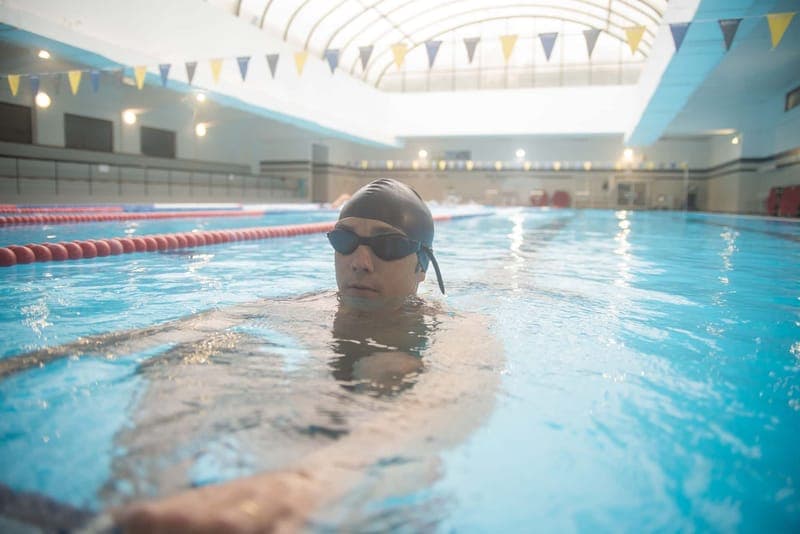
Arena Cobra Ultra Swipe
A racing goggle whose anti-fog treatment lasts, which is the one thing racing goggles usually get wrong.
Specifications
- Fit
- Racing, very low profile
- Gasket
- Minimal silicone
- Anti-fog
- Swipe, reactivatable
- Lens
- Edge-to-edge, mirrored options
What works
- The Swipe layer can be reactivated by wiping the inner lens, so clarity does not fall off after a month
- Edge-to-edge lens design cuts the peripheral blind spot racing goggles normally have
- Very low drag
- Ships in a hard case that actually protects the lens
What doesn’t
- Minimal gasket presses directly on the eye socket and gets uncomfortable past about forty minutes
- Expensive for a goggle you will still replace annually
Who it’s for
A competitive or masters swimmer doing timed sets — not a family lake day.
Bottom line
The upgrade pick, and only for someone racing. Recreational swimmers get nothing here the Vanquisher does not give.
Speedo Vanquisher 2.0
The pool default for two decades: low profile, reliable seal, replaceable at almost any sports shop.
Specifications
- Fit
- Low profile, adult
- Gasket
- Silicone
- Nose bridge
- Interchangeable, 4 sizes
- Lens
- Anti-fog, UV; optical version available
What works
- Four nose-bridge sizes in the box, which is how a low-profile goggle actually gets to seal
- A prescription version exists in the same frame, so a swimmer needing correction is not starting over
- Stocked everywhere, so replacement is never a special order
- Cheap relative to how long the silicone lasts
What doesn’t
- Narrow field of view next to a mask-style goggle
- Anti-fog coating wears out well before the gasket does
Who it’s for
An adult swimming laps, or a teenager who has outgrown junior frames.
Bottom line
Still the sensible adult default. Buy two pairs rather than one expensive pair.
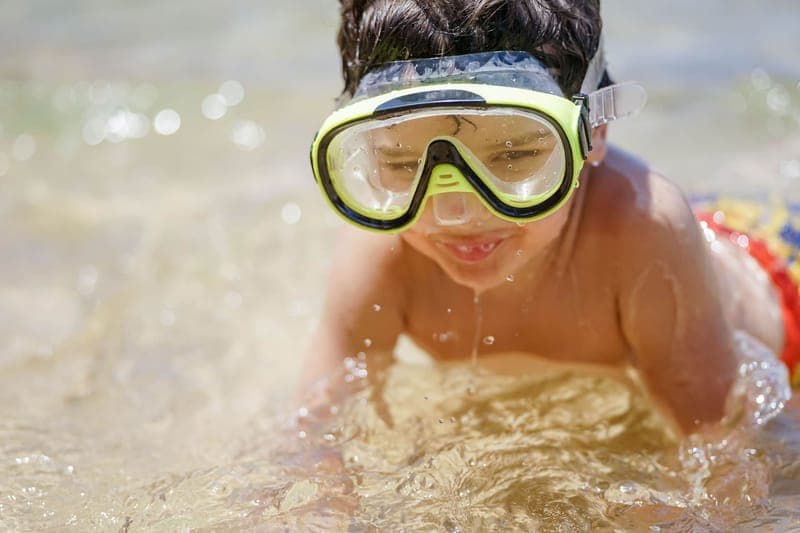
TYR Kids' Swimple
Oversized soft gaskets on a one-piece frame, which is the combination that actually seals a small face.
Specifications
- Age range
- 3-10 years
- Gasket
- Silicone, oversized
- Frame
- One-piece
- Lens
- Anti-fog, UV
What works
- One-piece frame has no nose-bridge adjustment to get wrong, which removes the most common source of leaks on small faces
- Soft silicone gasket sits wide of the eye socket, so it seals against cheek rather than thin skin
- Hypoallergenic silicone matters for kids who react to latex straps
- Cheap enough to replace mid-season without a conversation about it
What doesn’t
- No bridge adjustment at all, so a very narrow or very wide face has no fallback
- Strap clip is fiddly for a child to adjust alone
Who it’s for
A child between about 3 and 10 who is in the water for lessons and lake days rather than training, and who has already lost or broken a pair.
Bottom line
The default first pair. If you are buying goggles for a child under 10 and do not want to think about it, buy these.
Questions
Frequently asked questions
Does spitting in goggles actually work?
How long does anti-fog coating last?
Can you re-apply anti-fog to swim goggles?
Why do my new goggles fog immediately?
Read next