Baby & Toddler · Comparison
Best Toddler Swim Vests (2026)
Good teaching aids. Not life jackets, and the difference is not a technicality.
The short answer
The SwimWays Sea Squirts is the best toddler swim vest for building pool confidence — low bulk, soft shell, rear buckle out of reach. But swim vests are not USCG approved, give no head support, and must never be used in place of a life jacket on a boat or in open water.
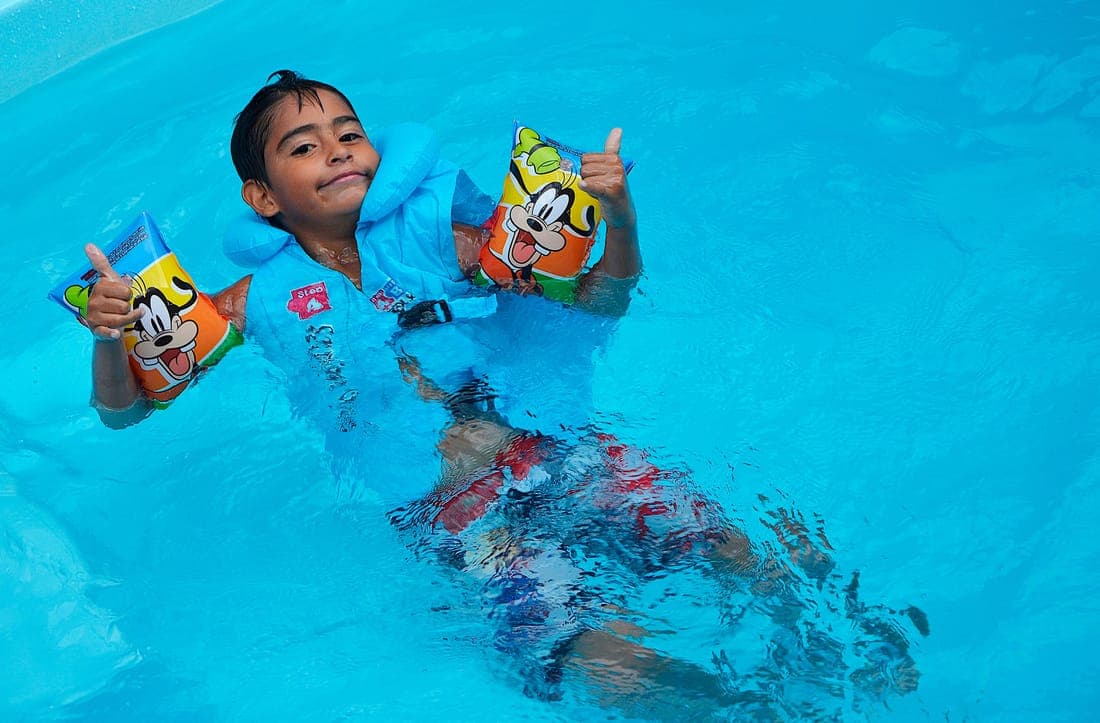
Photos on this page are licensed images that illustrate the category. They are not photographs of the specific products named, and no product image here is supplied by a manufacturer or retailer.
| # | Product | Best for | USCG class | Price |
|---|---|---|---|---|
| 1 | 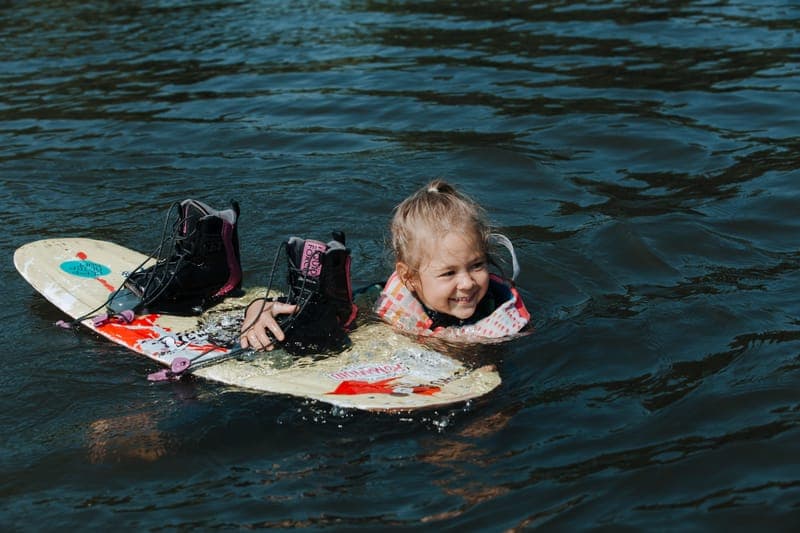 Top pick SwimWays Sea Squirts Swim Vest A soft, low-bulk toddler swim aid that builds water confidence — again, not a life jacket. | Toddler pool confidence | Not approved — swim aid only | |
| 2 | 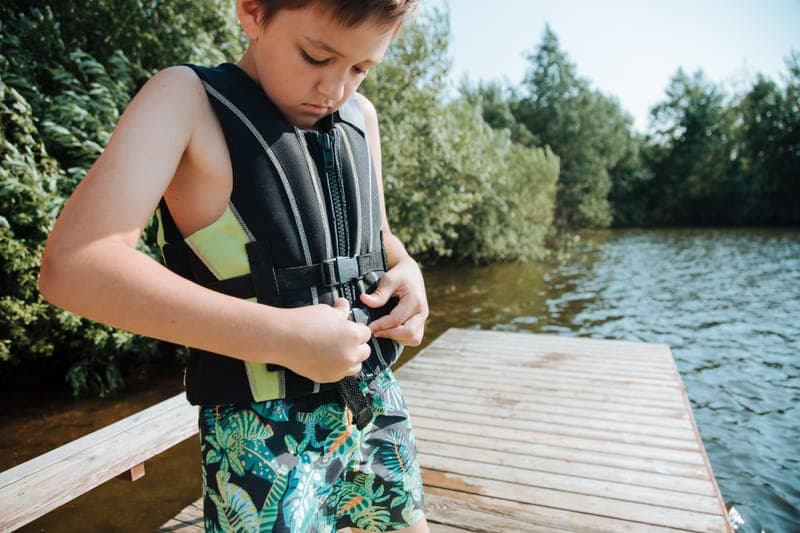 Also good Speedo Begin to Swim Kids' Swim Vest A swim aid, not a life jacket: it holds a child horizontal to practice stroke, and is not USCG approved. | Learning in a pool | Not approved — swim aid only | |
| 3 | Upgrade pick Stearns Puddle Jumper Deluxe A USCG-approved Type III that children accept, because the arm floats leave the shoulders free. | 30-50 lbs, learning to swim | Type III, approved | |
| 4 | Also good Stearns Infant Classic Series Vest An infant vest with the two features that matter at this size: a head pillow and a crotch strap. | Under 30 lbs | Type II, approved |
What a swim vest is genuinely good at
It is worth being fair to the category rather than dismissing it, because a swim vest does something an approved jacket cannot. It holds a toddler horizontal — the body position swimming actually requires — with low enough bulk that arms and legs move freely.
An approved life jacket holds a child upright, because that is what keeps a face clear of the water. That is the right property for safety and the wrong one for learning a stroke, and no single product does both.
Better swim vests also have removable flotation panels, so support can be reduced as a child improves. That progression is the entire point of a teaching aid, and a life jacket offers nothing like it because reducing its flotation would defeat its purpose.
SwimWays Sea Squirts Swim Vest
A soft, low-bulk toddler swim aid that builds water confidence — again, not a life jacket.
Specifications
- USCG class
- Not approved — swim aid only
- Weight range
- Approx. 30-50 lbs
- Flotation
- Foam, soft fabric shell
- Closure
- Rear buckle
What works
- Very low bulk, so a toddler forgets they are wearing it
- Soft fabric shell does not chafe under the arms the way hard foam can
- Rear buckle is out of a toddler's reach
- Cheap enough to own alongside a real life jacket
What doesn’t
- NOT USCG approved — pool and supervised shallow water only
- Flotation is fixed, so it does not adapt as the child improves
Who it’s for
A toddler getting comfortable in a supervised pool with an adult within arm's reach.
Bottom line
Fine as a confidence aid. Anything involving a boat needs an approved infant or child vest instead.
Speedo Begin to Swim Kids' Swim Vest
A swim aid, not a life jacket: it holds a child horizontal to practice stroke, and is not USCG approved.
Specifications
- USCG class
- Not approved — swim aid only
- Weight range
- Approx. 33-55 lbs
- Flotation
- Removable front and back panels
- Closure
- Zip plus buckle
What works
- Removable panels let you reduce flotation as a child improves, which no life jacket does
- Holds a swimmer horizontal, which is the body position lessons are actually teaching
- Low bulk, so it does not stop arm movement
- Cheap and easy to pack
What doesn’t
- NOT USCG approved — it does not satisfy boating law and must never be used in place of a life jacket
- Provides no head support and will not keep a non-swimmer's face clear on its own
Who it’s for
A child practicing strokes in a supervised pool or a calm, shallow lake edge with an adult in the water.
Bottom line
A teaching tool. On a boat, at a dock, or in open water, it is the wrong item — use an approved Type II or III.
Stearns Puddle Jumper Deluxe
A USCG-approved Type III that children accept, because the arm floats leave the shoulders free.
Specifications
- USCG class
- Type III, approved
- Weight range
- 30-50 lbs
- Closure
- Single rear buckle
- Flotation
- Chest panel plus arm floats
What works
- Genuinely USCG-approved, unlike the water wings and arm bands it resembles
- The rear-only buckle is behind the child, so they cannot undo it themselves
- Children tolerate it for a whole afternoon, which is the property that actually keeps them in it
- Holds a swimmer upright and slightly forward, which suits pool and calm-lake play
What doesn’t
- Not designed to turn an unconscious wearer face-up — that is a Type I offshore jacket
- The upright-forward position teaches a vertical body posture that has to be unlearned in lessons
Who it’s for
A 30-50 lb child in a pool or on a calm lake shore, supervised at arm's length.
Bottom line
The most-worn kids' PFD in America for a reason. Check the printed USCG approval on the label, because look-alikes without it are everywhere.
Stearns Infant Classic Series Vest
An infant vest with the two features that matter at this size: a head pillow and a crotch strap.
Specifications
- USCG class
- Type II, approved
- Weight range
- Under 30 lbs
- Head support
- Flotation collar
- Closure
- Buckles plus crotch strap
What works
- The flotation collar supports an infant's head, which is the whole point at this weight
- Crotch strap stops the vest lifting off a small body in water
- Grab handle at the collar lets an adult lift the child straight out
- Type II turns most wearers face-up, which an infant cannot do for themselves
What doesn’t
- Bulky and warm, and most infants object to it initially
- A vest is never a substitute for arm's-length supervision at this age
Who it’s for
A baby or small toddler under 30 lbs on or near a boat.
Bottom line
Required kit if an infant is going on the water. Fit it dry, on land, and lift by the collar handle to check it does not slip off.
What to look for in a toddler swim vest
- Low bulk, so the child forgets they are wearing it and can move their arms properly.
- A soft fabric shell rather than hard foam panels — hard foam chafes under the arms and children take it off.
- A rear closure out of the child's reach. A front buckle gets undone.
- Removable flotation panels, if you want to reduce support as they improve.
- A weight range printed on it, and buy to the child's actual weight rather than their age.
- No head support, and know that — this is a defining limitation, not an oversight.
Where a swim vest belongs, and where it does not
| Situation | Swim vest | Approved life jacket |
|---|---|---|
| Supervised pool, adult in the water | Yes | Optional |
| Shallow calm lake edge, adult within arm's reach | Yes | Better |
| Deeper open water | No | Required |
| On a dock | No | Required |
| On a boat | No — illegal as the only device | Required |
| Being towed | No | Required, with a crotch strap |
| Non-swimmer unattended for any moment | No | And no device replaces supervision |
The failure mode to avoid is using the vest because it is the one already in the car. It is lighter, more comfortable and easier to put on — which is exactly why it gets reached for on a dock, where it is the wrong item.
How much should you spend?
Very little. Swim vests are cheap, and they are worn for a limited window — a year or two while a child moves from clinging to swimming. The features that matter are low bulk and a rear closure, and both are available at the bottom of the market.
Where the money should go instead is the approved life jacket, because that is the item with a safety function. If the budget only stretches to one, buy the approved jacket: a child can practice without a vest under supervision, and cannot safely be on a boat without a jacket.
Will it last a second summer?
Often not, and that is by design — a swim vest is a stepping stone. A toddler who needed it last June may be swimming without it by the following August, which is the outcome you want.
Check the foam before reusing one: hard, stiff or crumbling panels mean it is finished. Rinse it after chlorine and lake water, and dry it fully rather than leaving it in a bag — the fabric shell holds damp and the foam takes a long time to dry.
And when you retire it, retire it honestly. A swim vest with degraded foam is not a spare life jacket for a guest's child, because it never was one.
Questions
Frequently asked questions
Are toddler swim vests Coast Guard approved?
What is the best swim vest for a toddler?
Can a toddler wear a swim vest on a boat?
Do swim instructors recommend swim vests?
Sources
Read next