Swimsuits · Guide
Kids' Swimsuit Size Chart
Age is the worst predictor of swimsuit fit. Two measurements beat it every time.
The short answer
Buy kids' swimsuits by chest measurement in inches, not by age. Measure around the fullest part of the chest and compare it to the brand's own chart; then measure the torso from shoulder, through the legs, back to the same shoulder, because torso length rather than chest size is what makes a one-piece ride up.
Product photos are the retailer’s own catalogue images, shown from the retailer’s servers and refreshed daily. Any other photo here is a licensed image that illustrates the category, not a photograph of the specific product named.
Why age sizing fails in swimwear
Children's clothing is sized by age because it is a convenient shorthand, and in loose-fitting clothes the error does not show. Swimwear is the opposite: it is a compression garment that has to hold its shape against water, so a two-inch error that would be invisible in a t-shirt becomes a suit that falls down or cuts in.
Two children of the same age can easily be four inches apart in chest measurement, and swim brands know it — which is why training brands abandoned age sizing for swimwear and label by chest measurement instead. Dolfin's girls' range, for instance, is sold as 22 through 32, and those numbers are chest inches rather than ages.
The practical consequence: every brand's chart is different and you have to read the one you are buying from. A 'size 8' is not a standard. The measurement is.
The two measurements that matter
- Chest. Pass a soft tape around the fullest part of the chest, under the arms, snug but not tight, with the child standing relaxed and breathing normally. Write down the inches.
- Torso (girth). Start at the top of one shoulder, run the tape down the front, between the legs, up the back, and return to the same shoulder. This is the measurement almost nobody takes and it is what decides whether a one-piece rides up.
Height and weight are useful as a cross-check, and most mainstream brands' charts list them, but they are secondary. A tall, slim child and a shorter, stockier child can share a height and need different suits.
Kids' swimsuit sizes: the typical mapping
| Age (typical) | Height | Chest | Common size label |
|---|---|---|---|
| 12-24 months | 31-34 in | 19-20 in | 18-24M / 2T |
| 2-3 years | 34-39 in | 20-21 in | 2T-3T |
| 4-5 years | 39-45 in | 22-23 in | 4-5 / XS |
| 6-7 years | 45-50 in | 24-25 in | 6-7 / S |
| 8-9 years | 50-55 in | 26-27 in | 8-10 / M |
| 10-11 years | 55-59 in | 28-29 in | 10-12 / L |
| 12-13 years | 59-63 in | 30-31 in | 14 / XL |
| 14+ years | 63 in and up | 32 in and up | 16 / adult XS |
Read that table as a translation aid, not as a specification. Its job is to tell you roughly where to start and to show you how wide the overlap is: a 26-inch chest appears on children between about six and nine, which is exactly why the age label is not doing the work you hoped.
Speedo Girls' Solid Racerback
A plain chlorine-resistant racerback — the suit that survives a full season of weekly lessons.
Specifications
- Fabric
- Chlorine-resistant polyester blend
- Back
- Racerback
- Sizes
- Girls 4-16
- Lining
- Front lined
What works
- Chlorine-resistant fabric holds shape and color where a fashion suit goes see-through by August
- Racerback straps do not slide off shoulders mid-lesson, which is the real reason kids tug at suits
- Full coverage, so a child is not adjusting it every time they climb out
- Cheap enough to own two so one is always dry
What doesn’t
- Plain and unfashionable — older children may object
- Chlorine-resistant fabrics feel stiffer than fashion swim fabric
Who it’s for
A girl in weekly lessons or on a summer team, where a suit gets chlorinated repeatedly.
Bottom line
The workhorse. If your child is in a pool every week, buy this rather than a fashion suit and replace it half as often.
Hanna Andersson Kids' One Piece
A generously cut UPF 50+ one piece with genuine torso length, which is the fit problem most suits ignore.
Specifications
- UPF
- 50+
- Cut
- Generous torso length
- Sizes
- Toddler through youth 16
- Fabric
- Recycled polyester blend
What works
- Cut long through the body — the fix for a child whose suits ride up and dig at the shoulders
- UPF 50+ across the covered area, so it is sun protection as well as a swimsuit
- Heavier fabric that does not thin out after a season
- Sizes run true, so next year's size is predictable
What doesn’t
- Priced well above a training suit
- Not chlorine-resistant fabric, so heavy pool use shortens its life
Who it’s for
A tall or long-torsoed child, or one who swims mostly outdoors where UPF matters.
Bottom line
The fit pick. If suits always ride up on your child, the problem is torso length and this is the answer.
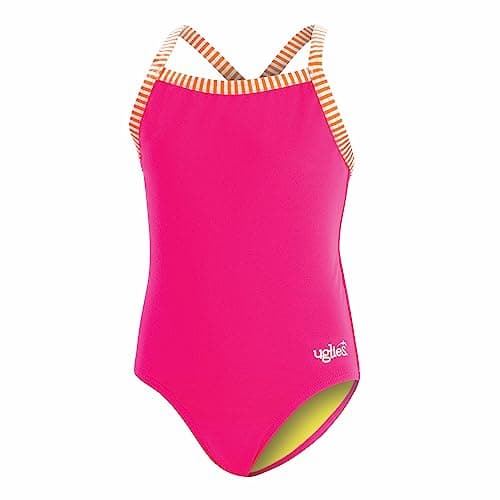
Dolfin Girls' Uglies One Piece
Training-grade chlorine-resistant fabric in loud prints — the compromise between durable and wearable.
Specifications
- Fabric
- Chlorine-resistant polyester
- Back
- V-back and racerback options
- Sizes
- Girls 22-32 (chest)
- Prints
- Wide seasonal range
What works
- Same durability tier as a plain training suit, in prints children actually choose themselves
- Sized by chest measurement rather than age, which fits real bodies far better
- Signature striped straps make it easy to identify in a pile of identical suits
- Holds up through a full competitive season
What doesn’t
- Chest sizing means you have to measure rather than guess
- Prints rotate seasonally, so re-buying the same one next size up may not be possible
Who it’s for
A girl who refuses plain suits but needs training-grade durability.
Bottom line
The pick that ends the argument. Measure the chest before ordering; age sizing does not apply here.
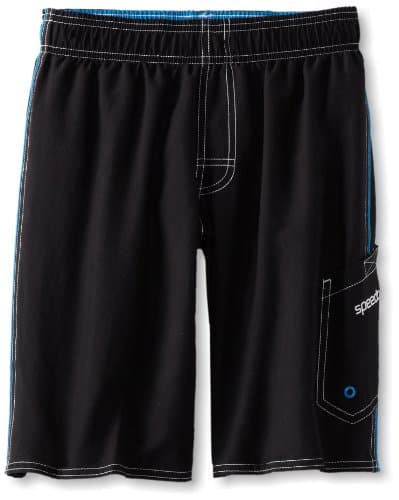
Speedo Boys' Marina Volley Short
A plain quick-dry volley short with a real drawcord and a mesh liner — everything a boy's trunk needs.
Specifications
- Length
- Volley, above knee
- Waist
- Elastic with drawcord
- Liner
- Mesh
- Fabric
- Quick-dry polyester
What works
- Drawcord plus elastic means it stays up on a thin child, which pull-on trunks do not
- Above-knee length does not drag in the water the way board shorts do
- Dries fast enough to put back on after lunch
- Cheap and stocked everywhere
What doesn’t
- Mesh liner irritates some children and cannot be removed
- Plain styling
Who it’s for
Any boy who needs one pair of trunks that work for the pool, the lake and the beach.
Bottom line
The default. Check the drawcord actually ties — that single detail is why cheaper trunks end up abandoned.
Boys' trunks: a different problem
Boys' swim trunks are sized by waist and they fit far more forgivingly, because a drawstring absorbs a lot of error. The two things worth checking are the inseam — what looks like a short on a tall eight-year-old is a mid-thigh fit on a stocky six-year-old — and whether the waistband has a real drawstring rather than elastic alone.
Where boys' sizing does go wrong is at the top of the range, on stockier builds, where a waist measurement that fits is attached to a leg length cut for a much taller child. Brands that offer a husky or relaxed fit solve that properly; sizing up does not. The picks are in best boys' swimsuits and trunks.
Should you size up for growth?
No, and this is the costliest mistake in kids' swimwear. A one-piece one size too large does not stay in reserve for next summer — it slides at the shoulders, gapes at the legs, fills with water and drags. Children take it off and refuse to wear it, which means you buy twice anyway.
Where you have genuine flexibility is in trunks with a drawstring, which tolerate a season of growth, and in rash guards, where one size up is a reasonable bet because a loose fit is merely loose rather than unwearable.
If a child is between two sizes in a one-piece, the usual answer is to take the larger size in a brand cut long in the torso rather than the smaller size in a standard cut. The fit failure is almost always length, not circumference.
When it fits but rides up
This is a torso-length problem and it is extremely common in tall or long-bodied children. The suit measures correctly across the chest, so the size looks right, but there is not enough fabric between the shoulder and the crotch — so the suit pulls down at the shoulders and up at the legs all day.
The fix is a brand that cuts generously through the body and says so, or a long-torso option where one exists. Sizing up makes it worse, because the extra width gapes without adding meaningful length. More on the pattern in swimsuit fit problems solved.
For an all-day outdoor swim there is a neat alternative: a long-sleeve sunsuit, which is a swimsuit and rash guard in one garment, so there is no waistband to ride up at all and the sun coverage comes free.
Outfitting several children at once
Measure all of them in one go and write the numbers down with the date — you will be glad of it next spring, and chest measurement is a far better record than 'she was in a 7 last year'.
Then buy on fabric rather than on brand. A plain chlorine-resistant racerback at the bottom of the training range costs little, survives a season of lessons, and hands down to a sibling in a way a fashion suit does not. The rest of the budget reasoning is in family swim gear on a budget, and the adult equivalent of this page is our swimsuit sizing guide.
Questions
Frequently asked questions
How do I know what size swimsuit my child needs?
Are kids' swimsuit sizes the same as clothing sizes?
Should I buy a swimsuit a size up so it lasts?
Why does my child's swimsuit ride up even though it fits?
What chest measurement is a size 8 kids' swimsuit?
Read next