Swimsuits · Comparison
Best Swimsuits for Swim Lessons
Lessons are the hardest use case a child's swimsuit faces. Here is what survives them.
The short answer
For swim lessons, buy a plain chlorine-resistant racerback one-piece for girls and quick-dry jammers or short trunks for boys. Weekly chlorine exposure is what destroys swimsuits, so fabric matters more here than anywhere else, and straps that stay on the shoulders keep a child focused.
Photos on this page are licensed images that illustrate the category. They are not photographs of the specific products named, and no product image here is supplied by a manufacturer or retailer.
| Swim lessons | Lake day | |
|---|---|---|
| Main destructive agent | Chlorine, weekly | Sun, occasionally |
| Fabric that makes sense | PBT / polyester | Anything that fits |
| Strap style | Racerback or crossback | Any |
| Coverage priority | Stay-put fit | Sun coverage |
| Sessions per suit per week | 1-3 | A few per summer |
| Suits needed | Two, so one is dry | One |
| Swim diaper required | Yes, if not trained | Usually yes at public pools |
Why lessons are the hard case
A suit worn to a lake six times a summer faces sunlight and fresh water and will last for years. The same suit worn to a chlorinated pool once a week faces roughly thirty chlorine exposures a year, and chlorine attacks the elastane that gives the suit its shape.
That is why the fabric decision matters here specifically. A chlorine-resistant suit — 100% PBT or polyester with minimal elastane — costs roughly double and lasts several times longer in this use. See chlorine resistant swimsuits for how to read the label.
The second reason lessons are hard is behavioral. A child adjusting a strap, hitching a waistband or pulling at a leg opening is a child not listening to an instructor. A suit that stays put is a suit that lets the lesson happen.
For girls: plain, racerback, chlorine-resistant
Racerback or crossback straps. Straight shoulder straps slide off, especially during backstroke and during anything involving arms overhead. A racerback cannot slide.
Full front lining, so the suit stays opaque wet through a season of use rather than going sheer.
Enough torso length. A suit that rides up at the shoulders will be tugged at all lesson. If your child is long in the body, this matters more than the chest size — see swimsuit fit problems.
If a plain suit is refused on appearance grounds, training brands make the same durable fabric in loud prints. That is exactly what the budget pick below is, and it is a better compromise than a fashion suit that dies in August.
For boys: short, quick-dry, secured
Jammers if he will wear them — close-fitting mid-thigh shorts in chlorine-resistant fabric. They create no drag, do not shift, and last far longer than trunks in a pool.
Short volley trunks otherwise, with a real drawcord. Long board shorts fill and drag and pull their own waistband down, which in a lesson means a child holding his shorts up instead of kicking.
For toddlers: the swim diaper is the rule
Baby and toddler classes almost universally require a snug-fitting swim diaper for any child not toilet trained, and many require a specific style. The leg seal is what gets checked.
A suit with a built-in reusable swim diaper is the neatest answer for a thirty-minute class: one garment, no waistband gap, and it meets the containment standard. Check your class's specific policy — some require a disposable under a reusable, which sounds excessive and is what they ask for. See best swim diapers.
What else to bring to lessons
- A second suit, so a damp one is never going back on. This is the single most useful thing on the list.
- A silicone swim cap — many programs require one, and it keeps hair out of the eyes and off the goggle strap. See best kids' swim caps.
- Soft-gasket goggles sized for the age, not junior-competitive frames. See best kids' swim goggles.
- Two towels, because one is always wet or lost.
- Slip-on water shoes for the changing room floor, if that matters to you.
Our picks
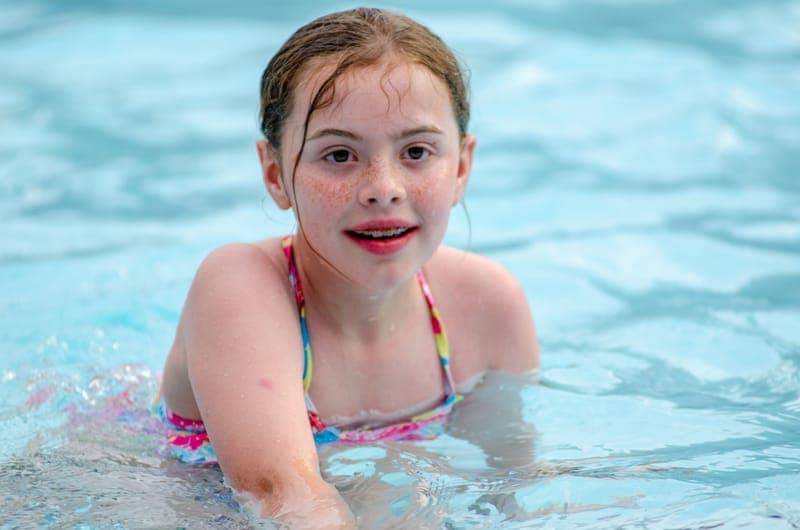
Speedo Girls' Solid Racerback
A plain chlorine-resistant racerback — the suit that survives a full season of weekly lessons.
Specifications
- Fabric
- Chlorine-resistant polyester blend
- Back
- Racerback
- Sizes
- Girls 4-16
- Lining
- Front lined
What works
- Chlorine-resistant fabric holds shape and color where a fashion suit goes see-through by August
- Racerback straps do not slide off shoulders mid-lesson, which is the real reason kids tug at suits
- Full coverage, so a child is not adjusting it every time they climb out
- Cheap enough to own two so one is always dry
What doesn’t
- Plain and unfashionable — older children may object
- Chlorine-resistant fabrics feel stiffer than fashion swim fabric
Who it’s for
A girl in weekly lessons or on a summer team, where a suit gets chlorinated repeatedly.
Bottom line
The workhorse. If your child is in a pool every week, buy this rather than a fashion suit and replace it half as often.
Dolfin Girls' Uglies One Piece
Training-grade chlorine-resistant fabric in loud prints — the compromise between durable and wearable.
Specifications
- Fabric
- Chlorine-resistant polyester
- Back
- V-back and racerback options
- Sizes
- Girls 22-32 (chest)
- Prints
- Wide seasonal range
What works
- Same durability tier as a plain training suit, in prints children actually choose themselves
- Sized by chest measurement rather than age, which fits real bodies far better
- Signature striped straps make it easy to identify in a pile of identical suits
- Holds up through a full competitive season
What doesn’t
- Chest sizing means you have to measure rather than guess
- Prints rotate seasonally, so re-buying the same one next size up may not be possible
Who it’s for
A girl who refuses plain suits but needs training-grade durability.
Bottom line
The pick that ends the argument. Measure the chest before ordering; age sizing does not apply here.
Speedo Boys' Marina Volley Short
A plain quick-dry volley short with a real drawcord and a mesh liner — everything a boy's trunk needs.
Specifications
- Length
- Volley, above knee
- Waist
- Elastic with drawcord
- Liner
- Mesh
- Fabric
- Quick-dry polyester
What works
- Drawcord plus elastic means it stays up on a thin child, which pull-on trunks do not
- Above-knee length does not drag in the water the way board shorts do
- Dries fast enough to put back on after lunch
- Cheap and stocked everywhere
What doesn’t
- Mesh liner irritates some children and cannot be removed
- Plain styling
Who it’s for
Any boy who needs one pair of trunks that work for the pool, the lake and the beach.
Bottom line
The default. Check the drawcord actually ties — that single detail is why cheaper trunks end up abandoned.

i play. by green sprouts Toddler Swimsuit
A UPF 50+ toddler suit with a reusable swim diaper built in, which removes one garment from the pile.
Specifications
- UPF
- 50+
- Swim diaper
- Built in, reusable
- Sizes
- 6 months to 4T
- Closure
- Snap or zip by style
What works
- The built-in diaper means one garment instead of two and no waistband gap
- Meets the snug-fit containment most public pools require
- UPF 50+ on the fabric
- Sizing matches the same brand's rash guards and swim diapers
What doesn’t
- You cannot change the diaper without removing the whole suit
- Built-in layer takes noticeably longer to dry
Who it’s for
A not-yet-toilet-trained toddler doing short swims — lessons, splash pads, an hour at the lake.
Bottom line
Best for short sessions. For a full day, a separate swim diaper plus a suit is more practical.
Questions
Frequently asked questions
What swimsuit is best for a child's swim lessons?
Do kids need a swim cap for lessons?
What does a toddler wear for baby swim classes?
How many swimsuits does a child in weekly lessons need?
Read next