Swim Goggles · Roundup
Kids' Swim Goggles That Stay On (2026)
Five picks chosen on strap design and nose bridge sizing — the two things that decide whether goggles stay put.
The short answer
The Speedo Jr. Vanquisher 3.0 is the pick: a split silicone strap plus three interchangeable nose bridges, which is the combination that keeps goggles on a face that is still changing shape. A single flat strap worn too low is the usual reason goggles come off.
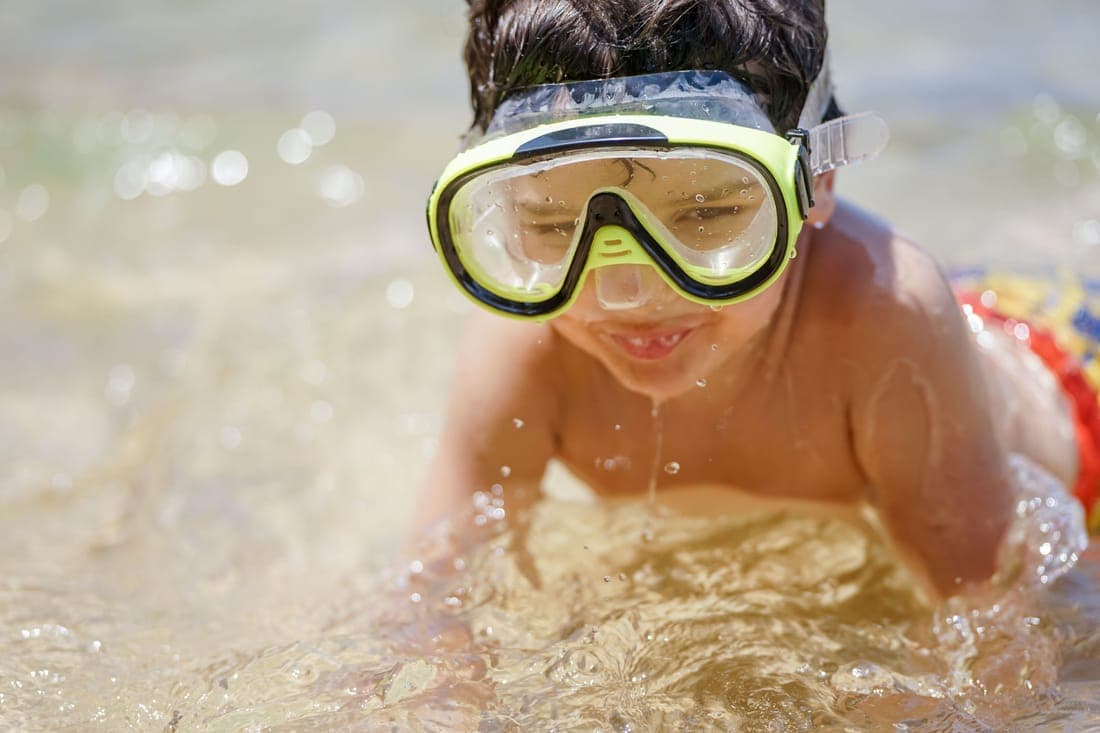
Product photos are the retailer’s own catalogue images, shown from the retailer’s servers and refreshed daily. Any other photo here is a licensed image that illustrates the category, not a photograph of the specific product named.
| # | Product | Best for | Strap | Price |
|---|---|---|---|---|
| 1 | Top pick Speedo Jr. Vanquisher 3.0 Adult-grade optics in a junior frame, with interchangeable nose bridges that grow with the face. | Swim team, ages 7-14 | 6-14 years | |
| 2 | 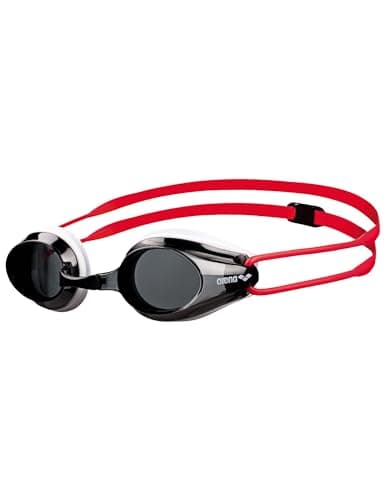 Also good Arena Tracks Jr. Built like the adult Tracks and priced close to a toy pair, which is why they survive being stepped on. | Durability, ages 6-12 | 6-12 years | |
| 3 | 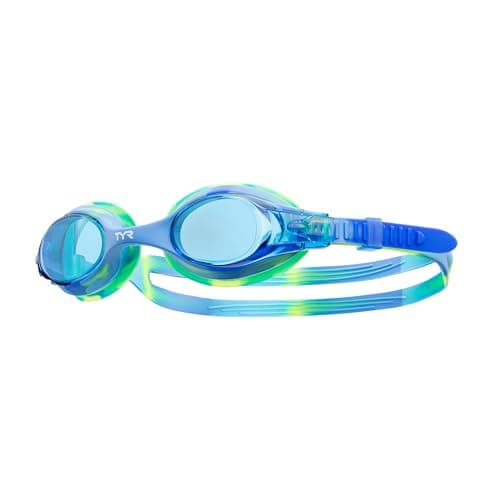 Budget pick TYR Kids' Swimple Oversized soft gaskets on a one-piece frame, which is the combination that actually seals a small face. | Ages 3-10, first goggles | 3-10 years | |
| 4 | 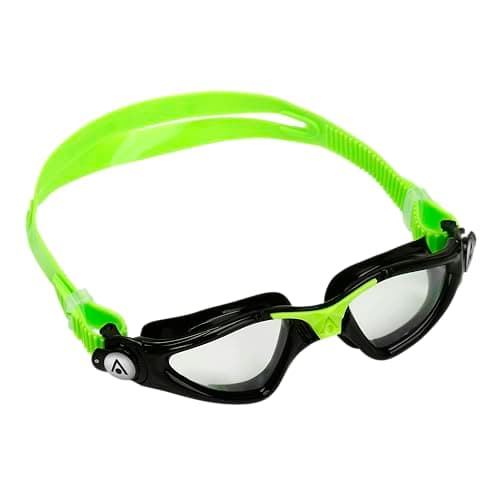 Upgrade pick Aqua Sphere Kayenne Jr. A wide curved lens that gives a genuinely panoramic view — the useful choice where a child cannot see the bottom. | Open water and lakes | 6-12 years | |
| 5 | 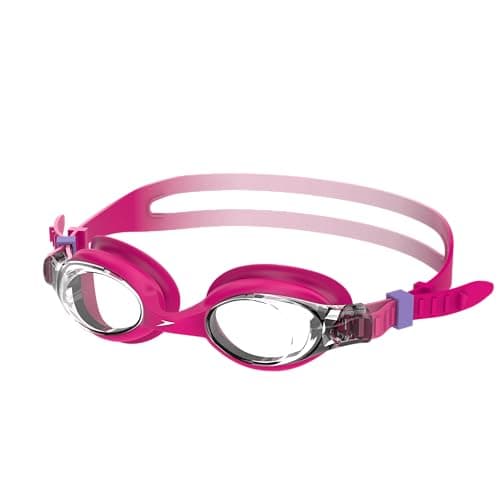 Also good Speedo Kids' Skoogles The softest, most forgiving gasket in the category — it seals even when a child pulls it on crooked. | Toddlers, nervous beginners | 3-8 years |
Goggles come off for three reasons, and only one is the goggles
The strap is in the wrong place. The most common cause by a distance. A strap sitting at the back of the head, level with the ears or lower, slides up and off the crown on impact. It should sit high at the back, above the occipital bump, so the skull itself is holding it down.
The nose bridge is the wrong width. A bridge that is too wide lets the eye cups sit outside the eye sockets, where there is no bone to seal against and nothing holding them. The goggles then rely entirely on strap tension, which is why parents keep tightening and the goggles keep failing.
The strap is a single flat band. One band can only pull in one direction. A split strap — two bands forming a Y at the back — pulls above and below the widest part of the skull at once, which is the mechanical reason split-strap goggles survive a dive and single-strap goggles do not.
Everything else people blame — the brand, the price, the child — is downstream of those three. A cheap pair with a split strap and the right bridge stays on better than an expensive pair with neither.
Speedo Jr. Vanquisher 3.0
Adult-grade optics in a junior frame, with interchangeable nose bridges that grow with the face.
Specifications
- Age range
- 6-14 years
- Gasket
- Silicone, low-profile
- Nose bridge
- Interchangeable, 3 sizes
- Lens
- Anti-fog, UV, mirrored options
What works
- Interchangeable bridges mean one pair covers two or three years of face growth instead of one season
- Low-profile gasket is what competitive kids actually wear, so a child on a team will not ask to swap them
- Double-strap head cradle stays put off a starting block or a dock
- Mirrored lenses are genuinely useful outdoors, not just styling
What doesn’t
- Low-profile gaskets need the correct bridge size to seal; get it wrong and they leak more than a soft-gasket pair
- Wrong shape for a child under about 6
Who it’s for
A child swimming twice a week or more, past beginner lessons or on a summer league team.
Bottom line
Worth the step up only for a regular swimmer. For a child who swims six times a summer, the Swimple does the same job for less.
Arena Tracks Jr.
Built like the adult Tracks and priced close to a toy pair, which is why they survive being stepped on.
Specifications
- Age range
- 6-12 years
- Gasket
- Silicone
- Nose bridge
- Self-adjusting
- Lens
- Anti-fog, UV, polycarbonate
What works
- Self-adjusting bridge removes the sizing decision without locking you to one face width
- The frame-to-strap junction is what usually fails first, and Arena reinforces it
- Comfortable enough for an hour-long lesson
- Wide color range makes them findable in a bag of identical black goggles
What doesn’t
- A self-adjusting bridge fits most faces well and no face perfectly
- Strap is thinner than Speedo's and can pull fine hair
Who it’s for
A family that loses or breaks goggles routinely and wants a pair that survives a second summer.
Bottom line
The most durable pair at the price. Add a swim cap if your child has long hair, because the thin strap pulls.
TYR Kids' Swimple
Oversized soft gaskets on a one-piece frame, which is the combination that actually seals a small face.
Specifications
- Age range
- 3-10 years
- Gasket
- Silicone, oversized
- Frame
- One-piece
- Lens
- Anti-fog, UV
What works
- One-piece frame has no nose-bridge adjustment to get wrong, which removes the most common source of leaks on small faces
- Soft silicone gasket sits wide of the eye socket, so it seals against cheek rather than thin skin
- Hypoallergenic silicone matters for kids who react to latex straps
- Cheap enough to replace mid-season without a conversation about it
What doesn’t
- No bridge adjustment at all, so a very narrow or very wide face has no fallback
- Strap clip is fiddly for a child to adjust alone
Who it’s for
A child between about 3 and 10 who is in the water for lessons and lake days rather than training, and who has already lost or broken a pair.
Bottom line
The default first pair. If you are buying goggles for a child under 10 and do not want to think about it, buy these.
Aqua Sphere Kayenne Jr.
A wide curved lens that gives a genuinely panoramic view — the useful choice where a child cannot see the bottom.
Specifications
- Age range
- 6-12 years
- Field of view
- Wide, 180-degree style
- Gasket
- Soft silicone, curved
- Lens
- Anti-fog, UV, tinted options
What works
- The wide lens is not a gimmick in murky water — peripheral vision is how a child keeps track of a parent or a dock
- Curved gasket spreads pressure across the cheekbone instead of the eye socket
- Quick-adjust buckles work with wet hands
- Tinted versions cut glare off open water, the actual complaint on bright lake days
What doesn’t
- Larger lens is more exposed and picks up scratches faster in a beach bag
- Bulkier than a low-profile pair, so a competitive swimmer will not want them
Who it’s for
A child who swims mostly in open water — a lake, a river, a bay — rather than a clear pool.
Bottom line
The lake pick. Where visibility is poor, field of view is worth more than a sleeker frame.
Speedo Kids' Skoogles
The softest, most forgiving gasket in the category — it seals even when a child pulls it on crooked.
Specifications
- Age range
- 3-8 years
- Gasket
- Oversized soft silicone
- Frame
- One-piece, flexible
- Lens
- Anti-fog, UV
What works
- Very forgiving fit — the gasket is deep enough that a crooked pull-on still seals
- Wide, shallow lens avoids the pressure ring that makes small children refuse goggles
- Single-strap adjustment a four-year-old can manage
- Widely stocked, so a mid-trip replacement is realistic
What doesn’t
- Soft gasket leaves a visible mark after a long session
- Too loose on the face of a child over about 8
Who it’s for
A toddler or young child who has tried goggles once and hated them. This is the pair that usually fixes that.
Bottom line
Buy these if the problem is refusal rather than leaking. Comfort is what they optimize for and it works.
What to look for
A split (double) strap. Two bands, adjustable independently if possible. On a child's head the difference is obvious within one session: the goggles stop migrating upward every time they surface.
Interchangeable nose bridges, or a self-adjusting one. Children's faces change width every year. Three bridge sizes in the box means the same goggles fit for two or three seasons instead of one, and a self-adjusting bridge does the same job with less fiddling.
A silicone gasket, not foam. Silicone grips wet skin and recovers its shape. Foam compresses permanently, absorbs water, and within a season is sealing on nothing. Foam-gasket goggles are the ones that end up in a drawer.
Buckles a child can work. A goggle a child cannot adjust is a goggle an adult adjusts wrongly, on a dock, while everyone waits. Push-button or slide buckles on the strap, reachable with wet hands.
A mask shape for jumping and diving. A larger mask-style goggle seals around a bigger area of bone and sits more stably than a low-profile racing cup. It is the shape to buy for a child whose day is mostly cannonballs.
Fit test before the first swim
- Hold the goggles against the eye sockets with no strap at all and press gently. They should hold for a couple of seconds on suction alone. If they do not, the gasket or the bridge is wrong and no strap setting will fix it.
- Check the eye cups sit inside the bone of the eye socket, not out on the soft tissue beside it. Outside the socket means the bridge is too wide.
- Put the strap on and move it high at the back, above the bump at the base of the skull. This single change solves most slipping.
- Tighten until the seal is complete and then stop. Deep red rings after a swim mean too tight, not a good fit.
- Have the child jump in once and look. If the goggles move, re-check the bridge before touching the strap again.
The full version of this method, including how to read the marks a session leaves, is in kids' swim goggle fit guide.
Which design for which child
| The child | Design to buy | Why |
|---|---|---|
| Jumps, dives, cannonballs | Mask style, split strap | Seals on a bigger area of bone |
| Swim lessons, ages 3-6 | Oversized gasket, one-piece frame | Forgiving of imperfect placement |
| Swim team, ages 7-14 | Low profile, interchangeable bridges | Fits a changing face, low drag |
| Face between bridge sizes | Self-adjusting nose bridge | No parts to swap or lose |
| Hates pressure around the eyes | Mask that seals outside the socket | No suction on the eye socket itself |
| Loses everything | Cheapest silicone pair, bought in twos | Replacement cost is the real spec |
What about the lake specifically
Lake water is darker and the bottom is not a painted line, so a wider field of view genuinely helps a child orient. A mask-style goggle with a tinted lens handles the glare off open water and gives a child enough peripheral vision to see a sibling coming, which a racing cup does not.
The other lake factor is loss. Goggles that come off in a pool are at the bottom of the pool. Goggles that come off in a lake are gone. That is a sound reason to buy the pair that stays on rather than the pair that costs least, and a reason to put a bright strap on anything you care about.
If they still come off
Try a swim cap. A cap over the strap holds it where you put it and stops the strap riding up the hair, which is a quiet but very common failure on children with a lot of hair. It also solves the hair-pull complaint — covered in swim goggles that do not pull hair.
If the goggles stay on but leak, the problem is the seal rather than the strap, and tightening makes it worse rather than better. That case is handled in swim goggles that do not leak.
Questions
Frequently asked questions
What kids' swim goggles stay on best?
Why do my child's goggles keep sliding off?
Should swim goggles be tight?
Do swim caps help goggles stay on?
Are mask-style goggles better for kids who jump in?
Read next