Swimsuits · Guide
How to Wash a Swimsuit
Three minutes after every swim is worth more than anything you can buy.
The short answer
Rinse the suit in cold water within minutes of getting out, before chlorine or salt dries into the fibers. Hand wash in cool water with a drop of mild detergent, press the water out without wringing, and dry it flat in the shade. That routine roughly doubles the life of a swimsuit and costs nothing.
Product photos are the retailer’s own catalogue images, shown from the retailer’s servers and refreshed daily. Any other photo here is a licensed image that illustrates the category, not a photograph of the specific product named.
What actually destroys a swimsuit
Swimsuits almost never wear out in the sense of abrading. They fail because the elastic fiber in them — elastane, sold as Lycra or spandex — is chemically attacked, and three things do the attacking. Knowing which three tells you exactly what the care routine is for.
Chlorine breaks elastane down, and it does the most damage while drying rather than while swimming. A suit left damp with pool water on it is sitting in a concentrating chlorine solution for hours, which is far worse than the hour it spent in the pool.
Heat does the same job faster. A tumble dryer, a hot radiator, a car dashboard or a sauna bench will cook the elastic out of a suit in a handful of exposures. This is the single most destructive thing people do to swimwear.
Sunscreen, body oils and salt are the third. Oils stay in the fiber and attract more grime; dried salt crystals are abrasive and stiffen the fabric. Neither is as damaging as chlorine or heat, and both are removed by the same cold rinse.
The routine, step by step
- Rinse in cold water straight away, ideally within a few minutes of getting out. Thirty seconds under a cold tap is enough to move most of the chlorine or salt out of the fabric.
- Fill a sink with cool water when you get home — cool, not warm. Add a small amount of mild detergent or a dedicated swimwear wash. Ordinary laundry detergent is fine in a small quantity; what you are avoiding is bleach, fabric softener and anything 'brightening'.
- Submerge the suit and leave it for about fifteen minutes. Press it gently a few times. Do not scrub, twist or stretch it — the structure of a swimsuit is knitted and scrubbing distorts it permanently.
- Rinse in clean cool water until the water runs clear and there is no detergent left. Detergent residue stiffens fabric and holds onto odors.
- Press the water out, do not wring. Lay the suit flat on a towel, roll the towel up and press. Wringing is what creates the permanent stretched-out patches at the hips and the shoulder straps.
- Dry flat in the shade, on a towel or a flat rack. Not on a hanger, which stretches a wet suit under its own weight; not in direct sun, which fades and degrades it; never in a dryer.
That is the whole thing. It takes about three minutes of attention spread over an evening, and it is the difference between a suit that lasts one season and the same suit lasting two or three.
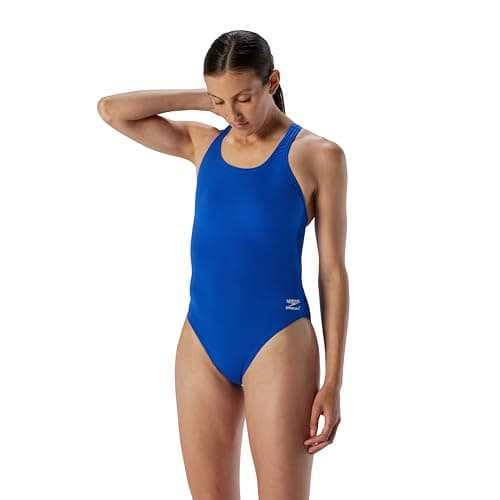
Speedo Women's Endurance+ Super Pro
Endurance+ fabric is the genuine article — it outlasts standard swim fabric several times over in chlorine.
Specifications
- Fabric
- Endurance+ (PBT), 100% chlorine-resistant
- Back
- Super Pro, high coverage
- Sizes
- Women's 28-40
- Lining
- Fully lined
What works
- PBT fabric does not degrade in chlorine — the fabric, not a coating, is what makes this last
- Super Pro back holds the shoulders without cutting in over a long swim
- Holds compression across a full season rather than going slack
- Fully lined, so it stays opaque wet
What doesn’t
- PBT has less stretch than standard swim fabric and feels firmer
- Costs roughly double a fashion one-piece
Who it’s for
A woman swimming laps weekly, or anyone tired of replacing a suit every summer.
Bottom line
Cheaper per swim than any fashion suit. If you swim in chlorine regularly, this is the only sensible fabric.
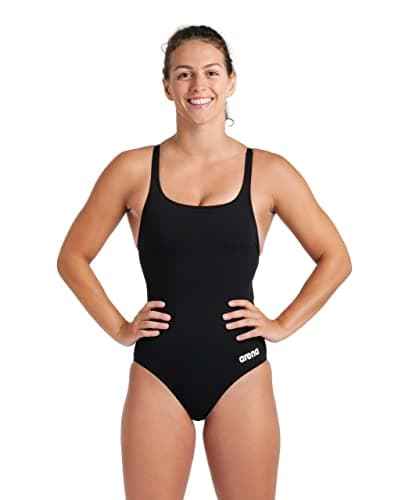
Arena Women's Team Solid MaxLife Swim Pro Back
Arena's MaxLife fabric contains no elastane at all, which is the reason a daily swimmer's suit stops going slack by August.
Specifications
- Fabric
- MaxLife polyester, no elastane
- Back
- Swim Pro, open back
- UPF
- 50+ (Arena's rating)
- Sizes
- US numeric team sizing
What works
- No elastane in the fabric means there is nothing in it for chlorine to attack, which is a different claim from chlorine-resistant
- Arena states a MaxLife suit holds close to its original properties after 240 hours in the water
- The open Swim Pro back leaves the shoulders free, which is what freestyle actually needs
- Team colors are restocked year on year, so the same suit in the next size up is usually still buyable
What doesn’t
- Cut for training — tight, compressive and high on the leg, which is not what everyone wants at a lake
- Arena's sizing is numeric and runs small against US dress sizes; the chart is not optional
- Elastane-free fabric feels firm out of the packet and takes several swims to relax
Who it’s for
A woman or teen swimming laps several times a week in chlorine who wants the suit to still fit properly in a year.
Bottom line
The brand to buy when the pool is a routine rather than a vacation. Measure against Arena's own chart before ordering.
Speedo Girls' Solid Racerback
A plain chlorine-resistant racerback — the suit that survives a full season of weekly lessons.
Specifications
- Fabric
- Chlorine-resistant polyester blend
- Back
- Racerback
- Sizes
- Girls 4-16
- Lining
- Front lined
What works
- Chlorine-resistant fabric holds shape and color where a fashion suit goes see-through by August
- Racerback straps do not slide off shoulders mid-lesson, which is the real reason kids tug at suits
- Full coverage, so a child is not adjusting it every time they climb out
- Cheap enough to own two so one is always dry
What doesn’t
- Plain and unfashionable — older children may object
- Chlorine-resistant fabrics feel stiffer than fashion swim fabric
Who it’s for
A girl in weekly lessons or on a summer team, where a suit gets chlorinated repeatedly.
Bottom line
The workhorse. If your child is in a pool every week, buy this rather than a fashion suit and replace it half as often.
Can you put a swimsuit in the washing machine?
Most manufacturers say no, and they are right about why — but the honest answer is more useful than a flat prohibition, because plenty of families are going to do it anyway.
| Method | Effect on the suit | Verdict |
|---|---|---|
| Cold rinse plus hand wash | Minimal — the fabric keeps its structure | Best, and quick |
| Cold delicate cycle in a mesh bag, no softener | Slight extra stretch and pilling over time | Acceptable compromise |
| Warm or hot cycle | Elastane degrades noticeably | No |
| Spin cycle | Stretches a saturated suit under load | No — or spin at the lowest setting only |
| Tumble dryer | Cooks the elastic out of it | Never |
| Fabric softener or bleach | Coats or attacks the fiber | Never |
If you are going to machine wash, the compromise that does least harm is a mesh laundry bag, the coldest delicate cycle, no fabric softener, and the suit taken out before any meaningful spin. For a training suit in chlorine-resistant polyester the cost is small. For a fashion suit with high elastane content it is considerably higher.
Two suits in rotation, and why it helps
Elastane recovers if it is allowed to dry fully and rest. A suit worn every day never gets that chance, which is why a daily swimmer's single suit goes baggy at the leg openings by midsummer while the same suit worn every other day does not.
For anyone swimming several times a week, two mid-range suits in rotation genuinely outlast one expensive suit used twice as often, and the total cost is usually lower. This is the most reliably ignored piece of swimwear advice there is.
Fixing the specific complaints
It smells of chlorine even after washing. Chlorine odor lives in detergent residue and in oils left in the fabric. Rinse much more thoroughly, and soak for fifteen minutes in cool water with a tablespoon of white vinegar before the normal wash. Do not use this on a suit that is already thinning.
It has gone see-through. That is elastane degradation and fabric thinning, and it is not reversible. The fix is for the replacement: buy a PBT or polyester chlorine-resistant fabric and insist on full lining rather than front lining only. The options are in chlorine resistant swimsuits.
It has faded. Sun, mostly, and drying in direct sunlight accelerates it enormously. Dark colors show it first. Dry in shade, and turn the suit inside out if your only drying spot is sunny.
The straps have stretched. Usually wringing, or drying on a hanger. Neither is fixable, which is why the press-in-a-towel step matters more than it sounds like it should.
It is baggy at the leg openings. The elastane has lost its recovery. Rotating two suits prevents it; nothing reverses it. If this happens inside one season, the suit was a fashion fabric being used as a training suit.
A note on new suits
A brand-new suit benefits from a cold rinse before its first swim. It removes manufacturing residue and finishing agents, and on strongly dyed suits it takes out the loose surface dye that would otherwise transfer onto a light-colored towel or a pale rash guard the first time it gets wet.
If a suit is still bleeding dye after a couple of cold rinses, soak it for half an hour in cold water with a tablespoon of salt. Do not use hot water to set dye — hot water is the thing that damages the suit.
Questions
Frequently asked questions
How do you wash a swimsuit properly?
Can you put a swimsuit in the washing machine?
What ruins a swimsuit fastest?
Should you rinse a swimsuit before the first wear?
How do you get the chlorine smell out of a swimsuit?
Why should you not wring out a swimsuit?
Sources
Read next